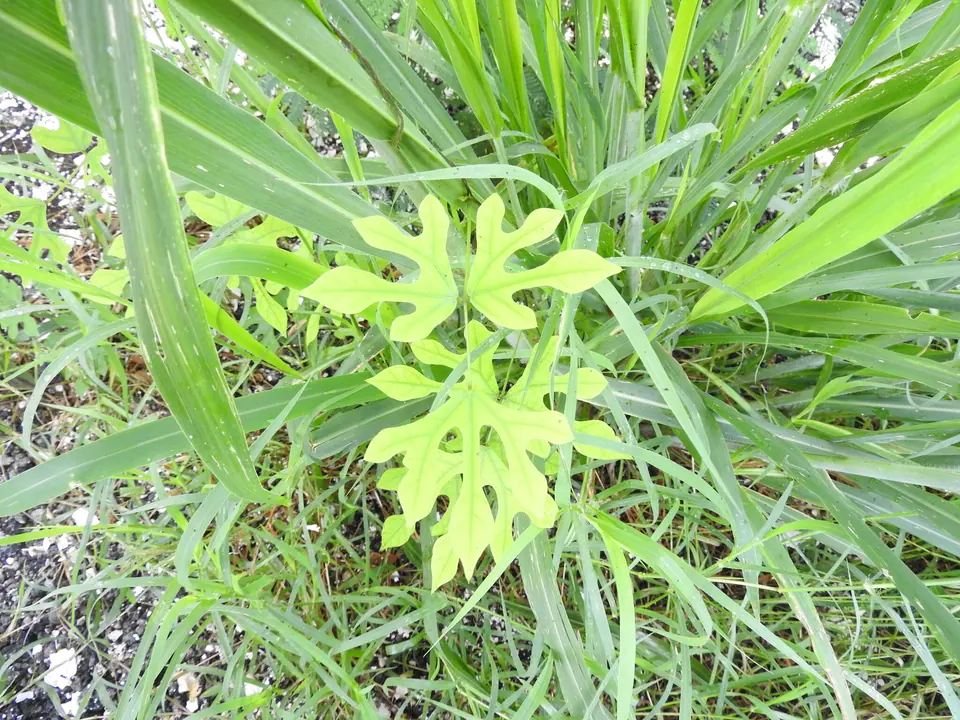
How to Grow and Care for Yam bean
Pachyrhizus erosus
Written by Emilio Marruso · last checked
Toxic to: People · Why
At a glance
Jicama is grown for its starchy root, which you can enjoy raw or cooked. Give it full sun, moderate water and moist, well-drained soil, and if you start from whole small roots you can dig mature roots after just 3 months; from seed, plan on 5–9 months of warm weather. Just remember to peel it and eat only the root.
- Sun
Full sun
- Water
Moderate water; keep the soil moist but never soggy
What the sources say (3)
Watering: Moderate water
Light Preference | Full Sun | Water Preference | Moderate Water
— NParks | Pachyrhizus erosus [4] Watering notes: Grows best in moist, well-drained soil; does not tolerate waterlogging; grow on ridges in areas of high precipitation
It grows best in moist, but well-drained soil.
— NParks | Pachyrhizus erosus [4] the crop does not tolerate waterlogging. In areas with high precipitation, cultivation on ridges is recommended.
— Pachyrhizus erosus (PROSEA) - Pl@ntUse [5] - Soil
Moist, well-drained soil, pH 4.8–7.3; in very rainy areas, plant on raised ridges
What the sources say (4)
Soil pH, minimum: 4.8
El pH óptimo es de 4.8 a 7.3. Crece bien cuando se siembra al comienzo de la temporada de lluvias.
— Descripción [3] Soil pH, maximum: 7.3
El pH óptimo es de 4.8 a 7.3. Crece bien cuando se siembra al comienzo de la temporada de lluvias.
— Descripción [3] Watering notes: Grows best in moist, well-drained soil; does not tolerate waterlogging; grow on ridges in areas of high precipitation
It grows best in moist, but well-drained soil.
— NParks | Pachyrhizus erosus [4] the crop does not tolerate waterlogging. In areas with high precipitation, cultivation on ridges is recommended.
— Pachyrhizus erosus (PROSEA) - Pl@ntUse [5] - Spacing
6–12 in between plants, 2–3 ft between rows
What the sources say (3)
Spacing: 15-30 cm (6-12 in) between plants, in rows 60-100 cm (2-3 ft) apart
Guanajuato, Mexico: The recommended spacing in Guanajuanto is 80 cm between ridges and 2 rows per ridge with 20 cm between rows and 20 cm between plants
— Pachyrhizus erosus (PROSEA) - Pl@ntUse [5] central Thailand: 50-120 cm between ridges (or seedbeds), 7-12 cm between rows and 4-12 cm between plants
— Pachyrhizus erosus (PROSEA) - Pl@ntUse [5] Las plantas deben tener una separación de 15 a 30 cm (6 a 12 pulgadas) en hileras separadas por 60 a 100 cm (2 a 3 pies)
— Descripción [3] - Planting
Plant sprouted seeds or roots when the rains begin, on well-prepared ridges
What the sources say (1)
Planting: At the start of the rains (sprouted seeds or roots), on well-prepared ridges
Las semillas o raíces germinadas normalmente se siembran al comienzo de las lluvias en camellones bien preparados.
— Descripción [3] - Pruning
While it blooms, pinch off the flowers 1–3 times
What the sources say (1)
Pruning: During the flowering period (removal of flowers or fertile shoots, 1-3 times)
Reproductive pruning (the removal of fertile shoots) is commonly practised 1-3 times during the flowering period in order to increase tuber size.
— Pachyrhizus erosus (PROSEA) - Pl@ntUse [5] - Harvest
Roots are ready 5–9 months from seed, or 3 months from small roots; eat them raw or cooked
What the sources say (2)
Days to maturity: About 5-9 months of warm weather from seed to large roots; mature roots after just 3 months if started from whole small roots
When planted from seeds, about 5-9 months of warm weather are required before large roots are produced.
— Archival copy: for current recommendations see http://edis.ifas.ufl.edu or your local extension office. [2] However, mature roots may be produced after just 3 months if started from whole small roots.
— Archival copy: for current recommendations see http://edis.ifas.ufl.edu or your local extension office. [2] - Pests
Mosaic virus makes roots smaller; beetles chew the leaves
- Propagation
From seed, sprouted roots or whole small roots
What the sources say (3)
Propagation: Seed; sprouted roots or whole small roots
La jícama generalmente se propaga a partir de semillas.
— Descripción [3] Seed, Storage Organ (Root Tuber)
— NParks | Pachyrhizus erosus [4] mature roots may be produced after just 3 months if started from whole small roots.
— Archival copy: for current recommendations see http://edis.ifas.ufl.edu or your local extension office. [2] - Sowing
Sow at the start of the rainy season
What the sources say (4)
Sowing: At the start of the rainy season
Guanajuato, Mexico: in Guanajuato at 1700 m above sea-level, planting takes place in January-March with harvesting in September-November
— Pachyrhizus erosus (PROSEA) - Pl@ntUse [5] Nayarit, Mexico: in Nayarit at 0-100 m altitude, planting takes place in October-November with harvesting following in February-March
— Pachyrhizus erosus (PROSEA) - Pl@ntUse [5] northern Thailand: In northern Thailand, yam beans are planted at the beginning of the early monsoon rains in June-July
— Pachyrhizus erosus (PROSEA) - Pl@ntUse [5] Crece bien cuando se siembra al comienzo de la temporada de lluvias.
— Descripción [3] - Safety
Eat only the peeled root: leaves, stems, ripe pods and seeds may be poisonous
Overview
Jicama is a climbing legume with very large tuberous roots that are eaten raw or cooked. [2] It does best in a warm climate with moderate rainfall, is sensitive to frost and needs well-drained soil. [2][5] Only the root is eaten; other parts of the plant are described as poisonous. [2]
This record is incomplete: the sources we read do not cover every field yet.
Not yet covered by our sources: Harvest
Yam bean care
Measurements in square brackets are our conversion into the other unit system; the quoted text is unchanged.
How to water Yam bean
Watering
Moderate water
What the sources say (1)
Light Preference
| Full Sun
| Water Preference
| Moderate WaterWatering notes
Grows best in moist, well-drained soil; does not tolerate waterlogging; grow on ridges in areas of high precipitation
How much light Yam bean needs
Best soil for Yam bean
Soil pH, minimum
4.8
What the sources say (1)
El pH óptimo es de 4.8 a 7.3. Crece bien cuando se siembra al comienzo de la temporada de lluvias.Soil pH, maximum
7.3
What the sources say (1)
El pH óptimo es de 4.8 a 7.3. Crece bien cuando se siembra al comienzo de la temporada de lluvias.Where to grow Yam bean
15-30 cm (6-12 in) between plants, in rows 60-100 cm (2-3 ft) apart
What each source says
Guanajuato, Mexico: 80 cm [31 in] between ridges, 2 rows per ridge, 20 cm [7.9 in] between rows and 20 cm [7.9 in] between plants
central Thailand: 50-120 cm [20–47 in] between ridges, 7-12 cm [2.8–4.7 in] between rows and 4-12 cm [1.6–4.7 in] between plants
What the sources say (3)
Guanajuato, Mexico: The recommended spacing in Guanajuanto is 80 cm between ridges and 2 rows per ridge with 20 cm between rows and 20 cm between plantscentral Thailand: 50-120 cm between ridges (or seedbeds), 7-12 cm between rows and 4-12 cm between plantsLas plantas deben tener una separación de 15 a 30 cm (6 a 12 pulgadas) en hileras separadas por 60 a 100 cm (2 a 3 pies)How to propagate Yam bean
Seed; sprouted roots or whole small roots
What the sources say (3)
La jícama generalmente se propaga a partir de semillas.Seed, Storage Organ (Root Tuber)mature roots may be produced after just 3 months if started from whole small roots.How to grow Yam bean
Sowing and growth
Days to maturity
About 5-9 months of warm weather from seed to large roots; mature roots after just 3 months if started from whole small roots
What the sources say (2)
When planted from seeds, about 5-9 months of warm weather are required before large roots are produced.However, mature roots may be produced after just 3 months if started from whole small roots.Fertilizing
Mineral fertilizers
The sources give different values depending on region, zone or growing conditions.
What each source says
field production: 6-6-12 at 1680 kg [3,703.8 lb]/ha; data on fertilizer needs are limited
What the sources say (1)
field production: Information on fertilizer requirements is limited, but one source suggests 1,500 pounds per acre of 6-6-12.Yam bean pests and problems
Mosaic virus
Symptom: Smaller tubers (yield reductions of 20-30%), discoloured leaves and brittle stems
What the sources say (1)
results in smaller-sized tubers (yield reductions of 20-30%), discoloured leaves and brittle stems.
— Pachyrhizus erosus (PROSEA) - Pl@ntUse [5] Insect pests
Symptom: Leaf damage by rose beetle (Tonga) and Diabrotica spp.; bruchids damage seed in the pods in parts of Central and South America
What the sources say (1)
Several pests have been reported damaging the leaves, the most serious being the rose beetle ( Adoretus versutus ) in Tonga; Diabrotica spp. have caused extensive damage in some cultivars.
— Pachyrhizus erosus (PROSEA) - Pl@ntUse [5]
Remedies
Each remedy shows what official sources say about it; traditional remedies without an official source are marked as such. Harmful ones are listed so you know to avoid them.
First aid
First aid: not a substitute for a doctor
plant ingestion (mouth)
remove plant material and wipe the mouth Official source, not independently tested
Call Poison Help at 1-800-222-1222 for instructions.
— mnpoison.org [10] How: Remove remaining plant material, gently wipe the mouth with a wet cloth.
Remove any remaining plant material or berries. - Gently wipe the mouth with a wet cloth. - Check for irritation, swelling, or discoloration.
— mnpoison.org [10] one glass of water Official source, not independently tested
Call Poison Help at 1-800-222-1222 for instructions.
— mnpoison.org [10] How: Give one glass of water if the person is awake and able to swallow.
Give one glass of water if the person is awake and able to swallow.
— mnpoison.org [10]
skin contact with the plant
remove contaminated clothing and wash skin Official source, not independently tested
Call Poison Help at 1-800-222-1222 for further guidance.
— mnpoison.org [10] How: Remove contaminated clothing and wash the skin thoroughly with soap and water.
Remove contaminated clothing. - Wash skin thoroughly with soap and water.
— mnpoison.org [10]
Treating the plant
weevils
shallow pan of water at night Not verified
Traditional remedy, not verified by an official source.
How: Set out a shallow pan of water at night: it attracts the weevils and drowns them.
Is Yam bean poisonous?
Reported by the source, quoted verbatim. This is not medical or veterinary advice: if a person or an animal may have eaten this plant, contact a poison control centre or a veterinarian.
As a word of caution, eat only the roots. The leaves, stems, ripe pods, and seeds may be poisonous.
[2]- Poisonous parts
The leaves, stems, ripe pods, and seeds may be poisonous.
[2]- Toxic principle
The leaves, mature seeds and pods contain a toxic glycoside, the roots and mature seeds contain rotenone
[6]- Toxic principle
Mature seeds contain about 30% fatty oils, 0.5-1.0% rotenon and 0.5-1.0% rotenoids.
[5]
The skin of the tuber must be removed before consumption because it contains toxic compounds.
[4]- Poisonous parts
The seeds, flowers and leaves also contain toxins.
[4]
Calendar
Sowing
At the start of the rainy season
What each source says
Guanajuato, Mexico: January-March
Nayarit, Mexico: October-November
northern Thailand: June-July
What the sources say (4)
Guanajuato, Mexico: in Guanajuato at 1700 m above sea-level, planting takes place in January-March with harvesting in September-NovemberNayarit, Mexico: in Nayarit at 0-100 m altitude, planting takes place in October-November with harvesting following in February-Marchnorthern Thailand: In northern Thailand, yam beans are planted at the beginning of the early monsoon rains in June-JulyCrece bien cuando se siembra al comienzo de la temporada de lluvias.Planting
At the start of the rains (sprouted seeds or roots), on well-prepared ridges
What the sources say (1)
Las semillas o raíces germinadas normalmente se siembran al comienzo de las lluvias en camellones bien preparados.Harvest
Not stated in the sources we read.
Pruning
During the flowering period (removal of flowers or fertile shoots, 1-3 times)
What the sources say (1)
Reproductive pruning (the removal of fertile shoots) is commonly practised 1-3 times during the flowering period in order to increase tuber size.Months as given by the sources, which are mostly from the United States (northern hemisphere). In the southern hemisphere they shift by about six months.
Edibility
Reported by the source, quoted verbatim. Do not eat a plant on the basis of this page alone: identification mistakes can be dangerous.
Indicative values
Values from a secondary source, not checked word for word like the rest of this page. Use them as a starting point.
- Life cycle
- PerennialIndicative value, adapt it to your climate · Secondary source
- Mature height
- 30.5-61 cm (1-2 ft)Indicative value, adapt it to your climate · Secondary source
- Drought tolerant
- yesIndicative value, adapt it to your climate · Secondary source
- USDA hardiness zones
- 10-12 [winter low −1.1 to 15.6 °C (30 to 60 °F)]Indicative value, adapt it to your climate · Secondary source
- Care level
- MediumIndicative value, adapt it to your climate · Secondary source
- Growth rate
- LowIndicative value, adapt it to your climate · Secondary source
Similar plants
- Abyssinian banana Ensete ventricosum
- Aconite Aconitum napellus
- Adam's Needle Yucca flaccida
- Afghan Cherry Prunus jacquemontii
- African Blood Lily Scadoxus multiflorus
- African Blue Lily Agapanthus praecox
- African Marigold Tagetes erecta
- Agretti Soda inermis
Sources
Every value above is quoted from these documents. Links lead to the original publisher.
- Jicama—Pachyrhizus erosus (L.) Urban: HS615/MV082, 5/2003 | EDIS · journals.flvc.org, consulted
- Archival copy: for current recommendations see http://edis.ifas.ufl.edu or your local extension office. · journals.flvc.org, consulted
- Descripción · echocommunity.org, consulted
- NParks | Pachyrhizus erosus · nparks.gov.sg, consulted
- Pachyrhizus erosus (PROSEA) - Pl@ntUse · uses.plantnet-project.org, consulted
- View crop · ecocrop.apps.fao.org, consulted
- Plants of Hawai'i | Bishop Museum · plantsofhawaii.org, consulted
- Pachyrhizus erosus · apps.lucidcentral.org, consulted
- ucanr.edu · ucanr.edu
- mnpoison.org · mnpoison.org
Written by Emilio Marruso · last checked