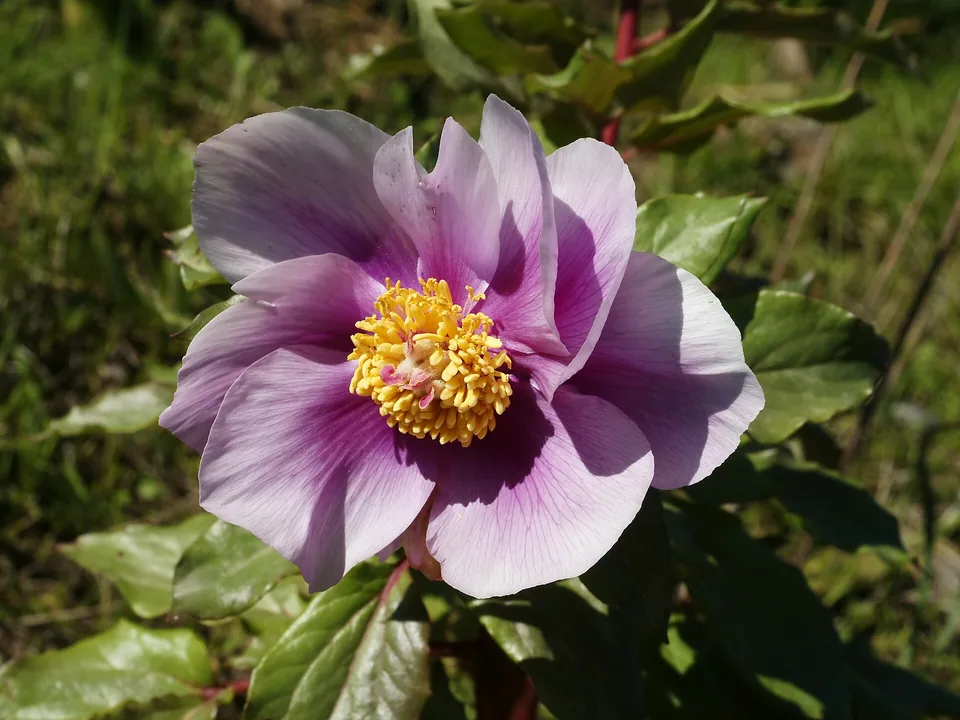

How to Grow and Care for Paeonia mascula
Paeonia mascula
Written by Emilio Marruso · last checked
Toxic to: People · Why
At a glance
This peony is an easygoing choice: it grows in full sun to light shade and tolerates drought with just moderate watering. Simply keep the soil from getting soggy or bone dry. You can start it from seed as soon as the seed is ripe or divide a clump in spring or fall, and it has no known hazards to people.
- Sun
Full sun to light shade
- Water
Moderate water; it handles drought but dies in soggy or bone-dry soil
What the sources say (2)
Watering: Moderate water; drought tolerant
Light full sun Shade tolerance light shade Water moderate
— Paeonia mascula — Practical Plants [2] Watering notes: Will not survive if the soil becomes waterlogged or is too dry
will not survive if the soil becomes waterlogged or is too dry
— Paeonia mascula - Useful Temperate Plants [1] - Planting
Plant out in spring while growing, after two seasons in a cold frame as seedlings
What the sources say (1)
Planting: Spring, when plants are in growth (seedlings grown on in a cold frame for at least two growing seasons)
grow them on in a cold frame for at least two growing seasons before planting them out when they are in growth in the spring
— Paeonia mascula - Useful Temperate Plants [1] - Pests
Peony wilt (gray mold at stem bases): remove infected parts, clean up in fall; slugs in damp soil
What the sources say (1)
Diseases: Paeonia wilt (Botrytis paeoniae)
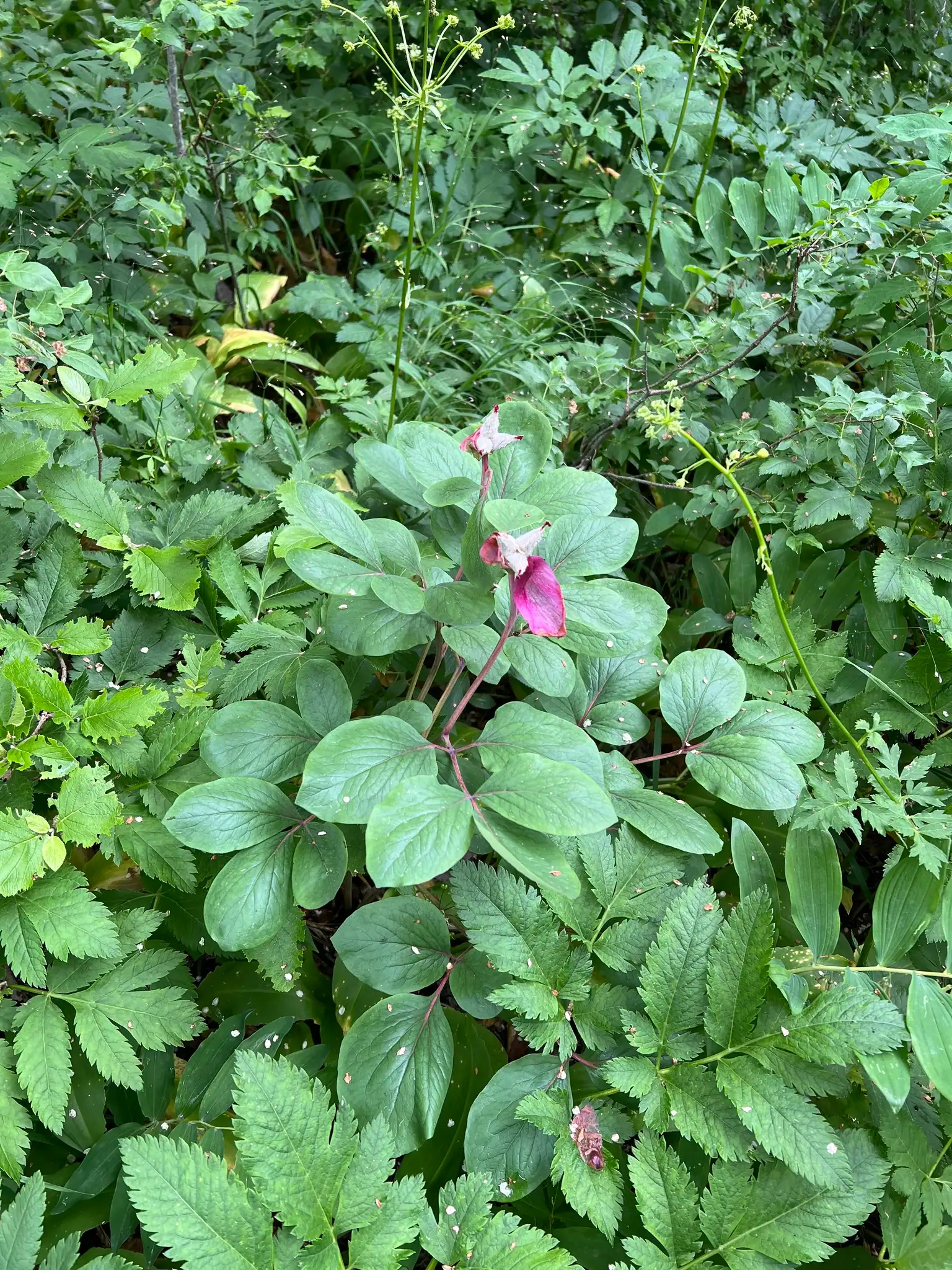
Paeonia wilt, Botrytis paeoniae , can be seen in the attached image.
— Paeonia with a problem – Botanics Stories [3] - Propagation
By seed, or divide clumps in spring or fall
- Sowing
Sow in a cold frame as soon as the seed is ripe
What the sources say (1)
Sowing: As soon as the seed is ripe (in a cold frame)
Seed - best sown as soon as it is ripe in a cold frame
— Paeonia mascula - Useful Temperate Plants [1] - Safety
No known hazards to people
Overview
Paeonia mascula is a long-lived herbaceous perennial that does well in sun or light shade. [2][1] It does not survive waterlogged or very dry soil, and it resents root disturbance. [1] It is propagated by seed sown fresh in a cold frame or by careful division. [1]
This record is incomplete: the sources we read do not cover every field yet.
Not yet covered by our sources: Hardiness, coldest zone, Hardiness, warmest zone, Pruning
Paeonia mascula care
How to water Paeonia mascula
Watering
Moderate water; drought tolerant
What the sources say (1)
Light
full sun
Shade tolerance
light shade
Water
moderateWatering notes
Will not survive if the soil becomes waterlogged or is too dry
What the sources say (1)
will not survive if the soil becomes waterlogged or is too dryHow much light Paeonia mascula needs
How much cold Paeonia mascula can take
Hardiness, coldest zone
Not stated in the sources we read.
Hardiness, warmest zone
Not stated in the sources we read.
How to propagate Paeonia mascula
How to grow Paeonia mascula
Pests and diseases
Diseases
Paeonia wilt (Botrytis paeoniae)
What the sources say (1)
Paeonia wilt, Botrytis paeoniae , can be seen in the attached image.Fertilizing
When
The sources give different values depending on region, zone or growing conditions.
What each source says
Paeonia in general: Late summer
Paeonia in general: After flowering
Paeonia in general: At planting, mixed into the soil of the planting hole
What the sources say (3)
Paeonia in general: Spread it over the area where the roots grow, 6 to 18" from the crown, and thoroughly scratch it into the soil. Apply fertilizer in the late summer, preferably a slow release type.Paeonia in general: If you decide to fertilize, do so after they are done blooming and use a balanced fertilizer or one with a higher phosphorous content (middle number).Paeonia in general: Mix soil from the holes with superphosphate fertilizer and organic matter, add some of the mixture to each hole and water to settle the soil.How often
The sources give different values depending on region, zone or growing conditions.
What each source says
Paeonia in general: No additional fertilizer for 3 to 4 years after planting in enriched, fertile loam
Paeonia in general: Every few years at most for established plants growing well
What the sources say (2)
Paeonia in general: If the peony was planted in properly enriched, fertile loam to start with, the plant should not need additional fertilizer for 3 to 4 years.Paeonia in general: Established plants with good growth only need to be fertilized every few years, if at all.Natural fertilizers
The sources give different values depending on region, zone or growing conditions.
What each source says
Paeonia in general: Bone meal at planting, 454 g per 35.2 L [9.3 gal] of soil returned to the hole
Paeonia in general: Leaf mould, compost or composted manure as soil amendments
Paeonia in general: Compost or well-rotted manure worked deeply into the soil before planting
What the sources say (3)
Paeonia in general: to which bonemeal or superphosphate (0- 20-0) has been thoroughly mixed. Bonemeal may be added at a rate of one pound (1-1/2 cups) to each bushel of soil replaced in the hole.Paeonia in general: Leafmold, compost or composted manure may be added as soil amendments.Paeonia in general: Peonies will be in place for many years, so work the soil deep (18 to 24 inches) and incorporate organic matter, such as compost, well rotted manure or peat moss.Mineral fertilizers
The sources give different values depending on region, zone or growing conditions.
What each source says
Paeonia in general: Superphosphate at planting, 227 g per 35.2 L [9.3 gal] of soil in the bottom 30.5 cm [12 in] of the hole
Paeonia in general: Slow-release fertilizer in late summer, spread over the root area 15.2 to 45.7 cm [6–18 in] from the crown and scratched into the soil
Paeonia in general: Balanced fertilizer or one with a higher phosphorus content, after flowering
What the sources say (3)
Paeonia in general: Superphosphate should be added at a rate of one-half pound (1/2 cup) per bushel of soil replaced in the bottom 12" of the hole, to prevent burning the roots.Paeonia in general: Spread it over the area where the roots grow, 6 to 18" from the crown, and thoroughly scratch it into the soil. Apply fertilizer in the late summer, preferably a slow release type.Paeonia in general: If you decide to fertilize, do so after they are done blooming and use a balanced fertilizer or one with a higher phosphorous content (middle number).Avoid
The sources give different values depending on region, zone or growing conditions.
What each source says
Paeonia in general: Over-fertilizing and too much nitrogen, which reduce flowering
Paeonia in general: Over-fertilizing, which reduces flowering
Paeonia in general: Fertilizer in contact with the crowns
What the sources say (3)
Paeonia in general: Over-fertilizing can also reduce the bloom of your peonies. Too much nitrogen fertilizer will cause the plants to produce a lot of foliage and a reduced number of blooms.Paeonia in general: Don't over-fertilize or it results in reduced flowering.Paeonia in general: Keep all fertilizer away from the crowns of the plants.Signs of excess
The sources give different values depending on region, zone or growing conditions.
What each source says
Paeonia in general: Lots of foliage and fewer blooms
Paeonia in general: Foliage instead of flowers
What the sources say (2)
Paeonia in general: Over-fertilizing can also reduce the bloom of your peonies. Too much nitrogen fertilizer will cause the plants to produce a lot of foliage and a reduced number of blooms.Paeonia in general: Over fertilized peonies will produce foliage instead of flowers, so fertilize with discretion.Paeonia mascula pests and problems
Paeonia wilt (Botrytis paeoniae)
Symptom: Grey mould colonises soft brown areas of rot at the base of the stems and then all plant surfaces.
What to do: Remove and ideally burn all infected vegetation; good hygiene in autumn prevents the disease carrying through to the following year.
Slug damage
Symptom: Roots are subject to slug damage in moist soils (subsp. mascula).
What to do: The subspecies succeeds in dry soils.
What the sources say (1)
The sub-species P. mascula mascula succeeds in dry soils, its roots are subject to slug damage in moist soils
— Paeonia mascula - Useful Temperate Plants [1]
Remedies
The sources we checked give no remedies for this plant.
Is Paeonia mascula poisonous?
Reported by the source, quoted verbatim. This is not medical or veterinary advice: if a person or an animal may have eaten this plant, contact a poison control centre or a veterinarian.
Known Hazards None known
[1]
Calendar
Sowing
As soon as the seed is ripe (in a cold frame)
What the sources say (1)
Seed - best sown as soon as it is ripe in a cold framePlanting
Spring, when plants are in growth (seedlings grown on in a cold frame for at least two growing seasons)
What the sources say (1)
grow them on in a cold frame for at least two growing seasons before planting them out when they are in growth in the springPruning
Not stated in the sources we read.
Months as given by the sources, which are mostly from the United States (northern hemisphere). In the southern hemisphere they shift by about six months.
Similar plants
- Common peony Paeonia officinalis
- Moutan peony Paeonia suffruticosa
- Paeonia tenuifolia Paeonia tenuifolia
- Paeonia obovata Paeonia japonica
- Abies grandis Abies grandis
- Abraham Trachystemon orientalis
- Abyssinian banana Ensete ventricosum
- Acacia longifolia Acacia longifolia
Sources
Every value above is quoted from these documents. Links lead to the original publisher.
- Paeonia mascula - Useful Temperate Plants · temperate.theferns.info, consulted
- Paeonia mascula — Practical Plants · practicalplants.org, consulted
- Paeonia with a problem – Botanics Stories · stories.rbge.org.uk, consulted
- Paeonia mascula ( Arietina Peony ) - Professional Gardening Tips · backyardgardener.com, consulted
- · paeo.de, consulted
- SCHEDA · sigecweb.beniculturali.it, consulted
- · paeon.de, consulted
- s3.amazonaws.com · s3.amazonaws.com
- extension.illinois.edu · extension.illinois.edu
- lancaster.unl.edu · lancaster.unl.edu
- extension.illinois.edu · extension.illinois.edu
Written by Emilio Marruso · last checked