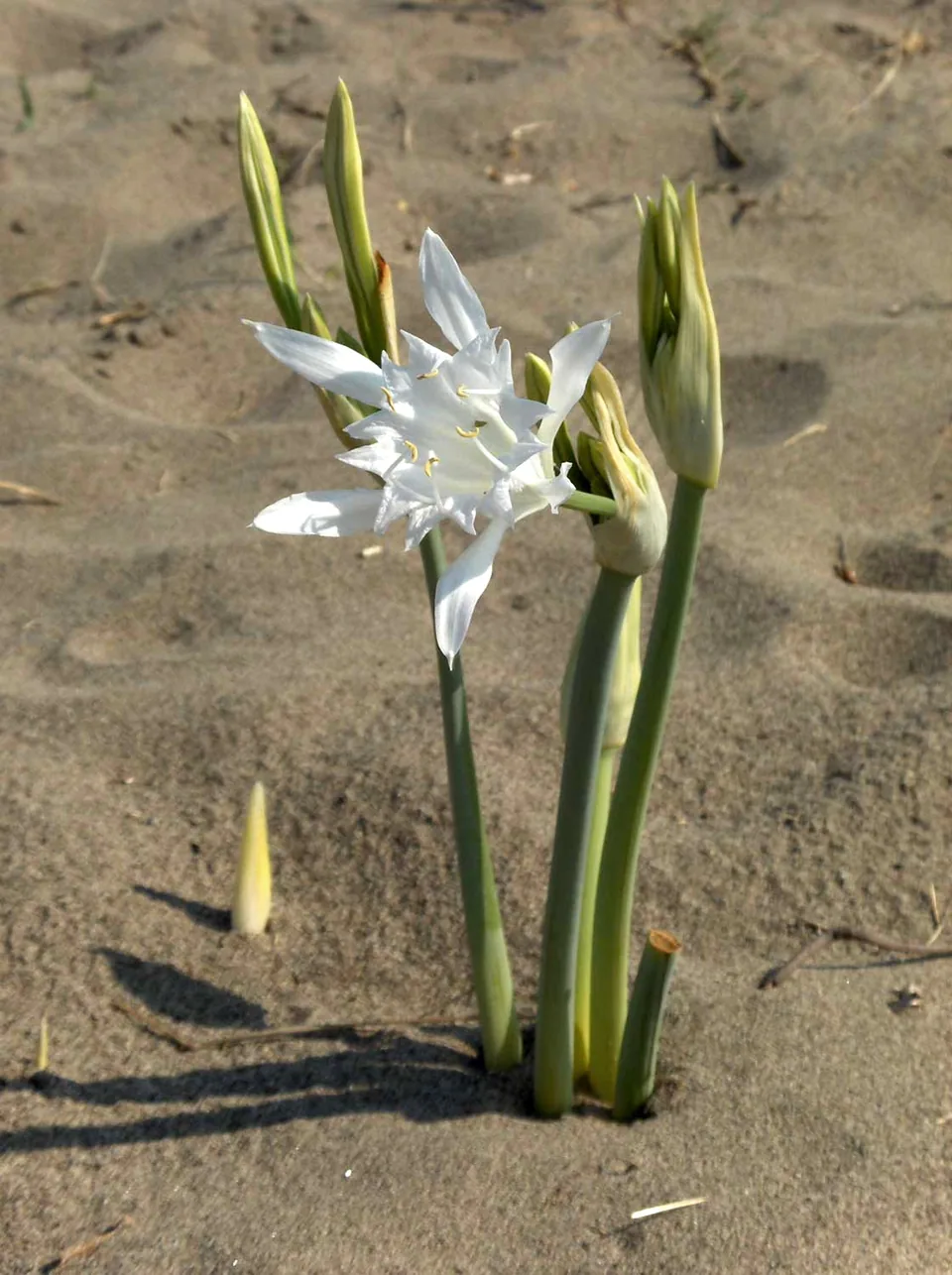
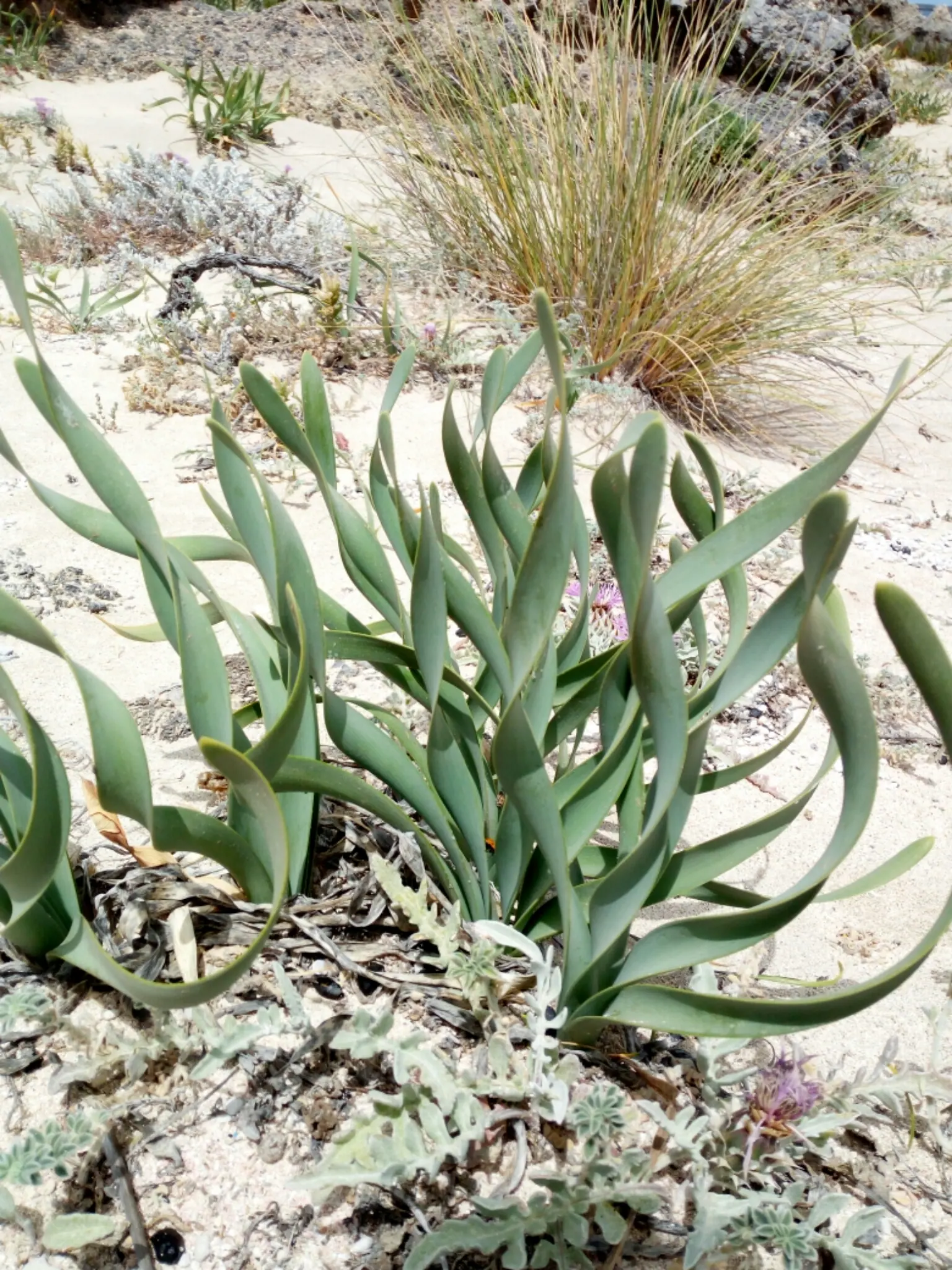

How to Grow and Care for Sea Daffodil
Pancratium maritimum
Written by Emilio Marruso · last checked
Toxic to: People · Why
At a glance
The sea daffodil is a perennial bulb that loves full sun and comes back year after year. It grows happily in a pot and even indoors, so you can enjoy it on a sunny patio or by a bright window. Start new plants from seed, or divide the clumps once flowering is over to grow even more.
- Sun
Full sun
What the sources say (1)
Light: Full sun
Light: Full sun (6 or more hours of direct sunlight a day)
— Pancratium maritimum (Sand Daffodil, Sea Daffodil, Sea Lily) | North Carolina Extension Gardener Plant Toolbox [1] - Water
Water in hot summers, or the leaves can die back
What the sources say (1)
Watering notes: Leaves can die back during hot summers without irrigation
evergreen, but the leaves can die back during hot summers without irrigation
— Pancratium maritimum (Sand Daffodil, Sea Daffodil, Sea Lily) | North Carolina Extension Gardener Plant Toolbox [1] - Cold
Survives winters down to 0 °F (−17.8 °C)
Hardy in very cold winters · USDA 7a · RHS H6 · Z7
What the sources say (2)
Hardiness, coldest zone: 7a [winter low −17.8 to −15 °C (0 to 5 °F)]
Neutral (6.0-8.0) Soil Drainage: Good Drainage Moist Occasionally Dry USDA Plant Hardiness Zone: 7a, 7b, 8a, 8b, 9a, 9b, 10a, 10b
— Pancratium maritimum (Sand Daffodil, Sea Daffodil, Sea Lily) | North Carolina Extension Gardener Plant Toolbox [1] Hardiness, warmest zone: 10b [winter low 1.7 to 4.4 °C (35 to 40 °F)]
Neutral (6.0-8.0) Soil Drainage: Good Drainage Moist Occasionally Dry USDA Plant Hardiness Zone: 7a, 7b, 8a, 8b, 9a, 9b, 10a, 10b
— Pancratium maritimum (Sand Daffodil, Sea Daffodil, Sea Lily) | North Carolina Extension Gardener Plant Toolbox [1] - Propagation
From seed, or divide the clumps after flowering is over
What the sources say (1)
Propagation: Seed; division after flowering completes
It can be grown from seed or division after flowering completes
— Pancratium maritimum (Sand Daffodil, Sea Daffodil, Sea Lily) | North Carolina Extension Gardener Plant Toolbox [1] - Containers
Grows in containers and indoors too
What the sources say (2)
In containers: Yes
Landscape Location: Container Houseplants Landscape Theme: Cottage Garden
— Pancratium maritimum (Sand Daffodil, Sea Daffodil, Sea Lily) | North Carolina Extension Gardener Plant Toolbox [1] Indoors: Yes
Landscape Location: Container Houseplants Landscape Theme: Cottage Garden
— Pancratium maritimum (Sand Daffodil, Sea Daffodil, Sea Lily) | North Carolina Extension Gardener Plant Toolbox [1] - Safety
Do not eat the bulbs: they cause nausea, vomiting and diarrhea
Overview
Sea daffodil is an evergreen bulb that grows best in sandy, well-drained soil in full sun. [1] Bulbs should be planted deeply in a warm, sheltered environment. [1] Ingesting the bulbs is poisonous to humans, with low severity. [1]
This record is incomplete: the sources we read do not cover every field yet.
Not yet covered by our sources: Watering, Pruning
Sea Daffodil care
How to water Sea Daffodil
Watering
Not stated in the sources we read.
Watering notes
Leaves can die back during hot summers without irrigation
What the sources say (1)
evergreen, but the leaves can die back during hot summers without irrigationHow much light Sea Daffodil needs
Full sun
What the sources say (1)
Light:
Full sun (6 or more hours of direct sunlight a day)How much cold Sea Daffodil can take
Hardiness, coldest zone
7a [winter low −17.8 to −15 °C (0 to 5 °F)]
What the sources say (1)
Neutral (6.0-8.0)
Soil Drainage:
Good Drainage
Moist
Occasionally Dry
USDA Plant Hardiness Zone:
7a, 7b, 8a, 8b, 9a, 9b, 10a, 10bHardiness, warmest zone
10b [winter low 1.7 to 4.4 °C (35 to 40 °F)]
What the sources say (1)
Neutral (6.0-8.0)
Soil Drainage:
Good Drainage
Moist
Occasionally Dry
USDA Plant Hardiness Zone:
7a, 7b, 8a, 8b, 9a, 9b, 10a, 10bWhere to grow Sea Daffodil
Indoors
Yes
What the sources say (1)
Landscape Location:
Container
Houseplants
Landscape Theme:
Cottage GardenIn containers
Yes
What the sources say (1)
Landscape Location:
Container
Houseplants
Landscape Theme:
Cottage GardenHow to propagate Sea Daffodil
Seed; division after flowering completes
What the sources say (1)
It can be grown from seed or division after flowering completesHow to grow Sea Daffodil
The plant
Life cycle
perennial
What the sources say (1)
Sea Daffodil is a flowering perennial, evergreen bulb in the amaryllis family native to the Canary Islands and the Mediterranean and Black Sea coasts.Family
Amaryllidaceae
What the sources say (1)
Pancratium maritimum (Amaryllidaceae) Pancratium maritimum L., bulbosa perenne degli ambienti dunali costieri, è un taxonRemedies
Each remedy shows what official sources say about it; traditional remedies without an official source are marked as such. Harmful ones are listed so you know to avoid them.
First aid
First aid: not a substitute for a doctor
swallowing the bulbs (nausea, vomiting, diarrhea)
saving the vomit for identification Official source, not independently tested
DO NOT make a person throw up unless told to do so by poison control or a health care professional.
— medlineplus.gov [3] The local poison control center can be reached directly by calling the national toll-free Poison Help hotline (1-800-222-1222) from anywhere in the United States.
— medlineplus.gov [3] How: If the person has been sick from a plant part, save the vomit.
If the person has been sick from a plant part, save the vomit. It may help experts identify what medicine can be used to help reverse the poisoning.
— medlineplus.gov [3]
Is Sea Daffodil poisonous?
Reported by the source, quoted verbatim. This is not medical or veterinary advice: if a person or an animal may have eaten this plant, contact a poison control centre or a veterinarian.
Poison Severity: Low Poison Symptoms: Ingesting the bulbs can bring on nausea, vomiting, and diarrhea.
[1]- Poisonous parts
Poison Toxic Principle: Lycorine and other phenanthridine alkaloids Causes Contact Dermatitis: No Poison Part: Roots
[1]- Toxic principle
Poison Toxic Principle: Lycorine and other phenanthridine alkaloids Causes Contact Dermatitis: No
[1]- Symptoms
Ingesting the bulbs can bring on nausea, vomiting, and diarrhea.
[1]- Severity
Poison Severity: Low Poison Symptoms: Ingesting the bulbs can bring on nausea
[1]
Calendar
Pruning
Not stated in the sources we read.
Months as given by the sources, which are mostly from the United States (northern hemisphere). In the southern hemisphere they shift by about six months.
Indicative values
Values from a secondary source, not checked word for word like the rest of this page. Use them as a starting point.
- Mature height
- 45.7-61 cm (1.5-2 ft)Indicative value, adapt it to your climate · Secondary source
- Hours of sun
- 6-8 hoursIndicative value, adapt it to your climate · Secondary source
- Watering
- FrequentIndicative value, adapt it to your climate · Secondary source
- Soil pH
- 6-7Indicative value, adapt it to your climate · Secondary source
- Care level
- MediumIndicative value, adapt it to your climate · Secondary source
- Growth rate
- LowIndicative value, adapt it to your climate · Secondary source
- Pruning
- May, June, July, AugustIndicative value, adapt it to your climate · Secondary source
Similar plants
- African Blood Lily Scadoxus multiflorus
- African Blue Lily Agapanthus praecox
- Allium triquetrum Allium triquetrum
- Aztec Lily Zephyranthes formosissima
- Blue Globe Onion Allium caeruleum
- Broadleaf wild leek Allium ampeloprasum
- Coastal Spiderlily Hymenocallis crassifolia
- Field Garlic Allium vineale
Sources
Every value above is quoted from these documents. Links lead to the original publisher.
- Pancratium maritimum (Sand Daffodil, Sea Daffodil, Sea Lily) | North Carolina Extension Gardener Plant Toolbox · plants.ces.ncsu.edu, consulted
- SBI Gruppo per la Floristica, Sistematica ed Evoluzione — 2014 39 · iris.unipa.it, consulted
- medlineplus.gov · medlineplus.gov
Written by Emilio Marruso · last checked