
How to Grow and Care for Phyllanthus fluitans
Phyllanthus fluitans
Written by Emilio Marruso · last checked
At a glance
This perennial water plant comes back year after year and asks for very little: just a calm surface and a gentle flow. Best of all, it is easy to share and multiply, since you can split it, take cuttings or simply snip off the little daughter plants to start new ones. A small piece is all you need to begin.
- Water
Keep the water surface calm, with only a gentle flow
What the sources say (1)
Watering notes: Requires low surface agitation and gentle water flow
P. fluitans requires a low level of surface agitation and a gentle water flow.
— Phyllanthus fluitans Benth. ex Müll.Arg. - BAP [8] - Propagation
Split it, take cuttings or snip off the small daughter plants; it also grows from seed
What the sources say (2)
Propagation: Fragmentation, cuttings, splitting, cutting off daughter plants; seed
Propagation: Fragmentation, Cuttings, Splitting, cutting off daughter plants
— Phyllanthus fluitans - Red root floater - Flowgrow Aquatic Plant Database [7] One aquarium hobbyist reports that it can be propagated by seed (GWAPA, 2004).
— United States [5]
Overview
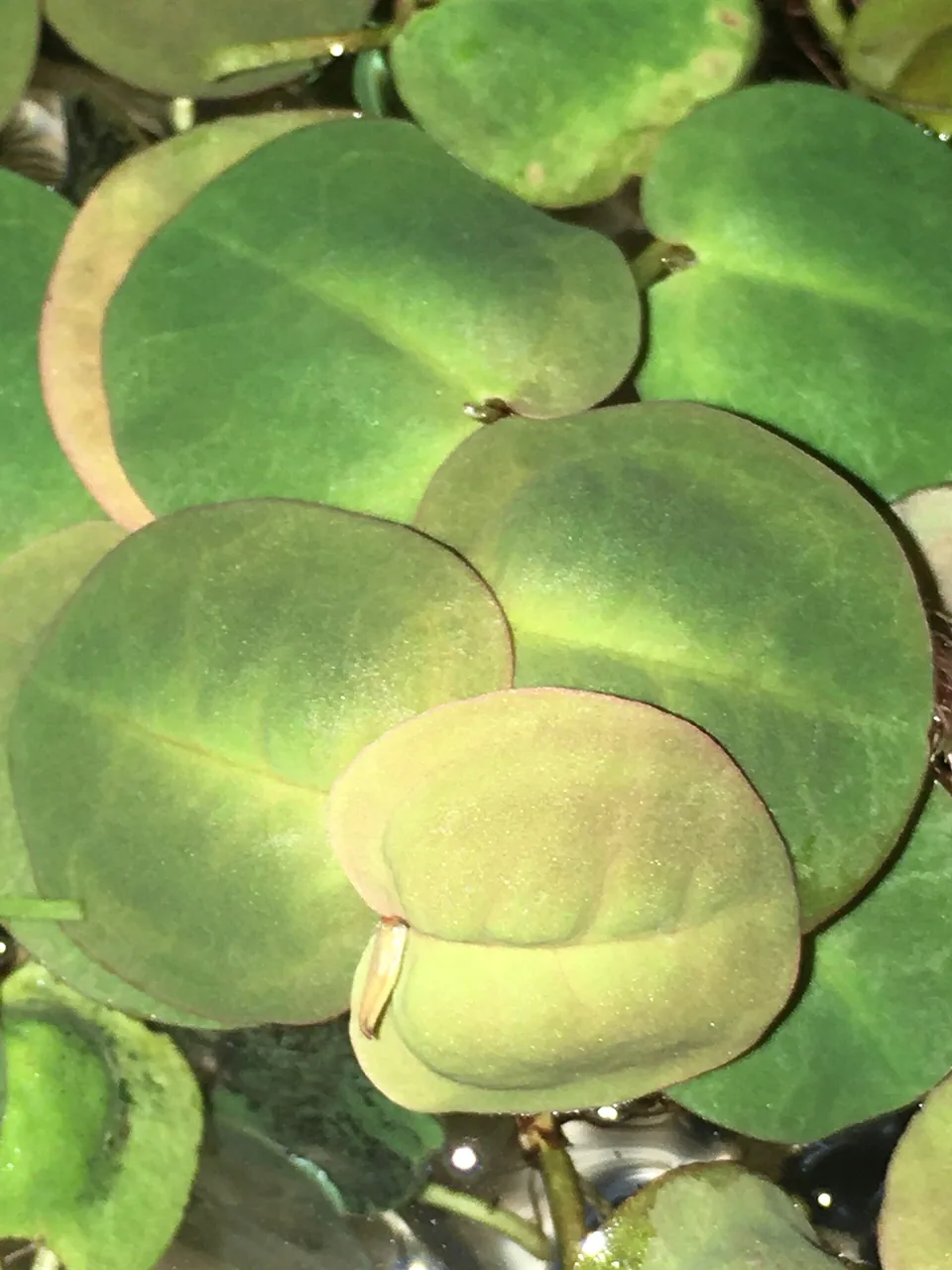
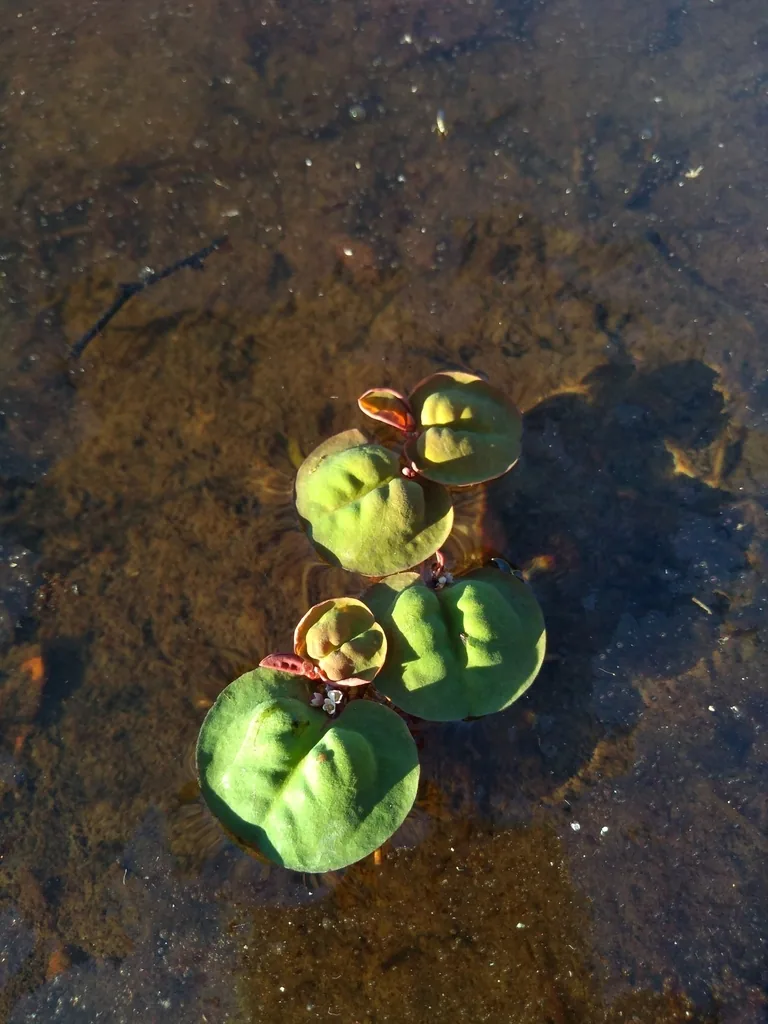
Red root floater is a free-floating perennial aquatic plant native to South America. [1] In Florida it is nonnative and can form a closed canopy over water that reduces biodiversity. [1] It is a popular aquarium plant, and the floating population divides easily into parts because the stems are fragile. [1][7] Leaf colour depends on light intensity, with stronger light giving a deeper brown-red hue. [7]
This record is incomplete: the sources we read do not cover every field yet.
Not yet covered by our sources: Light, Hardiness, coldest zone, Hardiness, warmest zone
Phyllanthus fluitans care
How to water Phyllanthus fluitans
Requires low surface agitation and gentle water flow
What the sources say (1)
P. fluitans requires a low level of surface agitation and a gentle water flow.How much light Phyllanthus fluitans needs
Not stated in the sources we read.
How much cold Phyllanthus fluitans can take
Hardiness, coldest zone
Not stated in the sources we read.
Hardiness, warmest zone
Not stated in the sources we read.
How to propagate Phyllanthus fluitans
Fragmentation, cuttings, splitting, cutting off daughter plants; seed
How to grow Phyllanthus fluitans
The plant
Life cycle
perennial
What the sources say (1)
Family: Phyllanthaceae
Habit: Free floating perennial aquatic plant.Family
Phyllanthaceae
What the sources say (1)
Family: Phyllanthaceae
Habit: Free floating perennial aquatic plant.Remedies
Each remedy shows what official sources say about it; traditional remedies without an official source are marked as such. Harmful ones are listed so you know to avoid them.
Treating the plant
heat stress
partial shade and a higher lamp Not verified
Traditional remedy, not verified by an official source.
How: If melting is due to heat, give partial shade from the sun and, with aquarium lights, increase the distance between the light and the water surface.
potassium deficiency
potassium-rich plant fertilizer Not verified
Traditional remedy, not verified by an official source.
How: Holes in the leaves are often caused by potassium deficiency; add aquarium plant fertilizer with a high potassium content.
pests
quarantine new plants Not verified
Traditional remedy, not verified by an official source.
How: Quarantine plants before adding them to an aquarium: plants may carry pesticides, pests, parasites and snails.
Getting rid of it
overgrowth
removing excess floaters by hand Not verified
Traditional remedy, not verified by an official source.
How: Periodically remove some floaters from the tank as they spread, to keep the surface from being blocked.
Indicative values
Values from a secondary source, not checked word for word like the rest of this page. Use them as a starting point.
- Mature height
- 0-7.6 cm (0-0.25 ft)Indicative value, adapt it to your climate · Secondary source
- Light
- Full sunIndicative value, adapt it to your climate · Secondary source
- Hours of sun
- 6-8 hoursIndicative value, adapt it to your climate · Secondary source
- Watering
- AverageIndicative value, adapt it to your climate · Secondary source
- Drought tolerant
- yesIndicative value, adapt it to your climate · Secondary source
- Soil pH
- 6-7.5Indicative value, adapt it to your climate · Secondary source
- USDA hardiness zones
- 9-11 [winter low −6.7 to 10 °C (20 to 50 °F)]Indicative value, adapt it to your climate · Secondary source
- Growth rate
- LowIndicative value, adapt it to your climate · Secondary source
- Pruning
- FebruaryIndicative value, adapt it to your climate · Secondary source
Similar plants
- Chamberbitter Phyllanthus urinaria
- Longstalked Phyllanthus Phyllanthus tenellus
- Tahitian gooseberry tree Phyllanthus acidus
- Aaron's Beard Hypericum calycinum
- Abies grandis Abies grandis
- Abraham Trachystemon orientalis
- Abyssinian banana Ensete ventricosum
- Acacia longifolia Acacia longifolia
Sources
Every value above is quoted from these documents. Links lead to the original publisher.
- | Center for Aquatic and Invasive Plants | University of Florida, IFAS · plant-directory.ifas.ufl.edu, consulted
- Phyllanthus fluitans / [Species detail] / Plant Atlas · florida.plantatlas.usf.edu, consulted
- Phyllanthus fluitans is a freshwater species native to South America and is the sole free-floating aquatic species of · plant-directory.ifas.ufl.edu, consulted
- Phyllanthus fluitans - Florida Natural Areas Inventory · fnai.org, consulted
- United States · aphis.usda.gov, consulted
- Phyllanthus fluitans (Phyllanthaceae): a new record of an aquatic plant for the flora of Panama · redalyc.org, consulted
- Phyllanthus fluitans - Red root floater - Flowgrow Aquatic Plant Database · flowgrow.de, consulted
- Phyllanthus fluitans Benth. ex Müll.Arg. - BAP · biotopeaquariumproject.com, consulted
Written by Emilio Marruso · last checked