
How to Grow and Care for Terebinth
Pistacia terebinthus
Written by Emilio Marruso · last checked
Toxic to: People · Why
At a glance
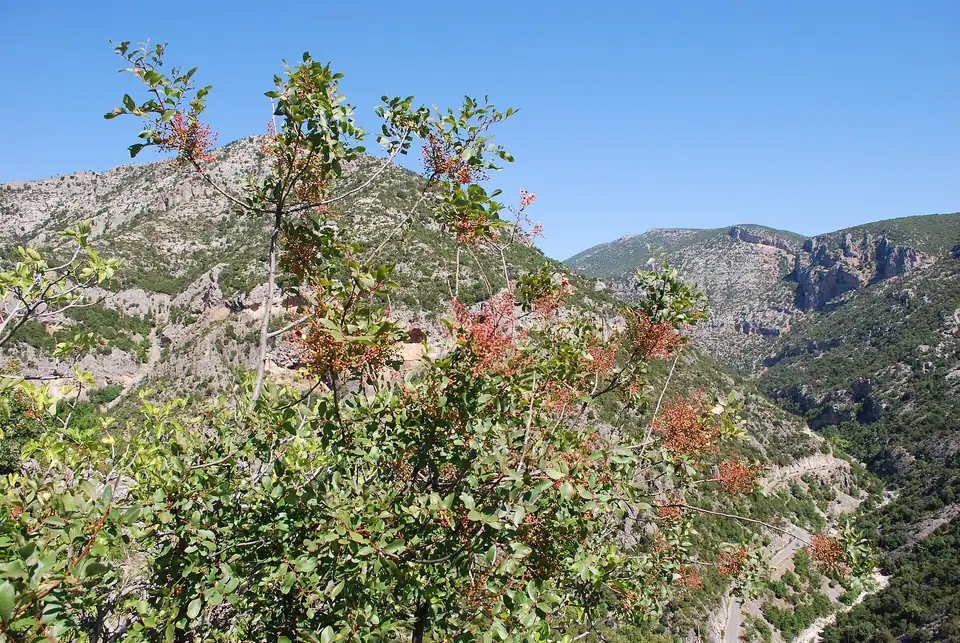
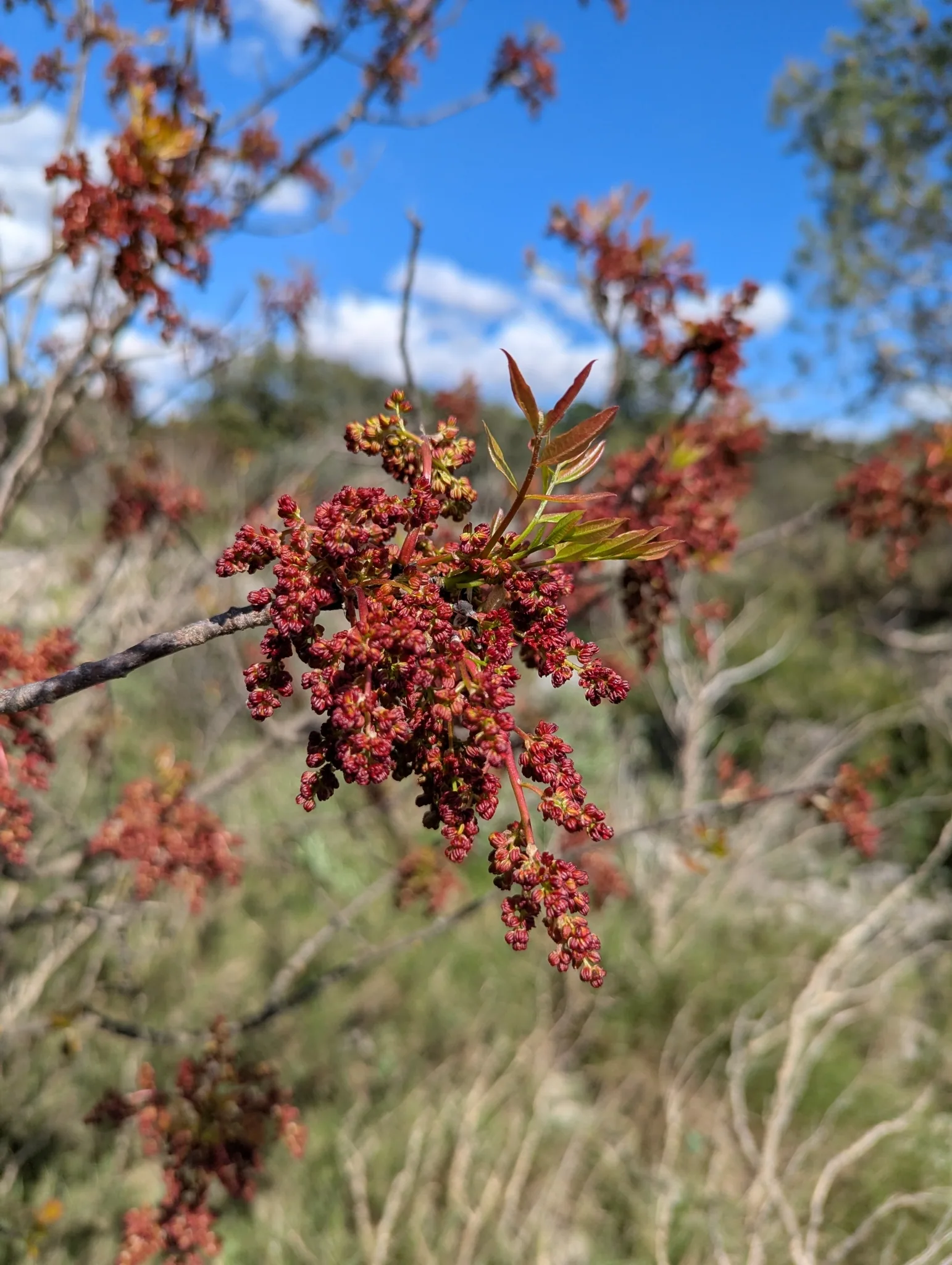
The terebinth is a tough, sun-loving plant that needs little water once established and handles drought well. Its immature red fruits, stems and all, can be preserved in vinegar and salt, and its young leaves can be cooked as a vegetable. From midsummer to mid-fall, small cuts in the plant even give you resin to collect.
- Sun
Full sun
- Water
Little to moderate water once established; it handles drought
What the sources say (2)
- Cold
Survives winters down to 20 °F (−6.7 °C)
Hardy in average winters · USDA 9 · RHS H4 · Z9
What the sources say (2)
Hardiness, coldest zone: 9 [winter low −6.7 to −1.1 °C (20 to 30 °F)]
USDA: 9-10 Frost Tolerance: Hardy to 20° F (-7° C)
— Terebinth (Pistacia terebinthus) [6] Hardiness, warmest zone: 10 [winter low −1.1 to 4.4 °C (30 to 40 °F)]
USDA: 9-10 Frost Tolerance: Hardy to 20° F (-7° C)
— Terebinth (Pistacia terebinthus) [6] - Soil
Needs soil that drains well
What the sources say (1)
Watering notes: Needs good drainage
Watering Needs: Moderate to little water when established, needs good drainage
— Terebinth (Pistacia terebinthus) [6] - Pruning
Prune in spring
What the sources say (1)
Pruning: Spring
Any pruning that needs to be done is best carried out in the spring
— Pistacia terebinthus - Useful Temperate Plants [4] - Harvest
Pickle the unripe red fruits in vinegar and salt; cook young leaves; tap resin midsummer to mid-fall
What the sources say (1)
Harvest: Resin: incisions made from mid summer to mid autumn
The incisions are made from mid summer to mid autumn
— Pistacia terebinthus - Useful Temperate Plants [4] - Propagation
From seed soaked first in boiling water, or by layering
What the sources say (1)
Propagation: Seed (pretreated in boiling water); layering
Propagation: Seeds (pretreated in boiling water), layering
— Terebinth (Pistacia terebinthus) [6] - Safety
No known hazards to people
Overview
Terebinth is a deciduous shrub or tree that prefers a hot dry position in full sun and tolerates drought once established. [4] It is propagated by seed or layering, and most forms are dioecious so both sexes are needed for seed. [6][4] The seed, immature fruits and young leaves are eaten. [4]
This record is incomplete: the sources we read do not cover every field yet.
Not yet covered by our sources: Planting, Spacing
Terebinth care
How to water Terebinth
Watering
Moderate to little water when established; drought tolerant
Watering notes
Needs good drainage
What the sources say (1)
Watering Needs: Moderate to little water when established, needs good drainageHow much light Terebinth needs
How much cold Terebinth can take
Hardiness, coldest zone
9 [winter low −6.7 to −1.1 °C (20 to 30 °F)]
What the sources say (1)
USDA: 9-10
Frost Tolerance: Hardy to 20° F (-7° C)Hardiness, warmest zone
10 [winter low −1.1 to 4.4 °C (30 to 40 °F)]
What the sources say (1)
USDA: 9-10
Frost Tolerance: Hardy to 20° F (-7° C)Where to grow Terebinth
Not stated in the sources we read.
How to propagate Terebinth
Seed (pretreated in boiling water); layering
What the sources say (1)
Propagation: Seeds (pretreated in boiling water), layeringHow to grow Terebinth
The plant
Family
Anacardiaceae
What the sources say (1)
Cyprus turpentine is part of the Pistacia genus within the Anacardiaceae family (Guney et al ., 2021).Remedies
The sources we checked give no remedies for this plant.
Is Terebinth poisonous?
Reported by the source, quoted verbatim. This is not medical or veterinary advice: if a person or an animal may have eaten this plant, contact a poison control centre or a veterinarian.
Known Hazards None known
[4]
Calendar
Planting
Not stated in the sources we read.
Harvest
Resin: incisions made from mid summer to mid autumn
What the sources say (1)
The incisions are made from mid summer to mid autumnPruning
Spring
What the sources say (1)
Any pruning that needs to be done is best carried out in the springMonths as given by the sources, which are mostly from the United States (northern hemisphere). In the southern hemisphere they shift by about six months.
Edibility
Reported by the source, quoted verbatim. Do not eat a plant on the basis of this page alone: identification mistakes can be dangerous.
Similar plants
- Chinese Pistache Pistacia chinensis
- Pistachio Pistacia vera
- Lentisk Pistacia lentiscus
- American pepper Schinus molle
- American Smoketree Cotinus obovatus
- Chinese Sumac Rhus chinensis
- Michaux's Sumac Rhus michauxii
- Poison oak Toxicodendron diversilobum
Sources
Every value above is quoted from these documents. Links lead to the original publisher.
- Pistacia terebinthus | Euro+Med-Plantbase · europlusmed.org, consulted
- Pistacia terebinthus - EUFORGEN European forest genetic resources programme · euforgen.org, consulted
- Pistacia terebinthus L. - Herbari Virtual del Mediterrani Occidental · herbarivirtual.uib.cat, consulted
- Pistacia terebinthus - Useful Temperate Plants · temperate.theferns.info, consulted
- Terebinto - EcuRed · ecured.cu, consulted
- Terebinth (Pistacia terebinthus) · desert-tropicals.com, consulted
Written by Emilio Marruso · last checked