How to Grow and Care for Lentisk
Pistacia lentiscus
Written by Emilio Marruso · last checked
At a glance
Lentisk is an aromatic plant that loves sunny spots and has edible and medicinal uses. Sow two or three seeds per cell in late winter, or root cuttings taken in winter or summer. Water it when the weather turns very dry, since it does not tolerate too much drought, and collect its fruit from October to December.
- Sun
Likes sunny spots
What the sources say (1)
Light: Sunny sites
El lentisco crece en matorrales soleados, junto a especies como el palmito, la coscoja, el aladierno o el espino negro
— 3 [2] - Water
Does not tolerate very dry conditions: water it during long dry spells
What the sources say (1)
Watering notes: Does not tolerate excessive aridity
Tampoco tolera una aridez excesiva, pero es indiferente al tipo de sustrato.
— 3 [2] - Harvest
Collect the fruit from October to December; the plant is aromatic and has edible uses
What the sources say (1)
Harvest: October-December (fruit collection)
La recogida de los frutos del lentisco se realiza entre octubre y diciembre. Se lleva a cabo manualmente
— 3 [2] - Pests
Young nursery plants can get fungal diseases on the stem and roots
What the sources say (1)
Diseases: Botryosphaeria and Pestalotiopsis (stem), Fusarium (root), isolated from nursery plants
En plantas de vivero se ha aislado Botryosphaeria y Pestalotiopsis en el tallo y Fusarium en la raíz (Navarro-Cerrillo et al., 2001).
— 3 [2] - Propagation
From seed, or from cuttings with rooting hormone: woody ones in winter, semi-woody in summer
What the sources say (2)
Propagation: Seed (mass production); cuttings with hormones, hardwood collected in winter or semi-hardwood in summer; in vitro
La producción masiva de lentisco se efectúa mediante siembra, ya que no enraíza fácilmente a partir de partes de plantas.
— 3 [2] Se ha efectuado estaquillado con material lignificado, recolectado en invierno (Isfendiyaroglu, 2000; Viola et al., 2004), y con material semileñoso, obtenido en verano
— 3 [2] - Sowing
Sow in late winter, two or three seeds per cell
What the sources say (1)
Sowing: Late winter (nursery sowing, two or three seeds per cell)
Las siembras se realizan a finales de invierno, colocando dos o tres semillas por alvéolo para garantizar la plena ocupación de las bandejas.
— 3 [2]
Overview
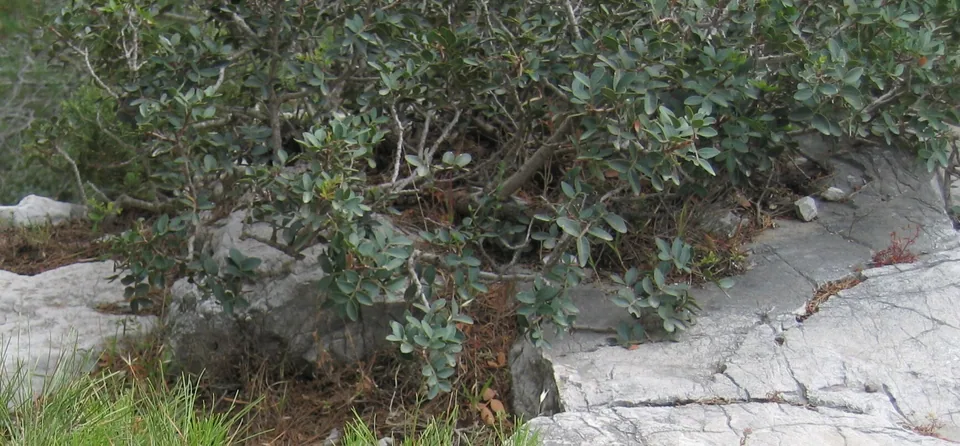
Mastic tree (Pistacia lentiscus) is a dioecious evergreen scented shrub or low tree up to 4-5 m [13.1–16.4 ft] with equally pinnate leaves. [1] It grows in sunny scrub and open forest and does not tolerate excessive aridity. [2]
This record is incomplete: the sources we read do not cover every field yet.
Not yet covered by our sources: Watering
Lentisk care
Measurements in square brackets are our conversion into the other unit system; the quoted text is unchanged.
How to water Lentisk
Watering
Not stated in the sources we read.
Watering notes
Does not tolerate excessive aridity
What the sources say (1)
Tampoco tolera una aridez excesiva, pero es indiferente al tipo de sustrato.How much light Lentisk needs
Sunny sites
What the sources say (1)
El lentisco crece en matorrales soleados, junto a especies como el palmito, la coscoja, el aladierno o el espino negroHow to propagate Lentisk
Seed (mass production); cuttings with hormones, hardwood collected in winter or semi-hardwood in summer; in vitro
What the sources say (2)
La producción masiva de lentisco se efectúa mediante siembra, ya que no enraíza fácilmente a partir de partes de plantas.Se ha efectuado estaquillado con material lignificado, recolectado en invierno (Isfendiyaroglu, 2000; Viola et al., 2004), y con material semileñoso, obtenido en veranoHow to grow Lentisk
The plant
Pests and diseases
Diseases
Botryosphaeria and Pestalotiopsis (stem), Fusarium (root), isolated from nursery plants
What the sources say (1)
En plantas de vivero se ha aislado Botryosphaeria y Pestalotiopsis en el tallo y Fusarium en la raíz (Navarro-Cerrillo et al., 2001).Fertilizing
How often
The sources give different values depending on region, zone or growing conditions.
What each source says
nursery seedlings in containers: Weekly macro- and micronutrient applications when fertigating
What the sources say (1)
nursery seedlings in containers: Si se emplea fertirriego se recomiendan aplicaciones semanales de macro y micronutrientes similares a las generales propuestas por Landis et al.Mineral fertilizers
The sources give different values depending on region, zone or growing conditions.
What each source says
nursery seedlings in containers: Controlled slow-release 17-9-8 fertilizer, 2–3 g per litre of substrate
What the sources say (1)
nursery seedlings in containers: Es frecuente emplear fertilizantes de liberación controlada lenta (FLCL) del tipo 17-9-8, en dosis de 2-3 g l–1 de sustrato.Avoid
The sources give different values depending on region, zone or growing conditions.
What each source says
nursery seedlings in containers: Substrate pH above 7.5 when slow-release fertilizer supplies phosphorus: phosphorus uptake starts to be blocked
What the sources say (1)
nursery seedlings in containers: si se emplean fertilizantes de liberación controlada lenta como fuente de fósforo, ya que la asimilación de este elemento, tan indispensable para el desarrollo de las plantas, comienza a bloquearse con un pH superior a 7,5.Remedies
The sources we checked give no remedies for this plant.
Calendar
Late winter (nursery sowing, two or three seeds per cell)
What the sources say (1)
Las siembras se realizan a finales de invierno, colocando dos o tres semillas por alvéolo para garantizar la plena ocupación de las bandejas.October-December (fruit collection)
What the sources say (1)
La recogida de los frutos del lentisco se realiza entre octubre y diciembre. Se lleva a cabo manualmenteMonths as given by the sources, which are mostly from the United States (northern hemisphere). In the southern hemisphere they shift by about six months.
Edibility
Reported by the source, quoted verbatim. Do not eat a plant on the basis of this page alone: identification mistakes can be dangerous.
Uses and properties: Aromatic. Edible or foodstuffs. Medicinal.
[3]
Similar plants
- Chinese Pistache Pistacia chinensis
- Pistachio Pistacia vera
- Terebinth Pistacia terebinthus
- Agrimony Agrimonia eupatoria
- Allium senescens Allium senescens
- Alpine Wormwood Artemisia umbelliformis
- Angelica Angelica archangelica
- Anise burnet saxifrage Pimpinella anisum
Sources
Every value above is quoted from these documents. Links lead to the original publisher.
- FILMED · uv.es, consulted
- 3 · uv.es, consulted
- Pistacia lentiscus L. - Herbari Virtual del Mediterrani Occidental · herbarivirtual.uib.cat, consulted
Written by Emilio Marruso · last checked