
How to Grow and Care for Caucasian Wingnut
Pterocarya fraxinifolia
Written by Emilio Marruso · last checked
At a glance
The Caucasian wingnut is a tree you can raise yourself in many ways: from seed, from cuttings, by layering or by dividing its suckers. Give it full sun, sow the seed in a cold frame as soon as it is ripe, and plant the seedlings out in late spring or early summer of the following year. Even its small seeds are edible.
- Sun
Full sun
What the sources say (1)
Light: Full sun
Prefers a sunny position in a rich strong loam with abundant moisture at the roots
— Caucasian Wingnut (Pterocarya fraxinifolia) — Practical Plants [3] - Cold
Survives winters down to 0 °F (−17.8 °C)
Hardy in very cold winters · USDA 7 · RHS H6 · Z7
What the sources say (1)
Hardiness, coldest zone: 7 [winter low −17.8 to −12.2 °C (0 to 10 °F)]
Hardiness Zone 7+
— Caucasian Wingnut (Pterocarya fraxinifolia) — Practical Plants [3] - Planting
Plant seedlings out in late spring or early summer, the year after sowing
What the sources say (1)
Planting: Late spring or early summer of the year after sowing (seedlings)
Plant them out in late spring or early summer of the following year
— Caucasian Wingnut (Pterocarya fraxinifolia) — Practical Plants [3] - Harvest
The seeds are edible, but very small
- Propagation
From seed, half-ripe cuttings, layering or dividing the suckers
What the sources say (3)
Propagation: Seed; cuttings of half-ripe wood; layering; division of suckers
Seed - best sown as soon as it is ripe in a cold frame
— Caucasian Wingnut (Pterocarya fraxinifolia) — Practical Plants [3] Cuttings of half-ripe wood, July/August in a frame
— Caucasian Wingnut (Pterocarya fraxinifolia) — Practical Plants [3] Division of suckers in the dormant season
— Caucasian Wingnut (Pterocarya fraxinifolia) — Practical Plants [3] - Sowing
Sow fresh seed in a cold frame; it can't be dried and needs 8 weeks of cold to sprout
What the sources say (2)
Sowing: As soon as the seed is ripe, in a cold frame
Seed - best sown as soon as it is ripe in a cold frame
— Caucasian Wingnut (Pterocarya fraxinifolia) — Practical Plants [3] Saving seeds: Seeds cannot be dried and stored long term but can be stored at sub-zero temperatures for 1 year without losing viability; germination after 8 weeks of cold stratification.
Seeds of Caucasian wingnut cannot be dried and stored long term but can be stored at sub-zero temperatures for 1 year without losing viability and germinated after 8 weeks of cold stratification
— Pterocarya fraxinifolia - EUFORGEN European forest genetic resources programme [1]
Overview
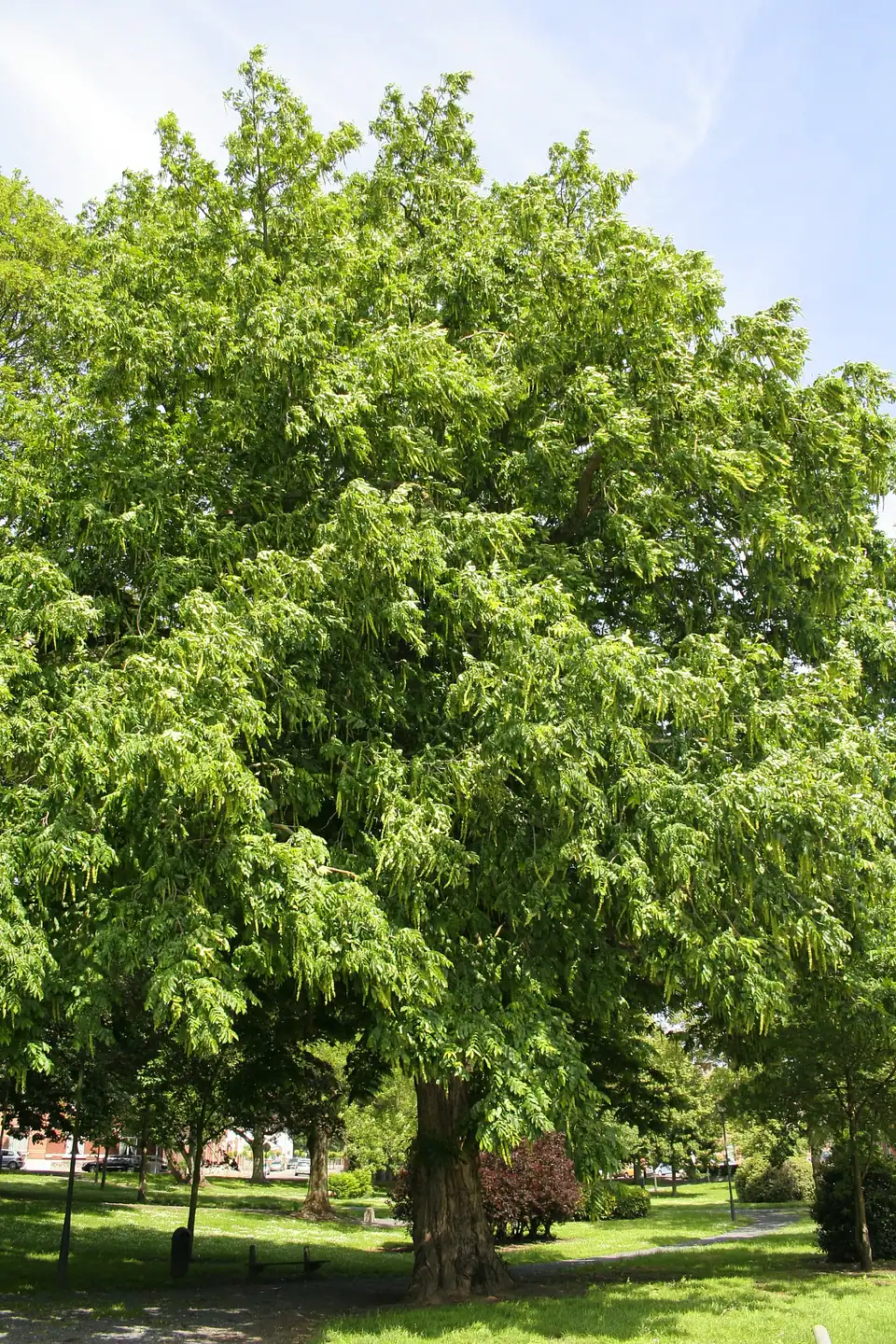
Caucasian wingnut is a fast-growing deciduous riparian tree used as an ornamental in parks and urban gardens of Europe. [1] It prefers a sunny position with abundant moisture at the roots, does not tolerate shade and produces suckers profusely. [3][1]
This record is incomplete: the sources we read do not cover every field yet.
Not yet covered by our sources: Watering, Hardiness, warmest zone, Pruning
Caucasian Wingnut care
How to water Caucasian Wingnut
Watering
Not stated in the sources we read.
Watering notes
The sources give different values depending on region, zone or growing conditions.
What each source says
According to Practical Plants: Drought intolerant
According to EUFORGEN: Drought tolerant
What the sources say (2)
According to Practical Plants: Drought
intolerantAccording to EUFORGEN: The tree is drought tolerant and can grow on compacted soilsHow much light Caucasian Wingnut needs
Full sun
What the sources say (1)
Prefers a sunny position in a rich strong loam with abundant moisture at the rootsHow much cold Caucasian Wingnut can take
Hardiness, coldest zone
7 [winter low −17.8 to −12.2 °C (0 to 10 °F)]
What the sources say (1)
Hardiness
Zone 7+Hardiness, warmest zone
Not stated in the sources we read.
How to propagate Caucasian Wingnut
Seed; cuttings of half-ripe wood; layering; division of suckers
What the sources say (3)
Seed - best sown as soon as it is ripe in a cold frameCuttings of half-ripe wood, July/August in a frameDivision of suckers in the dormant seasonHow to grow Caucasian Wingnut
Harvest and storage
Saving seeds
Seeds cannot be dried and stored long term but can be stored at sub-zero temperatures for 1 year without losing viability; germination after 8 weeks of cold stratification.
What the sources say (1)
Seeds of Caucasian wingnut cannot be dried and stored long term but can be stored at sub-zero temperatures for 1 year without losing viability and germinated after 8 weeks of cold stratificationRemedies
The sources we checked give no remedies for this plant.
Calendar
Sowing
As soon as the seed is ripe, in a cold frame
What the sources say (1)
Seed - best sown as soon as it is ripe in a cold framePlanting
Late spring or early summer of the year after sowing (seedlings)
What the sources say (1)
Plant them out in late spring or early summer of the following yearPruning
Not stated in the sources we read.
Months as given by the sources, which are mostly from the United States (northern hemisphere). In the southern hemisphere they shift by about six months.
Edibility
Reported by the source, quoted verbatim. Do not eat a plant on the basis of this page alone: identification mistakes can be dangerous.
Seed [6] [2] . No more details are given but the seed is very small
[3]
Indicative values
Values from a secondary source, not checked word for word like the rest of this page. Use them as a starting point.
- Life cycle
- PerennialIndicative value, adapt it to your climate · Secondary source
- Mature height
- 914.4-1828.8 cm (30-60 ft)Indicative value, adapt it to your climate · Secondary source
- Watering
- AverageIndicative value, adapt it to your climate · Secondary source
- Drought tolerant
- yesIndicative value, adapt it to your climate · Secondary source
- Soil
- Well-drainedIndicative value, adapt it to your climate · Secondary source
- Soil pH
- 6-7.5Indicative value, adapt it to your climate · Secondary source
- Care level
- MediumIndicative value, adapt it to your climate · Secondary source
- Growth rate
- ModerateIndicative value, adapt it to your climate · Secondary source
- Pruning
- February, March, AprilIndicative value, adapt it to your climate · Secondary source
- Pests
- Pest resistant, Disease resistant, Drought resistantIndicative value, adapt it to your climate · Secondary source
Similar plants
- Chinese Wingnut Pterocarya stenoptera
- Tonkin Wingnut Pterocarya tonkinensis
- Abies grandis Abies grandis
- Abraham Trachystemon orientalis
- Abyssinian banana Ensete ventricosum
- Acacia longifolia Acacia longifolia
- Acanthus hungaricus Acanthus hungaricus
- Aconite Aconitum napellus
Sources
Every value above is quoted from these documents. Links lead to the original publisher.
- Pterocarya fraxinifolia - EUFORGEN European forest genetic resources programme · euforgen.org, consulted
- Pterocarya fraxinifolia - Trees and Shrubs Online · treesandshrubsonline.org, consulted
- Caucasian Wingnut (Pterocarya fraxinifolia) — Practical Plants · practicalplants.org, consulted
- How to Grow Pterocarya - Wingnut · harvesttotable.com, consulted
- Pterocarya fraxinifolia | University College Cork · ucc.ie, consulted
- Juglans fraxinifolia Poir. | Plants of the World Online | Kew Science · powo.science.kew.org, consulted
- Pterocarya fraxinifolia – Friends of Belfast Botanic Gardens · fobbg.co.uk, consulted
Written by Emilio Marruso · last checked