

How to Grow and Care for Kudzu
Pueraria montana
Written by Emilio Marruso · last checked
At a glance
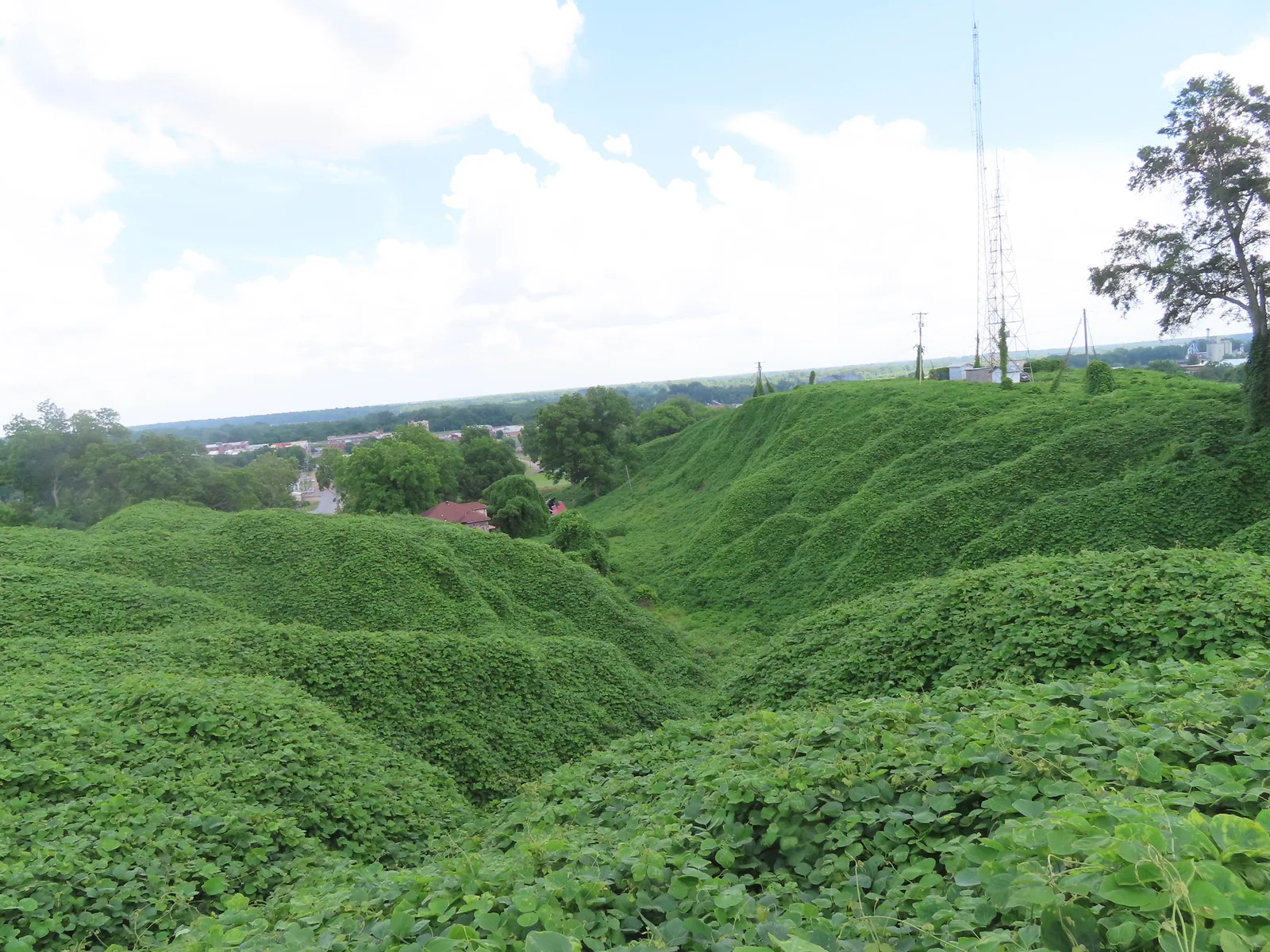
Kudzu is a tough perennial vine that loves full sun and shrugs off drought once established. Its young shoots taste like a cross between a bean and a pea, and its roots are a staple food in Japan. But its stems can reach 98 feet and smother other plants, so the advice is clear: do not plant it, and control it where it grows.
- Sun
Full sun
What the sources say (2)
Light: Full sun
Kudzu prefers moist, well-drained loamy soils in the full sun. It aggressively colonizes by growing along the ground and up
— Pueraria montana var. lobata (Japanese Arrowroot, Kudzu, Kudzu Bean, Kudzu Hemp, Kudzu Vine) | North Carolina Extension Gardener Plant Toolbox [6] Succeeds in most well-drained soils in a sunny position[ 200 Title
— Pueraria montana - Useful Temperate Plants [5] - Water
Very drought resistant once established; never let water sit around the roots
What the sources say (2)
Watering: Very drought resistant once established
A deep-rooted pant, once established it is very drought resistant[ 171 Title
— Pueraria montana - Useful Temperate Plants [5] Watering notes: Cannot stand waterlogging on any soil
Plants cannot stand waterlogging on any soil[ 269 Title
— Pueraria montana - Useful Temperate Plants [5] - Cold
Plant out only after the last expected frosts
What the sources say (1)
Planting: After the last expected frosts
Prick out the seedlings into individual pots when they are large enough to handle and plant them out after the last expected frosts[ 200 Title
— Pueraria montana - Useful Temperate Plants [5] - Soil
Acidic to neutral soil, pH 5.0–7.1
- Harvest
Young shoots taste like bean and pea; dig roots 1 year after planting cuttings
What the sources say (1)
Harvest: Tubers about 1 year after planting, if grown from cuttings
The tubers can be harvested about 1 year after planting, if grown from cuttings. If left longer in the soil
— Pueraria montana - Useful Temperate Plants [5] - Pests
Kudzu bugs
What the sources say (1)
Pests: kudzu bugs
Kudzu bugs do eat kudzu. And other legumes like soybeans, other bean species and wisteria.
— What Can You Do About Kudzu? - Swain County Center | N.C. Cooperative Extension [2] - Watch out
Do not plant: the vines cover and kill other plants; cut them at ground level and destroy the roots
- Size
Stems up to 98 ft long
What the sources say (1)
Mature height: up to 3000 cm (30 m, stem length)
Plant Height: Grows up to 30m in stem length (2).
— Pueraria montana var. lobata | CLIMBERS [8] - Propagation
Seeds and cuttings; spreads on its own by underground stems and vines that root
What the sources say (2)
Propagation: Seed; cuttings; spreads by rhizomes and by vines rooting at the nodes
Pre-soak the seed for 12 hours in warm water and sow in a warm greenhouse in early spring. Germination should
— Pueraria montana - Useful Temperate Plants [5] primarily vegetative by rhizomes and by vines that root at the nodes where the vines come in contact with soil and form
— No. 08 March 2010 [7] - Sowing
Sow in early spring in a warm greenhouse
What the sources say (1)
Sowing: Early spring, in a warm greenhouse
Pre-soak the seed for 12 hours in warm water and sow in a warm greenhouse in early spring. Germination should
— Pueraria montana - Useful Temperate Plants [5]
Overview
Pueraria montana (kudzu) is a deciduous, woody, perennial climbing vine native to eastern Asia. [6][4] It prefers full sun and well-drained loamy soils, and once established it is very drought resistant. [6][5] In the United States it is a noxious invasive weed that smothers other plants, and it is not recommended for any landscape purpose. [6][1]
This record is incomplete: the sources we read do not cover every field yet.
Not yet covered by our sources: Hardiness, coldest zone, Hardiness, warmest zone
Kudzu care
How to water Kudzu
Watering
Very drought resistant once established
What the sources say (1)
A deep-rooted pant, once established it is very drought resistant[ 171 TitleWatering notes
Cannot stand waterlogging on any soil
What the sources say (1)
Plants cannot stand waterlogging on any soil[ 269 TitleHow much light Kudzu needs
Full sun
What the sources say (2)
Kudzu prefers moist, well-drained loamy soils in the full sun. It aggressively colonizes by growing along the ground and upSucceeds in most well-drained soils in a sunny position[ 200 TitleHow much cold Kudzu can take
Hardiness, coldest zone
Not stated in the sources we read.
Hardiness, warmest zone
Not stated in the sources we read.
Best soil for Kudzu
Soil pH, minimum
5.0
What the sources say (1)
Prefers a pH in the range 5.5 - 6.5, tolerating 5 - 7.1[ 269 TitleSoil pH, maximum
7.1
What the sources say (1)
Prefers a pH in the range 5.5 - 6.5, tolerating 5 - 7.1[ 269 TitleHow to propagate Kudzu
Seed; cuttings; spreads by rhizomes and by vines rooting at the nodes
What the sources say (2)
Pre-soak the seed for 12 hours in warm water and sow in a warm greenhouse in early spring. Germination shouldprimarily vegetative by rhizomes and by vines that root at the nodes where the vines come in contact with soil and formHow to grow Kudzu
The plant
Life cycle
perennial
What the sources say (1)
Species Characteristics Family: Fabaceae Habit: climbing, semi-woody, perennial vine that can reach up to 100 feet in length.Family
Fabaceae
What the sources say (1)
Species Characteristics Family: Fabaceae Habit: climbing, semi-woody, perennial vine that can reach up to 100 feet in length.Mature height
up to 3000 cm (30 m, stem length)
What the sources say (1)
Plant Height: Grows up to 30m in stem length (2).Pests and diseases
Pests
kudzu bugs
What the sources say (1)
Kudzu bugs do eat kudzu. And other legumes like soybeans, other bean species and wisteria.Kudzu pests and problems
Smothering growth and difficult control
Symptom: Vines grow over and kill other plants by blocking out sunlight and girdling stems
What to do: Do not plant; cut vines just above ground level and destroy cut material, grazing and mowing weaken the stand, and the root crowns must be destroyed
What the sources say (2)
Kudzu will grow over anything in its path (other plants, buildings, road signs) and eventually kill other plants it covers because it blocks out sunlight. It
— | Center for Aquatic and Invasive Plants | University of Florida, IFAS [1] The massive root system and crowns must be destroyed for long term control of kudzu. Cut vines just above ground
— | Center for Aquatic and Invasive Plants | University of Florida, IFAS [1]
Remedies
Each remedy shows what official sources say about it; traditional remedies without an official source are marked as such. Harmful ones are listed so you know to avoid them.
Getting rid of it
smothering growth
grazing goats Works
How: Grazing goats eat the vine down, especially where a sprayer or mower cannot reach; after a few years of being eaten to the ground the kudzu cannot recover.
Lately another option used with success has been goats. Seriously, grazing goats are effective at eating the vine down
— What Can You Do About Kudzu? - Swain County Center | N.C. Cooperative Extension [2] What the evidence says Lately another option used with success has been goats. Seriously, grazing goats are effective at eating the vine down
— What Can You Do About Kudzu? - Swain County Center | N.C. Cooperative Extension [2] digging out the root crown Partly works
How: Follow the vine to the ground, cut the vine above the crown and dig around it to remove the crown from the taproots; the remaining taproots need not be dug up.
The key is to remove the crown, not the entire root! Follow the vine to the ground and dig there.
— conservingcarolina.org [9] What the evidence says Pre-burning, cutting, hand digging and disking are only measures to weaken the roots. They are ineffective alone, but helpful when used in conjunction with systemic herbicides.
— mdc.mo.gov [10] repeated mowing Partly works
How: Mow persistently; it is otherwise only a short term solution.
Repeated mowing can also kill kudzu eventually, though one needs to be persistent with this or it is just a short term solution.
— conservingcarolina.org [9] What the evidence says Close mowing every month for two growing seasons or repeated cultivation may be effective.
— | Center for Aquatic and Invasive Plants | University of Florida, IFAS [1] mowing then covering with plastic sheeting Partly works
How: Mow and then cover for two years with plastic sheeting firmly fastened down.
Mow and then cover for two years with plastic sheeting firmly fastened down to gain partial control.
— nps.gov [11] What the evidence says Mow and then cover for two years with plastic sheeting firmly fastened down to gain partial control.
— nps.gov [11]
vines climbing trees
cutting vines at the base Not verified
Traditional remedy, not verified by an official source.
How: Cut the climbing vine at chest height and as close to the ground as possible; the vine above the cut dries up and falls off.
Calendar
Sowing
Early spring, in a warm greenhouse
What the sources say (1)
Pre-soak the seed for 12 hours in warm water and sow in a warm greenhouse in early spring. Germination shouldPlanting
After the last expected frosts
What the sources say (1)
Prick out the seedlings into individual pots when they are large enough to handle and plant them out after the last expected frosts[ 200 TitleHarvest
Tubers about 1 year after planting, if grown from cuttings
What the sources say (1)
The tubers can be harvested about 1 year after planting, if grown from cuttings. If left longer in the soilMonths as given by the sources, which are mostly from the United States (northern hemisphere). In the southern hemisphere they shift by about six months.
Edibility
Reported by the source, quoted verbatim. Do not eat a plant on the basis of this page alone: identification mistakes can be dangerous.
Similar plants
- American hogpeanut Amphicarpaea bracteata
- Bean Phaseolus vulgaris
- Bicolor Lespedeza Lespedeza bicolor
- Black Locust Robinia pseudoacacia
- Black Medick Medicago lupulina
- Bur Medick Medicago polymorpha
- Bush Clover Lespedeza thunbergii
- Candelabra Bush Senna alata
Sources
Every value above is quoted from these documents. Links lead to the original publisher.
- | Center for Aquatic and Invasive Plants | University of Florida, IFAS · plant-directory.ifas.ufl.edu, consulted
- What Can You Do About Kudzu? - Swain County Center | N.C. Cooperative Extension · swain.ces.ncsu.edu, consulted
- BLUE RIDGE PARTNERSHIP FOR REGIONAL INVASIVE SPECIES MANAGEMENT www.blueridgeprism.org · ccedutchess.org, consulted
- FACT SHEET: KUDZU · efotg.sc.egov.usda.gov, consulted
- Pueraria montana - Useful Temperate Plants · temperate.theferns.info, consulted
- Pueraria montana var. lobata (Japanese Arrowroot, Kudzu, Kudzu Bean, Kudzu Hemp, Kudzu Vine) | North Carolina Extension Gardener Plant Toolbox · plants.ces.ncsu.edu, consulted
- No. 08 March 2010 · ncagr.gov, consulted
- Pueraria montana var. lobata | CLIMBERS · climbers.lsa.umich.edu, consulted
- conservingcarolina.org · conservingcarolina.org
- mdc.mo.gov · mdc.mo.gov
- nps.gov · nps.gov
Written by Emilio Marruso · last checked