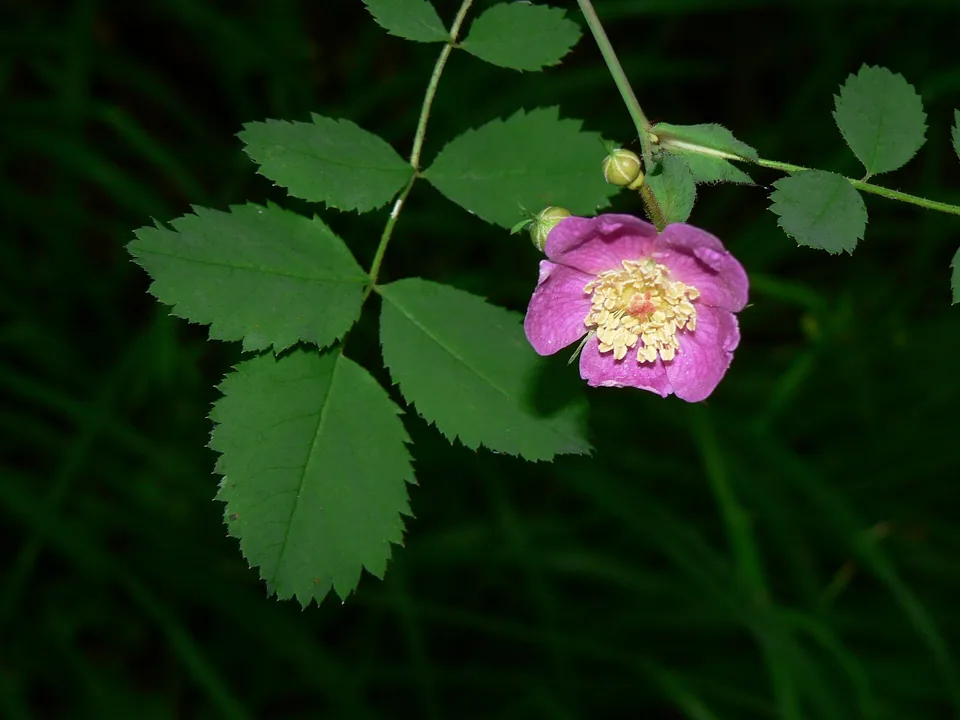
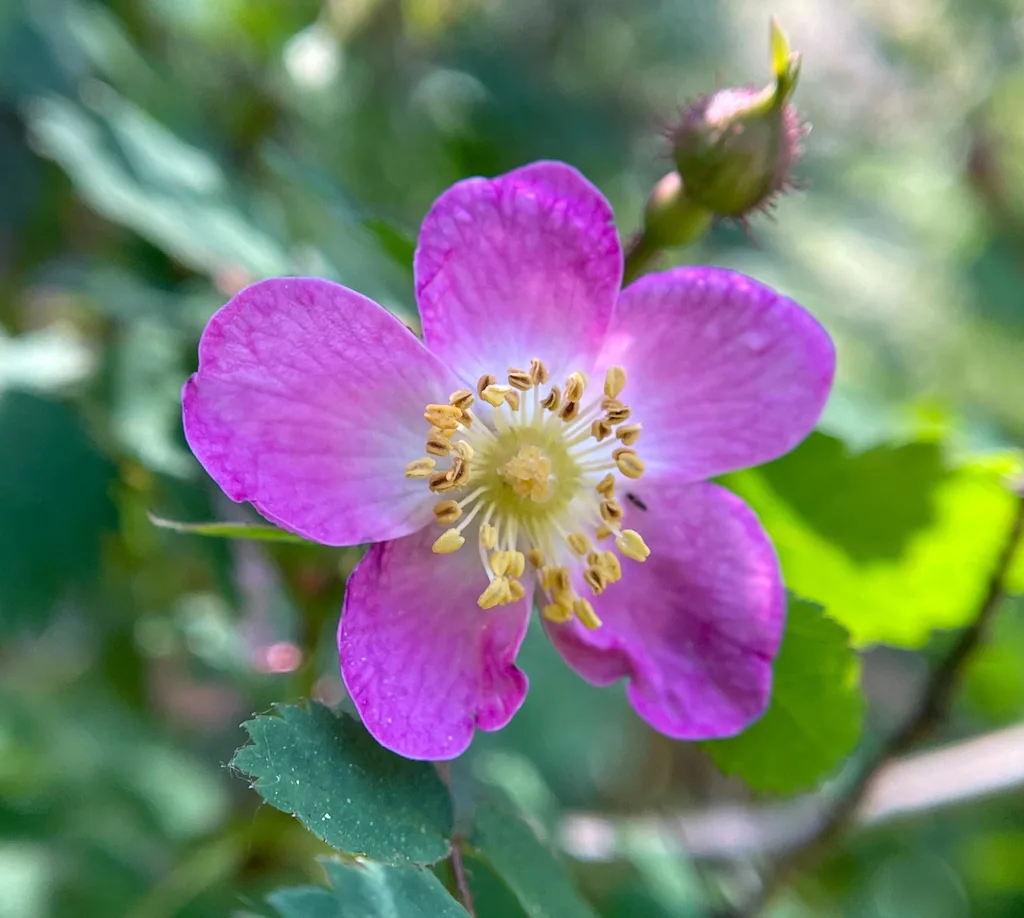

How to Grow and Care for Baldhip rose
Rosa gymnocarpa
Written by Emilio Marruso · last checked
At a glance
This rose asks for little: it likes soil that is moist but not wet, and it tolerates drought. It grows up to 6 ft tall, and you can start it from seed sown in autumn, from cuttings or from suckers. Its ripe hips can be eaten in small amounts, and the young leaves and twigs make a pleasant tea.
- Water
Keep the soil moist, not wet; it handles drought
What the sources say (2)
Watering: Moist, not wet; drought tolerant
prefers a moist, not wet, location with filtered sunlight, moderately tolerant of drought (2)
— Plant Data Sheet http://depts.washington.edu/propplnt/Plants/Rosa gymnocarpa.htm [5] This rose tolerates full sun to partial shade and is drought tolerant.
— Baldhip Rose • East Multnomah Soil and Water Conservation District [3] - Soil
Soil with pH 6–8
What the sources say (2)
Soil pH, minimum: 6
prefers an alkaline soil (pH 6-8) (2)
— Plant Data Sheet http://depts.washington.edu/propplnt/Plants/Rosa gymnocarpa.htm [5] Soil pH, maximum: 8
prefers an alkaline soil (pH 6-8) (2)
— Plant Data Sheet http://depts.washington.edu/propplnt/Plants/Rosa gymnocarpa.htm [5] - Harvest
Ripe hips can be eaten in small amounts; young leaves and twigs make a pleasant tea
- Size
Up to 6 ft tall
What the sources say (1)
Mature height: up to 183 cm (6 ft)
Bark: Green to red-brown. Form: Finely branched deciduous shrub to 6’ tall.
— Virginia Tech Dendrology Fact Sheet [4] - Propagation
From seed, cuttings, suckers, or by dividing the root crown
What the sources say (4)
Propagation: Seed, division of root crown and rhizomes, semi-hardwood cuttings, suckers
Sowing seeds in autumn yields the best results; seeds may take two years to germinate; scarifying may speed the process.
— Baldhip Rose, Rosa gymnocarpa | Native Plants PNW [7] The root crown and rhizomes may be divided.
— Baldhip Rose, Rosa gymnocarpa | Native Plants PNW [7] Semi-hardwood cuttings are possible but may take a year to become viably established.
— Baldhip Rose, Rosa gymnocarpa | Native Plants PNW [7] Carefully remove the suckers and transplant;
— Plant Data Sheet http://depts.washington.edu/propplnt/Plants/Rosa gymnocarpa.htm [5] - Sowing
Sow in autumn
What the sources say (2)
Overview
Baldhip rose is a spindly deciduous shrub with slender stems and prickles, native to western North America. [2] Seeds sown in autumn give the best results but may take two years to germinate. [7]
This record is incomplete: the sources we read do not cover every field yet.
Not yet covered by our sources: Hardiness, coldest zone, Hardiness, warmest zone, Pruning
Baldhip rose care
How to water Baldhip rose
Moist, not wet; drought tolerant
What the sources say (2)
prefers a moist, not wet, location with filtered sunlight, moderately tolerant of drought (2)This rose tolerates full sun to partial shade and is drought tolerant.How much light Baldhip rose needs
The sources disagree:
Will grow in full sunlight but has a higher survival rate in the shade (1)
[5]
How much cold Baldhip rose can take
Hardiness, coldest zone
Not stated in the sources we read.
Hardiness, warmest zone
Not stated in the sources we read.
Best soil for Baldhip rose
Soil pH, minimum
6
What the sources say (1)
prefers an alkaline soil (pH 6-8) (2)Soil pH, maximum
8
What the sources say (1)
prefers an alkaline soil (pH 6-8) (2)How to propagate Baldhip rose
Seed, division of root crown and rhizomes, semi-hardwood cuttings, suckers
What the sources say (4)
Sowing seeds in autumn yields the best results; seeds may take two years to germinate; scarifying may speed the process.The root crown and rhizomes may be divided.Semi-hardwood cuttings are possible but may take a year to become viably established.Carefully remove the suckers and transplant;How to grow Baldhip rose
The plant
Family
Rosaceae
What the sources say (1)
little wood rose Rosaceae Rosa gymnocarpa Nutt. symbol: ROGYMature height
up to 183 cm (6 ft)
What the sources say (1)
Bark: Green to red-brown. Form: Finely branched deciduous shrub to 6’ tall.Remedies
Each remedy shows what official sources say about it; traditional remedies without an official source are marked as such. Harmful ones are listed so you know to avoid them.
Treating the plant
disease and insect pests
garlic companion planting Not verified
Traditional remedy, not verified by an official source.
How: Plant garlic nearby.
Calendar
Sowing
Autumn
Pruning
Not stated in the sources we read.
Months as given by the sources, which are mostly from the United States (northern hemisphere). In the southern hemisphere they shift by about six months.
Edibility
Reported by the source, quoted verbatim. Do not eat a plant on the basis of this page alone: identification mistakes can be dangerous.
Indicative values
Values from a secondary source, not checked word for word like the rest of this page. Use them as a starting point.
- Life cycle
- PerennialIndicative value, adapt it to your climate · Secondary source
- Hours of sun
- 6-7 hoursIndicative value, adapt it to your climate · Secondary source
- Soil
- Sandy, LoamyIndicative value, adapt it to your climate · Secondary source
- Care level
- MediumIndicative value, adapt it to your climate · Secondary source
- Growth rate
- LowIndicative value, adapt it to your climate · Secondary source
- Pruning
- March, April, FebruaryIndicative value, adapt it to your climate · Secondary source
Similar plants
- Apple Rose Rosa villosa
- Burnet Rose Rosa spinosissima
- Carolina Rose Rosa carolina
- Cherokee Rose Rosa laevigata
- China Rose Rosa chinensis
- Climbing Prairie Rose Rosa setigera
- Dog rose Rosa canina
- Evergreen rose Rosa sempervirens
Sources
Every value above is quoted from these documents. Links lead to the original publisher.
- Rosa gymnocarpa - Useful Temperate Plants · temperate.theferns.info, consulted
- Rosa Gymnocarpa · goert.ca, consulted
- Baldhip Rose • East Multnomah Soil and Water Conservation District · emswcd.org, consulted
- Virginia Tech Dendrology Fact Sheet · dendro.cnre.vt.edu, consulted
- Plant Data Sheet http://depts.washington.edu/propplnt/Plants/Rosa gymnocarpa.htm · courses.washington.edu, consulted
- Rosa gymnocarpa - Trees and Shrubs Online · treesandshrubsonline.org, consulted
- Baldhip Rose, Rosa gymnocarpa | Native Plants PNW · nativeplantspnw.com, consulted
Written by Emilio Marruso · last checked