
How to Grow and Care for Evergreen rose
Rosa sempervirens
Written by Emilio Marruso · last checked
At a glance
This evergreen rose can reach 20 feet or more, and it is happy in a sunny, sheltered spot or light shade. Give it fertile, well-drained soil and one feeding a year in early spring. In return, its hips make an excellent jelly or syrup and are a very good source of vitamin C.
- Sun
Sun or light shade, in a sheltered spot
What the sources say (1)
Light: Sunny, sheltered positions or slight shade
It prefers the fertile and well drained soils in sheltered, sunny positions or in slight shade.
— Rosa sempervirens - Monaco Nature Encyclopedia [7] - Soil
Fertile, well-drained soil
What the sources say (1)
Watering notes: Prefers fertile, well-drained soils
It prefers the fertile and well drained soils in sheltered, sunny positions or in slight shade.
— Rosa sempervirens - Monaco Nature Encyclopedia [7] - Feeding
Once a year in early spring: 1/2 to 1 cup of all-purpose fertilizer; no nitrogen late in summer
What the sources say (7)
When: Early spring, before growth starts
as an alternative, in fall: Roses can be fall fertilized after the plants have gone dormant. Applying fertilizer at this time will not encourage growth but will be available as the plants start to grow in the spring.
— [9] If you decide to fertilize, the best time to fertilize roses is in the early spring before growth starts to appear.
— [10] For species roses, a spring application of general-purpose fertilizer is usually adequate for the season.
— [9] How often: Once a year, in spring
For species roses, a spring application of general-purpose fertilizer is usually adequate for the season.
— [9] Mineral fertilizers: General-purpose fertilizer such as 10-10-10 or 12-12-12, 119 to 237 mL per plant
For species roses, a spring application of general-purpose fertilizer is usually adequate for the season. General-purpose fertilizers such as 10-10-10 or 12-12-12 are used at about one-half to one cup per plant.
— [9] Avoid: High-nitrogen fertilizer late in summer; stop fertilizing in late summer as the plants go dormant
Be careful not to fertilize your roses with high nitrogen formulas late in the summer (end of August/September).
— [10] You can fertilize every four to six weeks during the growing season, but stop fertilization in late summer (late August or early September) as the roses begin to go dormant.
— [11] - Harvest
The hips make excellent jelly or syrup; remove the hairy seeds first
- Size
20 ft tall or more
What the sources say (1)
Mature height: 600 or more (6 m [19.7 ft] or more)
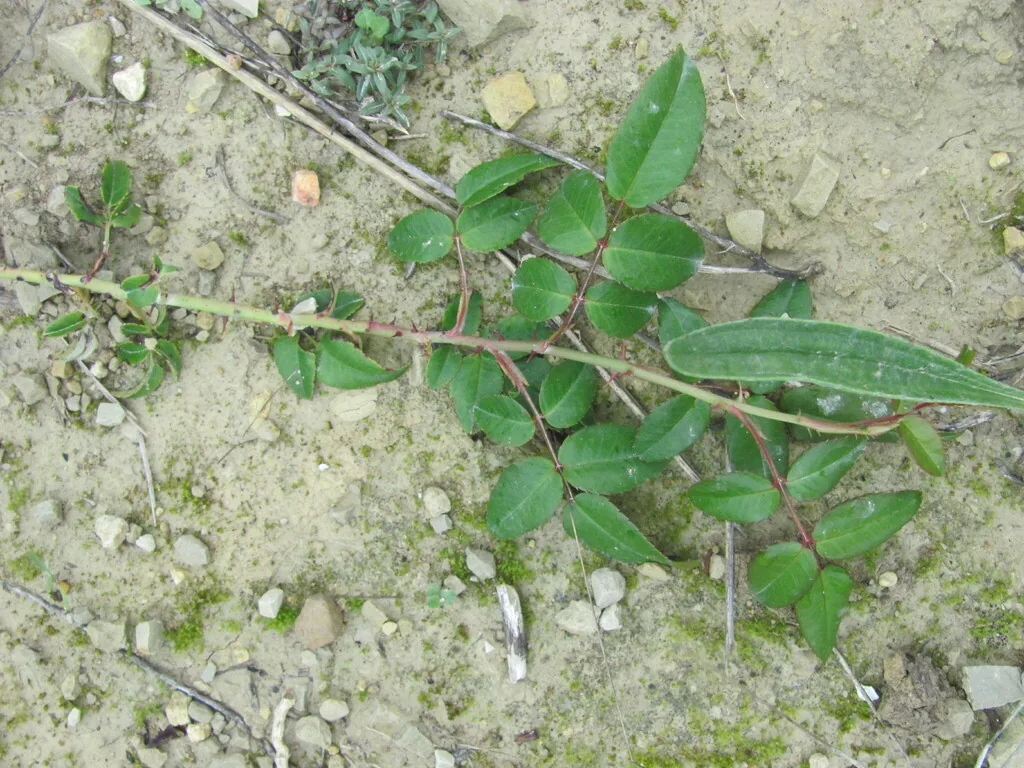
A shrub composed of climbing stems, and can top at 6 m. or more. The leaves have 3-5 coriaceous, dentate and very shiny folioles.
— Rosa sempervirens L. - Herbari Virtual del Mediterrani Occidental [4]
Overview
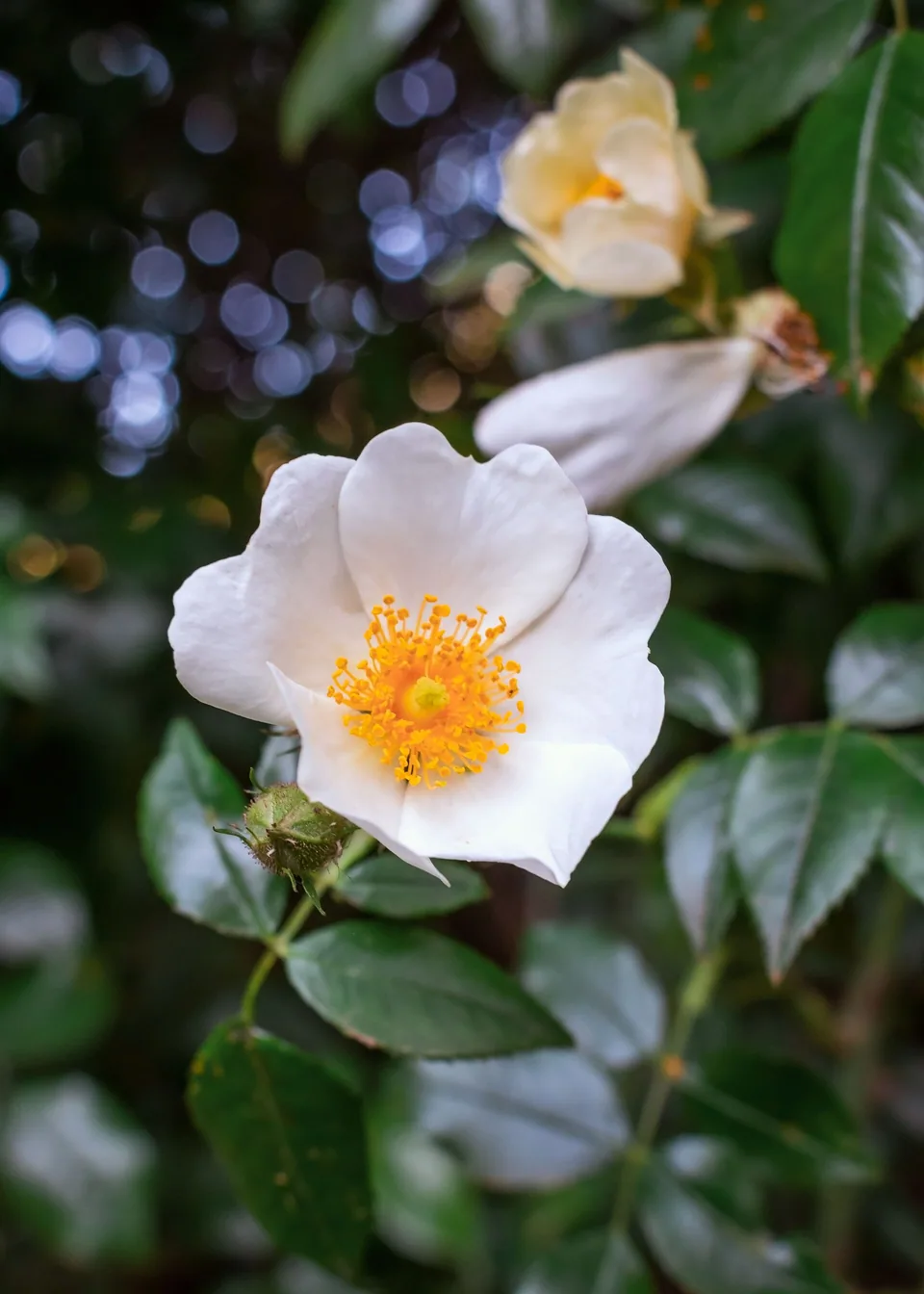
Rosa sempervirens is an evergreen scrambling rose native to the Mediterranean region. [3][2] It is recommended, adequately supported, to cover fences and boundary walls of gardens. [7] It prefers fertile, well-drained soils in sheltered, sunny positions or in slight shade. [7] The hips are described as edible once the hairy seeds are removed. [8]
This record is incomplete: the sources we read do not cover every field yet.
Not yet covered by our sources: Watering, Hardiness, coldest zone, Hardiness, warmest zone, Pruning, Propagation
Evergreen rose care
How to water Evergreen rose
Watering
Not stated in the sources we read.
Watering notes
Prefers fertile, well-drained soils
What the sources say (1)
It prefers the fertile and well drained soils in sheltered, sunny positions or in slight shade.How much light Evergreen rose needs
Sunny, sheltered positions or slight shade
What the sources say (1)
It prefers the fertile and well drained soils in sheltered, sunny positions or in slight shade.How much cold Evergreen rose can take
Hardiness, coldest zone
Not stated in the sources we read.
Hardiness, warmest zone
Not stated in the sources we read.
How to propagate Evergreen rose
Not stated in the sources we read.
How to grow Evergreen rose
The plant
Family
Rosaceae
What the sources say (1)
Family:
ROSACEAE
Genus:
Rosa
Catalan common name:
Gabarrera. Gardans. Gavarrera mosqueta.Mature height
600 or more (6 m [19.7 ft] or more)
What the sources say (1)
A shrub composed of climbing stems, and can top at 6 m. or more. The leaves have 3-5 coriaceous, dentate and very shiny folioles.Fertilizing
When
Early spring, before growth starts
What each source says
as an alternative, in fall: After the plants have gone dormant; the nutrients are available when growth resumes in spring
What the sources say (3)
as an alternative, in fall: Roses can be fall fertilized after the plants have gone dormant. Applying fertilizer at this time will not encourage growth but will be available as the plants start to grow in the spring.If you decide to fertilize, the best time to fertilize roses is in the early spring before growth starts to appear.For species roses, a spring application of general-purpose fertilizer is usually adequate for the season.How often
Once a year, in spring
What the sources say (1)
For species roses, a spring application of general-purpose fertilizer is usually adequate for the season.Mineral fertilizers
General-purpose fertilizer such as 10-10-10 or 12-12-12, 119 to 237 mL per plant
What the sources say (1)
For species roses, a spring application of general-purpose fertilizer is usually adequate for the season. General-purpose fertilizers such as 10-10-10 or 12-12-12 are used at about one-half to one cup per plant.Avoid
High-nitrogen fertilizer late in summer; stop fertilizing in late summer as the plants go dormant
What the sources say (2)
Be careful not to fertilize your roses with high nitrogen formulas late in the summer (end of August/September).You can fertilize every four to six weeks during the growing season, but stop fertilization in late summer (late August or early September) as the roses begin to go dormant.Remedies
The sources we checked give no remedies for this plant.
Calendar
Pruning
Not stated in the sources we read.
Months as given by the sources, which are mostly from the United States (northern hemisphere). In the southern hemisphere they shift by about six months.
Edibility
Reported by the source, quoted verbatim. Do not eat a plant on the basis of this page alone: identification mistakes can be dangerous.
Hips: hairy seeds need to be removed. Makes an excellent jelly or syrup. A very good source of vitamin C.
[8]
Similar plants
- Apple Rose Rosa villosa
- Baldhip rose Rosa gymnocarpa
- Burnet Rose Rosa spinosissima
- Carolina Rose Rosa carolina
- Cherokee Rose Rosa laevigata
- China Rose Rosa chinensis
- Climbing Prairie Rose Rosa setigera
- Dog rose Rosa canina
Sources
Every value above is quoted from these documents. Links lead to the original publisher.
- Rosa sempervirens - Trees and Shrubs Online · treesandshrubsonline.org, consulted
- Rosa sempervirens (evergreen rose): Go Botany · gobotany.nativeplanttrust.org, consulted
- · cretanflora.com, consulted
- Rosa sempervirens L. - Herbari Virtual del Mediterrani Occidental · herbarivirtual.uib.cat, consulted
- Rosa sempervirens hybrids • New Zealand Plant Conservation Network · nzpcn.org.nz, consulted
- Bean's Trees and Shrubs · beanstreesandshrubs.org, consulted
- Rosa sempervirens - Monaco Nature Encyclopedia · monaconatureencyclopedia.com, consulted
- Rosa sempervirens - wild in Provence · wildflowersprovence.fr, consulted
- extension.illinois.edu · extension.illinois.edu
- ask.extension.org · ask.extension.org
- extension.oregonstate.edu · extension.oregonstate.edu
Written by Emilio Marruso · last checked