
How to Grow and Care for Nootka rose
Rosa nutkana
Written by Emilio Marruso · last checked
Toxic to: People · Why
At a glance
Nootka rose is an easygoing perennial that grows 3 to 6 feet tall and asks for very little. After planting, it needs only occasional watering during dry spells in its first season, plus one feeding a year in early spring. Its hips have a story too: some Native Americans ate them or brewed them into tea.
- Water
Water now and then during dry spells in the first season after planting
What the sources say (1)
Watering notes: Occasional watering during dry periods in the first season after outplanting
occasional watering during dry periods is advised in the first season after outplanting.
— Species (common name, Latin name) [2] - Soil
Slightly acidic to neutral soil, pH 5.6–7.0
What the sources say (2)
Soil pH, minimum: 5.6
Nootka rose grows best at pH ranges of 5.6 to 7.0 thriving on moderately fertile, well-drained clayey-loam, sandy-loam, or sandy soils.
— Species (common name, Latin name) [2] Soil pH, maximum: 7.0
Nootka rose grows best at pH ranges of 5.6 to 7.0 thriving on moderately fertile, well-drained clayey-loam, sandy-loam, or sandy soils.
— Species (common name, Latin name) [2] - Spacing
10 ft between plants
What the sources say (1)
Spacing: 300 cm (3 m)
approximately 3 m spacing.
— Species (common name, Latin name) [2] - Feeding
Once a year in early spring, ½–1 cup of all-purpose fertilizer; no nitrogen-rich feed in late summer
What the sources say (7)
When: Early spring, before growth starts
as an alternative, in fall: Roses can be fall fertilized after the plants have gone dormant. Applying fertilizer at this time will not encourage growth but will be available as the plants start to grow in the spring.
— [8] If you decide to fertilize, the best time to fertilize roses is in the early spring before growth starts to appear.
— [9] For species roses, a spring application of general-purpose fertilizer is usually adequate for the season.
— [8] How often: Once a year, in spring
For species roses, a spring application of general-purpose fertilizer is usually adequate for the season.
— [8] Mineral fertilizers: General-purpose fertilizer such as 10-10-10 or 12-12-12, 119 to 237 mL per plant
For species roses, a spring application of general-purpose fertilizer is usually adequate for the season. General-purpose fertilizers such as 10-10-10 or 12-12-12 are used at about one-half to one cup per plant.
— [8] Avoid: High-nitrogen fertilizer late in summer; stop fertilizing in late summer as the plants go dormant
Be careful not to fertilize your roses with high nitrogen formulas late in the summer (end of August/September).
— [9] You can fertilize every four to six weeks during the growing season, but stop fertilization in late summer (late August or early September) as the roses begin to go dormant.
— [10] - Harvest
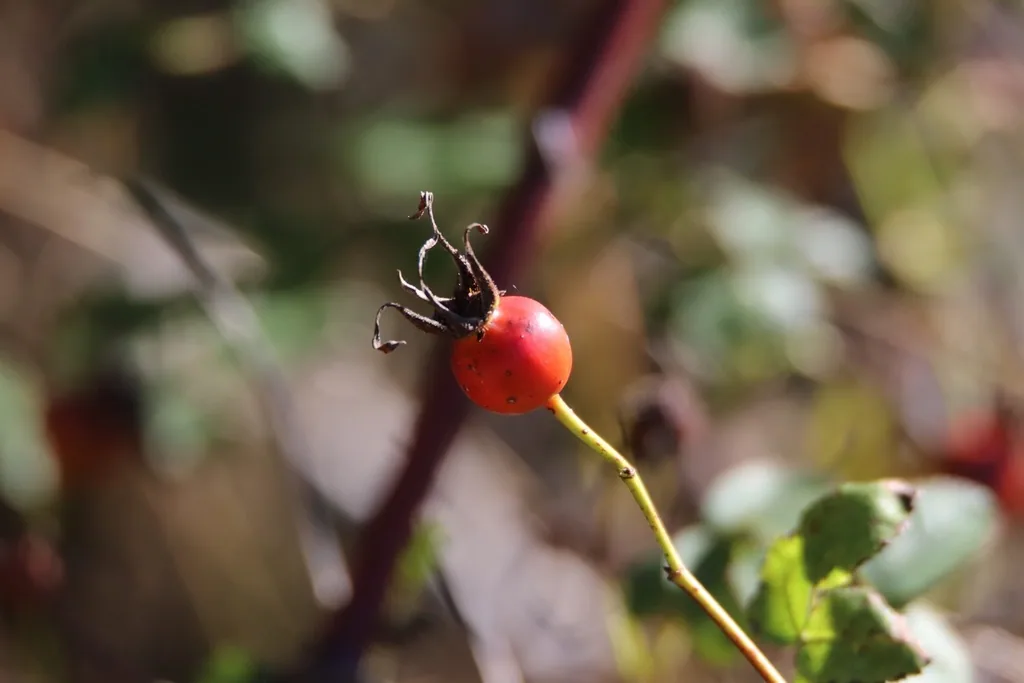
Some Native Americans ate the hips or made them into tea
- Pests
Prone to fungal problems
- Size
3 to 6 ft tall
What the sources say (2)
- Propagation
From seed, cuttings, or new shoots that sprout from the roots
What the sources say (2)
Propagation: Seed; cuttings (root crown sprouts, rhizomatous offshoots, softwood stakes); root offsets
root crown sprouts and short rhizomatous offshoots can be collected and rooted. Live softwood stakes may also be taken and rooted.
— Species (common name, Latin name) [2] Small offsets from the parent root transplant well.
— Lady Bird Johnson Wildflower Center - The University of Texas at Austin [4] - Sowing
Sow seeds directly in the ground in fall
What the sources say (1)
Sowing: Fall (direct sowing)
Seeds can also be direct sown in the fall.
— Species (common name, Latin name) [2] - Safety
Some parts can irritate the mouth and stomach if eaten
Overview
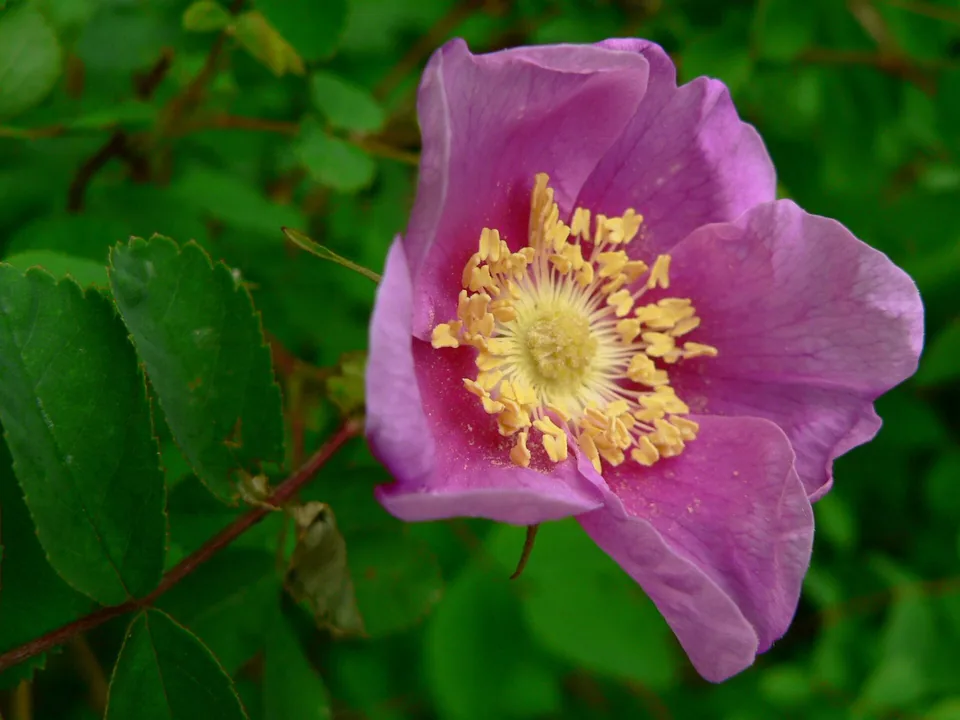
Nootka rose is a deciduous thicket-forming shrub native to western North America, with large pink flowers followed by purplish hips. [3][4]
This record is incomplete: the sources we read do not cover every field yet.
Not yet covered by our sources: Watering, Light, Hardiness, coldest zone, Hardiness, warmest zone, Pruning
Nootka rose care
How to water Nootka rose
Watering
Not stated in the sources we read.
Watering notes
Occasional watering during dry periods in the first season after outplanting
What the sources say (1)
occasional watering during dry periods is
advised in the first season after outplanting.How much light Nootka rose needs
Not stated in the sources we read.
How much cold Nootka rose can take
Hardiness, coldest zone
Not stated in the sources we read.
Hardiness, warmest zone
Not stated in the sources we read.
Best soil for Nootka rose
Soil pH, minimum
5.6
What the sources say (1)
Nootka rose grows best at pH ranges of 5.6 to 7.0 thriving on moderately fertile, well-drained clayey-loam, sandy-loam, or sandy soils.Soil pH, maximum
7.0
What the sources say (1)
Nootka rose grows best at pH ranges of 5.6 to 7.0 thriving on moderately fertile, well-drained clayey-loam, sandy-loam, or sandy soils.Where to grow Nootka rose
300 cm (3 m)
What the sources say (1)
approximately 3 m spacing.How to propagate Nootka rose
Seed; cuttings (root crown sprouts, rhizomatous offshoots, softwood stakes); root offsets
What the sources say (2)
root crown sprouts and short rhizomatous offshoots can be collected and
rooted. Live softwood stakes may also be taken and rooted.Small offsets from the parent root transplant well.How to grow Nootka rose
The plant
Life cycle
perennial
What the sources say (1)
Rosa Nutkana
Plant type: Shrub
Growing Season: No information found
Life Cycle: Perennial
Cover:Family
Rosaceae
What the sources say (1)
Family:
Rosaceae
Genus:
Rosa
Type:
Broadleaf
Native toMature height
91-183 cm (3-6 ft)
Fertilizing
When
Early spring, before growth starts
What each source says
as an alternative, in fall: After the plants have gone dormant; the nutrients are available when growth resumes in spring
What the sources say (3)
as an alternative, in fall: Roses can be fall fertilized after the plants have gone dormant. Applying fertilizer at this time will not encourage growth but will be available as the plants start to grow in the spring.If you decide to fertilize, the best time to fertilize roses is in the early spring before growth starts to appear.For species roses, a spring application of general-purpose fertilizer is usually adequate for the season.How often
Once a year, in spring
What the sources say (1)
For species roses, a spring application of general-purpose fertilizer is usually adequate for the season.Mineral fertilizers
General-purpose fertilizer such as 10-10-10 or 12-12-12, 119 to 237 mL per plant
What the sources say (1)
For species roses, a spring application of general-purpose fertilizer is usually adequate for the season. General-purpose fertilizers such as 10-10-10 or 12-12-12 are used at about one-half to one cup per plant.Avoid
High-nitrogen fertilizer late in summer; stop fertilizing in late summer as the plants go dormant
What the sources say (2)
Be careful not to fertilize your roses with high nitrogen formulas late in the summer (end of August/September).You can fertilize every four to six weeks during the growing season, but stop fertilization in late summer (late August or early September) as the roses begin to go dormant.Nootka rose pests and problems
Fungal problems
Symptom: Susceptible to fungal problems
What the sources say (1)
It is susceptible to fungal problems.
— Lady Bird Johnson Wildflower Center - The University of Texas at Austin [4]
Remedies
Each remedy shows what official sources say about it; traditional remedies without an official source are marked as such. Harmful ones are listed so you know to avoid them.
Treating the plant
fungal diseases
removing diseased foliage, flowers and stems Official source, not independently tested
How: Diseased foliage, flowers, and stems should be removed from the planting site and composted. Remove old mulch and replace it with a fresh layer in the spring.
Diseased foliage, flowers, and stems should be removed from the planting site and composted. Remove old mulch and replace it with a fresh layer of
— extension.umd.edu [11]
sawfly larvae (roseslugs)
handpicking larvae into soapy water Official source, not independently tested
How: If the infestation is light, pick off the larvae by hand and destroy them. They can be dropped into a container of soapy water to kill them.
If the infestation is light, pick off the larvae by hand and destroy them. They can be dropped into a container of soapy water to kill them.
— extension.umd.edu [11]
Is Nootka rose poisonous?
Reported by the source, quoted verbatim. This is not medical or veterinary advice: if a person or an animal may have eaten this plant, contact a poison control centre or a veterinarian.
Calendar
Sowing
Fall (direct sowing)
What the sources say (1)
Seeds can also be direct sown in the fall.Pruning
Not stated in the sources we read.
Months as given by the sources, which are mostly from the United States (northern hemisphere). In the southern hemisphere they shift by about six months.
Edibility
Reported by the source, quoted verbatim. Do not eat a plant on the basis of this page alone: identification mistakes can be dangerous.
Some Native Americans ate the hips or used them to make tea.
[5]
Indicative values
Values from a secondary source, not checked word for word like the rest of this page. Use them as a starting point.
- Light
- Full sun, Part sun/part shadeIndicative value, adapt it to your climate · Secondary source
- Hours of sun
- 6-8 hoursIndicative value, adapt it to your climate · Secondary source
- Watering
- MinimumIndicative value, adapt it to your climate · Secondary source
- Drought tolerant
- yesIndicative value, adapt it to your climate · Secondary source
- Soil
- Humus rich, Rocky, gravelly, dryIndicative value, adapt it to your climate · Secondary source
- Care level
- MediumIndicative value, adapt it to your climate · Secondary source
- Growth rate
- HighIndicative value, adapt it to your climate · Secondary source
- Pruning
- February, March, AprilIndicative value, adapt it to your climate · Secondary source
- Pests
- Blight, needle cast, Canker, sap rot, Crown rot, Diptera - true flies, Fungal leaf spot, Galls, Mildew, Mites, Rust, Scale insects, Thrips, Virus, Drought resistantIndicative value, adapt it to your climate · Secondary source
Similar plants
- Apple Rose Rosa villosa
- Baldhip rose Rosa gymnocarpa
- Burnet Rose Rosa spinosissima
- Carolina Rose Rosa carolina
- Cherokee Rose Rosa laevigata
- China Rose Rosa chinensis
- Climbing Prairie Rose Rosa setigera
- Dog rose Rosa canina
Sources
Every value above is quoted from these documents. Links lead to the original publisher.
- danielle_test | USU · extension.usu.edu, consulted
- Species (common name, Latin name) · depts.washington.edu, consulted
- Rosa nutkana | Landscape Plants | Oregon State University · landscapeplants.oregonstate.edu, consulted
- Lady Bird Johnson Wildflower Center - The University of Texas at Austin · wildflower.org, consulted
- Nootka Rose - Bryce Canyon National Park (U.S. National Park Service) · nps.gov, consulted
- Virginia Tech Dendrology Fact Sheet · dendro.cnre.vt.edu, consulted
- Nootka rose - KPU Plant DB · plantdatabase.kpu.ca, consulted
- extension.illinois.edu · extension.illinois.edu
- ask.extension.org · ask.extension.org
- extension.oregonstate.edu · extension.oregonstate.edu
- extension.umd.edu · extension.umd.edu
Written by Emilio Marruso · last checked