
How to Grow and Care for Sweet-briar
Rosa rubiginosa
Written by Emilio Marruso · last checked
Toxic to: People · Why
At a glance
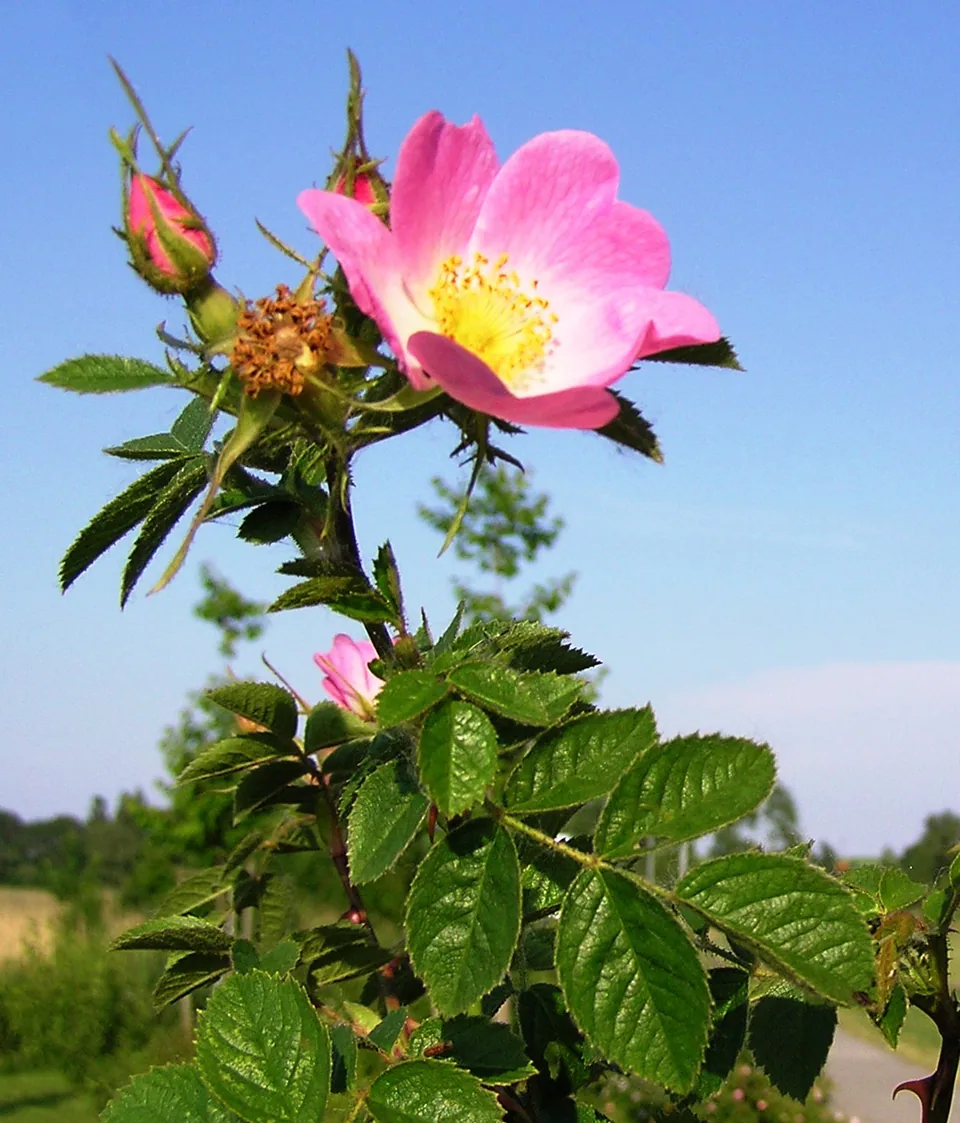
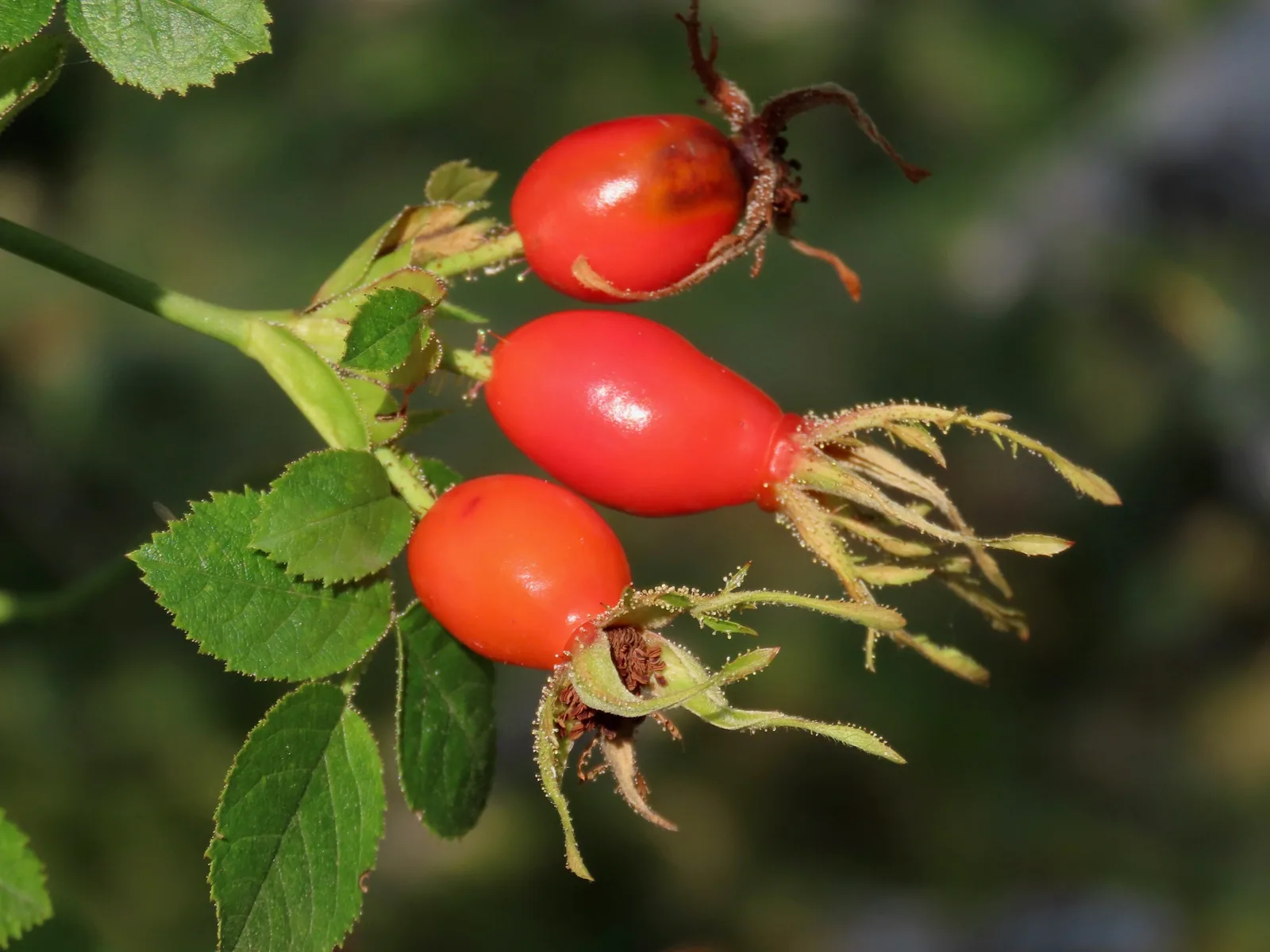
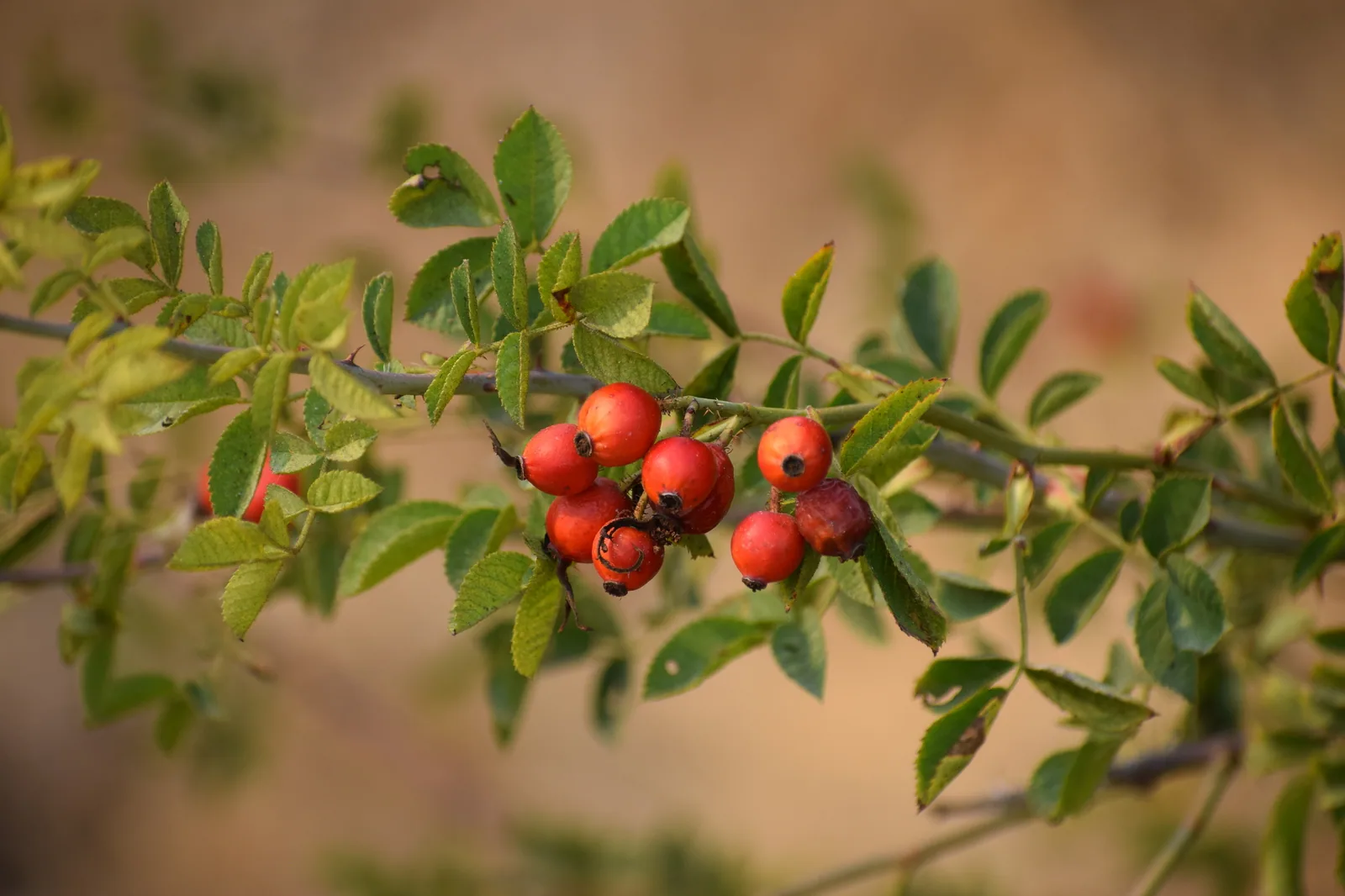
This rose gives you more than flowers: its hips ripen in September and October and taste best after a frost. Turn them into jellies or a pleasant fruity tea rich in vitamin C, and enjoy the petals raw or cooked. It asks only for moderate watering, moist soil that never stays soggy, and a yearly trim in spring.
- Water
Moderate watering; keep the soil moist but never soggy
What the sources say (3)
Watering: Moderate
Light full sun Shade tolerance light shade Water moderate Hardiness Zone 4+
— Sweet Briar (Rosa rubiginosa) — Practical Plants [4] - Cold
Survives winters down to −30 °F (−34.4 °C)
Very hardy · USDA 4a · RHS H7 · Z4
What the sources say (3)
Hardiness, coldest zone: 4a [winter low −34.4 to −31.7 °C (−30 to −25 °F)]
USDA hardiness zone 4a to 9b: from -30°F (-34.4°C) to 30°F (-1.1°C)
— Rosa rubiginosa (Sweet Briar Rose) - World of Flowering Plants [6] Hardy to USDA Zone 4
— Rosa rubiginosa | Landscape Plants | Oregon State University [1] Hardiness, warmest zone: 9b [winter low −3.9 to −1.1 °C (25 to 30 °F)]
USDA hardiness zone 4a to 9b: from -30°F (-34.4°C) to 30°F (-1.1°C)
— Rosa rubiginosa (Sweet Briar Rose) - World of Flowering Plants [6] - Planting
Dormant plants in early spring or fall; potted ones from spring to fall, best in spring
What the sources say (2)
Planting: Dormant plants in early spring (or fall); potted plants between spring and fall, preferably spring
Plant dormant roses in early spring (or fall)
— Rosa rubiginosa (Sweet Briar Rose) - World of Flowering Plants [6] Potted plants can be planted any time between spring and fall, but preferably in spring
— Rosa rubiginosa (Sweet Briar Rose) - World of Flowering Plants [6] - Feeding
Once a year in early spring, before growth starts; no high-nitrogen feed in late summer
What the sources say (6)
When: Early spring, before growth starts
as an alternative, in fall: Roses can be fall fertilized after the plants have gone dormant. Applying fertilizer at this time will not encourage growth but will be available as the plants start to grow in the spring.
— [7] If you decide to fertilize, the best time to fertilize roses is in the early spring before growth starts to appear.
— [8] For species roses, a spring application of general-purpose fertilizer is usually adequate for the season.
— [7] How often: Once a year, in spring
For species roses, a spring application of general-purpose fertilizer is usually adequate for the season.
— [7] Avoid: High-nitrogen fertilizer late in summer; stop fertilizing in late summer as the plants go dormant
Be careful not to fertilize your roses with high nitrogen formulas late in the summer (end of August/September).
— [8] You can fertilize every four to six weeks during the growing season, but stop fertilization in late summer (late August or early September) as the roses begin to go dormant.
— [9] - Pruning
As a hedge, trim it every year in spring, before new growth starts
What the sources say (1)
Pruning: Annually in spring before growth recommences (hedge)
The plant makes a charming low hedge if clipped back annually in spring before growth recommences
— Rosa rubiginosa - Useful Temperate Plants [3] - Harvest
Hips ripen September–October, best after a frost; petals and young shoots are edible too
What the sources say (2)
- Pests
Powdery and downy mildew; gall wasps make galls on stems, but they do no harm
What the sources say (2)
Diseases: powdery mildew, downy mildew
The plant is susceptible to fungal diseases such as powdery mildew (Sphaerotheca pannosa var. rosae) and downy mildew (Perenospora sparsa).
— Plant Guide [2] Pests: gall wasp (Diplolepis rosae)
Numerous galls are often found on Rosa rubiginosa stems. The galls are caused by a gall-forming wasp (Diplolepis rosae)
— Plant Guide [2] - Watch out
It can spread and take over an area; getting it under control may take several years
- Propagation
Seed, layering, suckers or cuttings: half-ripe in July, mature wood in early fall
What the sources say (4)
Propagation: Seed; layering; suckering; half-ripe cuttings (July); mature-wood cuttings (early autumn); division of suckers in the dormant season
Plants reproduce sexually by seed and vegetatively by layering and suckering
— Plant Guide [2] Cuttings of half-ripe wood with a heel, July in a shaded frame
— Rosa rubiginosa - Useful Temperate Plants [3] Select pencil thick shoots in early autumn that are about 20 - 25cm long and plant them in a sheltered position outdoors or in a cold frame
— Rosa rubiginosa - Useful Temperate Plants [3] Division of suckers in the dormant season
— Rosa rubiginosa - Useful Temperate Plants [3] - Sowing
Sow fresh seed in a cold frame; stored seed first needs 6 weeks at 41 °F (5 °C)
What the sources say (2)
Sowing: As soon as ripe (cold frame); stored seed as early in the year as possible after 6 weeks of stratification at 5°C [41 °F]
Seed sown as soon as it is ripe in a cold frame sometimes germinates in spring though it may take 18 months
— Rosa rubiginosa - Useful Temperate Plants [3] Stored seed can be sown as early in the year as possible and stratified for 6 weeks at 5°c
— Rosa rubiginosa - Useful Temperate Plants [3] - Safety
Its hairs can irritate the mouth and gut if swallowed
Overview
Sweetbriar rose is a deciduous, prickly shrub up to 2.4 m [8 ft] with aromatic foliage, hardy to USDA zone 4. [1] It is weedy and invasive in some regions, spreading by seed, layering and suckering, and is not recommended for planting in some landscapes. [2] It tolerates heavy clay, dislikes waterlogged soil and grows best in a sunny position. [3]
Sweet-briar care
Measurements in square brackets are our conversion into the other unit system; the quoted text is unchanged.
How to water Sweet-briar
Watering
Moderate
What the sources say (1)
Light
full sun
Shade tolerance
light shade
Water
moderate
Hardiness
Zone 4+How much light Sweet-briar needs
The sources disagree:
It is not shade tolerant
[2]
How much cold Sweet-briar can take
Hardiness, coldest zone
4a [winter low −34.4 to −31.7 °C (−30 to −25 °F)]
Hardiness, warmest zone
9b [winter low −3.9 to −1.1 °C (25 to 30 °F)]
What the sources say (1)
USDA hardiness zone 4a to 9b: from -30°F (-34.4°C) to 30°F (-1.1°C)How to propagate Sweet-briar
Seed; layering; suckering; half-ripe cuttings (July); mature-wood cuttings (early autumn); division of suckers in the dormant season
What the sources say (4)
Plants reproduce sexually by seed and vegetatively by layering and suckeringCuttings of half-ripe wood with a heel, July in a shaded frameSelect pencil thick shoots in early autumn that are about 20 - 25cm long and plant them in a sheltered position outdoors or in a cold frameDivision of suckers in the dormant seasonHow to grow Sweet-briar
The plant
Family
Rosaceae
What the sources say (1)
Rose family (Rosaceae). Rosa rubiginosa is a shrub introduced from Europe.Pests and diseases
Pests
gall wasp (Diplolepis rosae)
What the sources say (1)
Numerous galls are often found on Rosa rubiginosa stems. The galls are caused by a gall-forming wasp (Diplolepis rosae)Diseases
powdery mildew, downy mildew
What the sources say (1)
The plant is susceptible to fungal diseases such as powdery mildew (Sphaerotheca pannosa var. rosae) and downy mildew (Perenospora sparsa).Fertilizing
When
Early spring, before growth starts
What each source says
as an alternative, in fall: After the plants have gone dormant; the nutrients are available when growth resumes in spring
What the sources say (3)
as an alternative, in fall: Roses can be fall fertilized after the plants have gone dormant. Applying fertilizer at this time will not encourage growth but will be available as the plants start to grow in the spring.If you decide to fertilize, the best time to fertilize roses is in the early spring before growth starts to appear.For species roses, a spring application of general-purpose fertilizer is usually adequate for the season.How often
Once a year, in spring
What the sources say (1)
For species roses, a spring application of general-purpose fertilizer is usually adequate for the season.Mineral fertilizers
General-purpose fertilizer such as 10-10-10 or 12-12-12, 119 to 237 mL per plant
What the sources say (1)
For species roses, a spring application of general-purpose fertilizer is usually adequate for the season. General-purpose fertilizers such as 10-10-10 or 12-12-12 are used at about one-half to one cup per plant.Avoid
High-nitrogen fertilizer late in summer; stop fertilizing in late summer as the plants go dormant
What the sources say (2)
Be careful not to fertilize your roses with high nitrogen formulas late in the summer (end of August/September).You can fertilize every four to six weeks during the growing season, but stop fertilization in late summer (late August or early September) as the roses begin to go dormant.Sweet-briar pests and problems
Powdery and downy mildew
Symptom: Susceptible to fungal diseases
What the sources say (1)
The plant is susceptible to fungal diseases such as powdery mildew (Sphaerotheca pannosa var. rosae) and downy mildew (Perenospora sparsa)
— Plant Guide [2] Gall wasp
Symptom: Numerous galls on stems
What to do: Galls do not cause harm
Invasiveness
Symptom: Areas invaded can become dominated by the plant
What to do: Control often requires multiple years of treatment
Honey fungus
Symptom: Genus notably susceptible to honey fungus
What the sources say (1)
Plants in this genus are notably susceptible to honey fungus
— Rosa rubiginosa - Useful Temperate Plants [3]
Remedies
Each remedy shows what official sources say about it; traditional remedies without an official source are marked as such. Harmful ones are listed so you know to avoid them.
Getting rid of it
invasive sweet briar
digging out small plants by hand Partly works
How: Dig out small plants by hand, removing all the crown and as many roots as possible to prevent regrowth.
Small plants can be dug out by hand. Remove all the crown and as many roots as possible to prevent regrowth.
— weeds.dpi.nsw.gov.au [10] What the evidence says Small plants can be dug out by hand. Remove all the crown and as many roots as possible to prevent regrowth.
— weeds.dpi.nsw.gov.au [10] goat and sheep browsing Works
How: Goats readily browse established plants and seedlings; sheep graze young seedlings, more so than cattle.
Grazing can be useful in controlling sweet briar. It is highly palatable to goats and they will readily browse established plants and seedlings..
— weeds.dpi.nsw.gov.au [10] What the evidence says Continuous browsing by livestock can ringbark and kill established shrubs.
— weeds.dpi.nsw.gov.au [10] deep cultivation Partly works
How: Deep cultivation kills most of the roots; follow up with further cultivation in summer, and cultivate in autumn before sowing to remove remaining seedlings.
Deep cultivation kills most of the roots. However, it can be difficult if the bushes are large or dense.
— weeds.dpi.nsw.gov.au [10] What the evidence says Deep cultivation kills most of the roots. However, it can be difficult if the bushes are large or dense.
— weeds.dpi.nsw.gov.au [10]
Is Sweet-briar poisonous?
Reported by the source, quoted verbatim. This is not medical or veterinary advice: if a person or an animal may have eaten this plant, contact a poison control centre or a veterinarian.
Calendar
Sowing
As soon as ripe (cold frame); stored seed as early in the year as possible after 6 weeks of stratification at 5°C [41 °F]
What the sources say (2)
Seed sown as soon as it is ripe in a cold frame sometimes germinates in spring though it may take 18 monthsStored seed can be sown as early in the year as possible and stratified for 6 weeks at 5°cPlanting
Dormant plants in early spring (or fall); potted plants between spring and fall, preferably spring
Pruning
Annually in spring before growth recommences (hedge)
What the sources say (1)
The plant makes a charming low hedge if clipped back annually in spring before growth recommencesMonths as given by the sources, which are mostly from the United States (northern hemisphere). In the southern hemisphere they shift by about six months.
Edibility
Reported by the source, quoted verbatim. Do not eat a plant on the basis of this page alone: identification mistakes can be dangerous.
Indicative values
Values from a secondary source, not checked word for word like the rest of this page. Use them as a starting point.
- Life cycle
- PerennialIndicative value, adapt it to your climate · Secondary source
- Hours of sun
- 6-8 hoursIndicative value, adapt it to your climate · Secondary source
- Drought tolerant
- yesIndicative value, adapt it to your climate · Secondary source
- Soil pH
- 6-7Indicative value, adapt it to your climate · Secondary source
- Care level
- MediumIndicative value, adapt it to your climate · Secondary source
- Growth rate
- HighIndicative value, adapt it to your climate · Secondary source
Similar plants
- Apple Rose Rosa villosa
- Baldhip rose Rosa gymnocarpa
- Burnet Rose Rosa spinosissima
- Carolina Rose Rosa carolina
- Cherokee Rose Rosa laevigata
- China Rose Rosa chinensis
- Climbing Prairie Rose Rosa setigera
- Dog rose Rosa canina
Sources
Every value above is quoted from these documents. Links lead to the original publisher.
- Rosa rubiginosa | Landscape Plants | Oregon State University · landscapeplants.oregonstate.edu, consulted
- Plant Guide · nrcs.usda.gov, consulted
- Rosa rubiginosa - Useful Temperate Plants · temperate.theferns.info, consulted
- Sweet Briar (Rosa rubiginosa) — Practical Plants · practicalplants.org, consulted
- How To Grow Shrub Roses and Species Roses | BBC Gardeners World Magazine · gardenersworld.com, consulted
- Rosa rubiginosa (Sweet Briar Rose) - World of Flowering Plants · worldoffloweringplants.com, consulted
- extension.illinois.edu · extension.illinois.edu
- ask.extension.org · ask.extension.org
- extension.oregonstate.edu · extension.oregonstate.edu
- weeds.dpi.nsw.gov.au · weeds.dpi.nsw.gov.au
Written by Emilio Marruso · last checked