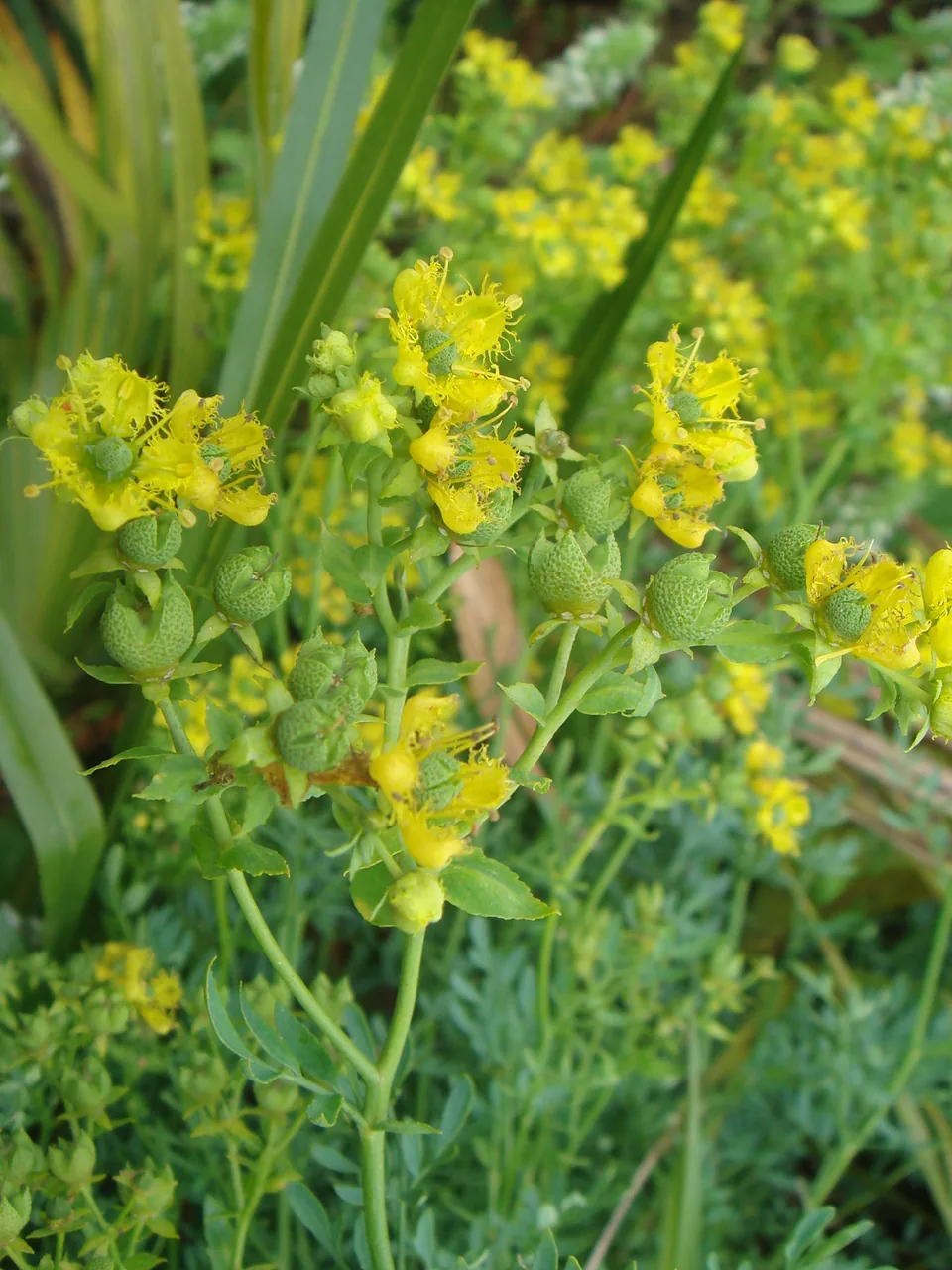
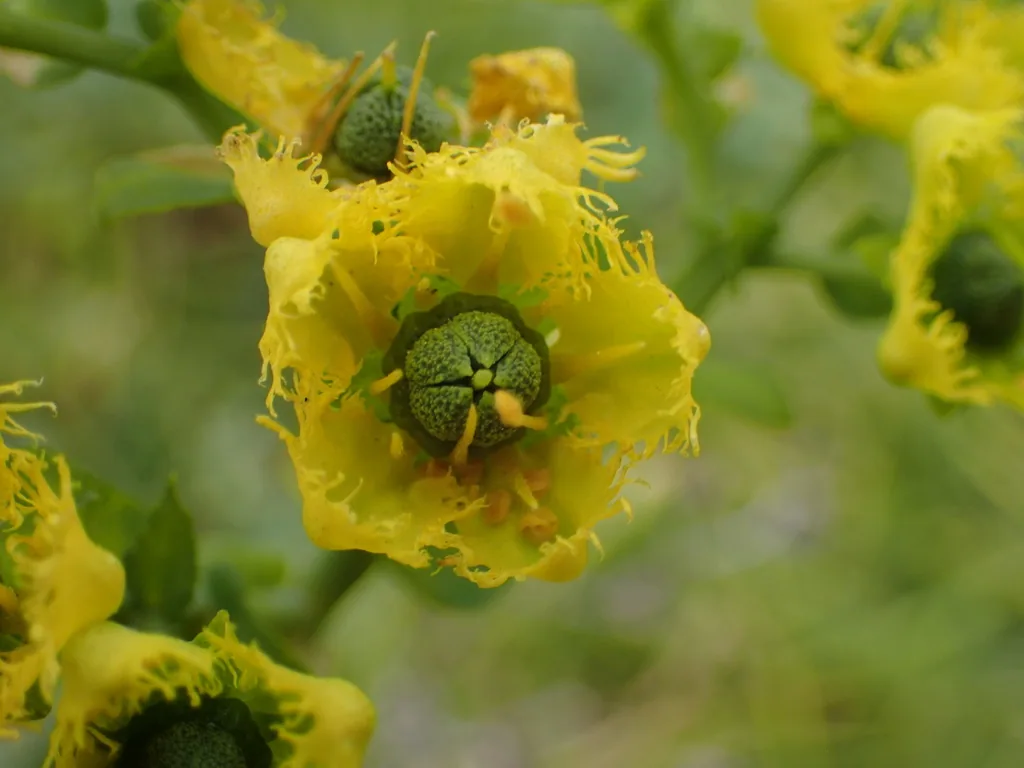

How to Grow and Care for Fringed rue
Ruta chalepensis
Written by Emilio Marruso · last checked
Toxic to: People · Why
At a glance
Fringed rue is an easygoing herb for an open, sunny spot. It is happy with average to dry soil and grows just as well in a container. Pick the tips of fresh shoots before it flowers, and cut it back to the old wood each spring. Handle it with care, though: touching it can irritate the skin, and too much of it is toxic.
- Sun
An open, sunny spot
What the sources say (1)
Light: Open sunny position
prefers an open sunny position
— Ruta chalepensis (PROTA) - Pl@ntUse [2] - Water
Handles average to dry soil; it does not need constant moisture
What the sources say (1)
Watering: Mesic, dry mesic or dry
Water Preferences: | Mesic Dry Mesic Dry
— Fringed Rue (Ruta chalepensis) - Garden.org [4] - Pruning
Cut back to the old wood in spring
What the sources say (1)
Pruning: Spring (back to the old wood)
In spring the plant can be pruned back to the old wood to encourage bushiness.
— Ruta chalepensis (PROTA) - Pl@ntUse [2] - Harvest
Pick the tips of fresh shoots before the plant flowers
What the sources say (1)
Harvest: Tops of fresh shoots, before the plant flowers
The tops of the fresh shoots are the most active and should be gathered before the plant flowers.
— Ruta chalepensis (PROTA) - Pl@ntUse [2] - Propagation
Grow new plants from seed, cuttings, layering or by dividing the roots
What the sources say (1)
Propagation: Seed; layering; division of roots; cuttings
Ruta chalepensis is mainly propagated by seed, but can also be reproduced by layering, division of roots and from cuttings.
— Ruta chalepensis (PROTA) - Pl@ntUse [2] - Containers
Grows in containers too
What the sources say (1)
In containers: Yes
The plant is also widely grown as ornamentals in hedges or as a container plant.
— Ruta chalepensis (PROTA) - Pl@ntUse [2] - Safety
Can be toxic if eaten, and touching it can cause a skin rash
Overview
Ruta chalepensis is a Mediterranean species cultivated in the tropics as a potherb or medicinal plant. [2] It grows well in well-drained sandy or rocky limestone soils in an open sunny position, and its toxic effects are dose-dependent. [2]
This record is incomplete: the sources we read do not cover every field yet.
Not yet covered by our sources: Sowing / Planting
Fringed rue care
How to water Fringed rue
Mesic, dry mesic or dry
What the sources say (1)
Water Preferences: | Mesic
Dry Mesic
DryHow much light Fringed rue needs
Open sunny position
What the sources say (1)
prefers an open sunny positionWhere to grow Fringed rue
Yes
What the sources say (1)
The plant is also widely grown as ornamentals in hedges or as a container plant.How to propagate Fringed rue
Seed; layering; division of roots; cuttings
What the sources say (1)
Ruta chalepensis is mainly propagated by seed, but can also be reproduced by layering, division of roots and from cuttings.How to grow Fringed rue
The plant
Family
Rutaceae
What the sources say (1)
Family: RUTACEAE Genus: Ruta Sinònims: Ruta chalepensis L. subsp. angustifolia (Pers.) Cout.Remedies
Each remedy shows what official sources say about it; traditional remedies without an official source are marked as such. Harmful ones are listed so you know to avoid them.
First aid
First aid: not a substitute for a doctor
skin contact with sap in sunlight (phytophotodermatitis)
wash the skin with mild soap and warm water Official source, not independently tested
If it isn’t getting better, is very painful or looks infected (more discoloration, warmth, pus, fever), contact a healthcare provider.
— my.clevelandclinic.org [5] How: Wash your skin with mild soap and warm water. Pat it dry with a clean towel.
Wash your skin with mild soap and warm water. Pat it dry with a clean towel.
— my.clevelandclinic.org [5] cool wet cloth on the rash Official source, not independently tested
If it isn’t getting better, is very painful or looks infected (more discoloration, warmth, pus, fever), contact a healthcare provider.
— my.clevelandclinic.org [5] How: Put a cool, wet cloth on the rash for 10 to 15 minutes. This eases pain and swelling.
Put a cool, wet cloth on the rash for 10 to 15 minutes. This eases pain and swelling.
— my.clevelandclinic.org [5] keep the area out of sunlight Official source, not independently tested
If it isn’t getting better, is very painful or looks infected (more discoloration, warmth, pus, fever), contact a healthcare provider.
— my.clevelandclinic.org [5] How: Keep the area out of sunlight. When outside, cover it with clothing or use sunscreen.
Keep the area out of sunlight. When outside, cover it with clothing or use sunscreen.
— my.clevelandclinic.org [5]
Is Fringed rue poisonous?
Reported by the source, quoted verbatim. This is not medical or veterinary advice: if a person or an animal may have eaten this plant, contact a poison control centre or a veterinarian.
Excessive use of the herb is dangerous. Its toxic effects are clearly dose-dependent. It is potentially toxic and carcinogenic when consumed orally, and can produce dermatitis when touched.
[2]- Poisonous parts
Used internally, the leaves and oil can cause haemorrhages, miscarriage and abortion
[2]- Toxic principle
Bergapten and chalepensin belong to the family of the linear furanocoumarins, which are known to have phototoxic activity.
[2]- Symptoms
It may further cause vomiting, gastroenteritis, swelling of the tongue, coldness of the extremities, and even death.
[2]
Calendar
Sowing
Not stated in the sources we read.
Planting
Not stated in the sources we read.
Harvest
Tops of fresh shoots, before the plant flowers
What the sources say (1)
The tops of the fresh shoots are the most active and should be gathered before the plant flowers.Pruning
Spring (back to the old wood)
What the sources say (1)
In spring the plant can be pruned back to the old wood to encourage bushiness.Months as given by the sources, which are mostly from the United States (northern hemisphere). In the southern hemisphere they shift by about six months.
Edibility
Reported by the source, quoted verbatim. Do not eat a plant on the basis of this page alone: identification mistakes can be dangerous.
Similar plants
- Rue Ruta graveolens
- Amur Cork Tree Phellodendron amurense
- Bee-Bee Tree Tetradium daniellii
- Bitter orange Citrus × aurantium
- Dittany Dictamnus albus
- Hardy orange Citrus trifoliata
- Hercules Club Zanthoxylum clava-herculis
- Hoptree Ptelea trifoliata
Sources
Every value above is quoted from these documents. Links lead to the original publisher.
- Ruta chalepensis - Useful Temperate Plants · temperate.theferns.info, consulted
- Ruta chalepensis (PROTA) - Pl@ntUse · uses.plantnet-project.org, consulted
- Ruta angustifolia Pers. - Herbari Virtual del Mediterrani Occidental · herbarivirtual.uib.cat, consulted
- Fringed Rue (Ruta chalepensis) - Garden.org · garden.org, consulted
- my.clevelandclinic.org · my.clevelandclinic.org
Written by Emilio Marruso · last checked