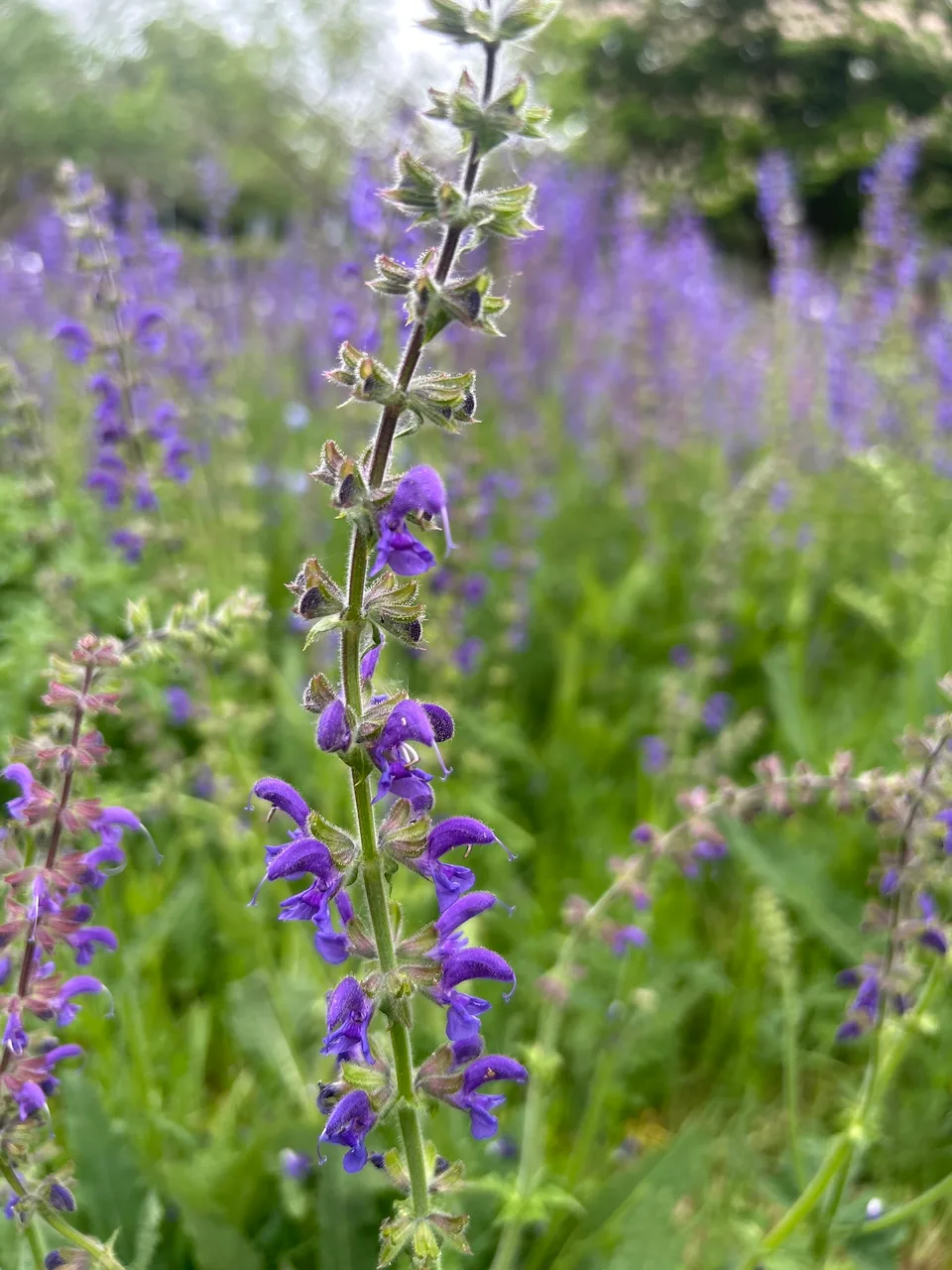
How to Grow and Care for Meadow clary
Salvia pratensis
Written by Emilio Marruso · last checked
At a glance
This perennial meadow sage is happy in full sun or partial shade and comes back year after year. Its leaves and flowers can be used for flavoring or brewed into a tea, and the herb has even flavored beers and wines. Start seeds in a greenhouse in early to mid spring, or divide a plant in spring to get new ones.
- Sun
Full sun to partial shade
What the sources say (1)
Light: Full sun to partial shade
Care Provide moist but well-drained soil in full sun to partial shade.
— Meadow clary - Fine Gardening [4] - Cold
Survives winters down to −40 °F (−40 °C)
Very hardy · USDA 3a · RHS H7 · Z3
- Planting
Plant out greenhouse seedlings in early summer; in the coldest areas, wait until late spring of the next year
What the sources say (1)
Planting: Early summer (seedlings raised in a greenhouse); late spring of the following year where near the limit of hardiness
Prick out the seedlings into individual pots when they are large enough to handle and plant them out in early summer.
— Salvia pratensis - Useful Temperate Plants [2] - Harvest
Leaves and flowers can be used for flavoring or to make tea
- Pests
Watch for powdery mildew, rust, stem rot, aphids, whiteflies and spider mites
- Propagation
By seed, by dividing the plant in spring, or by cuttings from spring through fall
What the sources say (2)
Propagation: Seed, division (spring), cuttings (spring through fall; half-ripe wood during the growing season)
Propagation Sow seed, or divide plants, in spring. Take cuttings spring through fall.
— Meadow clary - Fine Gardening [4] Cuttings of half-ripe wood succeed at almost any time in the growing season
— Salvia pratensis - Useful Temperate Plants [2] - Sowing
Sow in a greenhouse in early to mid spring
Overview
Meadow sage is a perennial of dry, sunny meadows that is also grown as a garden ornamental. [3] It needs moist but well-drained soil in full sun to partial shade. [4] It is very cold-hardy and can be grown from seed sown in spring. [2][4]
This record is incomplete: the sources we read do not cover every field yet.
Not yet covered by our sources: Watering, Harvest
Meadow clary care
How to water Meadow clary
Not stated in the sources we read.
How much light Meadow clary needs
Full sun to partial shade
What the sources say (1)
Care Provide moist but well-drained soil in full sun to partial shade.How much cold Meadow clary can take
Hardiness, coldest zone
3a [winter low −40 to −37.2 °C (−40 to −35 °F)]
What the sources say (1)
Zones :
3, 4, 5, 6, 7, 8, 9Hardiness, warmest zone
9b [winter low −3.9 to −1.1 °C (25 to 30 °F)]
What the sources say (1)
Zones :
3, 4, 5, 6, 7, 8, 9How to propagate Meadow clary
Seed, division (spring), cuttings (spring through fall; half-ripe wood during the growing season)
How to grow Meadow clary
The plant
Life cycle
perennial
What the sources say (1)
## Life form
Perennial hemicryptophyte
## Habitats
## Habitats © Delarze & al. 2015Fertilizing
When
The sources give different values depending on region, zone or growing conditions.
What each source says
Salvia in general: Each spring
What the sources say (1)
Salvia in general: Additionally, salvia will do best with an application of a balanced, slow-release fertilizer each spring.How often
The sources give different values depending on region, zone or growing conditions.
What each source says
Salvia in general: Once a year, in spring
What the sources say (1)
Salvia in general: Additionally, salvia will do best with an application of a balanced, slow-release fertilizer each spring.Mineral fertilizers
The sources give different values depending on region, zone or growing conditions.
What each source says
Salvia in general: Balanced, slow-release fertilizer
What the sources say (1)
Salvia in general: Additionally, salvia will do best with an application of a balanced, slow-release fertilizer each spring.Meadow clary pests and problems
General salvia problems
Symptom: Powdery mildew, rust, stem rot, fungal leaf spots, whiteflies, aphids, mealybugs, spider mites
What to do: Not stated
What the sources say (1)
Problems Powdery mildew, rust, stem rot, fungal leaf spots, whiteflies, aphids, mealybugs, spider mites.
— Meadow clary - Fine Gardening [4]
Remedies
The sources we checked give no remedies for this plant.
Calendar
Planting
Early summer (seedlings raised in a greenhouse); late spring of the following year where near the limit of hardiness
What the sources say (1)
Prick out the seedlings into individual pots when they are large enough to handle and plant them out in early summer.Harvest
Not stated in the sources we read.
Months as given by the sources, which are mostly from the United States (northern hemisphere). In the southern hemisphere they shift by about six months.
Edibility
Reported by the source, quoted verbatim. Do not eat a plant on the basis of this page alone: identification mistakes can be dangerous.
Indicative values
Values from a secondary source, not checked word for word like the rest of this page. Use them as a starting point.
- Mature height
- 30.5-91.4 cm (1-3 ft)Indicative value, adapt it to your climate · Secondary source
- Hours of sun
- 6-8 hoursIndicative value, adapt it to your climate · Secondary source
- Watering
- MinimumIndicative value, adapt it to your climate · Secondary source
- Drought tolerant
- yesIndicative value, adapt it to your climate · Secondary source
- Soil pH
- 6-7.5Indicative value, adapt it to your climate · Secondary source
- Care level
- MediumIndicative value, adapt it to your climate · Secondary source
- Growth rate
- LowIndicative value, adapt it to your climate · Secondary source
- Pruning
- May, June, JulyIndicative value, adapt it to your climate · Secondary source
Similar plants
- Autumn Sage Salvia greggii
- Clary Sage Salvia sclarea
- Greek oregano Salvia fruticosa
- Little Leaf Sage Salvia microphylla
- Pineapple Sage Salvia elegans
- Rosemary Salvia rosmarinus
- Sage Salvia officinalis
- Wild sage Salvia verbenaca
Sources
Every value above is quoted from these documents. Links lead to the original publisher.
- Salvia pratensis L. · infoflora.ch, consulted
- Salvia pratensis - Useful Temperate Plants · temperate.theferns.info, consulted
- · naturblick.museumfuernaturkunde.berlin, consulted
- Meadow clary - Fine Gardening · finegardening.com, consulted
- gardeningsolutions.ifas.ufl.edu · gardeningsolutions.ifas.ufl.edu
Written by Emilio Marruso · last checked