
How to Grow and Care for Saxifraga × arendsii
Saxifraga arendsii
Written by Emilio Marruso · last checked
At a glance
This low perennial saxifrage stays just 8 inches tall, perfect for a small corner or a pot. Give it semi-shade, a cool spot and well-drained soil, and it will come back year after year. In early spring you can divide it to make new plants for free; just never let water collect around its roots.
- Sun
Semi-shade in a cool spot
- Water
Never let water collect around the roots
What the sources say (1)
Watering notes: Sensitive to water accumulating at the roots
Saxifraga x arendsii is a plant quite resistant to the usual pests and diseases but sensitive to excessive heat and the accumulation of water in the roots.
— Saxifraga x arendsii or Mossy saxifrage | Care and Growing [2] - Soil
Well-drained soil
- Watch out
Suffers in strong heat and soggy soil
- Size
8 inches tall
What the sources say (1)
Mature height: 20 cm [7.9 in]
A compact perennial to around 20cm high with deeply-cut, evergreen leaves in dense rosettes forming low mats with a moss-like appearance.
— Saxifraga × arendsii (15) [1] - Propagation
Divide the clump in early spring
What the sources say (1)
Propagation: Division in early spring
Mossy saxifrage is propagated by division in early spring.
— Saxifraga x arendsii or Mossy saxifrage | Care and Growing [2] - Containers
Grows in containers too
What the sources say (1)
In containers: Yes
Mossy saxifrage is used in rockeries, in mixed borders, to cover slopes, in pots and in cracks in walls.
— Saxifraga x arendsii or Mossy saxifrage | Care and Growing [2]
Overview
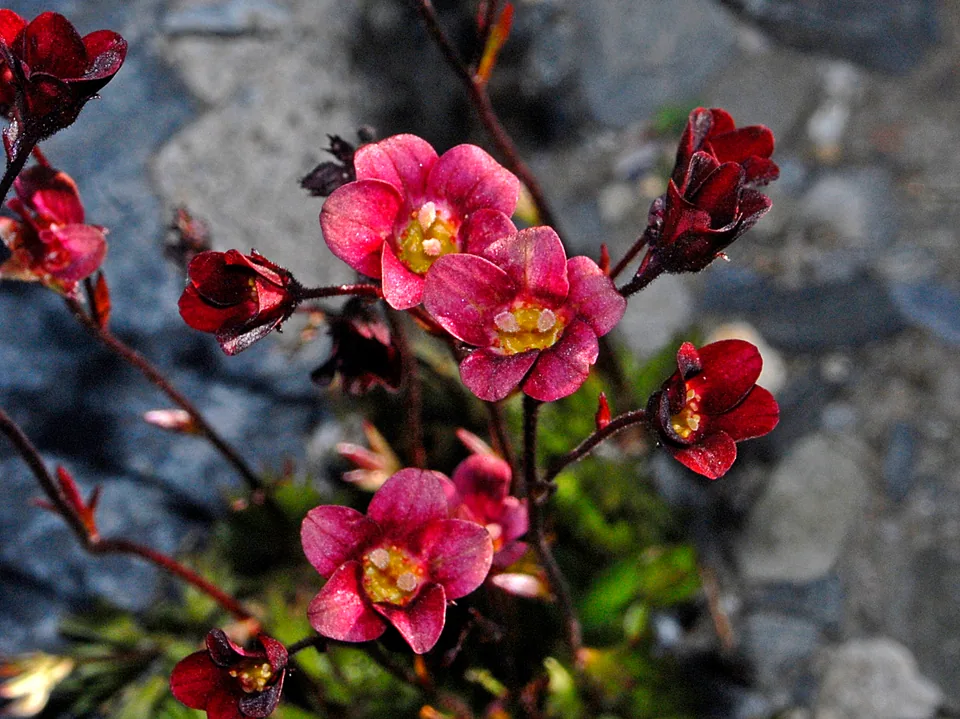
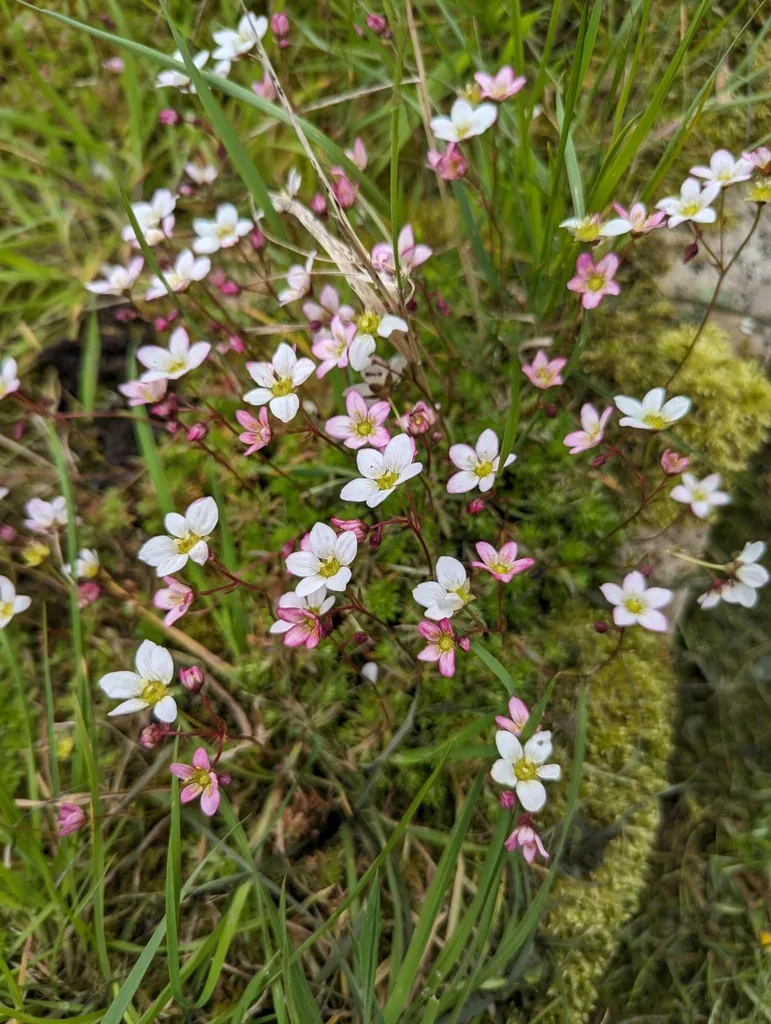
A compact evergreen perennial forming low moss-like mats with small white, pink or red flowers in late spring and early summer. [1]
This record is incomplete: the sources we read do not cover every field yet.
Not yet covered by our sources: Watering, Light, Hardiness, coldest zone, Hardiness, warmest zone, Pruning
Saxifraga × arendsii care
How to water Saxifraga × arendsii
Watering
Not stated in the sources we read.
Watering notes
Sensitive to water accumulating at the roots
What the sources say (1)
Saxifraga x arendsii is a plant quite resistant to the usual pests and diseases but sensitive to excessive heat and the accumulation of water in the roots.How much light Saxifraga × arendsii needs
Not stated in the sources we read.
How much cold Saxifraga × arendsii can take
Hardiness, coldest zone
Not stated in the sources we read.
Hardiness, warmest zone
Not stated in the sources we read.
Where to grow Saxifraga × arendsii
Yes
What the sources say (1)
Mossy saxifrage is used in rockeries, in mixed borders, to cover slopes, in pots and in cracks in walls.How to propagate Saxifraga × arendsii
Division in early spring
What the sources say (1)
Mossy saxifrage is propagated by division in early spring.How to grow Saxifraga × arendsii
The plant
Life cycle
perennial
What the sources say (1)
A compact perennial to around 20cm high with deeply-cut, evergreen leaves in dense rosettes forming low mats with a moss-like appearance.Mature height
20 cm [7.9 in]
What the sources say (1)
A compact perennial to around 20cm high with deeply-cut, evergreen leaves in dense rosettes forming low mats with a moss-like appearance.Saxifraga × arendsii pests and problems
Excessive heat and waterlogging
Symptom: Plant is sensitive to excessive heat and to water accumulating at the roots.
What to do: Provide semi-shade, a cool climate and well-drained soil.
What the sources say (2)
Saxifraga x arendsii needs semi-shade exposure and a cool climate; it does not like intense heat.
— Saxifraga x arendsii or Mossy saxifrage | Care and Growing [2] Saxifraga x arendsii is a plant quite resistant to the usual pests and diseases but sensitive to excessive heat and the accumulation of water in the roots.
— Saxifraga x arendsii or Mossy saxifrage | Care and Growing [2]
Remedies
The sources we checked give no remedies for this plant.
Calendar
Pruning
Not stated in the sources we read.
Months as given by the sources, which are mostly from the United States (northern hemisphere). In the southern hemisphere they shift by about six months.
Indicative values
Values from a secondary source, not checked word for word like the rest of this page. Use them as a starting point.
- Light
- Part shadeIndicative value, adapt it to your climate · Secondary source
- Watering
- AverageIndicative value, adapt it to your climate · Secondary source
- Drought tolerant
- yesIndicative value, adapt it to your climate · Secondary source
- Soil pH
- 5.5-7.5Indicative value, adapt it to your climate · Secondary source
- USDA hardiness zones
- 5-7 [winter low −28.9 to −12.2 °C (−20 to 10 °F)]Indicative value, adapt it to your climate · Secondary source
- Care level
- MediumIndicative value, adapt it to your climate · Secondary source
- Growth rate
- LowIndicative value, adapt it to your climate · Secondary source
- Pruning
- March, April, May, June, JulyIndicative value, adapt it to your climate · Secondary source
Similar plants
- Saxifraga burseriana Saxifraga burseriana
- Strawberry Begonia Saxifraga stolonifera
- Aaron's Beard Hypericum calycinum
- Abies grandis Abies grandis
- Abraham Trachystemon orientalis
- Abyssinian banana Ensete ventricosum
- Acacia longifolia Acacia longifolia
- Acacia retinodes Acacia retinodes
Sources
Every value above is quoted from these documents. Links lead to the original publisher.
- Saxifraga × arendsii (15) · rhs.org.uk, consulted
- Saxifraga x arendsii or Mossy saxifrage | Care and Growing · consultaplantas.com, consulted
- How To Grow Saxifraga Types: Popular For Rockeries, Pots, Stone Walls And Ground Cover | Horticulture.co.uk · horticulture.co.uk, consulted
- Saxifraga Plant Growing & Care Guide for Gardeners · gardenershq.com, consulted
Written by Emilio Marruso · last checked