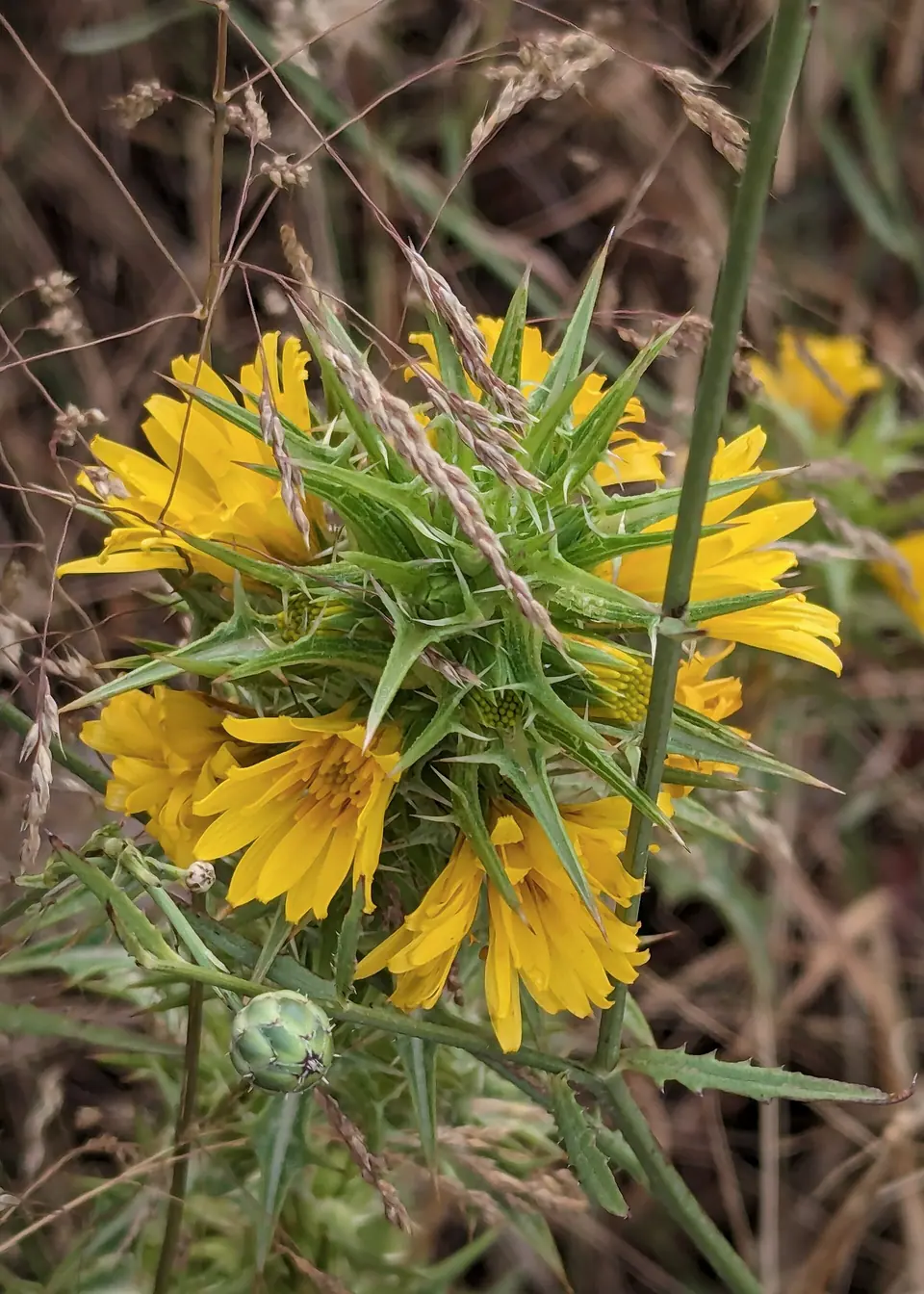
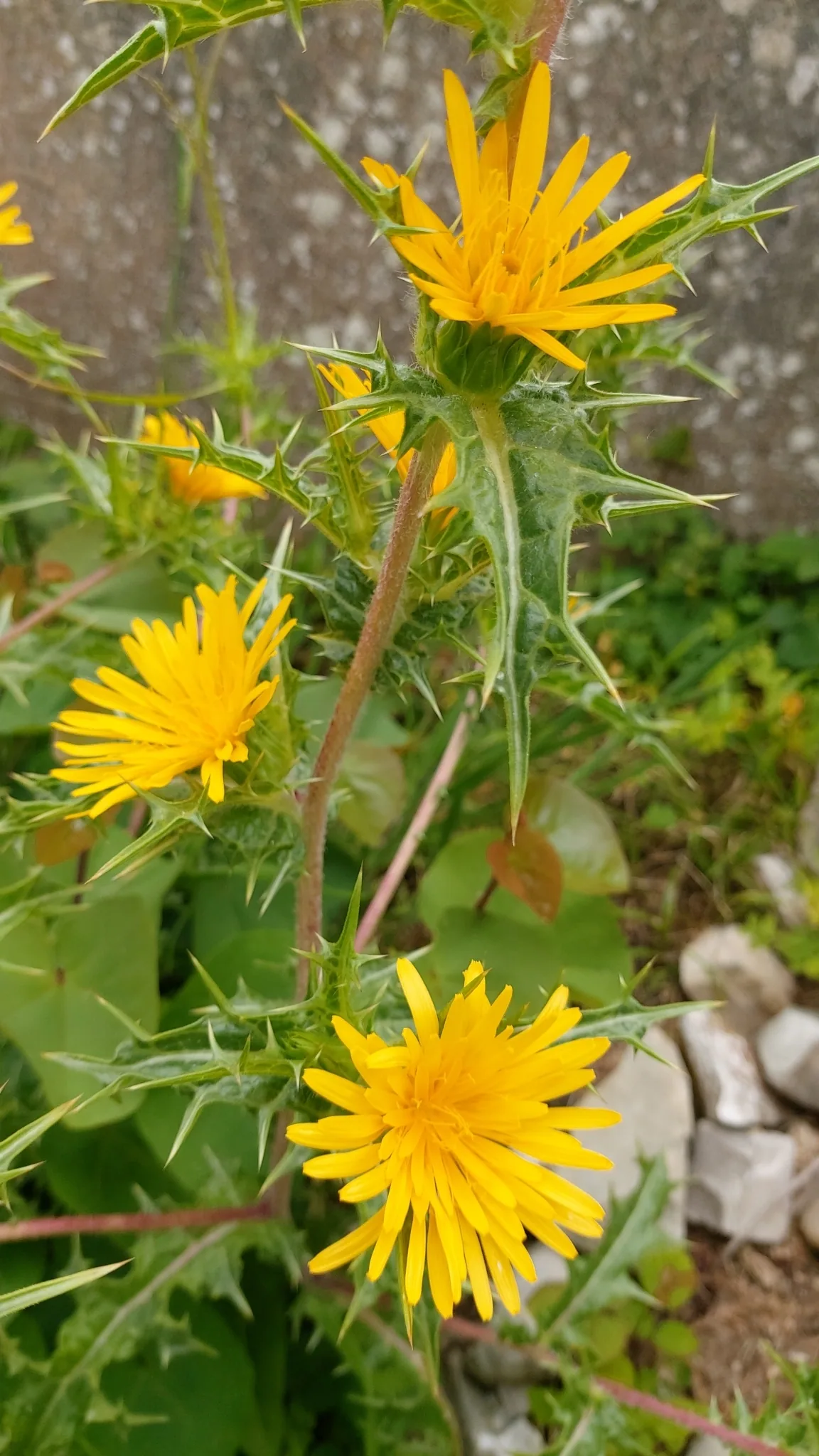

How to Grow and Care for Common golden thistle
Scolymus hispanicus
Written by Emilio Marruso · last checked
At a glance
Spanish oyster thistle is a tough, drought-tolerant plant that's easy to start: just sow the seeds right in the ground in late winter. Pick the leaves of the low rosette before it flowers, peel the tender stems to eat raw, or cook the leaves scrambled with eggs, in an omelet or in a hearty stew.
- Water
Handles dry spells well
- Spacing
12 in between plants
What the sources say (1)
Spacing: 30 cm [12 in]
una separación entre plantas de 30 cm.
— Scolymus hispanicus - EcuRed [5] - Harvest
Pick the low rosette leaves before it flowers; peeled tender stems can be eaten raw
What the sources say (1)
Harvest: Basal rosette leaves, before flowering
la parte aprovechable más habitual son las hojas de la roseta basal recolectadas antes de la floración
—  [2] - Propagation
Grows from seed
- Sowing
Sow straight into the ground in late winter
What the sources say (1)
Sowing: Late winter (direct sowing)
su siembra se efectúa directa, a finales del invierno
— Scolymus hispanicus - EcuRed [5]
Overview
Golden thistle is widely eaten as a wild vegetable in Spain, mainly the basal rosette leaves gathered before flowering. [2] It grows in fallows, waste ground and roadsides, usually on nitrified sites, and is treated as a weed in Australia and California. [2][6][3] It is tolerant of cold and drought and is sown directly in late winter, 30 cm [12 in] apart, in family gardens. [5]
This record is incomplete: the sources we read do not cover every field yet.
Not yet covered by our sources: Light
Common golden thistle care
Measurements in square brackets are our conversion into the other unit system; the quoted text is unchanged.
How to water Common golden thistle
How much light Common golden thistle needs
Not stated in the sources we read.
Where to grow Common golden thistle
30 cm [12 in]
What the sources say (1)
una separación entre plantas de 30 cm.How to propagate Common golden thistle
How to grow Common golden thistle
The plant
Family
Asteraceae
What the sources say (1)
Family:
COMPOSITAE (ASTERACEAE)
Genus:
Scolymus
Catalan common name:
Card de moro. Cardelina.Remedies
Each remedy shows what official sources say about it; traditional remedies without an official source are marked as such. Harmful ones are listed so you know to avoid them.
Getting rid of it
golden thistle infestation
manual removal of plant and tuber Not verified
Traditional remedy, not verified by an official source.
How: Small infestations can be managed by manual removal (grubbing) of the plant, especially the tuber.
repeated ploughing Not verified
Traditional remedy, not verified by an official source.
Care needs to be taken to clean all machinery used as tubers can 'hitch hike' and infest clean sites
— Golden Thistle, Spanish Salsify - Weeds Australia [6] How: Ploughing can be effective if carried out several times; clean all machinery used.
Calendar
Sowing
Late winter (direct sowing)
What the sources say (1)
su siembra se efectúa directa, a finales del inviernoHarvest
Basal rosette leaves, before flowering
What the sources say (1)
la parte aprovechable más habitual son las hojas de la roseta basal recolectadas antes de la floraciónMonths as given by the sources, which are mostly from the United States (northern hemisphere). In the southern hemisphere they shift by about six months.
Edibility
Reported by the source, quoted verbatim. Do not eat a plant on the basis of this page alone: identification mistakes can be dangerous.
Aunque también se come en crudo el tallo tierno pelado, la parte aprovechable más habitual son las hojas de la roseta basal recolectadas antes de la floración
[2]El consumo de la raíz, documentado en fuentes históricas [56,57], ha sido referido con menor frecuencia en los estudios etnobotánicos modernos
[2]Las tagarninas pueden ser cocinadas de varias maneras: Tagarninas sancochadas (ensaladilla), tagarninas revueltas con huevos , tagarninas esparragadas, tagarninas en el cocido, tortilla de tagarninas.
[5]The plant is edible and served in salads also the central part of the basal leaves can be boiled and served with scrambled eggs or in stews in parts of Spain. The Oyster reference comes from the sweet edible roots which are said to taste like oysters.
[4]
Similar plants
- Common goldenthistle Scolymus grandiflorus
- American Burnweed Erechtites hieraciifolius
- Autumn Goldenrod Solidago sphacelata
- Blessed milkthistle Silybum marianum
- Blue Wood Aster Symphyotrichum cordifolium
- Brown knapweed Centaurea jacea
- Bull Thistle Cirsium vulgare
- Bur Marigold Bidens laevis
Sources
Every value above is quoted from these documents. Links lead to the original publisher.
- Scolymus hispanicus L. - Herbari Virtual del Mediterrani Occidental · herbarivirtual.uib.cat, consulted
-  · miteco.gob.es, consulted
- Scolymus hispanicus Profile – California Invasive Plant Council · cal-ipc.org, consulted
- European Wild Plant: Scolymus hispanicus Spanish Oyster Plant · ukwildflowers.com, consulted
- Scolymus hispanicus - EcuRed · ecured.cu, consulted
- Golden Thistle, Spanish Salsify - Weeds Australia · weeds.org.au, consulted
Written by Emilio Marruso · last checked