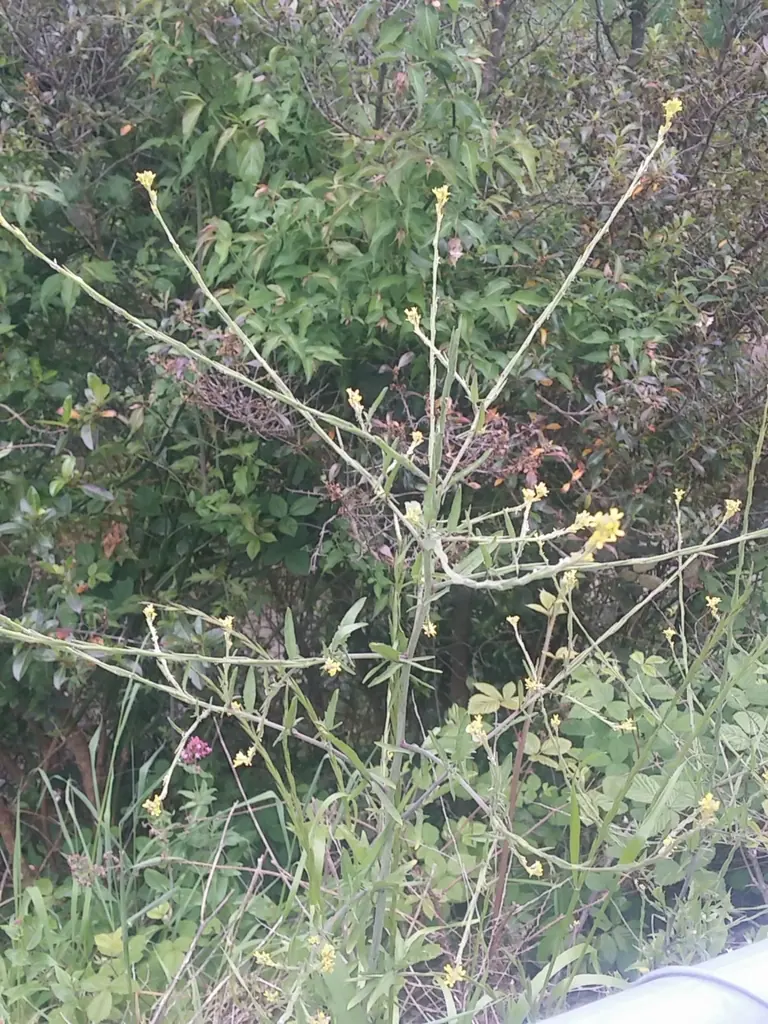
How to Grow and Care for Hedgemustard
Sisymbrium officinale
Written by Emilio Marruso · last checked
At a glance
Hedge mustard brings fresh young shoots to your kitchen, tasty raw or cooked. Just sow the seeds right where you want the plants to grow, in spring or fall, in full sun or light shade. Grow it away from roads and other polluted spots, because the plant holds on to dust and those leaves are seldom fit to eat.
- Sun
Full sun or light shade
What the sources say (1)
Light: Full sun or light shade
prefers a moist to dry acid to alkaline soil in full sun or light shade
— Sisymbrium officinale - Useful Temperate Plants [5] - Harvest
Eat the young shoots raw or cooked
- Watch out
It holds on to dust: leaves from plants near roads are seldom fit to eat
- Propagation
Grows from seed sown right where it will grow
What the sources say (1)
Propagation: Seed (sown in situ)
Propagation Seed - sow spring or autumn in situ
— Sisymbrium officinale - Useful Temperate Plants [5] - Sowing
Sow in place in spring or fall
What the sources say (2)
Overview
Hedge mustard is an annual or biennial plant that grows as a weed of roadsides and cultivated land. [1][7] The young shoots are eaten raw or cooked, with a bitter cabbage-like flavour used in salads or as a potherb. [5] It is easily grown from seed sown in spring or autumn, in full sun or light shade. [5]
This record is incomplete: the sources we read do not cover every field yet.
Not yet covered by our sources: Hardiness, coldest zone, Hardiness, warmest zone
Hedgemustard care
How much light Hedgemustard needs
Full sun or light shade
What the sources say (1)
prefers a moist to dry acid to alkaline soil in full sun or light shadeHow much cold Hedgemustard can take
Hardiness, coldest zone
Not stated in the sources we read.
Hardiness, warmest zone
Not stated in the sources we read.
How to propagate Hedgemustard
Seed (sown in situ)
What the sources say (1)
Propagation
Seed - sow spring or autumn in situHow to grow Hedgemustard
The plant
Family
Brassicaceae
What the sources say (1)
Family:
CRUCIFERAE (BRASSICACEAE)
Genus:
Sisymbrium
Catalan common name:Hedgemustard pests and problems
Dust and pollution on roadside plants
Symptom: The plant collects and retains dust, so leaves from plants growing near roads or other polluted places are seldom edible.
Remedies
Each remedy shows what official sources say about it; traditional remedies without an official source are marked as such. Harmful ones are listed so you know to avoid them.
Getting rid of it
hedge mustard
hand removal Partly works
How: Manual removal is effective but must be done at least every 8-10 weeks; once pods are formed, seed will often mature even if the plant has been uprooted.
Manual removal is effective but must be done at least every 8-10 weeks. Once pods are formed, seed will often mature even if the plant has been uprooted.
— Hedge Mustard [7] What the evidence says Hand-pulling is an option but it’s difficult and takes a lot of time.
— extension.oregonstate.edu [8] mowing before seed set Works
How: Prevent the plant from going to seed by mowing it right away.
Your first step needs to prevent this plant from going to seed, and I recommend mowing it right away.
— extension.oregonstate.edu [8] What the evidence says Your first step needs to prevent this plant from going to seed, and I recommend mowing it right away.
— extension.oregonstate.edu [8]
Calendar
Sowing
Spring or autumn (sown in situ)
What each source says
According to HerbiGuide (germination of wild plants, Australia): Mainly autumn, some in spring
Months as given by the sources, which are mostly from the United States (northern hemisphere). In the southern hemisphere they shift by about six months.
Edibility
Reported by the source, quoted verbatim. Do not eat a plant on the basis of this page alone: identification mistakes can be dangerous.
Edible Uses Young shoots - raw or cooked
[5]
Similar plants
- American Yellow Rocket Barbarea orthoceras
- Black Mustard Brassica nigra
- Broadleaved pepperweed Lepidium latifolium
- Brown Mustard Brassica juncea
- Cabbage Brassica oleracea
- Crested wartycabbage Bunias erucago
- Cultivated radish Raphanus sativus
- Dame's Rocket Hesperis matronalis
Sources
Every value above is quoted from these documents. Links lead to the original publisher.
- VicFlora: Sisymbrium officinale · vicflora.rbg.vic.gov.au, consulted
- Flora of New Zealand | Taxon Profile | Sisymbrium officinale · nzflora.info, consulted
- Plants of Hawai'i | Bishop Museum · plantsofhawaii.org, consulted
- VIRBOGA - Sisymbrium officinale · virboga.de, consulted
- Sisymbrium officinale - Useful Temperate Plants · temperate.theferns.info, consulted
- Sisymbrium officinale (L.) Scop. - Herbari Virtual del Mediterrani Occidental · herbarivirtual.uib.cat, consulted
- Hedge Mustard · herbiguide.com.au, consulted
- extension.oregonstate.edu · extension.oregonstate.edu
Written by Emilio Marruso · last checked