
How to Grow and Care for Coltsfoot
Tussilago farfara
Written by Emilio Marruso · last checked
Toxic to: People · Why
At a glance
Coltsfoot is an easygoing perennial that loves moist, well-drained soil and asks very little of you. Sow it from March to May, or start new plants from rhizomes, root cuttings or division, and its flowering stems will reach 12–20 inches. Give it a spot of its own: its creeping roots and airborne seeds spread quickly.
- Water
Keep the soil moist but well drained
- Cold
Survives winters down to −30 °F (−34.4 °C)
Very hardy · USDA 4 · RHS H7 · Z4
What the sources say (2)
Hardiness, coldest zone: 4 [winter low −34.4 to −28.9 °C (−30 to −20 °F)]
Hardiness: Zones 4-6
— Plant Profile: Coltsfoot (Tussilago farfara) – KarensGardenTips.com [7] Hardiness, warmest zone: 6 [winter low −23.3 to −17.8 °C (−10 to 0 °F)]
Hardiness: Zones 4-6
— Plant Profile: Coltsfoot (Tussilago farfara) – KarensGardenTips.com [7] - Harvest
Gathered from the wild as food and medicine, but it can harm the liver
- Watch out
Invasive: pull it from moist soil with the whole root and cut the flowers before they seed
- Size
Flowering stems 12–20 in tall
What the sources say (1)
Mature height: 30.5-50.8 cm (12-20 in, flowering stems at seed maturity)
Stems are 2 to 6 inches tall when flowering begins and can reach 12 to 20 inches by the time seeds mature.
— Ohio Weedguide [6] - Propagation
By seed, rhizomes, root cuttings or division
- Sowing
Sow from March to May
What the sources say (1)
Sowing: March to May
| Jan | Feb | Mar | Apr | May | Jun | Jul | Aug | Sep | Oct | Nov | Dec | Sow | | | yes | yes | yes
— Tussilago farfara (Coltsfoot) | BBC Gardeners World Magazine [3] - Safety
Toxic to people: it contains substances that damage the liver
Overview
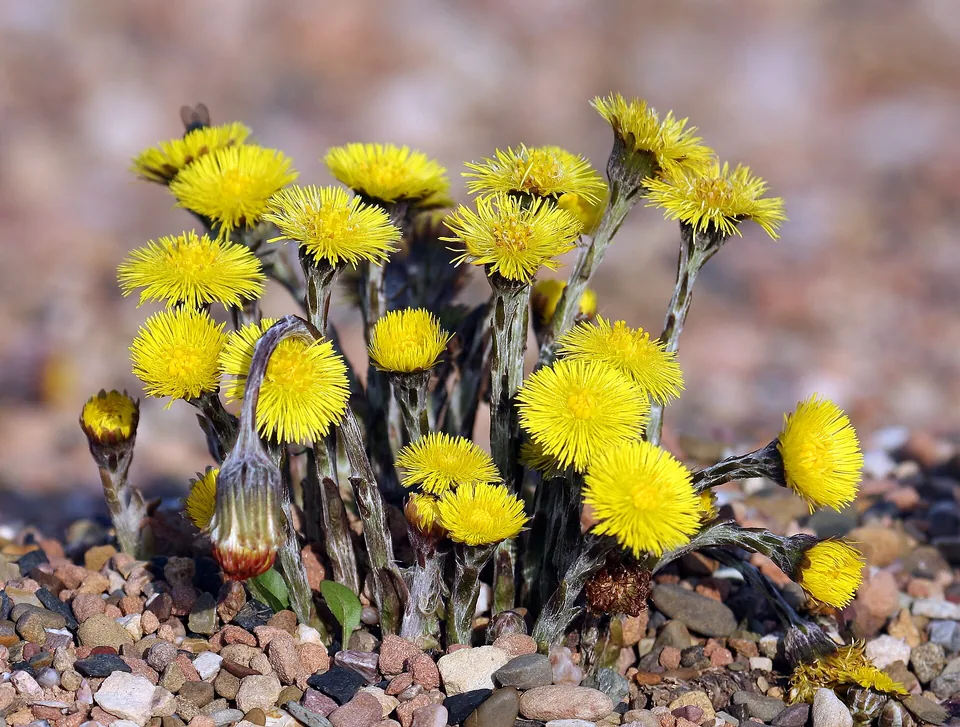
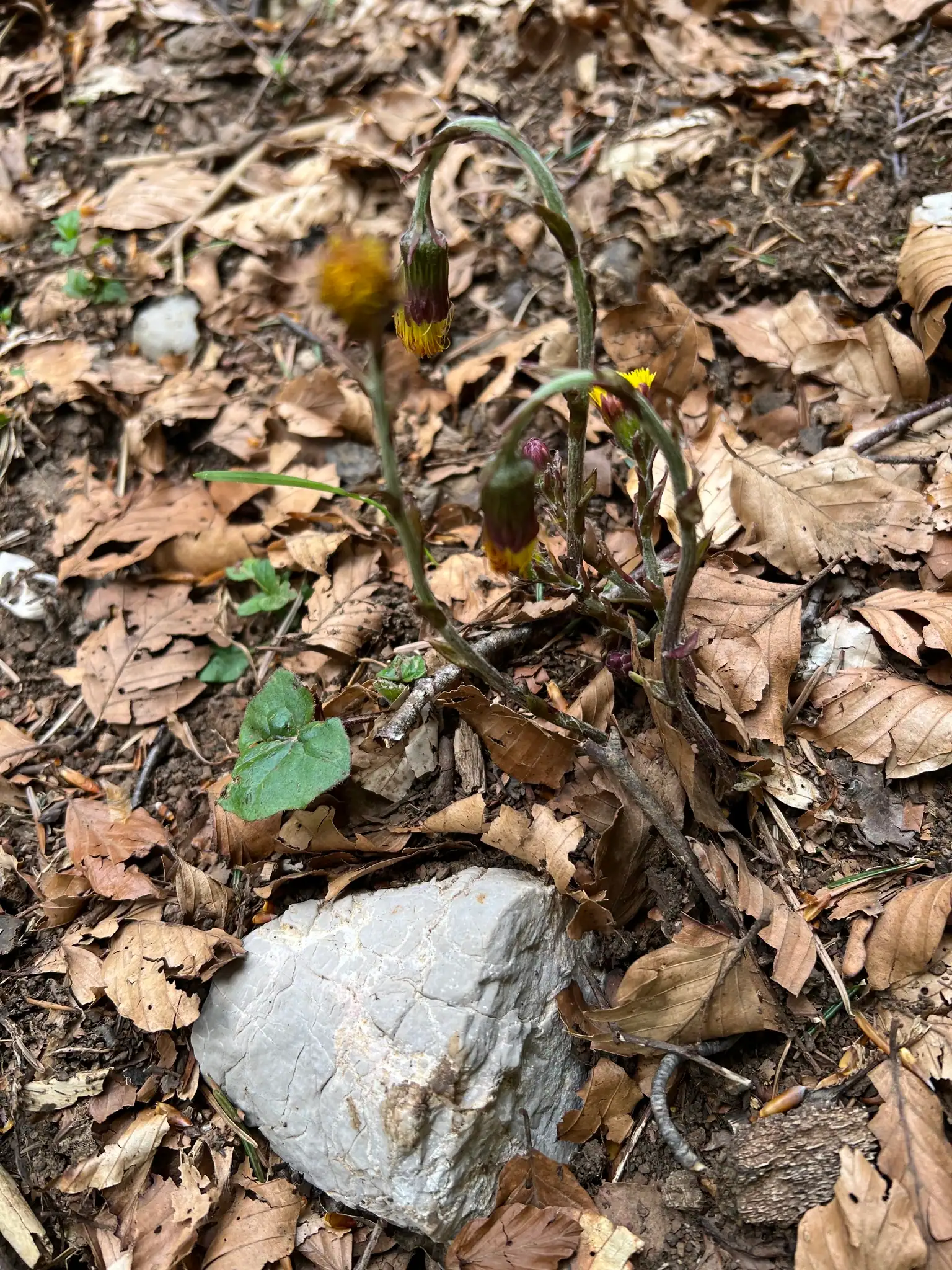
Coltsfoot is a spreading perennial weed whose yellow flowers appear before the leaves. [2][3] It spreads by creeping rhizomes and airborne seeds, and regrows from small root fragments. [2][3] It contains pyrrolizidine alkaloids that are reported to damage the liver. [3]
Coltsfoot care
How to water Coltsfoot
Well-drained and moist soil
What each source says
According to Plants for a Future (theferns): Moist soil
How much light Coltsfoot needs
How much cold Coltsfoot can take
Hardiness, coldest zone
4 [winter low −34.4 to −28.9 °C (−30 to −20 °F)]
What the sources say (1)
Hardiness: Zones 4-6Hardiness, warmest zone
6 [winter low −23.3 to −17.8 °C (−10 to 0 °F)]
What the sources say (1)
Hardiness: Zones 4-6How to propagate Coltsfoot
How to grow Coltsfoot
The plant
Life cycle
perennial
What the sources say (1)
Coltsfoot is a yellow-flowered perennial. Its flowers are the same color, size, and shape as dandelion flowers, and the two species are easily confusedFamily
Asteraceae
What the sources say (1)
## Family:
Sunflower Family (Asteraceae)
## Other Names:
ass's foot, bullsfoot, butterbur, clayweedMature height
30.5-50.8 cm (12-20 in, flowering stems at seed maturity)
What the sources say (1)
Stems are 2 to 6 inches tall when flowering begins and can reach 12 to 20 inches by the time seeds mature.Coltsfoot pests and problems
Invasive spread
Symptom: Creeping rhizomes and airborne seeds colonise disturbed ground; small root pieces left in the soil grow into new plants.
What to do: Hand-pull when soil is moist so the whole root comes up, cut flowers before they set seed, or smother with opaque covering.
What the sources say (2)
The best method for controlling coltsfoot is hand-pulling
— Coltsfoot Weed Control - How To Get Rid Of Coltsfoot Plants | Gardening Know How [2] Small pieces of root left in the soil can grow into new plants
— Coltsfoot Weed Control - How To Get Rid Of Coltsfoot Plants | Gardening Know How [2]
Remedies
Each remedy shows what official sources say about it; traditional remedies without an official source are marked as such. Harmful ones are listed so you know to avoid them.
Getting rid of it
coltsfoot patches
hand pulling when soil is moist Partly works
How: Pull plants when the ground is moist, before the plant sets seed, and remove all underground parts; left-over roots may resprout.
Manual removal of plants can be challenging for large populations; initial infestations may be controlled by hand pulling. Residual roots left in the soil may resprout.
— dnr.wisconsin.gov [9] What the evidence says Manual removal of plants can be challenging for large populations; initial infestations may be controlled by hand pulling. Residual roots left in the soil may resprout.
— dnr.wisconsin.gov [9]
coltsfoot young plants and small patches
pulling seedlings and digging out small patches Partly works
How: Dig out small patches and seedlings, removing all parts of the plant including roots.
Physical removal - Pull seedlings and dig out small patches. Ensure removal of all parts of the plant including roots
— weedbusters.org.nz [10] What the evidence says Young plants and very small infestations may be able to be carefully dug out of the ground. All rhizome fragments will have to be carefully removed, as a fragment with even one node can form a new plant.
— nwcb.wa.gov [11]
coltsfoot rhizomes
repeated hoeing and removal of leaves and flowers Partly works
How: Hoe off the flowers to prevent seeding and remove the leaves to exhaust the rhizomes.
It is important to prevent seeding and flowers should be hoed off. The leaves should be removed to exhaust the rhizomes.
— gardenorganic.org.uk [12] What the evidence says Also the rhizome depth can also make it difficult to control plants with stubble cultivation, ploughing, or hoeing as these methods may not reach the entire rhizome system.
— nwcb.wa.gov [11]
coltsfoot in cropped land
smother crops of mustard or vetch Not verified
Traditional remedy, not verified by an official source.
How: Smother crops of mustard or vetches help to suppress coltsfoot; a dense crop stand will also out-compete it.
coltsfoot regrowth
planting competitive perennial plants Partly works
How: Establish competitive perennial plants to reduce coltsfoot populations.
Competitive perennial plants can reduce Tussilago populations. This can have the added benefit of replacing the coltsfoot as a food source for pollinators.
— kingcounty.gov [13] What the evidence says Competitive perennial plants can reduce Tussilago populations. This can have the added benefit of replacing the coltsfoot as a food source for pollinators.
— kingcounty.gov [13]
Is Coltsfoot poisonous?
Reported by the source, quoted verbatim. This is not medical or veterinary advice: if a person or an animal may have eaten this plant, contact a poison control centre or a veterinarian.
carcinogenicity of young, pre-blooming flowers of coltsfoot - due to senkirkine, a hepatotoxic pyrrolizidine alkaloid
[1]coltsfoot has been discovered to contain toxic pyrrolizidine alkaloids and studies have found that these cause liver damage
[3]The plant contains traces of liver-affecting pyrrolizidine alkaloids and is potentially toxic in large doses
[4]- Toxic principle
liver-affecting pyrrolizidine alkaloids
[4]
Calendar
March to May
What the sources say (1)
| Jan | Feb | Mar | Apr | May | Jun | Jul | Aug | Sep | Oct | Nov | Dec
| Sow | | | yes | yes | yesMonths as given by the sources, which are mostly from the United States (northern hemisphere). In the southern hemisphere they shift by about six months.
Edibility
Reported by the source, quoted verbatim. Do not eat a plant on the basis of this page alone: identification mistakes can be dangerous.
It is harvested from the wild for local use as a food, medicine and source of materials
[4]
Similar plants
- African Marigold Tagetes erecta
- American Burnweed Erechtites hieraciifolius
- Aspen Fleabane Erigeron speciosus
- Autumn Goldenrod Solidago sphacelata
- Blessed milkthistle Silybum marianum
- Blue Chalksticks Curio repens
- Blue Wood Aster Symphyotrichum cordifolium
- Boneset Eupatorium perfoliatum
Sources
Every value above is quoted from these documents. Links lead to the original publisher.
- Coltsfoot - Cooperative Extension: Maine Wild Blueberries - University of Maine Cooperative Extension · extension.umaine.edu, consulted
- Coltsfoot Weed Control - How To Get Rid Of Coltsfoot Plants | Gardening Know How · gardeningknowhow.com, consulted
- Tussilago farfara (Coltsfoot) | BBC Gardeners World Magazine · gardenersworld.com, consulted
- Tussilago farfara - Useful Temperate Plants · temperate.theferns.info, consulted
- World Plants · worldplants.ca, consulted
- Ohio Weedguide · weedguide.cfaes.osu.edu, consulted
- Plant Profile: Coltsfoot (Tussilago farfara) – KarensGardenTips.com · karensgardentips.com, consulted
- AgroAtlas - Weeds - Tussilago farfara L. - Tussilago farfara · agroatlas.ru, consulted
- dnr.wisconsin.gov · dnr.wisconsin.gov
- weedbusters.org.nz · weedbusters.org.nz
- nwcb.wa.gov · nwcb.wa.gov
- gardenorganic.org.uk · gardenorganic.org.uk
- kingcounty.gov · kingcounty.gov
Written by Emilio Marruso · last checked