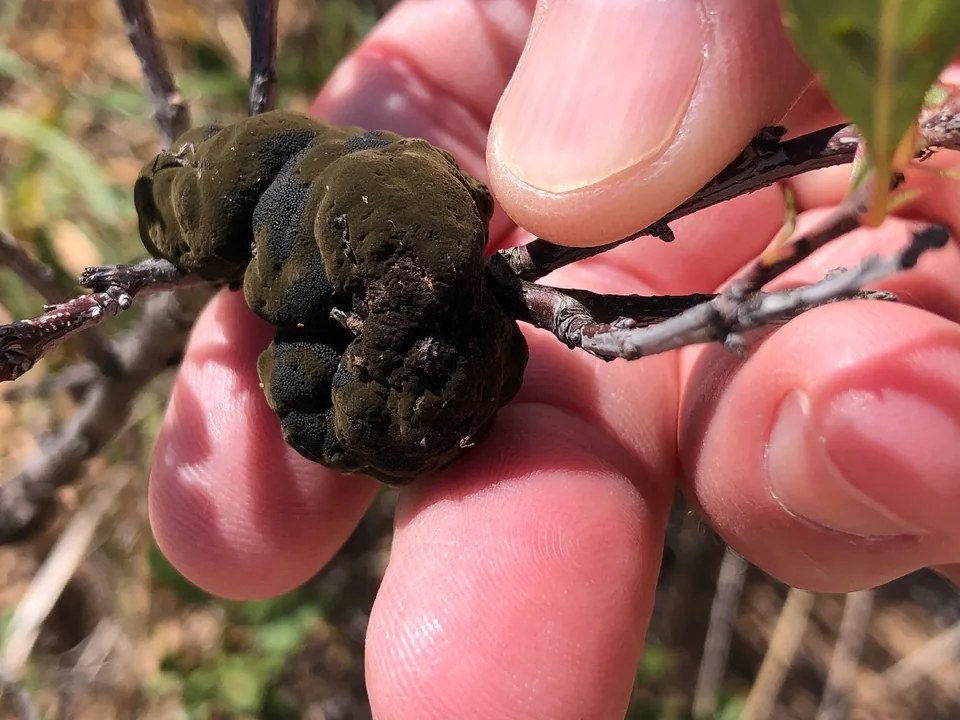
Fungus
Black knot of plum
Apiosporina morbosa
Written by Emilio Marruso
Classification: Ascomycota › Pezizomycotina › Dothideomycetes › Venturiales › Venturiaceae › Apiosporina
Plants it attacks
Plants in our guide where this problem is reported. Open a plant to see the sources.
- Plum
Symptom: Fungal disease listed among plum problems
- Fire Cherry
Symptom: Disfiguring clumps of black growth on the branches
- Japanese Plum
Symptom: Fungal infection of the woody parts occurring in spring during shoot growth; severe infestations reduce yield.
- Black Cherry
Symptom: Caterpillar webs and defoliation; black knobby fungus growths on branches
- Downy Cherry
Symptom: Listed as the most serious problems of this species.
- Chokecherry
Symptom: Long, black swellings on tips of branches.
Also reported on: Afghan Cherry, American Plum, Apricot, Chickasaw Plum, Chinese Plum, Flatwoods Plum, Peach, Sour Cherry
Remedies
What our plant sheets report, with the outcome checked against official sources. Traditional remedies without an official source are flagged.
Treat
cutting off the knots Works
How: Cut off the knots and remove them from the premises, cutting several inches back of the knot. Prune before budbreak.
Reported for 1 plant: Japanese Plum
pruning out black knot galls Works
How: Cut off the knots and remove them from the premises, cutting several inches back of the knot; prune before budbreak.
Reported for 1 plant: Flatwoods Plum
pruning out cankers Works
How: Prune infections in wood about 4 inches below the lowest symptom of infection. Midsummer pruning is the most effective since the outer swelling is the closest to the infection on the inside of the wood.
Reported for 1 plant: Plum
pruning out infected branches Works
How: In the dormant season prune out infected branches at least 6-12 inches away from the gall and remove the infected stems and branches from the site.
Reported for 1 plant: Fire Cherry
pruning out infected wood Works
How: Prune out and dispose of infected wood below visible damage.
Reported for 1 plant: Sour Cherry
removing diseased branches Works
How: prune out knots while the tree is dormant, cutting about 15 cm below the swelling into healthy wood; burn or bin the prunings (never compost them) and clean tools between cuts
Reported for 1 plant: Chokecherry
pruning out the galls Partly works
How: Prune in the dormant season when galls are easy to see; remove all knots and burn, bury, or remove them from the site; cut 4 to 8 inches behind the swellings.
Reported for 1 plant: Chinese Plum
burning, burying or removing prunings Official source, not independently tested
How: All clippings should be burned, buried, or otherwise removed from the property.
Reported for 1 plant: Fire Cherry
dormant oil at bud swell Official source, not independently tested
How: Apply a dormant oil at bud swell.
Reported for 1 plant: Chinese Plum
pruning out galls Official source, not independently tested
How: Prune and destroy galls, cutting several inches below the gall, especially during dormancy.
Reported for 1 plant: Afghan Cherry
pruning out infected branches Official source, not independently tested
How: Prune out all infected branches in late winter and destroy them by burning, burying, or throwing them away; remove at least 3-4 inches of healthy tissue below each knot.
Reported for 1 plant: Chickasaw Plum
pruning out infected wood Official source, not independently tested
How: Prune out and burn or bury all infected wood in late winter or early spring, cutting four to eight inches behind the swellings.
Reported for 1 plant: American Plum
pruning out knots Official source, not independently tested
How: Prune out and destroy all visible knots before spring growth, cutting 6-8 inches below the lowest part of the knot; burn, bury or remove all clippings from the property.
Reported for 1 plant: Downy Cherry
Where it is found
Present in 3 countries.
Regulated as a quarantine pest in: Argentina, Bahrain, Brazil, Chile, China, Egypt, Iran, Israel, Jordan, Morocco, Norway, Paraguay, Serbia, Switzerland, Tunisia, Türkiye, Ukraine, United Kingdom, Uruguay.