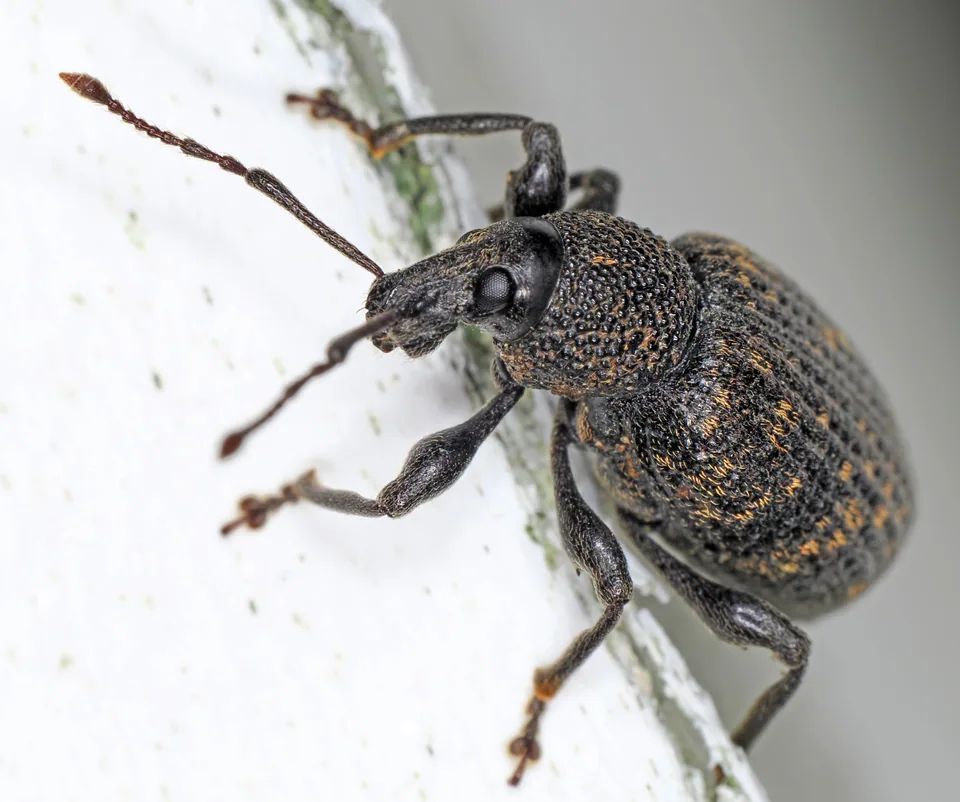
Insect
Black vine weevil
Otiorhynchus sulcatus
Written by Emilio Marruso
Classification: Arthropoda › Hexapoda › Insecta › Coleoptera › Curculionidae › Entiminae › Otiorhynchus
Plants it attacks
Plants in our guide where this problem is reported. Open a plant to see the sources.
- Japanese Jack-in-the-pulpit
Symptom: Pests to watch for
- Bellflower
Symptom: Listed as pests to monitor.
- Sweet Autumn Clematis
Symptom: Aphids, vine weevils, leaf spot, stem rot, and powdery mildew.
- Coneflower
Symptom: Insect and disease problems; vine weevils may feed on roots
- Foamflower
Symptom: Occasional pest that can be very destructive
Also reported on: African Spear, Allegheny Stonecrop, American Yew, Ashy Hydrangea, Bergenia, Boston Ivy, Bush Clematis, Chinese Yew, Coral Bells, Cyclamen, English Yew, Enkianthus, Florida Yew, Grape, Greek Cyclamen, Hairy Alumroot, Hardy Cyclamen, Heath, Oxlip, Portugal Laurel, Primrose, Primrose, Stonecrop
Remedies
What our plant sheets report, with the outcome checked against official sources. Traditional remedies without an official source are flagged.
Treat
beneficial nematodes Works
How: In fall, beneficial nematodes can be applied to the soil around the plants to help control weevil larvae.
Reported for 1 plant: Hairy Alumroot
hand-picking adults Works
How: handpick the adults off stems and leaves in the evening, when they are active
Reported for 1 plant: Coral Bells
hand-picking adults after dusk Works
How: Adults can also be hand-picked after dusk if your populations are low.
Reported for 1 plant: English Yew
beneficial nematodes in the soil Partly works
How: Treat the soil with insect pathogenic nematodes.
Reported for 4 plants: Cyclamen, Heath, Chinese Yew, Florida Yew
insect pathogenic nematodes Partly works
How: Treat the soil with insect pathogenic nematodes.
Reported for 2 plants: Greek Cyclamen, Boston Ivy
beneficial nematodes Partly works
How: apply beneficial nematodes to the soil around the plants in fall
Reported for 1 plant: Coral Bells
hand-picking adults Official source, not independently tested
How: Adults feed at night: scout and hand-pick them; a sheet or burlap spread beneath the plant catches adults as they drop to the ground, and the beetles caught are destroyed.
Reported for 1 plant: Japanese Jack-in-the-pulpit
insect pathogenic nematodes Official source, not independently tested
How: Insect pathogenic nematodes can be used for control of larvae in the soil.
Reported for 1 plant: Ashy Hydrangea
insect pathogenic nematodes in the soil Official source, not independently tested
How: Treat the soil with insect pathogenic nematodes against the root-feeding larvae.
Reported for 1 plant: American Yew
nematodes Official source, not independently tested
How: Apply microscopic insect pathogenic nematodes against the larvae, in August or early September, in containers or in the open ground.
Reported for 1 plant: Stonecrop
removing beetles by hand Official source, not independently tested
How: On mild spring or summer evenings inspect plants and walls by torchlight and pick off the adult weevils.
Reported for 1 plant: Stonecrop
beneficial nematodes Not verified
How: insect-attacking nematodes burrow into the weevil grubs and release bacteria that poison them
Reported for 1 plant: Hardy Cyclamen
buckwheat hull or gravel mulch, chives or garlic nearby Not verified
How: Pacciamare i vasi con lolla di grano saraceno o ghiaia attorno al colletto; coltivare erba cipollina o aglio fra le piante.
Reported for 1 plant: Primrose
corrugated cardboard trap Not verified
How: Place corrugated cardboard around the infested plants overnight and throw it out with the weevils in the morning.
Reported for 1 plant: Bergenia
corrugated paper or flowerpot traps Not verified
How: leave out rolls of corrugated paper or flowerpots stuffed with fresh grass, inspecting and emptying the traps every day
Reported for 1 plant: Primrose
corrugated paper or grass-filled flowerpot traps Not verified
How: Gli adulti notturni si catturano con rotoli di cartone ondulato o vasi riempiti di erba fresca; le trappole vanno controllate ogni giorno.
Reported for 1 plant: Primrose
corrugated paper trap Not verified
How: adults are nocturnal and can be trapped in rolls of corrugated paper or flowerpots stuffed with fresh grass, inspected every day
Reported for 1 plant: Oxlip
9 more remedies are reported in single plant sheets.
Where it is found
Present in 34 countries.
Regulated as a quarantine pest in: Argentina, Brazil, Iran, Israel, Mexico, Paraguay, Uruguay.