
How to Grow and Care for American beachgrass
Ammophila breviligulata
Written by Emilio Marruso · last checked
At a glance
Beachgrass is a tough, sun-loving grass made for life on the dunes. Give it full sun and, once it settles in, it handles drought on its own, even in acidic soil down to pH 4.5. Plant it 18–24 inches apart on the dune crest, and grow new plants from seed sown in a spring greenhouse or by dividing the clumps.
- Sun
Full sun
What the sources say (3)
Light: Full sun
Light full sun Shade tolerance no shade Water moderate
— Beach Grass (Ammophila breviligulata) — Practical Plants [2] Water Use: Medium Light Requirement: Sun Soil Moisture: Dry
— Lady Bird Johnson Wildflower Center - The University of Texas at Austin [3] Requires a sunny position in a light well-drained soil, tolerating moderate salinity.
— Ammophila breviligulata - Useful Temperate Plants [5] - Water
Handles drought once it is established
What the sources say (2)
- Cold
Survives winters down to −20 °F (−28.9 °C)
Very hardy · USDA 5 · RHS H7 · Z5
What the sources say (1)
Hardiness, coldest zone: 5 [winter low −28.9 to −23.3 °C (−20 to −10 °F)]
Hardiness Zone 5+ Soil textures sandy, loamy
— Beach Grass (Ammophila breviligulata) — Practical Plants [2] - Soil
Tolerates acidic soil, down to pH 4.5
What the sources say (2)
- Spacing
18–24 in apart on the dune crest; 2 ft, then 3 ft in the rows beside it
What the sources say (3)
Spacing: 45.7-61.0 cm (18-24 in) at the crest of the dune
crest of the dune: Space the plants 18 to 24 inches apart at the crest of the dune and increase the spacing to 2 feet and then to 3 feet for several rows on each side of the crest.
— Restoration and Management of Coastal Dune Vegetation | NC State Extension Publications [4] several rows on each side of the crest: Space the plants 18 to 24 inches apart at the crest of the dune and increase the spacing to 2 feet and then to 3 feet for several rows on each side of the crest.
— Restoration and Management of Coastal Dune Vegetation | NC State Extension Publications [4] Space the plants 18 to 24 inches apart at the crest of the dune and increase the spacing to 2 feet and then to 3 feet for several rows on each side of the crest.
— Restoration and Management of Coastal Dune Vegetation | NC State Extension Publications [4] - Pests
Can suffer from fungal disease
What the sources say (1)
Diseases: fungal disease
it tends to die out behind the the dune crest after only a few years. This die-out is caused by climatic effects, fungal disease, and insects.
— Restoration and Management of Coastal Dune Vegetation | NC State Extension Publications [4] - Watch out
Behind the dune crest it can die out in a few years; fill dead patches with sea oats
- Propagation
From seed or by dividing the clumps
- Sowing
Sow in spring, in a greenhouse
What the sources say (1)
Sowing: Spring, in a greenhouse
Seed - sow spring in a greenhouse and only just cover the seed.
— Beach Grass (Ammophila breviligulata) — Practical Plants [2]
Overview
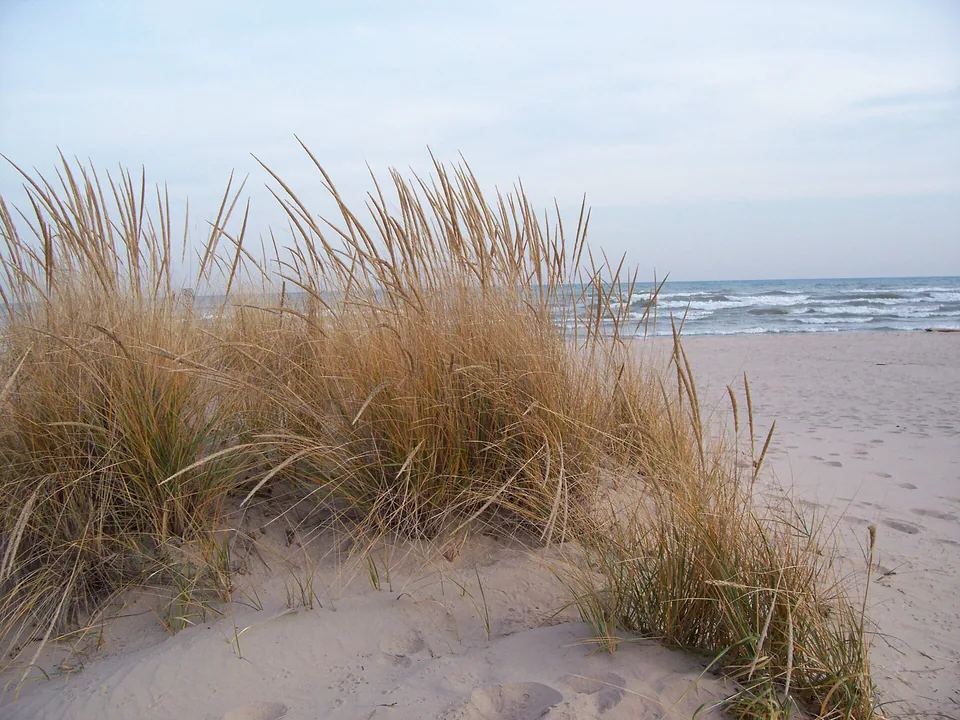
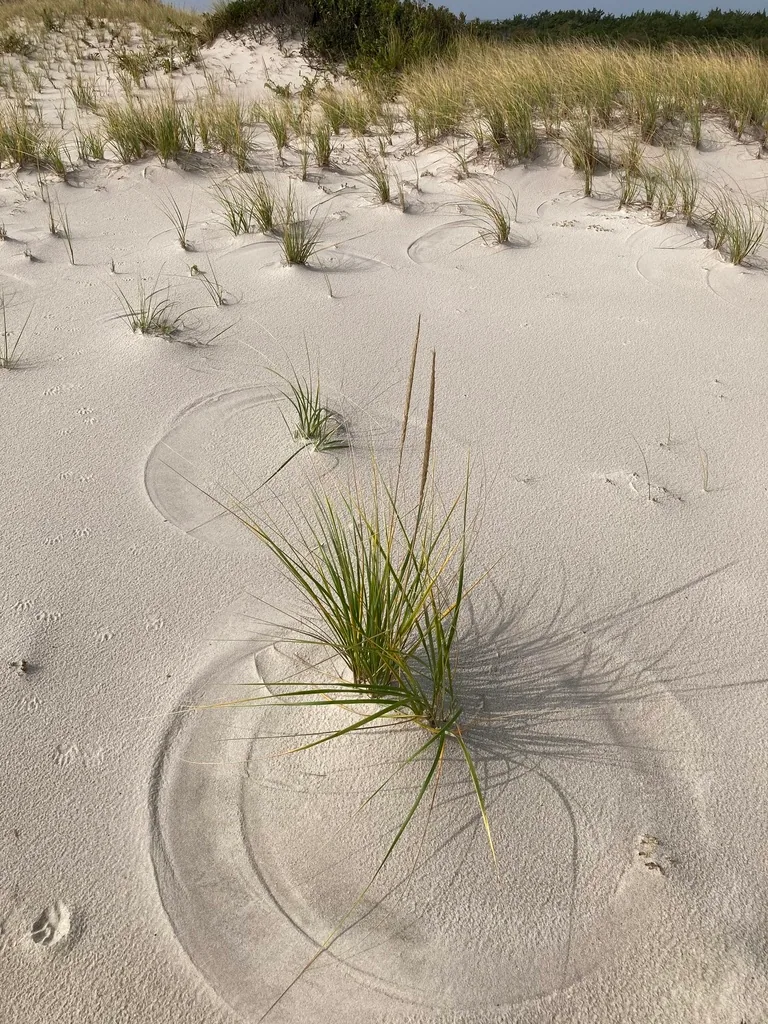
American beachgrass is a cool-season perennial dune grass native to the Atlantic and Great Lakes coasts that spreads by runners and is widely used to stop blowing sand. [4] It needs a sunny position in light, well-drained sandy soil and tolerates drought and severe maritime exposure once established. [5] Introduced to the Pacific Coast of North America, it has become invasive there. [1]
This record is incomplete: the sources we read do not cover every field yet.
Not yet covered by our sources: Hardiness, warmest zone, Pruning
American beachgrass care
How to water American beachgrass
Drought tolerant once established
How much light American beachgrass needs
Full sun
What the sources say (3)
Light
full sun
Shade tolerance
no shade
Water
moderateWater Use: Medium
Light Requirement: Sun
Soil Moisture: DryRequires a sunny position in a light well-drained soil, tolerating moderate salinity.How much cold American beachgrass can take
Hardiness, coldest zone
5 [winter low −28.9 to −23.3 °C (−20 to −10 °F)]
What the sources say (1)
Hardiness
Zone 5+
Soil textures
sandy, loamyHardiness, warmest zone
Not stated in the sources we read.
Best soil for American beachgrass
Soil pH, minimum
4.5
What each source says
According to Useful Temperate Plants (preferred 5-6): 4.5
Soil pH, maximum
The sources give different values depending on region, zone or growing conditions.
What each source says
According to Useful Temperate Plants: 6.5
According to Practical Plants: alkaline soils included
What the sources say (3)
According to Useful Temperate Plants: Prefers a pH in the range 5 - 6, tolerating 4.5 - 6.5According to Practical Plants: Soil pH
acid, neutral, alkaline
Drainage
well drainedPrefers a pH in the range 5 - 6, tolerating 4.5 - 6.5Where to grow American beachgrass
45.7-61.0 cm (18-24 in) at the crest of the dune
What each source says
crest of the dune: 45.7-61.0 cm (18-24 in)
several rows on each side of the crest: 61.0 cm (2 ft), then 91.4 cm (3 ft)
What the sources say (3)
crest of the dune: Space the plants 18 to 24 inches apart at the crest of the dune and increase the spacing to 2 feet and then to 3 feet for several rows on each side of the crest.several rows on each side of the crest: Space the plants 18 to 24 inches apart at the crest of the dune and increase the spacing to 2 feet and then to 3 feet for several rows on each side of the crest.Space the plants 18 to 24 inches apart at the crest of the dune and increase the spacing to 2 feet and then to 3 feet for several rows on each side of the crest.How to propagate American beachgrass
How to grow American beachgrass
Pests and diseases
Diseases
fungal disease
What the sources say (1)
it tends to die out behind the the dune crest after only a few years. This die-out is caused by climatic effects, fungal disease, and insects.American beachgrass pests and problems
Die-out behind the dune crest
Symptom: Dead patches of beachgrass after only a few years
What to do: Replace dead patches with sea oats, bitter panicum, or seashore elder
What the sources say (1)
it tends to die out behind the the dune crest after only a few years. This die-out is caused by climatic effects, fungal disease, and insects.
— Restoration and Management of Coastal Dune Vegetation | NC State Extension Publications [4]
Remedies
Each remedy shows what official sources say about it; traditional remedies without an official source are marked as such. Harmful ones are listed so you know to avoid them.
Treating the plant
dieback
lime and fertilizer on replanted dunes Official source, not independently tested
How: Fertilizer and lime applied to dunes defoliated by die-off and replanted.
The lime+fertilizer treatment resulted in a significantly greater percentage of live plants and percentage of cover of A. breviligulata, as well as greater total plant cover.
— scholars.unh.edu [6] replanting dead patches with other dune plants Official source, not independently tested
How: Dead patches are replaced with sea oats, bitter panicum, or seashore elder.
Dead patches of beachgrass should be replaced with sea oats, bitter panicum, or seashore elder.
— Restoration and Management of Coastal Dune Vegetation | NC State Extension Publications [4]
Calendar
Sowing
Spring, in a greenhouse
What the sources say (1)
Seed - sow spring in a greenhouse and only just cover the seed.Planting
The sources give different values depending on region, zone or growing conditions.
What each source says
North Carolina dune planting: November - March
seedlings raised in a greenhouse: Late spring - early summer
What the sources say (3)
North Carolina dune planting: the best planting dates are November through March.seedlings raised in a greenhouse: Plant them out in late spring or early summer.the best planting dates are November through March.Pruning
Not stated in the sources we read.
Months as given by the sources, which are mostly from the United States (northern hemisphere). In the southern hemisphere they shift by about six months.
Indicative values
Values from a secondary source, not checked word for word like the rest of this page. Use them as a starting point.
- Mature height
- 20-25 cm [7.9–9.8 in]Indicative value, adapt it to your climate · Secondary source
- Hours of sun
- 6-8 hoursIndicative value, adapt it to your climate · Secondary source
- Soil
- SandIndicative value, adapt it to your climate · Secondary source
- Care level
- ModerateIndicative value, adapt it to your climate · Secondary source
- Growth rate
- LowIndicative value, adapt it to your climate · Secondary source
- Pruning
- March, April, May, March, April, MayIndicative value, adapt it to your climate · Secondary source
Similar plants
- Abies grandis Abies grandis
- Abraham Trachystemon orientalis
- Abyssinian banana Ensete ventricosum
- Acacia longifolia Acacia longifolia
- Acanthus hungaricus Acanthus hungaricus
- Aconite Aconitum napellus
- Adam's Needle Yucca flaccida
- Adriatic lizard orchid Himantoglossum adriaticum
Sources
Every value above is quoted from these documents. Links lead to the original publisher.
- Ammophila breviligulata (American Beach Grass): Minnesota Wildflowers · minnesotawildflowers.info, consulted
- Beach Grass (Ammophila breviligulata) — Practical Plants · practicalplants.org, consulted
- Lady Bird Johnson Wildflower Center - The University of Texas at Austin · wildflower.org, consulted
- Restoration and Management of Coastal Dune Vegetation | NC State Extension Publications · content.ces.ncsu.edu, consulted
- Ammophila breviligulata - Useful Temperate Plants · temperate.theferns.info, consulted
- scholars.unh.edu · scholars.unh.edu
Written by Emilio Marruso · last checked