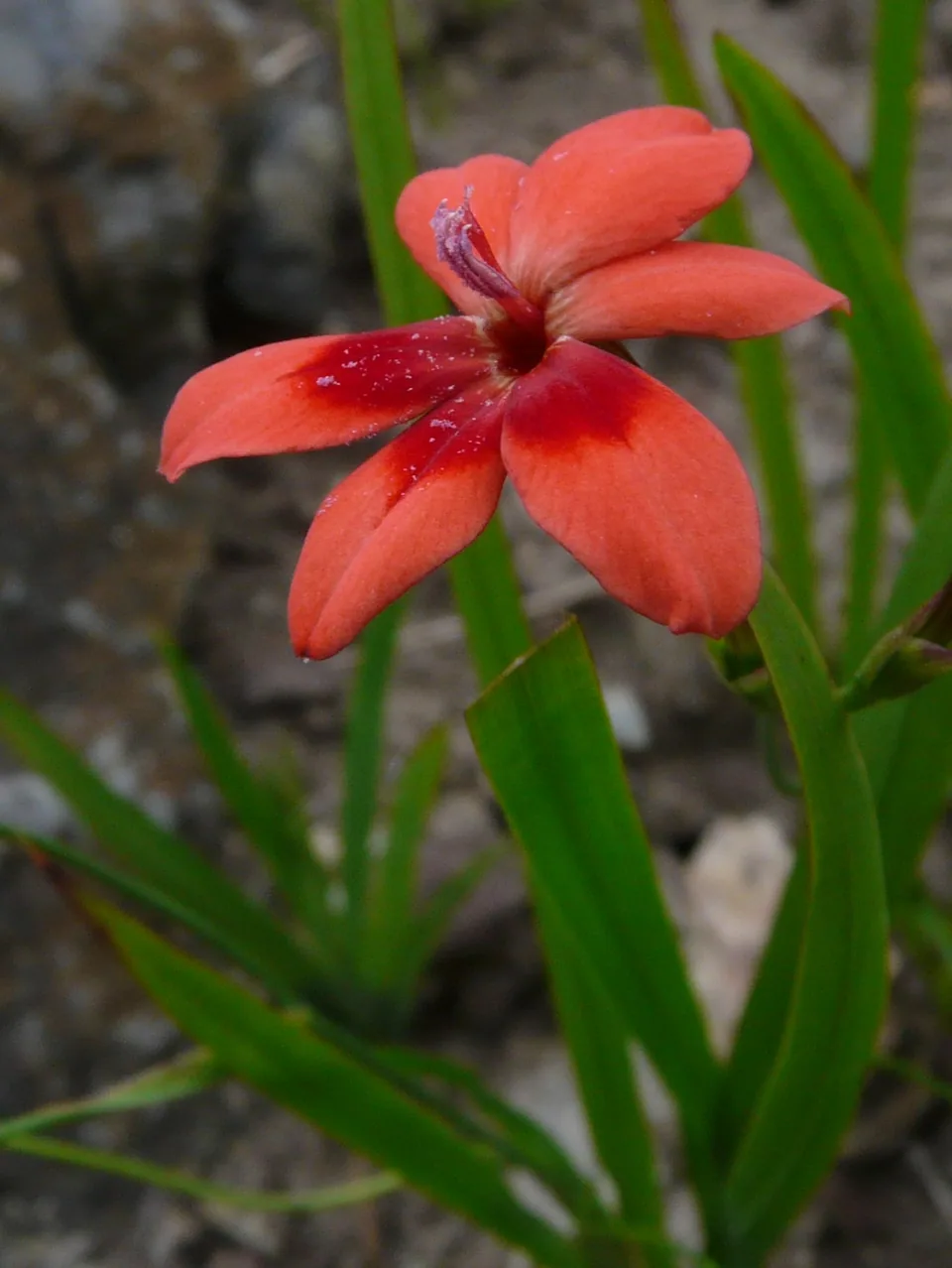

How to Grow and Care for Freesia laxa
Anomatheca laxa
Written by Emilio Marruso · last checked
Toxic to: Cats, Birds · Why
At a glance
Freesia laxa is an easygoing plant that shrugs off drought, yet rewards you when you keep the soil moist and well drained while it grows and flowers. Start the seeds indoors two to three months before the final frost, or divide the plants to get more. It grows happily in containers too, and it has no reported toxic effects for cats or birds.
- Water
Keep soil moist and well drained while it grows and flowers; keep the bulbs dry while it rests
What the sources say (3)
Watering: Drought resistant, but keep soil moist and well drained during growth and flowering
It's a drought resistant flower, but requires moist, well-drained soil during its growing and blooming stages.
— What Is False Freesia: Learn About False Freesia Plants In The Garden | Gardening Know How [3] Watering notes: Keep corms dry during dormancy
Corms need to be kept completely dry when dormant – it’s therefore best to dig them up for overwintering undercover, or grow in a container, which you can easily move indoors in autumn.
— Freesia laxa | BBC Gardeners World Magazine [2] After blooming, false freesia plants enter a period of dormancy and the leaves die back. During dormancy, it prefers a drier substrate.
— What Is False Freesia: Learn About False Freesia Plants In The Garden | Gardening Know How [3] - Cold
Survives winters down to 10 °F (−12.2 °C)
Hardy in cold winters · USDA 8 · RHS H5 · Z8
What the sources say (2)
Hardiness, coldest zone: 8 [winter low −12.2 to −6.7 °C (10 to 20 °F)]
False freesia plants prefer full sun and are winter hardy in USDA zones 8 to 10. In these areas, planting false freesia corms in the fall is recommended.
— What Is False Freesia: Learn About False Freesia Plants In The Garden | Gardening Know How [3] Hardiness, warmest zone: 10 [winter low −1.1 to 4.4 °C (30 to 40 °F)]
False freesia plants prefer full sun and are winter hardy in USDA zones 8 to 10. In these areas, planting false freesia corms in the fall is recommended.
— What Is False Freesia: Learn About False Freesia Plants In The Garden | Gardening Know How [3] - Propagation
Grow it from seed, or divide the plants in spring or in September–October
What the sources say (4)
Propagation: Seed, division
According to Gardening Know How: False freesia can readily propagate from seeds and can become prolific to the point of being invasive. When needed, divide false freesia in the spring.
— What Is False Freesia: Learn About False Freesia Plants In The Garden | Gardening Know How [3] According to Gardeners' World: Flowers | | | | | | yes | yes | yes | | | | | Divide | | | | | | | | | yes | yes | |
— Freesia laxa | BBC Gardeners World Magazine [2] False freesia can readily propagate from seeds and can become prolific to the point of being invasive. When needed, divide false freesia in the spring.
— What Is False Freesia: Learn About False Freesia Plants In The Garden | Gardening Know How [3] Flowers | | | | | | yes | yes | yes | | | | | Divide | | | | | | | | | yes | yes | |
— Freesia laxa | BBC Gardeners World Magazine [2] - Sowing
Sow indoors 2–3 months before the last frost
What the sources say (1)
Sowing: Indoors, two to three months before the final frost
Seed germination can take several weeks, so it's recommended to start seeds two to three months before the final frost.
— What Is False Freesia: Learn About False Freesia Plants In The Garden | Gardening Know How [3] - Containers
Grows in containers too
What the sources say (2)
In containers: Yes
Corms need to be kept completely dry when dormant – it’s therefore best to dig them up for overwintering undercover, or grow in a container, which you can easily move indoors in autumn.
— Freesia laxa | BBC Gardeners World Magazine [2] When planting false freesia corms outside of zones 8 to 10, they can be grown as annual garden flowers or in containers. Plant the corms in early spring.
— What Is False Freesia: Learn About False Freesia Plants In The Garden | Gardening Know How [3] - Safety
No toxic effects reported for cats or birds
Overview
Freesia laxa (syn. Anomatheca laxa) is a small cormous plant whose red flowers suit borders and rock gardens. [3] It needs well-drained soil, moist during growth and flowering and drier during dormancy. [3] It propagates readily from seed and can self-sow to the point of being invasive. [3][4]
This record is incomplete: the sources we read do not cover every field yet.
Not yet covered by our sources: Pruning
Freesia laxa care
How to water Freesia laxa
Watering
Drought resistant, but keep soil moist and well drained during growth and flowering
What the sources say (1)
It's a drought resistant flower, but requires moist, well-drained soil during its growing and blooming stages.Watering notes
Keep corms dry during dormancy
What the sources say (2)
Corms need to be kept completely dry when dormant – it’s therefore best to dig them up for overwintering undercover, or grow in a container, which you can easily move indoors in autumn.After blooming, false freesia plants enter a period of dormancy and the leaves die back. During dormancy, it prefers a drier substrate.How much light Freesia laxa needs
The sources give different values depending on region, zone or growing conditions.
What each source says
cooler regions: More sun tolerated; best in partial shade
According to Gardening Know How: Full sun
What the sources say (4)
cooler regions: It thrives in well-drained soil with low fertility. While it’s best growing in partial shade, it can take more sun in cooler regions.According to Gardening Know How: False freesia plants prefer full sun and are winter hardy in USDA zones 8 to 10. In these areas, planting false freesia corms in the fall is recommended.Sun Exposure:
Dappled shade, full sun, partial shade
|
Aspect:
East facing, south facing, west facingFalse freesia plants prefer full sun and are winter hardy in USDA zones 8 to 10. In these areas, planting false freesia corms in the fall is recommended.How much cold Freesia laxa can take
Hardiness, coldest zone
8 [winter low −12.2 to −6.7 °C (10 to 20 °F)]
What the sources say (1)
False freesia plants prefer full sun and are winter hardy in USDA zones 8 to 10. In these areas, planting false freesia corms in the fall is recommended.Hardiness, warmest zone
10 [winter low −1.1 to 4.4 °C (30 to 40 °F)]
What the sources say (1)
False freesia plants prefer full sun and are winter hardy in USDA zones 8 to 10. In these areas, planting false freesia corms in the fall is recommended.Where to grow Freesia laxa
Yes
What the sources say (2)
Corms need to be kept completely dry when dormant – it’s therefore best to dig them up for overwintering undercover, or grow in a container, which you can easily move indoors in autumn.When planting false freesia corms outside of zones 8 to 10, they can be grown as annual garden flowers or in containers. Plant the corms in early spring.How to propagate Freesia laxa
Seed, division
What each source says
According to Gardening Know How: Division in spring
According to Gardeners' World: Division in September-October
What the sources say (4)
According to Gardening Know How: False freesia can readily propagate from seeds and can become prolific to the point of being invasive. When needed, divide false freesia in the spring.According to Gardeners' World: Flowers | | | | | | yes | yes | yes | | | |
| Divide | | | | | | | | | yes | yes | |False freesia can readily propagate from seeds and can become prolific to the point of being invasive. When needed, divide false freesia in the spring.Flowers | | | | | | yes | yes | yes | | | |
| Divide | | | | | | | | | yes | yes | |Remedies
The sources we checked give no remedies for this plant.
Is Freesia laxa toxic to pets?
Reported by the source, quoted verbatim. This is not medical or veterinary advice: if a person or an animal may have eaten this plant, contact a poison control centre or a veterinarian.
No reported toxicity to: Is not known to attract Birds Birds Is not known to attract Cats Cats
[2]The source flags the risk for this animal but does not explain why.
Freesia ‘Laxa’ has no toxic effects reported. No reported toxicity to: Is not known to attract Birds Birds
[2]The source flags the risk for this animal but does not explain why.
Calendar
Sowing
Indoors, two to three months before the final frost
What the sources say (1)
Seed germination can take several weeks, so it's recommended to start seeds two to three months before the final frost.Planting
The sources give different values depending on region, zone or growing conditions.
What each source says
According to Gardeners' World: May-June
USDA zones 8 to 10: Fall
outside of zones 8 to 10: Early spring
What the sources say (3)
According to Gardeners' World: Apr | May | Jun | Jul | Aug | Sep | Oct | Nov | Dec
| Plant | | | | | yes | yes | | | | | |USDA zones 8 to 10: False freesia plants prefer full sun and are winter hardy in USDA zones 8 to 10. In these areas, planting false freesia corms in the fall is recommended.outside of zones 8 to 10: When planting false freesia corms outside of zones 8 to 10, they can be grown as annual garden flowers or in containers. Plant the corms in early spring.Pruning
Not stated in the sources we read.
Months as given by the sources, which are mostly from the United States (northern hemisphere). In the southern hemisphere they shift by about six months.
Indicative values
Values from a secondary source, not checked word for word like the rest of this page. Use them as a starting point.
- Life cycle
- PerennialIndicative value, adapt it to your climate · Secondary source
- Mature height
- 22.9-30.5 cm (0.75-1 ft)Indicative value, adapt it to your climate · Secondary source
- Hours of sun
- 6-8 hoursIndicative value, adapt it to your climate · Secondary source
- Soil pH
- 6-7.5Indicative value, adapt it to your climate · Secondary source
- Growth rate
- LowIndicative value, adapt it to your climate · Secondary source
- Pruning
- March, April, May, June, July, AugustIndicative value, adapt it to your climate · Secondary source
Similar plants
- Aaron's Beard Hypericum calycinum
- Abies grandis Abies grandis
- Abraham Trachystemon orientalis
- Abyssinian banana Ensete ventricosum
- Acacia longifolia Acacia longifolia
- Acacia retinodes Acacia retinodes
- Acanthus hungaricus Acanthus hungaricus
- Achlys triphylla Achlys triphylla
Sources
Every value above is quoted from these documents. Links lead to the original publisher.
- HortFlora · hortflora.rbg.vic.gov.au, consulted
- Freesia laxa | BBC Gardeners World Magazine · gardenersworld.com, consulted
- What Is False Freesia: Learn About False Freesia Plants In The Garden | Gardening Know How · gardeningknowhow.com, consulted
- Freesia | Pacific Bulb Society · pacificbulbsociety.org, consulted
Written by Emilio Marruso · last checked