
How to Grow and Care for White asphodel
Asphodelus albus
Written by Emilio Marruso · last checked
Toxic to: Cats, Dogs, Horses, Livestock, People · Why
At a glance
White asphodel asks for very little: once established, it shrugs off drought and prefers poor, well-drained soil to rich ground. Start the seeds in a greenhouse in early spring, or divide a clump, then plant the young plants out in late spring or early summer. When the plant is dormant, just cut back the dead growth and let it rest.
- Water
Handles drought once it is settled in
What the sources say (2)
Watering: Drought tolerant once established
Grows well on hot dry banks and in thin grass[ 42 Title
— Asphodelus albus - Useful Temperate Plants [1] White asphodel is an excellent drought-tolerant plant to grow on banks, in gravel gardens, Mediterranean-style plantings, or well-drained sunny borders
— Asphodelus albus (White Asphodel) | BBC Gardeners World Magazine [2] - Cold
Survives winters down to −10 °F (−23.3 °C)
Very hardy · USDA 6 · RHS H7 · Z6
What the sources say (1)
Hardiness, coldest zone: 6 [winter low −23.3 to −17.8 °C (−10 to 0 °F)]
Shade tolerance light shade Water moderate Hardiness Zone 6+
— Asphodel (Asphodelus albus) — Practical Plants [3] - Soil
Poor, well-drained soil; its fleshy roots rot in soil that stays wet
What the sources say (1)
Watering notes: Needs well-drained soil low in fertility; fleshy roots rot in moisture-retentive soil
White asphodel must have a sunny site and well-drained soil that is low in fertility in order to thrive, as the fleshy roots are liable to rot in moisture-retentive soil.
— Asphodelus albus (White Asphodel) | BBC Gardeners World Magazine [2] - Planting
Plant seedlings out in late spring or early summer, after their first winter
What the sources say (1)
Planting: Late spring or early summer (seedlings, after their first winter)
When the plants are large enough to handle, plant them out into their permanent positions in late spring or early summer.
— Asphodelus albus - Useful Temperate Plants [1] - Pruning
Cut back the dead growth while the plant is dormant
What the sources say (1)
Pruning: When dormant (cut back dead growth)
needs virtually no care apart from cutting back the dead growth once dormant.
— Asphodelus albus (White Asphodel) | BBC Gardeners World Magazine [2] - Propagation
Grow new plants from seed or by dividing the clump
What the sources say (4)
Propagation: Seed, division
According to Useful Temperate Plants: Division in early spring or autumn[ 111 Title
— Asphodelus albus - Useful Temperate Plants [1] According to Gardeners World: Propagate white asphodel from seed, or by division during late winter.
— Asphodelus albus (White Asphodel) | BBC Gardeners World Magazine [2] Division in early spring or autumn[ 111 Title
— Asphodelus albus - Useful Temperate Plants [1] Propagate white asphodel from seed, or by division during late winter.
— Asphodelus albus (White Asphodel) | BBC Gardeners World Magazine [2] - Sowing
Sow in a greenhouse in early to mid spring (March–April)
What the sources say (2)
Sowing: Early to mid spring (March-April), in a greenhouse
Seed - sow early to mid spring in a greenhouse and only just cover the seed.
— Asphodelus albus - Useful Temperate Plants [1] Seed - sow March/April in a greenhouse and only just cover the seed. Germination usually takes place in 1 - 3 months at 15°c
— Asphodel (Asphodelus albus) — Practical Plants [3] - Safety
Toxic to people, cats, dogs, horses and livestock; don't eat the root
Overview
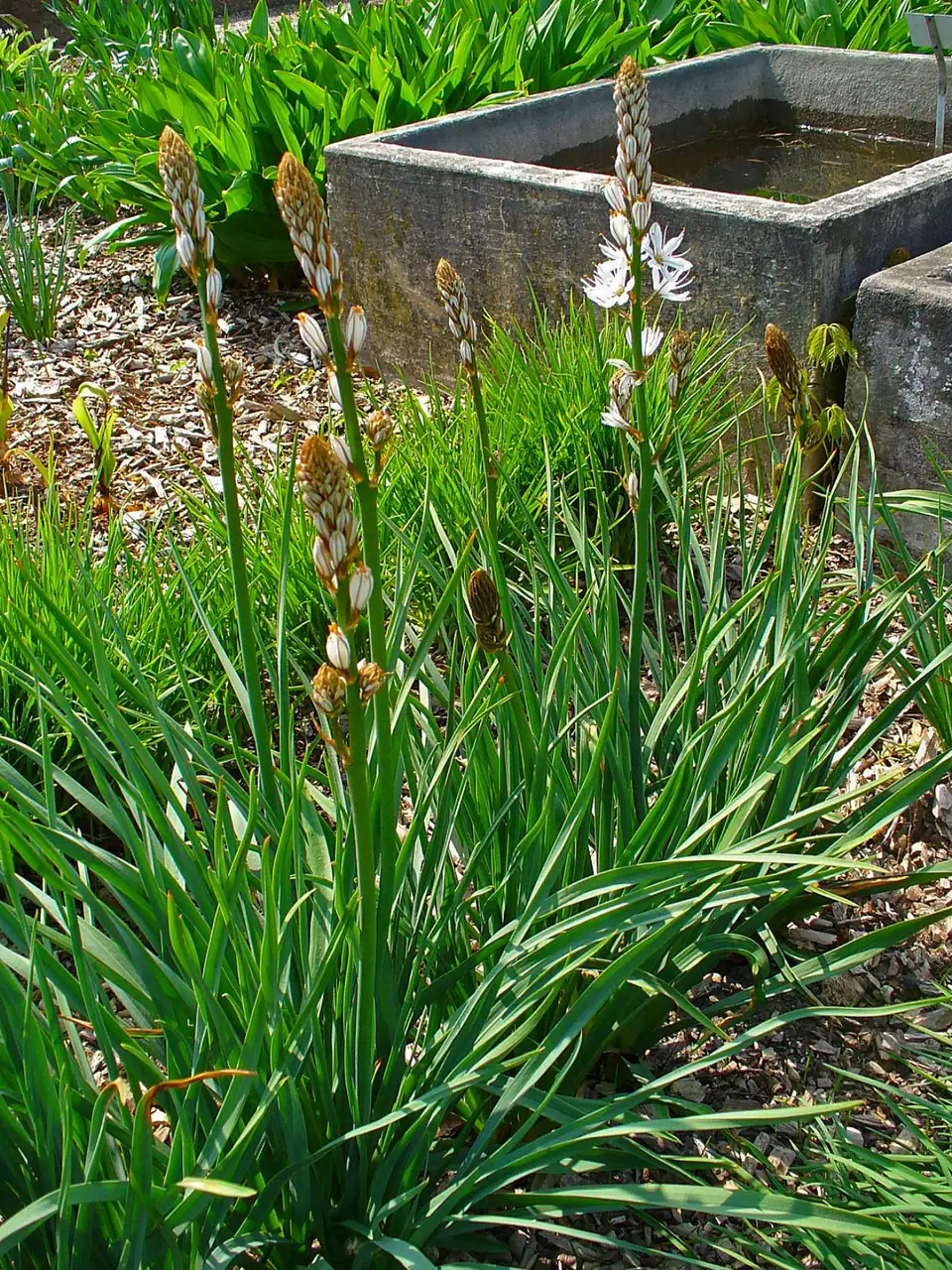
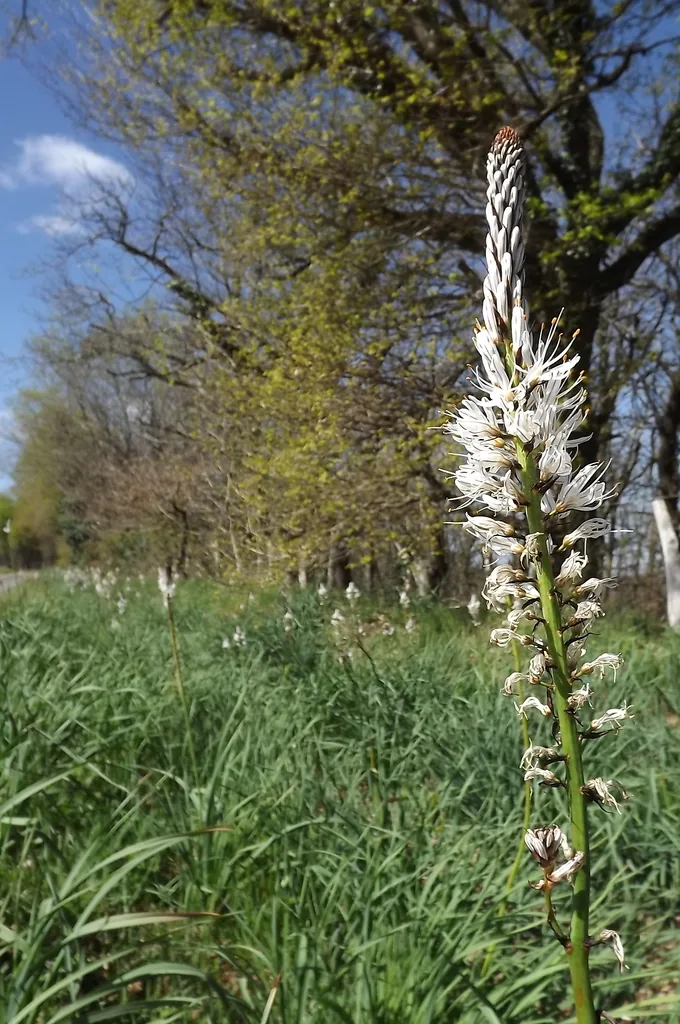
Asphodelus albus is a herbaceous perennial growing from a tuberous rootstock, with narrow leaves and flowering stems up to 100 cm [39 in] tall. [1] It is a drought-tolerant plant for sunny, well-drained sites, flowering in late spring and early summer. [2] The root is reported as poisonous. [2]
This record is incomplete: the sources we read do not cover every field yet.
Not yet covered by our sources: Hardiness, warmest zone
White asphodel care
Measurements in square brackets are our conversion into the other unit system; the quoted text is unchanged.
How to water White asphodel
Watering
Drought tolerant once established
What the sources say (2)
Grows well on hot dry banks and in thin grass[ 42 TitleWhite asphodel is an excellent drought-tolerant plant to grow on banks, in gravel gardens, Mediterranean-style plantings, or well-drained sunny bordersWatering notes
Needs well-drained soil low in fertility; fleshy roots rot in moisture-retentive soil
What the sources say (1)
White asphodel must have a sunny site and well-drained soil that is low in fertility in order to thrive, as the fleshy roots are liable to rot in moisture-retentive soil.How much light White asphodel needs
The sources disagree:
White asphodel must have a sunny site and well-drained soil that is low in fertility in order to thrive
[2]
What the sources say (3)
Sun Exposure:
Full sun
|
Aspect:
East facing, south facing, west facingLight
full sun
Shade tolerance
light shade
Water
moderateSucceeds in ordinary garden soil, tolerating partial shade [6] . Requires a well-drained soil and a sheltered position [8] .How much cold White asphodel can take
Hardiness, coldest zone
6 [winter low −23.3 to −17.8 °C (−10 to 0 °F)]
What the sources say (1)
Shade tolerance
light shade
Water
moderate
Hardiness
Zone 6+Hardiness, warmest zone
Not stated in the sources we read.
How to propagate White asphodel
Seed, division
What each source says
According to Useful Temperate Plants: Division in early spring or autumn
According to Gardeners World: Seed, or division in late winter
What the sources say (4)
According to Useful Temperate Plants: Division in early spring or autumn[ 111 TitleAccording to Gardeners World: Propagate white asphodel from seed, or by division during late winter.Division in early spring or autumn[ 111 TitlePropagate white asphodel from seed, or by division during late winter.Remedies
Each remedy shows what official sources say about it; traditional remedies without an official source are marked as such. Harmful ones are listed so you know to avoid them.
First aid
First aid: not a substitute for a doctor
swallowed plant
wash out child's mouth Official source, not independently tested
Call the Poisons Information Centre on 13 11 26 for further information.
— poisonsinfo.nsw.gov.au [5] How: If the plant was swallowed, remove remaining pieces and wash out child's mouth.
If the plant was swallowed, remove remaining pieces and wash out child's mouth.
— poisonsinfo.nsw.gov.au [5]
Is White asphodel toxic to pets?
Reported by the source, quoted verbatim. This is not medical or veterinary advice: if a person or an animal may have eaten this plant, contact a poison control centre or a veterinarian.
Toxic to: Is known to attract Cats Cats Is known to attract Dogs Dogs Is known to attract Horses Horses Is known to attract Livestock Livestock Is known to attract People
[2]- Poisonous parts
Asphodelus ‘Albus’ causes an upset stomach and is harmful if ingested. Its roots are toxic.
[2]- Toxic principle
The root was at one time eaten as a food but, since it contains the alkaloid asphodeline, this is not really very advisable
[1]- Symptoms
Asphodelus ‘Albus’ causes an upset stomach and is harmful if ingested. Its roots are toxic.
[2]
Calendar
Early to mid spring (March-April), in a greenhouse
What the sources say (2)
Seed - sow early to mid spring in a greenhouse and only just cover the seed.Seed - sow March/April in a greenhouse and only just cover the seed. Germination usually takes place in 1 - 3 months at 15°cLate spring or early summer (seedlings, after their first winter)
What the sources say (1)
When the plants are large enough to handle, plant them out into their permanent positions in late spring or early summer.When dormant (cut back dead growth)
What the sources say (1)
needs virtually no care apart from cutting back the dead growth once dormant.Months as given by the sources, which are mostly from the United States (northern hemisphere). In the southern hemisphere they shift by about six months.
Edibility
Reported by the source, quoted verbatim. Do not eat a plant on the basis of this page alone: identification mistakes can be dangerous.
The root was at one time eaten as a food but, since it contains the alkaloid asphodeline, this is not really very advisable
[1]
Similar plants
- Asphodelus ramosus Asphodelus ramosus
- Aaron's Beard Hypericum calycinum
- Abies grandis Abies grandis
- Abraham Trachystemon orientalis
- Abyssinian banana Ensete ventricosum
- Acacia longifolia Acacia longifolia
- Acacia retinodes Acacia retinodes
- Acanthus hungaricus Acanthus hungaricus
Sources
Every value above is quoted from these documents. Links lead to the original publisher.
- Asphodelus albus - Useful Temperate Plants · temperate.theferns.info, consulted
- Asphodelus albus (White Asphodel) | BBC Gardeners World Magazine · gardenersworld.com, consulted
- Asphodel (Asphodelus albus) — Practical Plants · practicalplants.org, consulted
- Asphodelus albus, White-flowered Asphodel: identification, distribution, habitat · first-nature.com, consulted
- poisonsinfo.nsw.gov.au · poisonsinfo.nsw.gov.au
Written by Emilio Marruso · last checked