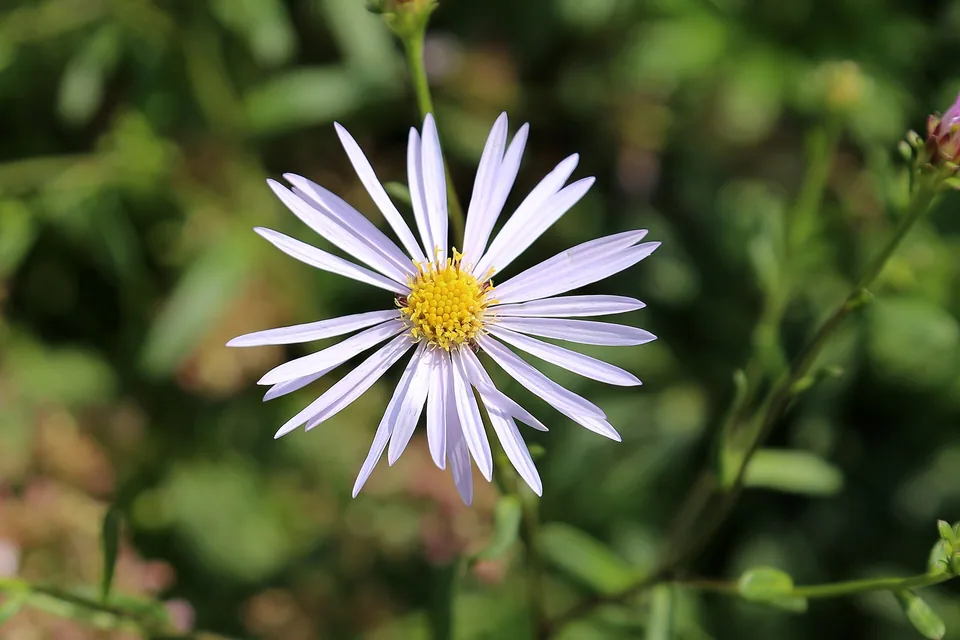
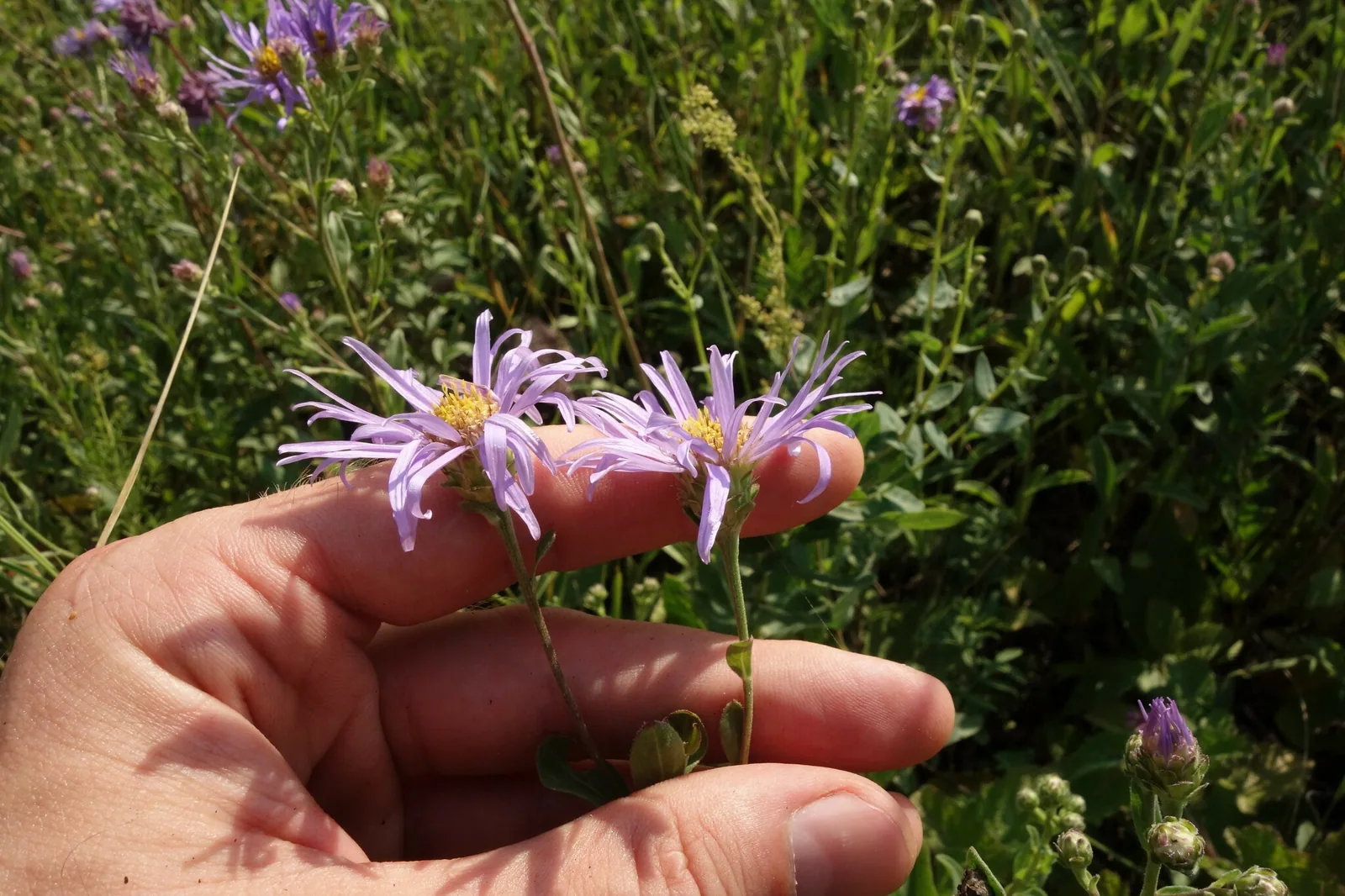

How to Grow and Care for European Michaelmas-daisy
Aster amellus
Written by Emilio Marruso · last checked
At a glance
This easygoing aster asks for very little: full sun to half sun, free-draining soil and a mulch of compost or well-rotted manure each spring, with no regular feeding needed. Plant it in spring, water at the roots and trim it lightly after flowering. It grows happily in containers too, and you can divide it in spring or autumn to get more plants.
- Sun
Full sun to half sun
What the sources say (1)
Light: Full sun to half sun
Aster amellus needs full or half-sun exposure . It resists cold and frost well.
— Aster amellus or Italian Aster | Care and Growing [4] - Water
Water at the roots and keep the leaves dry
What the sources say (1)
Watering: Water at the roots; do not let water saturate the leaves
As with other flowering plants, do not allow water to saturate leaves. Be sure to water the plant's roots to prevent mildew and mold.
— Aster amellus (Italian Aster) - World of Flowering Plants [5] - Soil
Free-draining soil; it dislikes soil that stays wet in winter
What the sources say (1)
Watering notes: Does not like prolonged wet soil in winter; free-draining soil is particularly important
Asters do not like prolonged periods of wet soil in winter. A free-draining soil is particularly important for asters that originate from Europe, for example Aster amellus.
— How to grow Asters / RHS Growing Guide [3] - Planting
Plant in spring
What the sources say (1)
Planting: Spring
Transplanting or planting is done in spring.
— Aster amellus or Italian Aster | Care and Growing [4] - Feeding
No regular feeding: just a mulch of compost or well-rotted manure each spring
What the sources say (4)
When: Spring, as growth starts
Asters generally do not need regular applications of fertiliser in most garden soils. Mulching plants in borders with well-rotted manure or garden compost each spring should be sufficient.
— How to grow Asters / RHS Growing Guide [3] If your garden soil is light and sandy your asters can benefit from a feed in spring when they start to come into growth. Use a general-purpose fertiliser
— How to grow Asters / RHS Growing Guide [3] How often: Regular feeding not needed in most garden soils; a mulch each spring is sufficient
Asters generally do not need regular applications of fertiliser in most garden soils. Mulching plants in borders with well-rotted manure or garden compost each spring should be sufficient.
— How to grow Asters / RHS Growing Guide [3] Natural fertilizers: Well-rotted manure or garden compost as a mulch each spring
Asters generally do not need regular applications of fertiliser in most garden soils. Mulching plants in borders with well-rotted manure or garden compost each spring should be sufficient.
— How to grow Asters / RHS Growing Guide [3] - Pruning
Trim lightly after flowering
What the sources say (1)
Pruning: Slightly after flowering
Prune slightly after flowering to favor flowering the following year.
— Aster amellus or Italian Aster | Care and Growing [4] - Harvest
Leaves and young plants can be eaten cooked
- Pests
Aphids, rust and powdery mildew; prone to wilt and gray mold
What the sources say (1)
Diseases: Fusarium wilt, grey mould
Fusarium wilts ( Aster amellus seems more susceptible than most) and grey moulds may be occasional problems.
— How to grow Asters / RHS Growing Guide [3] - Propagation
Divide in spring or fall, or grow from seed
What the sources say (2)
Propagation: Division in spring or autumn; seed
Italian Aster propagates by division in spring or autumn or by seeds sown in spring in glass covered seedbeds.
— Aster amellus or Italian Aster | Care and Growing [4] Seed - surface sow in spring in a cold frame. Do not allow the compost to become dry.
— Aster amellus - Useful Temperate Plants [1] - Sowing
Sow in spring
- Containers
Grows in containers too
What the sources say (1)
In containers: Yes
Due to their abundant flowering, Italian Aster is used in pots and gardens for borders, rockeries and also for floral decorations.
— Aster amellus or Italian Aster | Care and Growing [4]
Overview
Italian aster is a herbaceous perennial widely grown as an ornamental. [1] It needs full or half sun and a free-draining soil, and does not like prolonged wet soil in winter. [4][3]
This record is incomplete: the sources we read do not cover every field yet.
Not yet covered by our sources: Hardiness, coldest zone, Hardiness, warmest zone
European Michaelmas-daisy care
How to water European Michaelmas-daisy
Watering
Water at the roots; do not let water saturate the leaves
What the sources say (1)
As with other flowering plants, do not allow water to saturate leaves. Be sure to water the plant's roots to prevent mildew and mold.Watering notes
Does not like prolonged wet soil in winter; free-draining soil is particularly important
What the sources say (1)
Asters do not like prolonged periods of wet soil in winter. A free-draining soil is particularly important for asters that originate from Europe, for example Aster amellus.How much light European Michaelmas-daisy needs
Full sun to half sun
What the sources say (1)
Aster amellus needs full or half-sun exposure . It resists cold and frost well.How much cold European Michaelmas-daisy can take
Hardiness, coldest zone
Not stated in the sources we read.
Hardiness, warmest zone
Not stated in the sources we read.
Where to grow European Michaelmas-daisy
Yes
What the sources say (1)
Due to their abundant flowering, Italian Aster is used in pots and gardens for borders, rockeries and also for floral decorations.How to propagate European Michaelmas-daisy
Division in spring or autumn; seed
What the sources say (2)
Italian Aster propagates by division in spring or autumn or by seeds sown in spring in glass covered seedbeds.Seed - surface sow in spring in a cold frame. Do not allow the compost to become dry.How to grow European Michaelmas-daisy
Pests and diseases
Diseases
Fusarium wilt, grey mould
What the sources say (1)
Fusarium wilts ( Aster amellus seems more susceptible than most) and grey moulds may be occasional problems.Fertilizing
When
Spring, as growth starts
What the sources say (2)
Asters generally do not need regular applications of fertiliser in most garden soils. Mulching plants in borders with well-rotted manure or garden compost each spring should be sufficient.If your garden soil is light and sandy your asters can benefit from a feed in spring when they start to come into growth. Use a general-purpose fertiliserHow often
Regular feeding not needed in most garden soils; a mulch each spring is sufficient
What the sources say (1)
Asters generally do not need regular applications of fertiliser in most garden soils. Mulching plants in borders with well-rotted manure or garden compost each spring should be sufficient.Natural fertilizers
Well-rotted manure or garden compost as a mulch each spring
What the sources say (1)
Asters generally do not need regular applications of fertiliser in most garden soils. Mulching plants in borders with well-rotted manure or garden compost each spring should be sufficient.Mineral fertilizers
The sources give different values depending on region, zone or growing conditions.
What each source says
on light, sandy soils: General-purpose fertilizer in spring, when growth starts
What the sources say (1)
on light, sandy soils: If your garden soil is light and sandy your asters can benefit from a feed in spring when they start to come into growth. Use a general-purpose fertiliserEuropean Michaelmas-daisy pests and problems
Aphids, rust and powdery mildew
Symptom: Can be attacked by aphids and fungi
What the sources say (1)
Aster amellus can be attacked by aphids and fungi (rust and powdery mildew).
— Aster amellus or Italian Aster | Care and Growing [4] Fusarium wilt and grey mould
Symptom: Occasional problems; Aster amellus seems more susceptible to wilts than most
What the sources say (1)
Fusarium wilts ( Aster amellus seems more susceptible than most) and grey moulds may be occasional problems.
— How to grow Asters / RHS Growing Guide [3]
Remedies
The sources we checked give no remedies for this plant.
Calendar
Planting
Spring
What the sources say (1)
Transplanting or planting is done in spring.Pruning
Slightly after flowering
What the sources say (1)
Prune slightly after flowering to favor flowering the following year.Months as given by the sources, which are mostly from the United States (northern hemisphere). In the southern hemisphere they shift by about six months.
Edibility
Reported by the source, quoted verbatim. Do not eat a plant on the basis of this page alone: identification mistakes can be dangerous.
Edible Uses Leaves and young plants - cooked
[1]
Similar plants
- Alpine aster Aster alpinus
- Japanese Aster Aster iinumae
- Tatarian Aster Aster tataricus
- Abies grandis Abies grandis
- Abraham Trachystemon orientalis
- Abyssinian banana Ensete ventricosum
- Acacia longifolia Acacia longifolia
- Acanthus hungaricus Acanthus hungaricus
Sources
Every value above is quoted from these documents. Links lead to the original publisher.
- Aster amellus - Useful Temperate Plants · temperate.theferns.info, consulted
- Orto Botanico “Carmela Cortini” · polomuseale.unicam.it, consulted
- How to grow Asters / RHS Growing Guide · rhs.org.uk, consulted
- Aster amellus or Italian Aster | Care and Growing · consultaplantas.com, consulted
- Aster amellus (Italian Aster) - World of Flowering Plants · worldoffloweringplants.com, consulted
- Nesom, G.L. 2020d. The genus Aster (Asteraceae) in the strictest sense. Phytoneuron 2020-56: 1–22. Published 19 August · phytoneuron.net, consulted
Written by Emilio Marruso · last checked