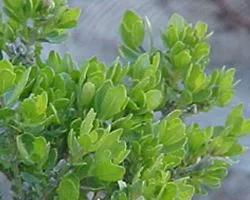
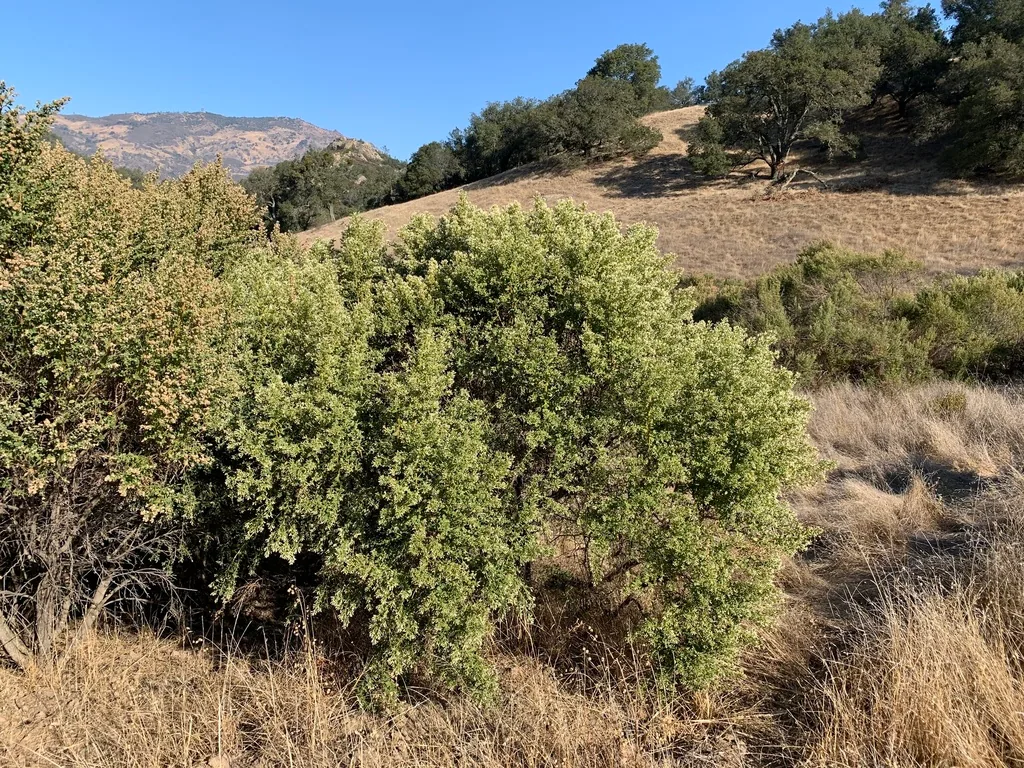

How to Grow and Care for Chaparral Broom
Baccharis pilularis
Written by Emilio Marruso · last checked
At a glance
Coyote brush is an easygoing plant for sunny spots: give it full sun and just moderate to little water, and it will be happy. Plant it out in late spring or early summer, once the last frosts are behind you. Want more plants for free? Sow seeds in spring, or take cuttings in July or August and again in November.
- Sun
Full sun
What the sources say (1)
Light: Full sun
if it is growing in a sunny position
— Baccharis pilularis - Useful Temperate Plants [1] - Water
Needs only moderate to little water
What the sources say (1)
Watering: Moderate to little water
Moderate to little water.
— How to Grow Baccharis [6] - Cold
Survives winters down to 10 °F (−12.2 °C)
Hardy in cold winters · USDA 8 · RHS H5 · Z8
What the sources say (1)
Hardiness, coldest zone: 8 [winter low −12.2 to −6.7 °C (10 to 20 °F)]
Hardiness Zone 8+
— Dwarf Chaparral Broom (Baccharis pilularis) — Practical Plants [2] - Planting
Plant in late spring or early summer, after the last frosts
What the sources say (1)
Planting: Late spring or early summer, after the last expected frosts
Plant them out into their permanent positions in late spring or early summer, after the last expected frosts.
— Dwarf Chaparral Broom (Baccharis pilularis) — Practical Plants [2] - Propagation
From seed, or cuttings of half-ripe wood in July–August and of mature wood in November
What the sources say (2)
Propagation: Seed; half-ripe wood cuttings (July/August); mature wood cuttings (November)
Seed - no pre-treatment is required
— Dwarf Chaparral Broom (Baccharis pilularis) — Practical Plants [2] Cuttings of half-ripe wood, July/August in a frame.
— Dwarf Chaparral Broom (Baccharis pilularis) — Practical Plants [2] - Sowing
Sow in spring
What the sources say (1)
Sowing: Spring
Surface sow in pots a cold frame in the spring
— Dwarf Chaparral Broom (Baccharis pilularis) — Practical Plants [2]
Overview
Baccharis pilularis is an evergreen shrub with an upright form and a prostrate form. [1] It is often grown as a ground cover and soil stabilizer, and tolerates poor dry soils and maritime exposure. [1]
This record is incomplete: the sources we read do not cover every field yet.
Not yet covered by our sources: Hardiness, warmest zone, Pruning
Chaparral Broom care
How to water Chaparral Broom
Moderate to little water
What the sources say (1)
Moderate to little water.How much light Chaparral Broom needs
Full sun
What the sources say (1)
if it is growing in a sunny positionHow much cold Chaparral Broom can take
Hardiness, coldest zone
8 [winter low −12.2 to −6.7 °C (10 to 20 °F)]
What the sources say (1)
Hardiness
Zone 8+Hardiness, warmest zone
Not stated in the sources we read.
How to propagate Chaparral Broom
Seed; half-ripe wood cuttings (July/August); mature wood cuttings (November)
How to grow Chaparral Broom
The plant
Family
Asteraceae
What the sources say (1)
Baccharis (Coyote Bush) — Baccharis pilularis - Family Asteraceae (Sunflower family)Fertilizing
When
The sources give different values depending on region, zone or growing conditions.
What each source says
low groundcover forms: After the late-winter cutback that renews the plants
What the sources say (1)
low groundcover forms: To maintain a low profile and to renew interior stems, these woody groundcovers benefit from being cut back about halfway every 3-4 years in late winter. Apply a dose of nitrogen fertilizer after pruning.Mineral fertilizers
The sources give different values depending on region, zone or growing conditions.
What each source says
low groundcover forms: A dose of nitrogen fertilizer after pruning
What the sources say (1)
low groundcover forms: To maintain a low profile and to renew interior stems, these woody groundcovers benefit from being cut back about halfway every 3-4 years in late winter. Apply a dose of nitrogen fertilizer after pruning.Remedies
The sources we checked give no remedies for this plant.
Calendar
Sowing
Spring
What the sources say (1)
Surface sow in pots a cold frame in the springPlanting
Late spring or early summer, after the last expected frosts
What the sources say (1)
Plant them out into their permanent positions in late spring or early summer, after the last expected frosts.Pruning
Not stated in the sources we read.
Months as given by the sources, which are mostly from the United States (northern hemisphere). In the southern hemisphere they shift by about six months.
Indicative values
Values from a secondary source, not checked word for word like the rest of this page. Use them as a starting point.
- Life cycle
- PerennialIndicative value, adapt it to your climate · Secondary source
- Mature height
- 30.5-121.9 cm (1-4 ft)Indicative value, adapt it to your climate · Secondary source
- Hours of sun
- 6-8 hoursIndicative value, adapt it to your climate · Secondary source
- Drought tolerant
- yesIndicative value, adapt it to your climate · Secondary source
- Soil pH
- 6-8Indicative value, adapt it to your climate · Secondary source
- Care level
- LowIndicative value, adapt it to your climate · Secondary source
- Growth rate
- LowIndicative value, adapt it to your climate · Secondary source
- Pruning
- February, March, April, AugustIndicative value, adapt it to your climate · Secondary source
Similar plants
- Silverling Baccharis halimifolia
- African Daisy Dimorphotheca pluvialis
- African Marigold Tagetes erecta
- Ageratum Ageratum houstonianum
- Alpine aster Aster alpinus
- Appalachian Blazing Star Liatris squarrulosa
- Appalachian Ironweed Vernonia glauca
- Appalachian Sunflower Helianthus atrorubens
Sources
Every value above is quoted from these documents. Links lead to the original publisher.
- Baccharis pilularis - Useful Temperate Plants · temperate.theferns.info, consulted
- Dwarf Chaparral Broom (Baccharis pilularis) — Practical Plants · practicalplants.org, consulted
- Baccharis / Home and Landscape / UC Statewide IPM Program (UC IPM) · ipm.ucanr.edu, consulted
- Baccharis pilularis, coyote bush, mulefat | Trees of Stanford & Environs · trees.stanford.edu, consulted
- Plant Propagation Protocol for [B. pilularis] · courses.washington.edu, consulted
- How to Grow Baccharis · harvesttotable.com, consulted
- Baccharis pilularis ssp. pilularis - Calflora · calflora.org, consulted
- ucanr.edu · ucanr.edu
Written by Emilio Marruso · last checked