
How to Grow and Care for Wax gourd
Benincasa hispida
Written by Emilio Marruso · last checked
At a glance
Wax gourd is a generous annual for a warm, sunny spot. Give it plenty of water while it grows, especially early on, and it rewards you with fruit you can slice raw like cucumber and keep for 2–6 months in a cool, dry place. Even the young shoots, leaves and flowers are edible, and the seeds become a fried snack.
- Sun
A warm, sunny spot
What the sources say (1)
Light: Warm sunny position
Requires a warm sunny position in a rich well-drained soil and plenty of moisture in the growing season
— Benincasa hispida - Useful Temperate Plants [4] - Water
Plenty of water while it grows, especially when young and in dry spells
What the sources say (3)
Watering: Ample irrigation during dry periods; plenty of moisture in the growing season
Ample irrigation is needed during dry periods. In the rainy season, fruits of trailing plants can be protected from rotting by putting them on some straw.
— Benincasa hispida (PROTA) - Pl@ntUse [3] Requires a warm sunny position in a rich well-drained soil and plenty of moisture in the growing season
— Benincasa hispida - Useful Temperate Plants [4] Watering notes: Excessive rain may reduce yields, but water requirements remain fairly high, especially in the early stages of development
Excessive rain may reduce yields, but the water requirements are still fairly high especially in the early stages of development
— Benincasa hispida - Useful Temperate Plants [4] - Harvest
Eat the fruit raw like cucumber; it keeps 2–6 months in a cool, dry place
What the sources say (1)
Storage: Keeps 2-6 months or more in a cool dry place
Wax gourds keep for 2-6 months or more if stored in a cool dry place.
— Archival copy: for current recommendations see http://edis.ifas.ufl.edu or your local extension office. [2] - Pests
Prone to anthracnose, gummy stem blight and watermelon mosaic virus, which aphids spread
- Propagation
From seed: sow right in the ground, or in pots and transplant
What the sources say (2)
Propagation: Seed (direct sowing, or sowing in pots and transplanting)
Both direct-seeding and sowing in pots and transplanting is practised if grown for immature fruits
— Benincasa hispida (PROTA) - Pl@ntUse [3] Seeds may be planted to produce three crops annually in South Florida (seeded in July, December, and March) or two crops in the rest of Florida (planted March and July).
— Archival copy: for current recommendations see http://edis.ifas.ufl.edu or your local extension office. [2] - Sowing
In warm climates, sow in March and July; the warmest areas add a December crop
What the sources say (5)
Sowing: South Florida: July, December and March (three crops); rest of Florida: March and July (two crops); Kerala, India: January-March and September-December
South Florida: Seeds may be planted to produce three crops annually in South Florida (seeded in July, December, and March) or two crops in the rest of Florida (planted March and July).
— Archival copy: for current recommendations see http://edis.ifas.ufl.edu or your local extension office. [2] Rest of Florida: Seeds may be planted to produce three crops annually in South Florida (seeded in July, December, and March) or two crops in the rest of Florida (planted March and July).
— Archival copy: for current recommendations see http://edis.ifas.ufl.edu or your local extension office. [2] According to Kerala Agricultural University: Ash gourd can be successfully grown during January-March and September-December. - For rainfed crop, sowing can also be started after the receipt of the first few showers during May-June.
— KAU Agri Infotech Portal [5] Seeds may be planted to produce three crops annually in South Florida (seeded in July, December, and March) or two crops in the rest of Florida (planted March and July).
— Archival copy: for current recommendations see http://edis.ifas.ufl.edu or your local extension office. [2] Ash gourd can be successfully grown during January-March and September-December.
— KAU Agri Infotech Portal [5]
Overview
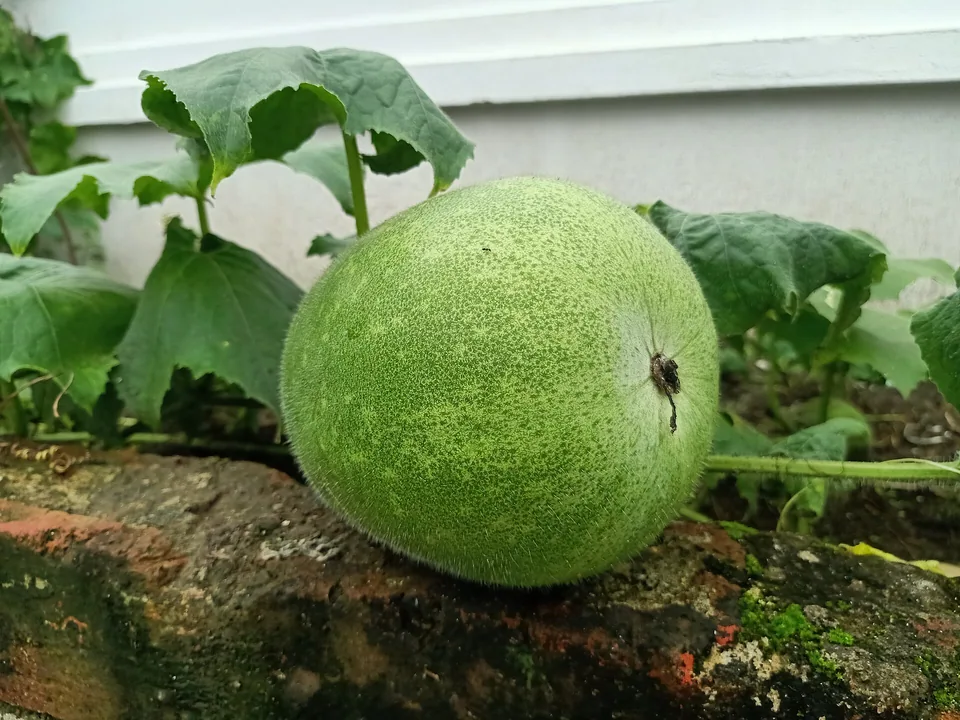
Wax gourd is a pumpkin-like annual vine grown for its large fruits, which are eaten cooked or raw. [2]
This record is incomplete: the sources we read do not cover every field yet.
Not yet covered by our sources: Harvest, Spacing
Wax gourd care
How to water Wax gourd
Watering
Ample irrigation during dry periods; plenty of moisture in the growing season
What the sources say (2)
Ample irrigation is needed during dry periods. In the rainy season, fruits of trailing plants can be protected from rotting by putting them on some straw.Requires a warm sunny position in a rich well-drained soil and plenty of moisture in the growing seasonWatering notes
Excessive rain may reduce yields, but water requirements remain fairly high, especially in the early stages of development
What the sources say (1)
Excessive rain may reduce yields, but the water requirements are still fairly high especially in the early stages of developmentHow much light Wax gourd needs
Warm sunny position
What the sources say (1)
Requires a warm sunny position in a rich well-drained soil and plenty of moisture in the growing seasonWhere to grow Wax gourd
The sources give different values depending on region, zone or growing conditions.
What each source says
Plants allowed to trail over the ground: 200-300 cm (2-3 m)
What the sources say (1)
Plants allowed to trail over the ground: Plants allowed to trail over the ground should have wider spacing (2–3 m).How to propagate Wax gourd
Seed (direct sowing, or sowing in pots and transplanting)
What the sources say (2)
Both direct-seeding and sowing in pots and transplanting is practised if grown for immature fruitsSeeds may be planted to produce three crops annually in South Florida (seeded in July, December, and March) or two crops in the rest of Florida (planted March and July).How to grow Wax gourd
The plant
Life cycle
annual
What the sources say (1)
The pumpkin-like annual vine has thick, furrowed stems with coarse hairs, tendrils, and somewhat triangular, irregularly lobed leaves up to 10 inches long.Harvest and storage
Storage
Keeps 2-6 months or more in a cool dry place
What the sources say (1)
Wax gourds keep for 2-6 months or more if stored in a cool dry place.Wax gourd pests and problems
Anthracnose and gummy stem blight
Symptom: Moderately susceptible to anthracnose (Colletotrichum lagenarium) and gummy stem blight (Didymella bryoniae); no tolerance identified.
What the sources say (1)
Wax gourd is moderately susceptible to anthracnose ( Colletotrichum lagenarium ) and gummy stem blight ( Didymella bryoniae ), for which no tolerance has been identified yet.
— Benincasa hispida (PROTA) - Pl@ntUse [3] Watermelon mosaic virus
Symptom: Susceptible to watermelon mosaic virus, transmitted by aphids.
What the sources say (1)
Wax gourd is susceptible to watermelon mosaic virus (WMV) transmitted by aphids.
— Benincasa hispida (PROTA) - Pl@ntUse [3]
Remedies
Each remedy shows what official sources say about it; traditional remedies without an official source are marked as such. Harmful ones are listed so you know to avoid them.
Treating the plant
aphids
strong water jet Not verified
Traditional remedy, not verified by an official source.
How: Spray plants with a strong jet of water to knock aphids from the leaves.
neem or canola oil Partly works
How: Oils such as neem or canola oil are the usual method of control.
Oils such as neem or canola oil are usually the best method of control
— celkau.in [9] What the evidence says However, neem oil is not effective against every insect and disease, and often must be frequently reapplied to reach the desired outcome.
— extension.unh.edu [10] neem garlic emulsion Not verified
Traditional remedy, not verified by an official source.
How: 20 ml neem oil + 20 g garlic paste + 5 g bar soap per litre of water, sprayed on the plants.
Calendar
Sowing
South Florida: July, December and March (three crops); rest of Florida: March and July (two crops); Kerala, India: January-March and September-December
What each source says
South Florida: July, December and March
Rest of Florida: March and July
According to Kerala Agricultural University: January-March and September-December; rainfed crop: May-June after the first showers
What the sources say (5)
South Florida: Seeds may be planted to produce three crops annually in South Florida (seeded in July, December, and March) or two crops in the rest of Florida (planted March and July).Rest of Florida: Seeds may be planted to produce three crops annually in South Florida (seeded in July, December, and March) or two crops in the rest of Florida (planted March and July).According to Kerala Agricultural University: Ash gourd can be successfully grown during January-March and September-December.
- For rainfed crop, sowing can also be started after the receipt of the first few showers during May-June.Seeds may be planted to produce three crops annually in South Florida (seeded in July, December, and March) or two crops in the rest of Florida (planted March and July).Ash gourd can be successfully grown during January-March and September-December.Harvest
The sources give different values depending on region, zone or growing conditions.
What each source says
Immature fruits (PROTA): Weekly, when they weigh 300-1000 g
What the sources say (1)
Immature fruits (PROTA): Immature fruits are harvested at weekly intervals when they weigh 300–1000 g.Months as given by the sources, which are mostly from the United States (northern hemisphere). In the southern hemisphere they shift by about six months.
Edibility
Reported by the source, quoted verbatim. Do not eat a plant on the basis of this page alone: identification mistakes can be dangerous.
Indicative values
Values from a secondary source, not checked word for word like the rest of this page. Use them as a starting point.
- Mature height
- 22.9-45.7 cm (0.75-1.5 ft)Indicative value, adapt it to your climate · Secondary source
- Drought tolerant
- yesIndicative value, adapt it to your climate · Secondary source
- Soil pH
- 5.5-7Indicative value, adapt it to your climate · Secondary source
- USDA hardiness zones
- 2-11 [winter low −45.6 to 10 °C (−50 to 50 °F)]Indicative value, adapt it to your climate · Secondary source
- Care level
- MediumIndicative value, adapt it to your climate · Secondary source
- Growth rate
- LowIndicative value, adapt it to your climate · Secondary source
- Pruning
- March, April, MayIndicative value, adapt it to your climate · Secondary source
Similar plants
- Abyssinian banana Ensete ventricosum
- Agretti Soda inermis
- Aji Capsicum chinense
- Alexanders Smyrnium olusatrum
- Allium senescens Allium senescens
- Allium triquetrum Allium triquetrum
- Alpine dock Rumex alpinus
- Alpine mountain-sorrel Oxyria digyna
Sources
Every value above is quoted from these documents. Links lead to the original publisher.
- Gourd, Wax—Benincasa hispida (Thunb.) Cogn.: HS607/MV074, 5/2003 | EDIS · journals.flvc.org, consulted
- Archival copy: for current recommendations see http://edis.ifas.ufl.edu or your local extension office. · journals.flvc.org, consulted
- Benincasa hispida (PROTA) - Pl@ntUse · uses.plantnet-project.org, consulted
- Benincasa hispida - Useful Temperate Plants · temperate.theferns.info, consulted
- KAU Agri Infotech Portal · celkau.in, consulted
- Benincasa hispida (Thunb.) Cogn. (Cucurbitaceae) | Japan International Research Center for Agricultural Sciences | JIRCAS · jircas.go.jp, consulted
- Benincasa hispida - Pl@ntUse · uses.plantnet-project.org, consulted
- Scientific Papers Series Management , Economic Engineering in Agriculture and Rural Development · managementjournal.usamv.ro, consulted
- celkau.in · celkau.in
- extension.unh.edu · extension.unh.edu
Written by Emilio Marruso · last checked