
How to Grow and Care for Brachyscome iberidifolia
Brachyscome iberidifolia
Written by Emilio Marruso · last checked
At a glance
Swan River daisy is an easygoing plant for beginners: it is happy in full sun to partial shade, and once established it tolerates drought, so you water only when the soil is dry 2 inches down. It grows well in containers too, and trimming the spent blooms in late summer keeps the flowers coming into fall.
- Sun
Full sun to partial shade
What the sources say (1)
Light: Full sun to partial shade
The Swan River daisy appreciates full sun but it can cope with partial shade, so feel free to grow it in an area that gets morning sun and afternoon shade if you wish.
— How to Grow and Care for Swan River Daisies [2] - Water
Drought tolerant once settled; water only when the soil is dry a couple of inches down, and add mulch
What the sources say (3)
Watering: Drought tolerant once established; give supplemental water only when the soil is dry a couple of inches below the surface; avoid overwatering
Provide the plants with about an inch of supplemental water only if their soil is dry a couple of inches from the surface. They are more susceptible to overwatering than underwatering.
— How to Grow and Care for Swan River Daisies [2] Keep the soil evenly moist. Swan River daisy is drought tolerant once established.
— How to Grow and Care for Swan River Daisy -- Garden Chronicle [4] Watering notes: Mulch to conserve soil moisture and prevent weeds
Mulch around Swan River daisies to conserve soil moisture and prevent weeds.
— How to Grow and Care for Swan River Daisy -- Garden Chronicle [4] - Soil
Acidic to slightly alkaline soil, pH 5.0–7.5
- Planting
Cold-winter areas: 3–4 weeks before the last frost; warm climates: late fall or early winter
What the sources say (3)
Planting: 3 to 4 weeks before the last frost (zones 2 to 8); late fall or early winter (zones 9 to 11)
Zones 2 to 8: Set out established plants 3 to 4 weeks before the last frost in Zones 2 to 8. In Zones 9 to 11, plant in late fall or early winter for winter or early spring color.
— How to Grow and Care for Swan River Daisy -- Garden Chronicle [4] Zones 9 to 11: Set out established plants 3 to 4 weeks before the last frost in Zones 2 to 8. In Zones 9 to 11, plant in late fall or early winter for winter or early spring color.
— How to Grow and Care for Swan River Daisy -- Garden Chronicle [4] Set out established plants 3 to 4 weeks before the last frost in Zones 2 to 8. In Zones 9 to 11, plant in late fall or early winter for winter or early spring color.
— How to Grow and Care for Swan River Daisy -- Garden Chronicle [4] - Pruning
Trim spent blooms in late summer for flowers into fall; cut back in late fall if kept year to year
What the sources say (2)
Pruning: Late fall (cut back foliage of plants grown as perennials); late summer (trim spent blooms to encourage bloom into fall)
For those grown as perennials, cut back the foliage in late fall.
— How to Grow and Care for Swan River Daisies [2] Trimming plants to remove spent blooms in late summer will help to encourage further bloom time into fall.
— Swan River Daisy Flowers: How To Grow Swan River Daisies In The Garden | Gardening Know How [3] - Pests
Watch for powdery mildew, aphids, slugs, snails and gray mold; full sun helps prevent mildew
- Watch out
Too much water or soggy soil rots the roots: let the soil dry out before watering
What the sources say (2)
Watering: Drought tolerant once established; give supplemental water only when the soil is dry a couple of inches below the surface; avoid overwatering
Provide the plants with about an inch of supplemental water only if their soil is dry a couple of inches from the surface. They are more susceptible to overwatering than underwatering.
— How to Grow and Care for Swan River Daisies [2] Keep the soil evenly moist. Swan River daisy is drought tolerant once established.
— How to Grow and Care for Swan River Daisy -- Garden Chronicle [4] - Propagation
Grow new plants from seed, cuttings or division
What the sources say (3)
Propagation: Seed; cuttings; division
Swan River Daisies may be grown from seed or from seedlings, both of which are readily available from commercial growers.
— Brachyscome iberidifolia - Growing Native Plants [1] B. iberidifolia can be propagated by division or by taking cuttings in spring or late summer.
— How to Grow and Care for Swan River Daisy -- Garden Chronicle [4] Another option is planting Swan River daisies rooted from cuttings taken from perennial plants in warm regions.
— How to Grow and Care for Swan River Daisies [2] - Containers
Grows in containers too
What the sources say (1)
In containers: Yes
It is a popular and easily-grown garden plant for bedding, borders, rockeries, pots and hanging baskets.
— Brachyscome iberidifolia - Growing Native Plants [1]
Overview
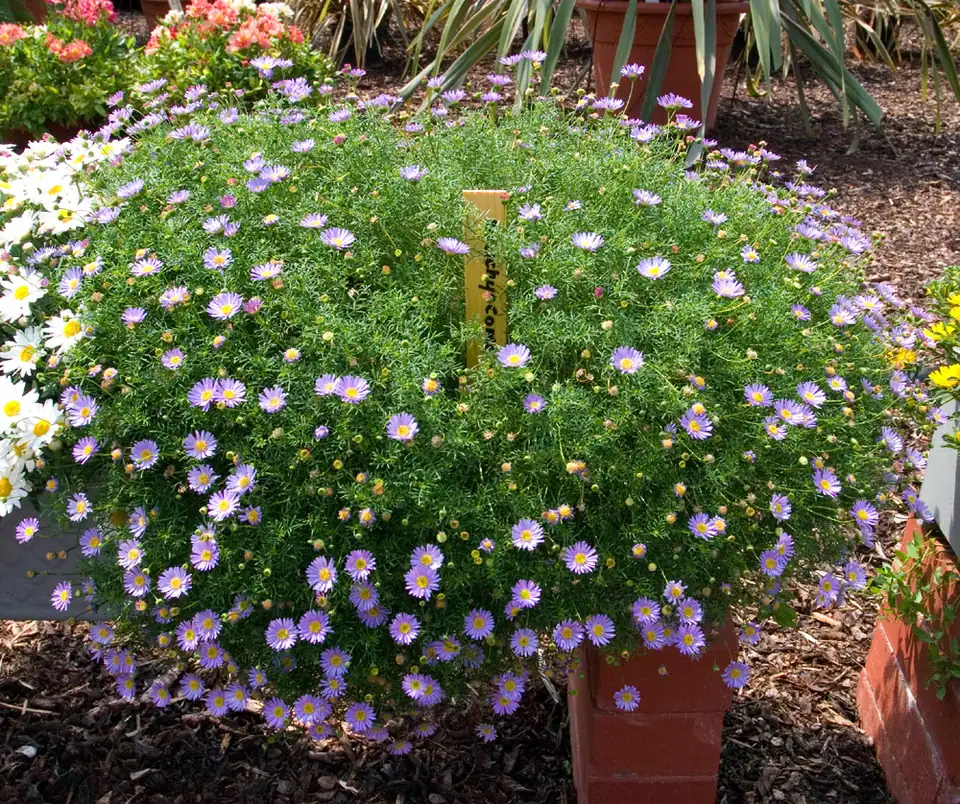
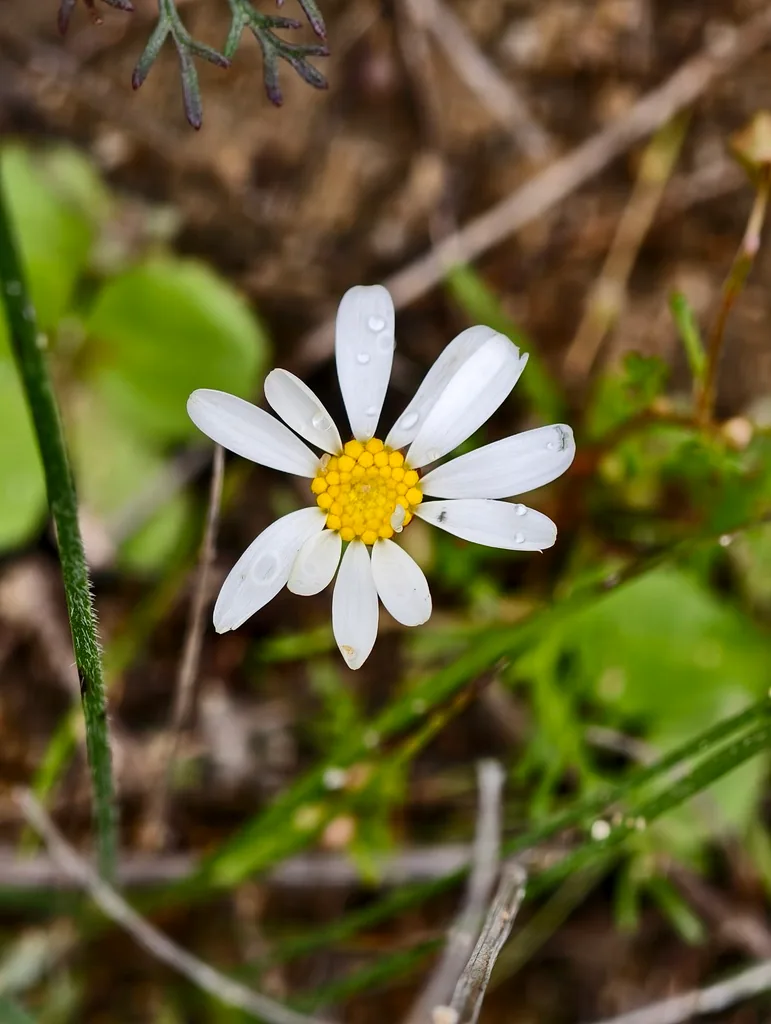
Swan River daisy is an annual daisy from Australia, found in the wild in Western Australia, South Australia and the southern Northern Territory. [1] In the wild it usually flowers in late winter and spring, but in cultivation it commonly flowers in spring and summer and intermittently at other times. [1] It is grown in full sun in well-drained soil and is drought tolerant once established. [2][4]
Brachyscome iberidifolia care
Measurements in square brackets are our conversion into the other unit system; the quoted text is unchanged.
How to water Brachyscome iberidifolia
Watering
Drought tolerant once established; give supplemental water only when the soil is dry a couple of inches below the surface; avoid overwatering
What the sources say (2)
Provide the plants with about an inch of supplemental water only if their soil is dry a couple of inches from the surface. They are more susceptible to overwatering than underwatering.Keep the soil evenly moist. Swan River daisy is drought tolerant once established.Watering notes
Mulch to conserve soil moisture and prevent weeds
What the sources say (1)
Mulch around Swan River daisies to conserve soil moisture and prevent weeds.How much light Brachyscome iberidifolia needs
Full sun to partial shade
What the sources say (1)
The Swan River daisy appreciates full sun but it can cope with partial shade, so feel free to grow it in an area that gets morning sun and afternoon shade if you wish.How much cold Brachyscome iberidifolia can take
Hardiness, coldest zone
The sources give different values depending on region, zone or growing conditions.
What each source says
According to Gardener's Path: 8b [winter low −9.4 to −6.7 °C (15 to 20 °F)]
According to Harvest to Table: 3 [winter low −40 to −34.4 °C (−40 to −30 °F)]
What the sources say (4)
According to Gardener's Path: | Hardiness (USDA Zones): | 8b-11bAccording to Harvest to Table: Growing Zones and range: Zones 3 to 11| Hardiness (USDA Zones): | 8b-11bGrowing Zones and range: Zones 3 to 11Hardiness, warmest zone
The sources give different values depending on region, zone or growing conditions.
What each source says
According to Gardener's Path: 11b [winter low 7.2 to 10 °C (45 to 50 °F)]
According to Harvest to Table: 11 [winter low 4.4 to 10 °C (40 to 50 °F)]
What the sources say (4)
According to Gardener's Path: | Hardiness (USDA Zones): | 8b-11bAccording to Harvest to Table: Growing Zones and range: Zones 3 to 11| Hardiness (USDA Zones): | 8b-11bGrowing Zones and range: Zones 3 to 11Best soil for Brachyscome iberidifolia
Soil pH, minimum
5.0
What the sources say (1)
| Time to Maturity: | 60-120 days | Soil pH: | 5.0-7.5Soil pH, maximum
7.5
What the sources say (1)
| Time to Maturity: | 60-120 days | Soil pH: | 5.0-7.5Where to grow Brachyscome iberidifolia
In containers
Yes
What the sources say (1)
It is a popular and easily-grown garden plant for bedding, borders, rockeries, pots and hanging baskets.Spacing
The sources give different values depending on region, zone or growing conditions.
What each source says
According to Gardener's Path: 12.7-15.2 cm (5-6 in)
According to Harvest to Table: 15.2-20.3 cm (6 to 8 in)
According to Australian National Botanic Gardens: 20 cm [7.9 in]
What the sources say (6)
According to Gardener's Path: | Spacing: | 5-6 inchesAccording to Harvest to Table: Space Swan River daisies 6 to 8 inches apart to form a solid carpet of blooms.According to Australian National Botanic Gardens: Once established, plants may be picked out to 20cm centres.| Spacing: | 5-6 inchesSpace Swan River daisies 6 to 8 inches apart to form a solid carpet of blooms.Once established, plants may be picked out to 20cm centres.How to propagate Brachyscome iberidifolia
Seed; cuttings; division
What the sources say (3)
Swan River Daisies may be grown from seed or from seedlings, both of which are readily available from commercial growers.B. iberidifolia can be propagated by division or by taking cuttings in spring or late summer.Another option is planting Swan River daisies rooted from cuttings taken from perennial plants in warm regions.Brachyscome iberidifolia pests and problems
Powdery mildew
Symptom: Plants are prone to powdery mildew
What to do: Usually preventable by planting in full sun
Root rot
Symptom: Root rot caused by overwatering or poorly draining soil
What to do: Let the soil dry out before watering; destroy affected plants
What the sources say (2)
Also, watch out for root rot caused by overwatering – via the gardener, rain storms, or poorly draining soil.
— How to Grow and Care for Swan River Daisies [2] Be careful to let the soil dry out before watering, and eradicate and destroy any plants affected by root rot, as fungal pathogens that may be present can quickly spread to healthy plants.
— How to Grow and Care for Swan River Daisies [2] Slugs, snails, aphids and botrytis
Symptom: Plants are sometimes prone to botrytis, aphids and slugs; snails and slugs need watching
Remedies
Each remedy shows what official sources say about it; traditional remedies without an official source are marked as such. Harmful ones are listed so you know to avoid them.
Treating the plant
root-rot
remove and destroy affected plants, let soil dry between waterings Not verified
Traditional remedy, not verified by an official source.
How: Let the soil dry out before watering and destroy any plants affected by root rot.
Calendar
Sowing
The sources give different values depending on region, zone or growing conditions.
What each source says
Australia, coastal areas (fonte: Australian National Botanic Gardens): May or June
Australia, colder areas (fonte: Australian National Botanic Gardens): June or July (in peat pots or seedling flats)
According to Harvest to Table: Indoors 4-6 weeks before the last frost; directly in the garden in late spring
According to Gardener's Path: Indoors 6-8 weeks before the average last frost date; directly in the garden after the last frost date
What the sources say (7)
Australia, coastal areas (fonte: Australian National Botanic Gardens): Sowing should be done in May or June in coastal areas and, in colder areas, they are best sown in peat pots or seedling flats in June or July.Australia, colder areas (fonte: Australian National Botanic Gardens): Sowing should be done in May or June in coastal areas and, in colder areas, they are best sown in peat pots or seedling flats in June or July.According to Harvest to Table: Sow seed indoors 4 to 6 weeks before the last frost,According to Gardener's Path: You can propagate seeds started indoors six to eight weeks before your average last frost date.Sowing should be done in May or June in coastal areas and, in colder areas, they are best sown in peat pots or seedling flats in June or July.Sow seed indoors 4 to 6 weeks before the last frost,You can propagate seeds started indoors six to eight weeks before your average last frost date.Planting
3 to 4 weeks before the last frost (zones 2 to 8); late fall or early winter (zones 9 to 11)
What each source says
Zones 2 to 8: 3 to 4 weeks before the last frost
Zones 9 to 11: Late fall or early winter
What the sources say (3)
Zones 2 to 8: Set out established plants 3 to 4 weeks before the last frost in Zones 2 to 8. In Zones 9 to 11, plant in late fall or early winter for winter or early spring color.Zones 9 to 11: Set out established plants 3 to 4 weeks before the last frost in Zones 2 to 8. In Zones 9 to 11, plant in late fall or early winter for winter or early spring color.Set out established plants 3 to 4 weeks before the last frost in Zones 2 to 8. In Zones 9 to 11, plant in late fall or early winter for winter or early spring color.Pruning
Late fall (cut back foliage of plants grown as perennials); late summer (trim spent blooms to encourage bloom into fall)
What the sources say (2)
For those grown as perennials, cut back the foliage in late fall.Trimming plants to remove spent blooms in late summer will help to encourage further bloom time into fall.Months as given by the sources, which are mostly from the United States (northern hemisphere). In the southern hemisphere they shift by about six months.
Indicative values
Values from a secondary source, not checked word for word like the rest of this page. Use them as a starting point.
- Life cycle
- AnnualIndicative value, adapt it to your climate · Secondary source
- Mature height
- 30.5-45.7 cm (1-1.5 ft)Indicative value, adapt it to your climate · Secondary source
- Hours of sun
- 6-8 hoursIndicative value, adapt it to your climate · Secondary source
- Drought tolerant
- yesIndicative value, adapt it to your climate · Secondary source
- Soil
- Well-drainedIndicative value, adapt it to your climate · Secondary source
- Care level
- EasyIndicative value, adapt it to your climate · Secondary source
- Growth rate
- HighIndicative value, adapt it to your climate · Secondary source
- Pests
- Slugs, snailsIndicative value, adapt it to your climate · Secondary source
Similar plants
- Abies grandis Abies grandis
- Abraham Trachystemon orientalis
- Abyssinian banana Ensete ventricosum
- Acacia longifolia Acacia longifolia
- Acanthus hungaricus Acanthus hungaricus
- Achlys triphylla Achlys triphylla
- Aconite Aconitum napellus
- Adam's Needle Yucca flaccida
Sources
Every value above is quoted from these documents. Links lead to the original publisher.
- Brachyscome iberidifolia - Growing Native Plants · anbg.gov.au, consulted
- How to Grow and Care for Swan River Daisies · gardenerspath.com, consulted
- Swan River Daisy Flowers: How To Grow Swan River Daisies In The Garden | Gardening Know How · gardeningknowhow.com, consulted
- How to Grow and Care for Swan River Daisy -- Garden Chronicle · harvesttotable.com, consulted
Written by Emilio Marruso · last checked