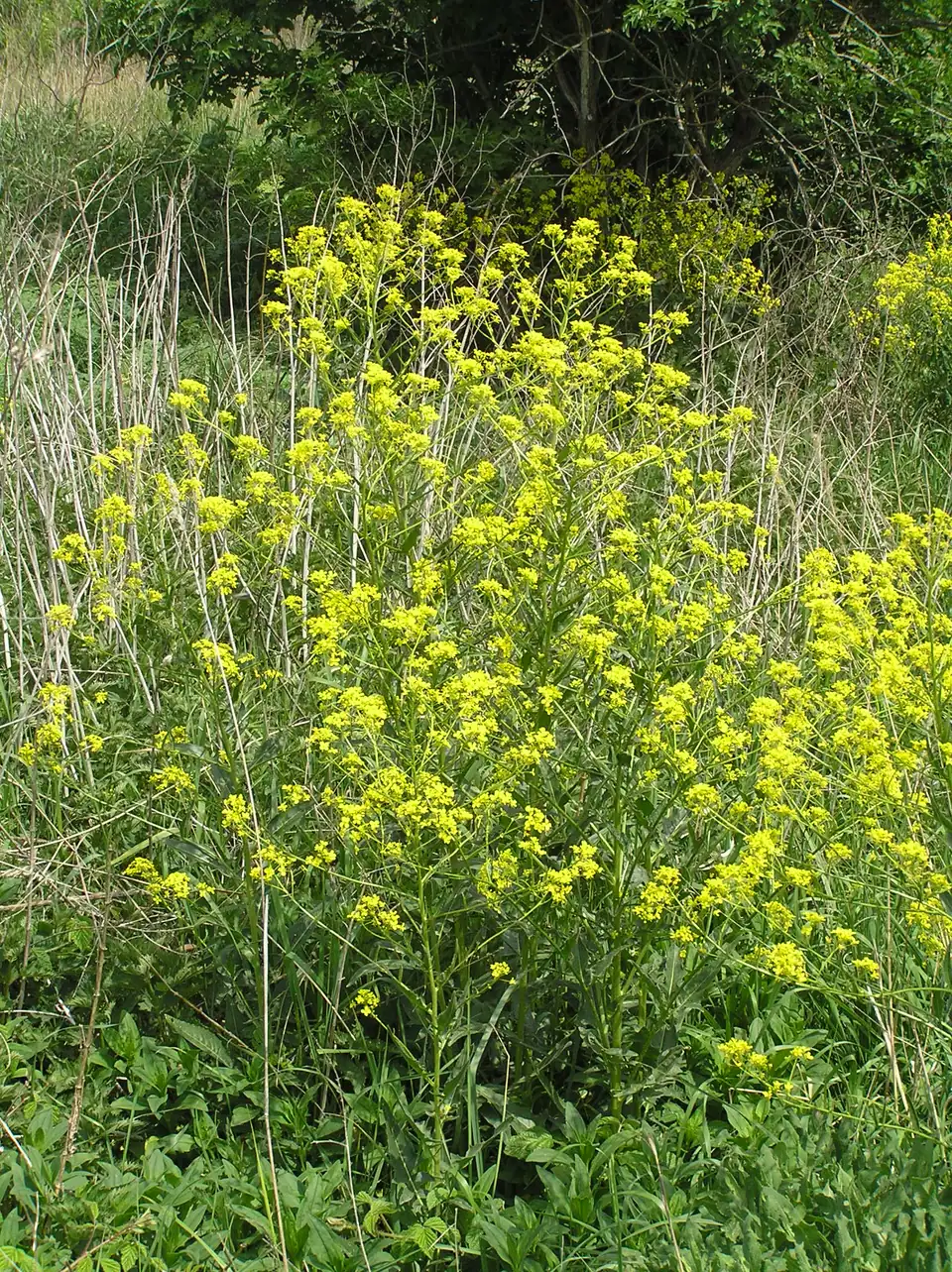
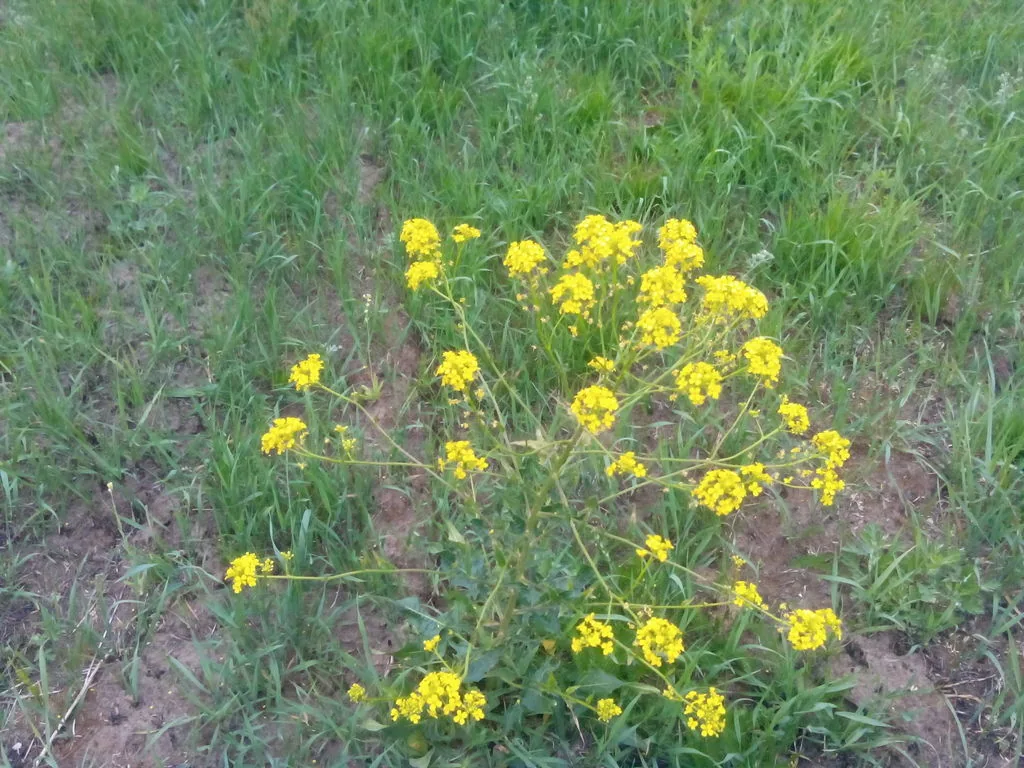

How to Grow and Care for Turkish wartycabbage
Bunias orientalis
Written by Emilio Marruso · last checked
At a glance
Imagine picking fresh leaves from the end of winter until late autumn, with only a short pause while the plant flowers. The young leaves have a mild cabbage flavor that's lovely in mixed salads, and the flower buds and stems taste sweet and delicate, raw or cooked. Just water it moderately and never let it go thirsty.
- Water
Moderate watering; it doesn't tolerate drought
What the sources say (2)
Watering: Moderate
Light full sun Shade tolerance no shade Water moderate
— Turkish Rocket (Bunias orientalis) — Practical Plants [7] Watering notes: Drought intolerant
Water moderate Hardiness Zone 7+ Soil textures sandy, loamy, clay Soil pH acid, neutral, alkaline Tolerates Nutritionally Poor Soil No Drought intolerant
— Turkish Rocket (Bunias orientalis) — Practical Plants [7] - Planting
Plant out in early summer
What the sources say (1)
Planting: Early summer
Prick out the seedlings into pots as soon as they are large enough to handle and plant them out in early summer.
— Bunias orientalis - Useful Temperate Plants [6] - Harvest
Young leaves from late winter to late autumn, except during flowering; flower buds and stems too
What the sources say (1)
Harvest: Leaves from the end of winter until late autumn, with a gap during flowering
The leaves are available early in the year, usually towards the end of winter, and the plant will continue to produce leaves until late autumn, with a bit of a gap when the plant is in flower[
— Bunias orientalis - Useful Temperate Plants [6] - Pests
Slugs damage seedlings and young spring growth; grown plants recover quickly
- Watch out
Spreads easily: seeds last 5–7 years in soil and root bits regrow, so pull out the whole root
What the sources say (1)
Root system: Perennial taproot, up to 2.5 cm [1 in] in diameter in older plants.
Roots: Perennial taproot up to 1” in diameter in older plants.
— Hill mustard acts as either a simple [3] - Propagation
By seed, by dividing the plant in spring, or from root cuttings
What the sources say (2)
Propagation: Seed; division in spring; root cuttings
Division in spring. Quick and easy. Root cuttings 2 - 5cm in length succeed at any time during the growing season, though early spring as the plant comes into growth is best[
— Bunias orientalis - Useful Temperate Plants [6] Le bunias d’Orient se reproduit de manière sexuée par les graines ou de manière végétative.
— F3-05 - Bunias d’Orient [4] - Sowing
Sow in April in a cold frame, or directly in the ground in spring
What the sources say (5)
Sowing: Mid spring (April) in a cold frame, or in situ in spring
According to Useful Temperate Plants (Ken Fern): Seed - sow mid spring in a cold frame. Germination is usually very quick and good.
— Bunias orientalis - Useful Temperate Plants [6] According to Practical Plants: Seed - sow April in a cold frame. Germination is usually very quick and good.
— Turkish Rocket (Bunias orientalis) — Practical Plants [7] Seed - sow mid spring in a cold frame. Germination is usually very quick and good.
— Bunias orientalis - Useful Temperate Plants [6] Seed - sow April in a cold frame. Germination is usually very quick and good.
— Turkish Rocket (Bunias orientalis) — Practical Plants [7] The seed can also be sown in situ in the spring, though the seedlings are rather prone to slug damage[K].
— Turkish Rocket (Bunias orientalis) — Practical Plants [7]
Overview
Warty cabbage or Turkish rocket is a biennial to perennial crucifer with yellow flowers, native to south-eastern Europe and western Asia. [6] It is listed as an invasive alien species in Switzerland and Wisconsin, where it spreads along roadsides and into grasslands. [4][3] Its young leaves and flowering shoots are eaten raw or cooked. [7]
This record is incomplete: the sources we read do not cover every field yet.
Not yet covered by our sources: Hardiness, warmest zone
Turkish wartycabbage care
Measurements in square brackets are our conversion into the other unit system; the quoted text is unchanged.
How to water Turkish wartycabbage
Watering
Moderate
What the sources say (1)
Light
full sun
Shade tolerance
no shade
Water
moderateWatering notes
Drought intolerant
What the sources say (1)
Water
moderate
Hardiness
Zone 7+
Soil textures
sandy, loamy, clay
Soil pH
acid, neutral, alkaline
Tolerates Nutritionally Poor Soil
No
Drought
intolerantHow much light Turkish wartycabbage needs
The sources give different values depending on region, zone or growing conditions.
What each source says
According to Practical Plants: Full sun, no shade
According to Useful Temperate Plants (Ken Fern): Sunny position; also dappled shade
What the sources say (4)
According to Practical Plants: Light
full sun
Shade tolerance
no shade
Water
moderateAccording to Useful Temperate Plants (Ken Fern): Plants have also been seen growing exceedingly well in the dappled shade of a woodland garden[Light
full sun
Shade tolerance
no shade
Water
moderateBunias orientalis L. is a fast growing perennial plant needing a lot of light.How much cold Turkish wartycabbage can take
Hardiness, coldest zone
The sources give different values depending on region, zone or growing conditions.
What each source says
According to Practical Plants: 7 [winter low −17.8 to −12.2 °C (0 to 10 °F)]
According to Useful Temperate Plants (Ken Fern): -45°C
What the sources say (2)
According to Practical Plants: Water
moderate
Hardiness
Zone 7+
Soil textures
sandy, loamy, clay
Soil pH
acid, neutral, alkalineAccording to Useful Temperate Plants (Ken Fern): Bunias orientalis is a very hardy plant, able to survive winter temperatures falling as low as -45°c.Hardiness, warmest zone
Not stated in the sources we read.
How to propagate Turkish wartycabbage
Seed; division in spring; root cuttings
What the sources say (2)
Division in spring. Quick and easy.
Root cuttings 2 - 5cm in length succeed at any time during the growing season, though early spring as the plant comes into growth is best[Le bunias d’Orient se reproduit de manière sexuée par les graines ou de manière végétative.How to grow Turkish wartycabbage
The plant
Life cycle
biennial or perennial
Family
Brassicaceae (Cruciferae)
What the sources say (1)
Classification: Cruciferae, Dicotyledonous Common name: warty cabbageRoots
Root system
Perennial taproot, up to 2.5 cm [1 in] in diameter in older plants.
What the sources say (1)
Roots: Perennial taproot up to 1” in diameter in older plants.Turkish wartycabbage pests and problems
Slugs
Symptom: Young spring growth and seedlings damaged
What to do: Mature plants grow away quickly
What the sources say (1)
The young spring growth can be quite badly damaged by slugs, though more mature plants grow away so quickly that this does not seem to be a problem[
— Bunias orientalis - Useful Temperate Plants [6] Persistent seed bank and root regrowth
Symptom: Seeds stay viable 5-7 years in soil; root fragments form new plants
What to do: Pull the entire taproot; establish desired vegetation after cultivation
What the sources say (2)
Chaque plante produit en moyenne 5’000 graines et bien qu’elles aient une faible capacité de dispersion, elles restent viables de nombreuses années (5-7 ans) dans le sol.
— F3-05 - Bunias d’Orient [4] Pull if soil conditions allow for the removal of the entire taproot. This will be difficult with well-established, mature plants.
— Hill mustard acts as either a simple [3]
Remedies
Each remedy shows what official sources say about it; traditional remedies without an official source are marked as such. Harmful ones are listed so you know to avoid them.
Getting rid of it
hill mustard
pull out the taproot Partly works
How: Pull when soil conditions allow removal of the entire taproot; if flowers are present, bag the material and dispose of it in a landfill to avoid spreading seed.
Pull if soil conditions allow for the removal of the entire taproot. This will be difficult with well-established, mature plants.
— Hill mustard acts as either a simple [3] What the evidence says Removal Effectiveness in season: 90–100% Season after treatment: 50–70% Pull if soil conditions allow for the removal of the entire taproot.
— Hill mustard acts as either a simple [3] mowing before seed set Partly works
Care must be taken not to mow when mature seeds could be present since this will spread the seed.
— Hill mustard acts as either a simple [3] How: When flowers appear, mow as close to the ground as possible to halt seed production; repeat, since a single mowing may increase seed production.
When flowers appear, mow as close as possible to ground to halt seed production. Continual mowing regimes may be needed as mowing once may result in greater seed production.
— dnr.wisconsin.gov [8] What the evidence says Mowing Effectiveness in season: 70–90% Season after treatment: < 50% Mow as low as possible before seed production. Plants may resprout and still flower.
— Hill mustard acts as either a simple [3] cultivation to dislodge roots Partly works
How: Cultivation dislodges the roots and suppresses adult plants but stimulates seed germination; re-establish desired vegetation afterwards.
Cultivation can suppress adult plants, but stimulates seed germination. Cultivation can dislodge the roots from the soil.
— Hill mustard acts as either a simple [3] What the evidence says No information is available as to how effective cultivation alone is at managing this plant, but observations indicate that additional management methods will be required
— Hill mustard acts as either a simple [3] propane torch on seedlings Partly works
How: A handheld propane torch can be used to treat seedlings.
A handheld propane torch can be effective for treating seedlings.
— Hill mustard acts as either a simple [3] What the evidence says A handheld propane torch can be effective for treating seedlings.
— Hill mustard acts as either a simple [3] establishing desired vegetation Official source, not independently tested
How: After cultivation, establish desired vegetation so no bare ground is left for the seed bank; reduce the amount and duration of soil disturbance.
Establishment of desired vegetation after cultivation is essential since hill mustard maintains a large seed bank from which plants can establish if bare ground exists.
— Hill mustard acts as either a simple [3]
Calendar
Mid spring (April) in a cold frame, or in situ in spring
What each source says
According to Useful Temperate Plants (Ken Fern): Mid spring, cold frame
According to Practical Plants: April, cold frame; or in situ in spring
What the sources say (5)
According to Useful Temperate Plants (Ken Fern): Seed - sow mid spring in a cold frame. Germination is usually very quick and good.According to Practical Plants: Seed - sow April in a cold frame. Germination is usually very quick and good.Seed - sow mid spring in a cold frame. Germination is usually very quick and good.Seed - sow April in a cold frame. Germination is usually very quick and good.The seed can also be sown in situ in the spring, though the seedlings are rather prone to slug damage[K].Early summer
What the sources say (1)
Prick out the seedlings into pots as soon as they are large enough to handle and plant them out in early summer.Leaves from the end of winter until late autumn, with a gap during flowering
What the sources say (1)
The leaves are available early in the year, usually towards the end of winter, and the plant will continue to produce leaves until late autumn, with a bit of a gap when the plant is in flower[Months as given by the sources, which are mostly from the United States (northern hemisphere). In the southern hemisphere they shift by about six months.
Edibility
Reported by the source, quoted verbatim. Do not eat a plant on the basis of this page alone: identification mistakes can be dangerous.
Similar plants
- Crested wartycabbage Bunias erucago
- Abraham Trachystemon orientalis
- Abyssinian banana Ensete ventricosum
- Acacia longifolia Acacia longifolia
- African Blue Lily Agapanthus praecox
- African lily Dietes bicolor
- African lovegrass Eragrostis curvula
- African tuliptree Spathodea campanulata
Sources
Every value above is quoted from these documents. Links lead to the original publisher.
- Bunias orientalis L. · infoflora.ch, consulted
- Bunias orientalis · www2.dijon.inrae.fr, consulted
- Hill mustard acts as either a simple · renzweedscience.cals.wisc.edu, consulted
- F3-05 - Bunias d’Orient · vd.ch, consulted
- Bunias orientalis L. – neobiota.lu · neobiota.lu, consulted
- Bunias orientalis - Useful Temperate Plants · temperate.theferns.info, consulted
- Turkish Rocket (Bunias orientalis) — Practical Plants · practicalplants.org, consulted
- dnr.wisconsin.gov · dnr.wisconsin.gov
Written by Emilio Marruso · last checked