
How to Grow and Care for Bengal kino
Butea monosperma
Written by Emilio Marruso · last checked
Toxic to: People · Why
At a glance
This plant asks for little once it settles in: give it full sun and moderate water, and in time it becomes very drought tolerant. It even succeeds on salty or waterlogged soils. Sow the seeds before the rainy season begins, or start new plants from root suckers or by air layering, and watch your own little grove take shape.
- Sun
Full sun is best; some shade is fine, but heavy shade slows growth
What the sources say (2)
Light: Full sun (also thrives with some shade; heavy shade depresses growth)
Light Preference | Full Sun | Water Preference | Moderate Water | Plant Growth Rate | Moderate
— NParks | Butea monosperma [1] Plants prefer a sunny position, though they also thrive with some shade
— Butea monosperma - Useful Tropical Plants [2] - Water
Moderate water; once settled in, it handles drought very well
What the sources say (2)
Watering: Moderate water; established plants are very drought tolerant
Light Preference | Full Sun | Water Preference | Moderate Water | Plant Growth Rate | Moderate
— NParks | Butea monosperma [1] Established plants are very drought tolerant[ 303 Title World Agroforesty Centre
— Butea monosperma - Useful Tropical Plants [2] - Soil
Grows even in salty or waterlogged soil
What the sources say (1)
Watering notes: Succeeds even on saline or waterlogged soils
it succeeds on a wide variety of soils including shallow, gravelly sites, black cotton soil, clay loams, and even saline or waterlogged soils where few other trees will grow
— Butea monosperma - Useful Tropical Plants [2] - Spacing
Sow in rows 10–20 ft apart
What the sources say (1)
Spacing: 300-600 cm (3-6 m) between rows (seed sown in rows)
Before the beginning of the rainy season, complete pods are sown in rows 3—6 m apart.
— PROSEA - Plant Resources of South East Asia [8] - Harvest
The roots are used as an herb or spice
- Propagation
From seed, root suckers or air layering
What the sources say (3)
Propagation: Seed; root suckers; air layering
Trees are propagated by seeds. Before the beginning of the rainy season, complete pods are sown in rows 3—6 m apart.
— PROSEA - Plant Resources of South East Asia [8] The Seeds can be direcijy sown in polypot Germination takes upto 15 days.
— Forestry :: Nursery Technologies [6] Root suckers. Air layering. Cite as: Tropical Plants Database, Ken Fern.
— Butea monosperma - Useful Tropical Plants [2] - Sowing
Sow before the rainy season begins
What the sources say (1)
Sowing: Before the beginning of the rainy season
Before the beginning of the rainy season, complete pods are sown in rows 3—6 m apart.
— PROSEA - Plant Resources of South East Asia [8] - Safety
No known hazards to people
Overview
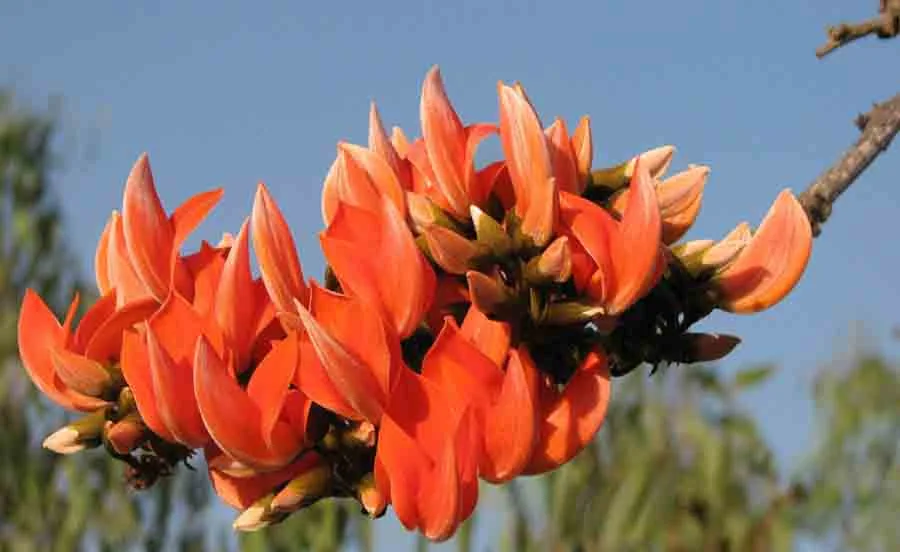
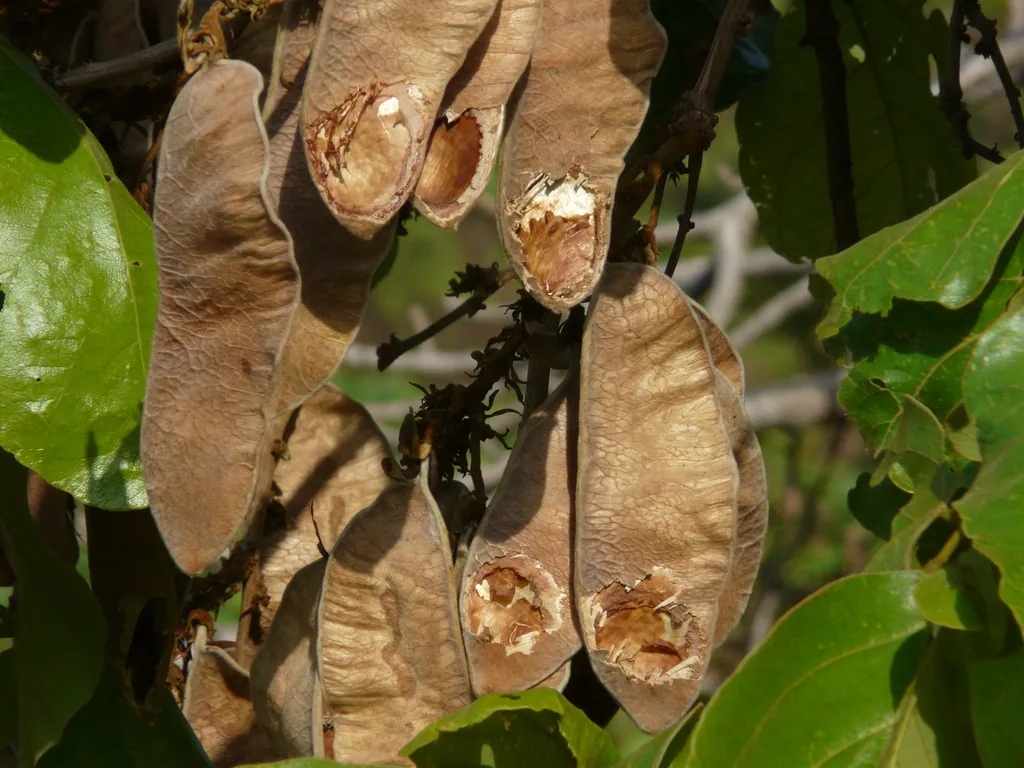
Butea monosperma is a small to medium-sized, slow-growing, deciduous tree of South and Southeast Asia. [2] It prefers a sunny position and established plants are very drought tolerant. [2] In Singapore it is recorded as a horticultural plant needing full sun and moderate water. [1]
This record is incomplete: the sources we read do not cover every field yet.
Not yet covered by our sources: Hardiness, coldest zone, Hardiness, warmest zone, Pruning
Bengal kino care
How to water Bengal kino
Watering
Moderate water; established plants are very drought tolerant
Watering notes
Succeeds even on saline or waterlogged soils
What the sources say (1)
it succeeds on a wide variety of soils including shallow, gravelly sites, black cotton soil, clay loams, and even saline or waterlogged soils where few other trees will growHow much light Bengal kino needs
Full sun (also thrives with some shade; heavy shade depresses growth)
How much cold Bengal kino can take
Hardiness, coldest zone
Not stated in the sources we read.
Hardiness, warmest zone
Not stated in the sources we read.
Where to grow Bengal kino
300-600 cm (3-6 m) between rows (seed sown in rows)
What the sources say (1)
Before the beginning of the rainy season, complete pods are sown in rows 3—6 m apart.How to propagate Bengal kino
Seed; root suckers; air layering
What the sources say (3)
Trees are propagated by seeds. Before the beginning of the rainy season, complete pods are sown in rows 3—6 m apart.The Seeds can be direcijy sown in polypot Germination takes upto 15 days.Root suckers.
Air layering.
Cite as: Tropical Plants Database, Ken Fern.Remedies
The sources we checked give no remedies for this plant.
Is Bengal kino poisonous?
Reported by the source, quoted verbatim. This is not medical or veterinary advice: if a person or an animal may have eaten this plant, contact a poison control centre or a veterinarian.
Known Hazards None known ## Botanical References ## Range E. Asia - Indian subcontinent, Myanmar
[2]
Calendar
Sowing
Before the beginning of the rainy season
What the sources say (1)
Before the beginning of the rainy season, complete pods are sown in rows 3—6 m apart.Pruning
Not stated in the sources we read.
Months as given by the sources, which are mostly from the United States (northern hemisphere). In the southern hemisphere they shift by about six months.
Edibility
Reported by the source, quoted verbatim. Do not eat a plant on the basis of this page alone: identification mistakes can be dangerous.
## Description and Ethnobotany | Ethnobotanical Uses | Food (Herb or Spice)
[1]
Indicative values
Values from a secondary source, not checked word for word like the rest of this page. Use them as a starting point.
- Life cycle
- PerennialIndicative value, adapt it to your climate · Secondary source
- Mature height
- 914.4-1219.2 cm (30-40 ft)Indicative value, adapt it to your climate · Secondary source
- Hours of sun
- 6-8 hoursIndicative value, adapt it to your climate · Secondary source
- Drought tolerant
- yesIndicative value, adapt it to your climate · Secondary source
- Soil pH
- 6-7.5Indicative value, adapt it to your climate · Secondary source
- USDA hardiness zones
- 10-12 [winter low −1.1 to 15.6 °C (30 to 60 °F)]Indicative value, adapt it to your climate · Secondary source
- Care level
- MediumIndicative value, adapt it to your climate · Secondary source
- Growth rate
- LowIndicative value, adapt it to your climate · Secondary source
- Pruning
- March, AprilIndicative value, adapt it to your climate · Secondary source
Similar plants
- Abies grandis Abies grandis
- Abraham Trachystemon orientalis
- Abyssinian banana Ensete ventricosum
- Acacia longifolia Acacia longifolia
- Acanthus hungaricus Acanthus hungaricus
- Aconite Aconitum napellus
- Adam's Needle Yucca flaccida
- Adriatic lizard orchid Himantoglossum adriaticum
Sources
Every value above is quoted from these documents. Links lead to the original publisher.
- NParks | Butea monosperma · nparks.gov.sg, consulted
- Butea monosperma - Useful Tropical Plants · tropical.theferns.info, consulted
- Digital Garden :: UoK · keralauniversity.ac.in, consulted
- Butea (PROSEA) - Pl@ntUse · uses.plantnet-project.org, consulted
- Butea monosperma - Plant Detail - Tropical Plants Database - NTBG Database · ntbg.org, consulted
- Forestry :: Nursery Technologies · agritech.tnau.ac.in, consulted
- Plants · vanasampada.somaiya.edu, consulted
- PROSEA - Plant Resources of South East Asia · prosea.prota4u.org, consulted
Written by Emilio Marruso · last checked