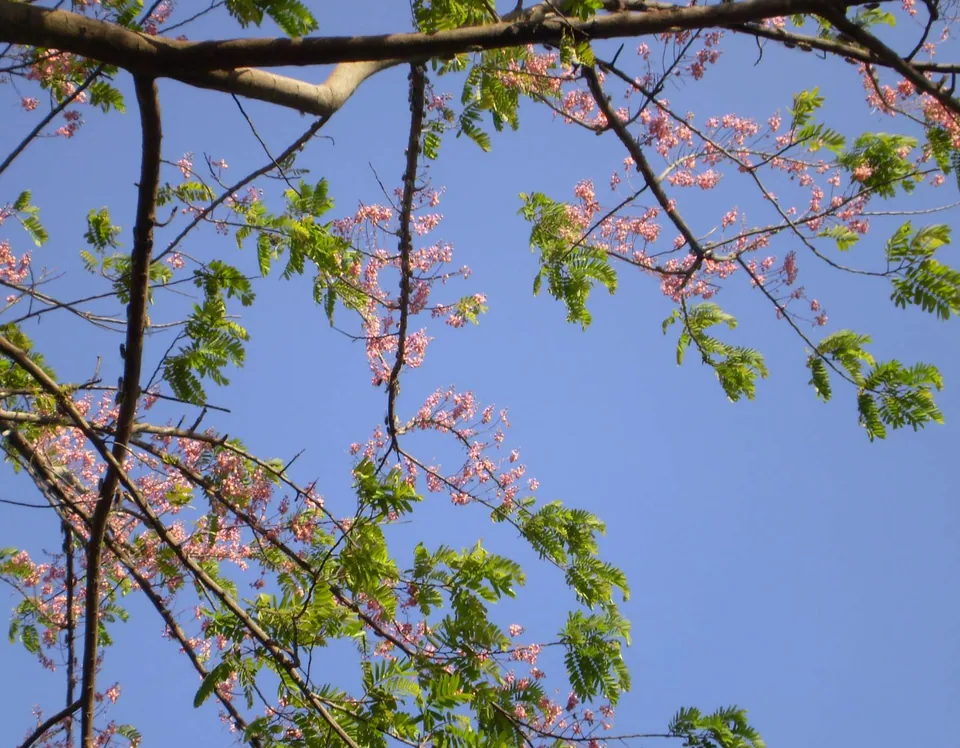

How to Grow and Care for Pink shower
Cassia grandis
Written by Emilio Marruso · last checked
Toxic to: Animals, People · Why
At a glance
This sun-loving tree asks only for full sun and moderate water, and it even copes with soil that stays waterlogged for part of the year. The sweet pulp of its fruit is edible, and the seed membrane can be turned into a chocolate-like dessert. It is safe around people and animals, and you can grow new trees from seed, cuttings or layering.
- Sun
Full sun
- Water
Moderate water; it handles soil that is waterlogged part of the year
- Harvest
The sweet fruit pulp is edible, but it smells bad and works as a laxative
- Watch out
Big ripe pods drop and make a mess on sidewalks and driveways
- Propagation
Seed (nick the seed first), cuttings, layering or replanting suckers
What the sources say (2)
Propagation: Seed (nick the seed surface to promote germination), cuttings, layering; suckers can be replanted
Propagate by seed, cuttings or layering. Seed surface should be nicked to promote germination. This species produces suckers which can also be replanted.
— NParks | Cassia grandis [1] Seed - it has a hard seedcoat and may benefit from scarification before sowing to speed up germination.
— Cassia grandis - Useful Tropical Plants [4] - Safety
Not toxic to people or animals
Overview
Cassia grandis is a semi-deciduous, medium-sized tree native to tropical America, used as an ornamental in streets, parks and gardens. [1][7] It prefers full sun and is propagated by seed, cuttings or layering. [2][1] The ripened pods are large and can be messy when they drop on sidewalks or driveways. [2]
This record is incomplete: the sources we read do not cover every field yet.
Not yet covered by our sources: Hardiness, coldest zone, Hardiness, warmest zone, Pruning
Pink shower care
How to water Pink shower
Watering
Moderate water
What the sources say (1)
Water Preference
| Moderate WaterWatering notes
Tolerates seasonally waterlogged soils
What the sources say (1)
Soil type: C. grandis tolerates seasonally waterlogged soils.How much light Pink shower needs
How much cold Pink shower can take
Hardiness, coldest zone
Not stated in the sources we read.
Hardiness, warmest zone
Not stated in the sources we read.
How to propagate Pink shower
Seed (nick the seed surface to promote germination), cuttings, layering; suckers can be replanted
What the sources say (2)
Propagate by seed, cuttings or layering. Seed surface should be nicked to promote germination. This species produces suckers which can also be replanted.Seed - it has a hard seedcoat and may benefit from scarification before sowing to speed up germination.Pink shower pests and problems
Pod litter
Symptom: Large ripened pods are messy when they drop on sidewalks or driveways
What to do: The sterile hybrid Rainbow Shower is often recommended as a cleaner alternative
Remedies
The sources we checked give no remedies for this plant.
Is Pink shower toxic to pets?
Reported by the source, quoted verbatim. This is not medical or veterinary advice: if a person or an animal may have eaten this plant, contact a poison control centre or a veterinarian.
No Toxic or Allelopathic Effects: Not toxic to humans or animals; no allelopathy reported.
[2]The source flags the risk for this animal but does not explain why.
Calendar
Pruning
Not stated in the sources we read.
Months as given by the sources, which are mostly from the United States (northern hemisphere). In the southern hemisphere they shift by about six months.
Edibility
Reported by the source, quoted verbatim. Do not eat a plant on the basis of this page alone: identification mistakes can be dangerous.
Indicative values
Values from a secondary source, not checked word for word like the rest of this page. Use them as a starting point.
- Life cycle
- PerennialIndicative value, adapt it to your climate · Secondary source
- Mature height
- 1219.2-1828.8 cm (40-60 ft)Indicative value, adapt it to your climate · Secondary source
- Hours of sun
- 6-8 hoursIndicative value, adapt it to your climate · Secondary source
- Drought tolerant
- yesIndicative value, adapt it to your climate · Secondary source
- Soil pH
- 6-7.5Indicative value, adapt it to your climate · Secondary source
- USDA hardiness zones
- 10-12 [winter low −1.1 to 15.6 °C (30 to 60 °F)]Indicative value, adapt it to your climate · Secondary source
- Care level
- MediumIndicative value, adapt it to your climate · Secondary source
- Growth rate
- HighIndicative value, adapt it to your climate · Secondary source
- Pruning
- March, April, May, June, July, August, March, April, May, June, July, AugustIndicative value, adapt it to your climate · Secondary source
Similar plants
- Abies grandis Abies grandis
- Abraham Trachystemon orientalis
- Abyssinian banana Ensete ventricosum
- Acacia longifolia Acacia longifolia
- Acanthus hungaricus Acanthus hungaricus
- Aconite Aconitum napellus
- Adam's Needle Yucca flaccida
- Adriatic lizard orchid Himantoglossum adriaticum
Sources
Every value above is quoted from these documents. Links lead to the original publisher.
- NParks | Cassia grandis · nparks.gov.sg, consulted
- Cassia grandis | Plant Pono · plantpono.org, consulted
- Cassia grandis · apps.worldagroforestry.org, consulted
- Cassia grandis - Useful Tropical Plants · tropical.theferns.info, consulted
- Cassia grandis (PROSEA) - Pl@ntUse · uses.plantnet-project.org, consulted
- Cassia grandis - Plant Detail - Tropical Plants Database - NTBG Database · ntbg.org, consulted
- Cassia grandis L.f. · npn.rngr.net, consulted
- Rev. Biol. Trop., 34(2): 289-296, 1986 · tropicalstudies.org, consulted
Written by Emilio Marruso · last checked