
How to Grow and Care for Black Bean
Castanospermum australe
Written by Emilio Marruso · last checked
Toxic to: Livestock, People · Why
At a glance
Castanospermum grows happily in full sun and even puts up with shade and light frost. Start it from fresh seed as soon as it ripens, keep it in a greenhouse through its first winter, then plant it out in summer. It does well in containers and indoors too, and its seeds, once carefully roasted and soaked, taste like sweet chestnuts.
- Sun
Full sun; it also tolerates shade
What the sources say (2)
Light: Full sun (shade and light frost tolerated)
Full sun is recommended, however shady situations are tolerated, as is light frost.
— Castanospermum australe - Growing Native Plants [1] a very sunny position when grown in areas cooler than its natural climate
— Castanospermum australe - Useful Temperate Plants [5] - Water
Water regularly after planting; too much water rots the roots
What the sources say (3)
Watering: Water regularly after planting the seedling
mulch around the base of the plant and water regularly.
— Castanospermum australe - Growing Native Plants [1] - Cold
Survives winters down to 20 °F (−6.7 °C)
Hardy in average winters · USDA 9 · RHS H4 · Z9
What the sources say (2)
Hardiness, coldest zone: 9 [winter low −6.7 to −1.1 °C (20 to 30 °F)]
outdoors in south Cornwall: It is said to be able to grow outdoors in south Cornwall (hardiness zone 9)
— Castanospermum australe - Useful Temperate Plants [5] It is said to be able to grow outdoors in south Cornwall (hardiness zone 9)
— Castanospermum australe - Useful Temperate Plants [5] - Soil
Moist but very well-drained soil
What the sources say (2)
- Planting
Plant out in summer, after at least one winter in a greenhouse
What the sources say (1)
Planting: Summer, after at least the first winter in a greenhouse
Grow them on for at least the first winter in a greenhouse before planting out in the summer.
— Castanospermum australe - Useful Temperate Plants [5] - Feeding
First liquid feed 3 months after the seed sprouts
What the sources say (3)
When: First application 3 months after germination
The Black Bean is slow to establish but will respond to liquid fertilizer (NPK), which should be firstly applied 3 months after germination.
— [9] Mineral fertilizers: Liquid NPK fertilizer
indoor plants in containers: Plant the seedlings in a commercial potting mix with slow release fertilizer added.
— [9] The Black Bean is slow to establish but will respond to liquid fertilizer (NPK), which should be firstly applied 3 months after germination.
— [9] - Harvest
Seeds are edible only after careful roasting and soaking; they taste like sweet chestnuts
- Pests
Scale insects and psyllids now and then; overwatering causes root rot
- Propagation
From fresh seed
What the sources say (1)
Propagation: Fresh seed
Propagation of this species is from fresh seed.
— Castanospermum australe - Growing Native Plants [1] - Sowing
Sow in a greenhouse as soon as the seed is ripe
What the sources say (1)
Sowing: As soon as the seed is ripe (in a greenhouse)
would recommend sowing it in a greenhouse as soon as it is ripe
— Castanospermum australe - Useful Temperate Plants [5] - Containers
Grows in containers and indoors too
What the sources say (2)
In containers: Yes
As a pot plant it is popular in Europe and the Americas but its roots must be restricted in a container to prevent it growing too tall.
— Oxford University Plants 400: Castanospermum australe [3] Indoors: Yes
Black Bean also makes an ideal indoor plant
— Castanospermum australe - Growing Native Plants [1] - Safety
Leaves and seeds are toxic to people and livestock
Overview
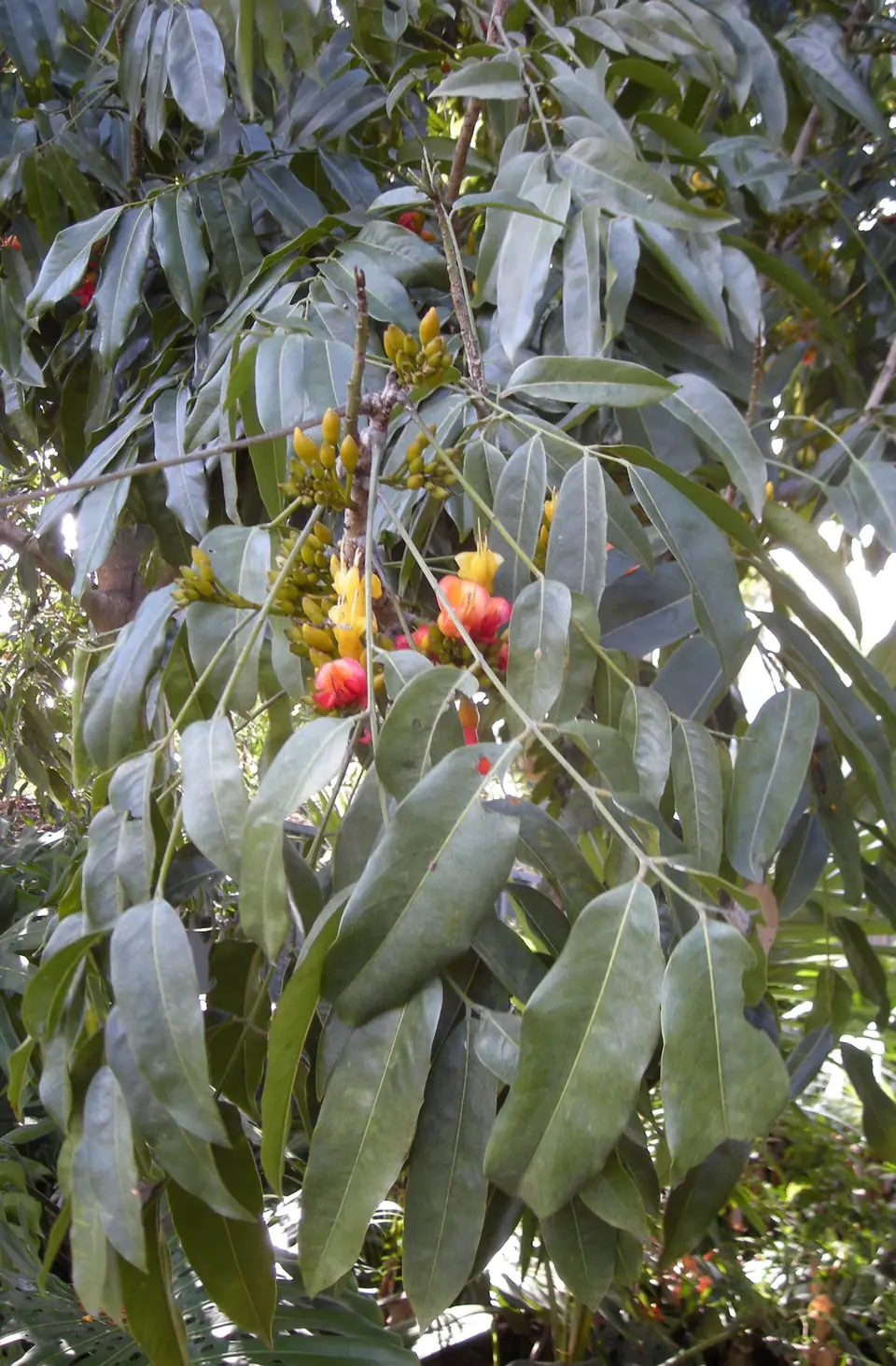
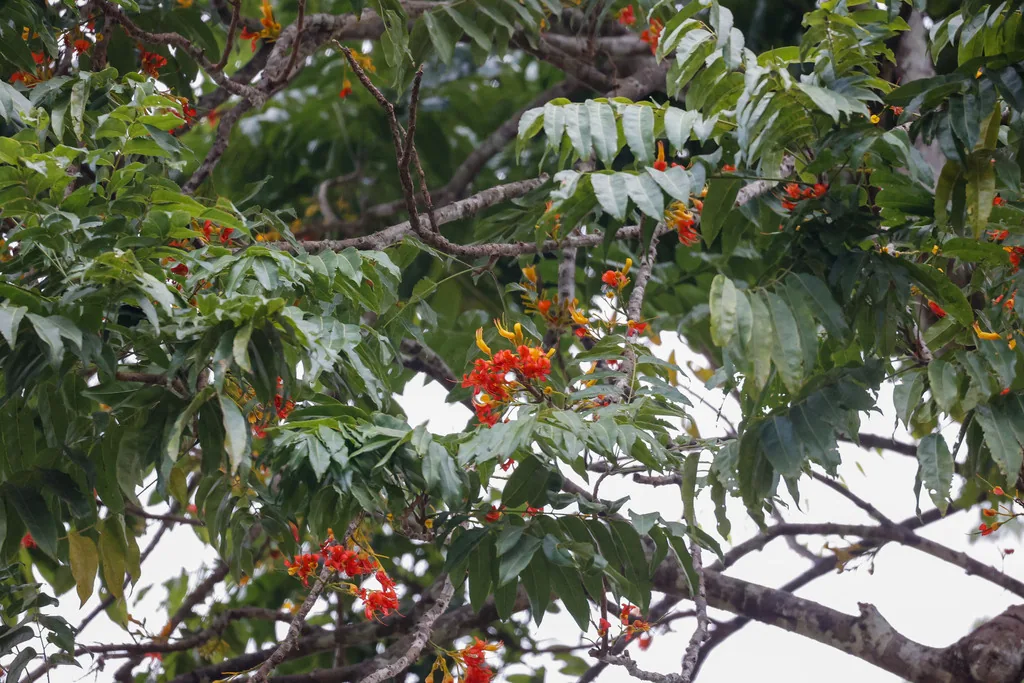
Castanospermum australe is a tall evergreen tree that develops a dense rounded canopy under cultivation and is used as a shade tree. [1] Full sun is recommended, although shade and light frost are tolerated. [1] The seeds are poisonous because of their saponin content and must be processed before they can be eaten. [6][3]
This record is incomplete: the sources we read do not cover every field yet.
Not yet covered by our sources: Hardiness, warmest zone, Pruning
Black Bean care
How to water Black Bean
Watering
Water regularly after planting the seedling
What the sources say (1)
mulch around the base of the plant and water
regularly.How much light Black Bean needs
Full sun (shade and light frost tolerated)
How much cold Black Bean can take
Hardiness, coldest zone
9 [winter low −6.7 to −1.1 °C (20 to 30 °F)]
What each source says
outdoors in south Cornwall: 9 [winter low −6.7 to −1.1 °C (20 to 30 °F)]
What the sources say (2)
outdoors in south Cornwall: It is said to be able to grow outdoors in south Cornwall (hardiness zone 9)It is said to be able to grow outdoors in south Cornwall (hardiness zone 9)Hardiness, warmest zone
Not stated in the sources we read.
Where to grow Black Bean
Indoors
Yes
What the sources say (1)
Black Bean also makes an ideal indoor plantIn containers
Yes
What the sources say (1)
As a pot plant it is popular in Europe and the Americas but its roots must be restricted in a container to prevent it growing too tall.How to propagate Black Bean
Fresh seed
What the sources say (1)
Propagation
of this species is from fresh seed.How to grow Black Bean
Fertilizing
When
First application 3 months after germination
What the sources say (1)
The Black Bean is slow to establish but will respond to liquid fertilizer (NPK), which should be firstly applied 3 months after germination.Mineral fertilizers
Liquid NPK fertilizer
What each source says
indoor plants in containers: Potting mix with slow-release fertilizer added
What the sources say (2)
indoor plants in containers: Plant the seedlings in a commercial potting mix with slow release fertilizer added.The Black Bean is slow to establish but will respond to liquid fertilizer (NPK), which should be firstly applied 3 months after germination.Black Bean pests and problems
Scale insects and psyllids
Symptom: May occasionally be affected
What the sources say (1)
May occasionally be affected by scale insects and psyllids.
— Castanospermum australe - Growing Native Plants [1] Fungal root rot
Symptom: Caused by over-watering
What the sources say (1)
Over-watering may cause fungal root rot.
— Castanospermum australe - Growing Native Plants [1]
Remedies
Each remedy shows what official sources say about it; traditional remedies without an official source are marked as such. Harmful ones are listed so you know to avoid them.
Getting rid of it
unwanted spread
hand weeding young seedlings Not verified
Traditional remedy, not verified by an official source.
How: Hand weed young seedlings.
Is Black Bean toxic to pets?
Reported by the source, quoted verbatim. This is not medical or veterinary advice: if a person or an animal may have eaten this plant, contact a poison control centre or a veterinarian.
Animals
The leaves and seeds are toxic to livestock.
[1]
People
Because of their content of saponins the leaves and seeds are toxic to livestock and humans.
[6]- Poisonous parts
Because of their content of saponins the leaves and seeds are toxic to livestock and humans.
[6]- Toxic principle
Because of their content of saponins the leaves and seeds are toxic to livestock and humans.
[6]- Symptoms
If eaten, the seeds can cause severe diarrhoea, vomiting, abdominal pain and dizziness.
[2]- Severity
Warning : Seek urgent medical attention for all ingestions.
[2]
Calendar
Sowing
As soon as the seed is ripe (in a greenhouse)
What the sources say (1)
would recommend sowing it in a greenhouse as soon as it is ripePlanting
Summer, after at least the first winter in a greenhouse
What the sources say (1)
Grow them on for at least the first winter in a greenhouse before planting out in the summer.Pruning
Not stated in the sources we read.
Months as given by the sources, which are mostly from the United States (northern hemisphere). In the southern hemisphere they shift by about six months.
Edibility
Reported by the source, quoted verbatim. Do not eat a plant on the basis of this page alone: identification mistakes can be dangerous.
Indicative values
Values from a secondary source, not checked word for word like the rest of this page. Use them as a starting point.
- Life cycle
- PerennialIndicative value, adapt it to your climate · Secondary source
- Hours of sun
- 4-6 hoursIndicative value, adapt it to your climate · Secondary source
- Soil
- Well-drainedIndicative value, adapt it to your climate · Secondary source
- Soil pH
- 6-7.5Indicative value, adapt it to your climate · Secondary source
- Growth rate
- LowIndicative value, adapt it to your climate · Secondary source
- Pruning
- March, April, May, May, May, MayIndicative value, adapt it to your climate · Secondary source
- Pests
- Mealybugs, Scale insects, Whitefly, psyllids, Disease resistantIndicative value, adapt it to your climate · Secondary source
Similar plants
- Abies grandis Abies grandis
- Abraham Trachystemon orientalis
- Abyssinian banana Ensete ventricosum
- Acacia longifolia Acacia longifolia
- Acanthus hungaricus Acanthus hungaricus
- Aconite Aconitum napellus
- Adam's Needle Yucca flaccida
- Adriatic lizard orchid Himantoglossum adriaticum
Sources
Every value above is quoted from these documents. Links lead to the original publisher.
- Castanospermum australe - Growing Native Plants · anbg.gov.au, consulted
- Black bean (Castanospermum australe) | QPIC · childrens.health.qld.gov.au, consulted
- Oxford University Plants 400: Castanospermum australe · herbaria.plants.ox.ac.uk, consulted
- Discover Nature at JCU - Castanospermum australe - JCU Australia · jcu.edu.au, consulted
- Castanospermum australe - Useful Temperate Plants · temperate.theferns.info, consulted
- Castanospermum australe - Plant Detail - Tropical Plants Database - NTBG Database · ntbg.org, consulted
- Castanospermum australe - Botany Brisbane · botanybrisbane.com, consulted
- Castanospermum australe · apps.worldagroforestry.org, consulted
- anbg.gov.au · anbg.gov.au
Written by Emilio Marruso · last checked