
How to Grow and Care for Pipsissewa
Chimaphila umbellata
Written by Emilio Marruso · last checked
At a glance
This charming plant asks for very little: a light soil that stays moist but drains well, and a light feeding in spring when you transplant it. Its leaves can even be brewed into tea or used to flavor root beer. You can grow new plants by dividing the rhizomes or taking cuttings, so one plant can become many.
- Water
Keep the soil moist, but never soggy
What the sources say (1)
Watering: Light, moist but well-drained soil
Requires a light moist but well-drained lime-free soil and shade from direct sunlight
— Chimaphila umbellata - Useful Temperate Plants [1] - Soil
Light soil that drains well
What the sources say (1)
Watering: Light, moist but well-drained soil
Requires a light moist but well-drained lime-free soil and shade from direct sunlight
— Chimaphila umbellata - Useful Temperate Plants [1] - Planting
Transplant in spring
What the sources say (1)
Planting: Spring (transplanting)
Transplanted in spring and top-dressed lightly with granular fertilizer may enhance thick growth and flowering.
— Plant Propagation Protocol for Pipsissewa [Chimaphila umbellate] [6] - Feeding
In spring, at transplanting, a light sprinkle of granular fertilizer for more flowers
What the sources say (2)
When: In spring, at transplanting
Transplanted in spring and top-dressed lightly with granular fertilizer may enhance thick growth and flowering.
— Plant Propagation Protocol for Pipsissewa [Chimaphila umbellate] [6] Mineral fertilizers: Light top-dressing of granular fertilizer, for denser growth and more flowers
Transplanted in spring and top-dressed lightly with granular fertilizer may enhance thick growth and flowering.
— Plant Propagation Protocol for Pipsissewa [Chimaphila umbellate] [6] - Harvest
The leaves make a tea or flavor root beer
- Propagation
Divide the rhizomes or take cuttings; seed is difficult
What the sources say (2)
Propagation: Rhizome divisions and cuttings; seed (difficult)
Propagation Recommendations: � Rhizome divisions and cuttings. � Soil seedbank from existing patches.
— Pipsissewa (Chimaphila umbellata) [2] This plant is very difficult to propagation.6 Other Comments: Seem to have mycorrhiza relationship
— Plant Propagation Protocol for Pipsissewa [Chimaphila umbellate] [6] - Sowing
Sow the seed as soon as it is ripe
What the sources say (1)
Sowing: As soon as the seed is ripe
Sow as soon as ripe on moist peat with small amount of inoculated soil from parent site.
— Pipsissewa (Chimaphila umbellata) [2] - Safety
Not toxic, unless used for a long time
Overview
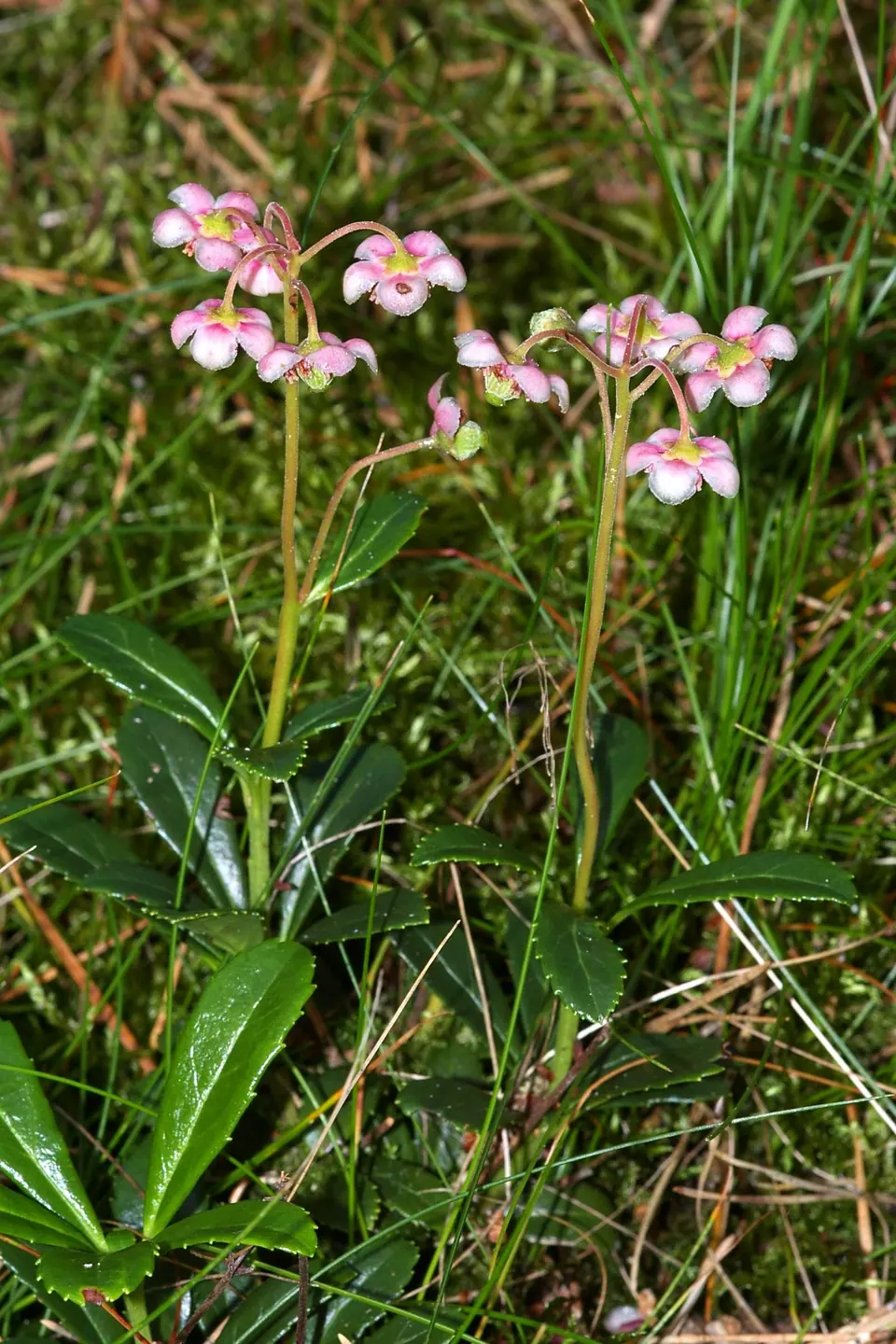
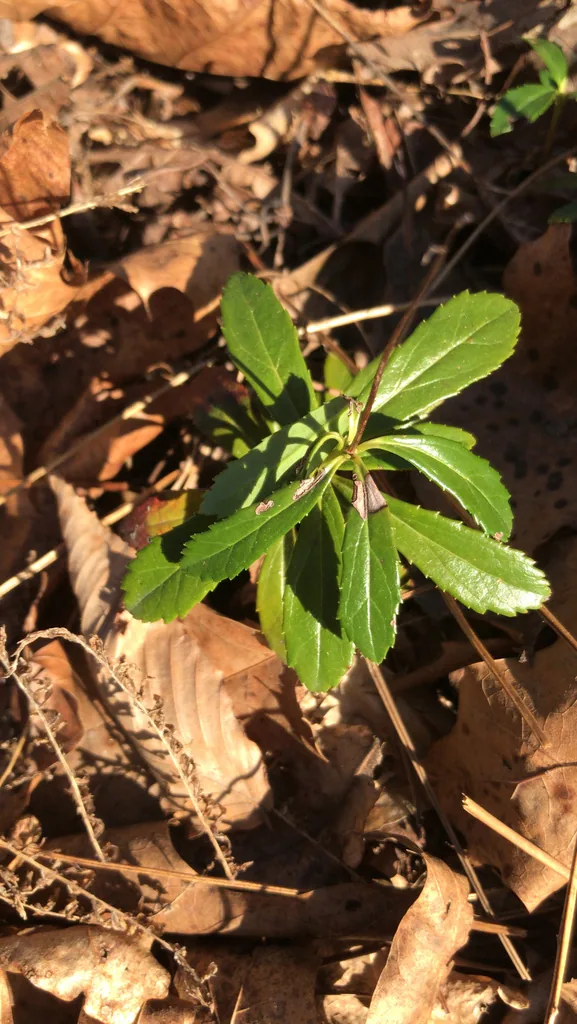
Pipsissewa is a low evergreen woodland plant of dry, shaded coniferous forests. [3][7] It is difficult to propagate and grow in cultivation because it depends on mycorrhizal associations in the wild. [1] Propagation is mainly by rhizome divisions and cuttings, and the plant is sensitive to disturbance. [2]
This record is incomplete: the sources we read do not cover every field yet.
Not yet covered by our sources: Hardiness, coldest zone, Hardiness, warmest zone, Pruning
Pipsissewa care
How to water Pipsissewa
Light, moist but well-drained soil
What the sources say (1)
Requires a light moist but well-drained lime-free soil and shade from direct sunlightHow much light Pipsissewa needs
The sources disagree:
Light: Part Sun Part Shade Shade Soil: Sandy
[5]
How much cold Pipsissewa can take
Hardiness, coldest zone
Not stated in the sources we read.
Hardiness, warmest zone
Not stated in the sources we read.
How to propagate Pipsissewa
Rhizome divisions and cuttings; seed (difficult)
What the sources say (2)
Propagation
Recommendations: � Rhizome divisions
and cuttings. � Soil seedbank from existing patches.This plant is very difficult to propagation.6 Other Comments: Seem to have mycorrhiza relationshipHow to grow Pipsissewa
The plant
Fertilizing
When
In spring, at transplanting
What the sources say (1)
Transplanted in spring and top-dressed lightly with granular fertilizer may enhance thick growth and flowering.Mineral fertilizers
Light top-dressing of granular fertilizer, for denser growth and more flowers
What the sources say (1)
Transplanted in spring and top-dressed lightly with granular fertilizer may enhance thick growth and flowering.Remedies
The sources we checked give no remedies for this plant.
Is Pipsissewa poisonous?
Reported by the source, quoted verbatim. This is not medical or veterinary advice: if a person or an animal may have eaten this plant, contact a poison control centre or a veterinarian.
Calendar
Sowing
As soon as the seed is ripe
What the sources say (1)
Sow as soon as ripe on moist peat with
small amount of inoculated soil from parent site.Planting
Spring (transplanting)
What the sources say (1)
Transplanted in spring and top-dressed lightly with granular fertilizer may enhance thick growth and flowering.Pruning
Not stated in the sources we read.
Months as given by the sources, which are mostly from the United States (northern hemisphere). In the southern hemisphere they shift by about six months.
Edibility
Reported by the source, quoted verbatim. Do not eat a plant on the basis of this page alone: identification mistakes can be dangerous.
Edibility: Leaves can be used as tea or a flavoring for root beer.
[7]
Indicative values
Values from a secondary source, not checked word for word like the rest of this page. Use them as a starting point.
- Hours of sun
- 2-4 hoursIndicative value, adapt it to your climate · Secondary source
- Soil
- SandIndicative value, adapt it to your climate · Secondary source
- Soil pH
- 4.5-6Indicative value, adapt it to your climate · Secondary source
- Care level
- MediumIndicative value, adapt it to your climate · Secondary source
- Growth rate
- LowIndicative value, adapt it to your climate · Secondary source
- Pruning
- March, AprilIndicative value, adapt it to your climate · Secondary source
Similar plants
- Striped Wintergreen Chimaphila maculata
- Aaron's Beard Hypericum calycinum
- Abies grandis Abies grandis
- Abraham Trachystemon orientalis
- Abyssinian banana Ensete ventricosum
- Acacia longifolia Acacia longifolia
- Acacia retinodes Acacia retinodes
- Acanthus hungaricus Acanthus hungaricus
Sources
Every value above is quoted from these documents. Links lead to the original publisher.
- Chimaphila umbellata - Useful Temperate Plants · temperate.theferns.info, consulted
- Pipsissewa (Chimaphila umbellata) · depts.washington.edu, consulted
- Chimaphila umbellata (Pipsissewa): Minnesota Wildflowers · minnesotawildflowers.info, consulted
- Virginia Tech Dendrology Fact Sheet · dendro.cnre.vt.edu, consulted
- Chimaphila umbellata | FLNPS · flnps.org, consulted
- Plant Propagation Protocol for Pipsissewa [Chimaphila umbellate] · courses.washington.edu, consulted
- Chimaphila umbellata (Common pipsissewa) · florafinder.com, consulted
- Chimaphila umbellata (L.) W. P. C. Barton · infoflora.ch, consulted
Written by Emilio Marruso · last checked