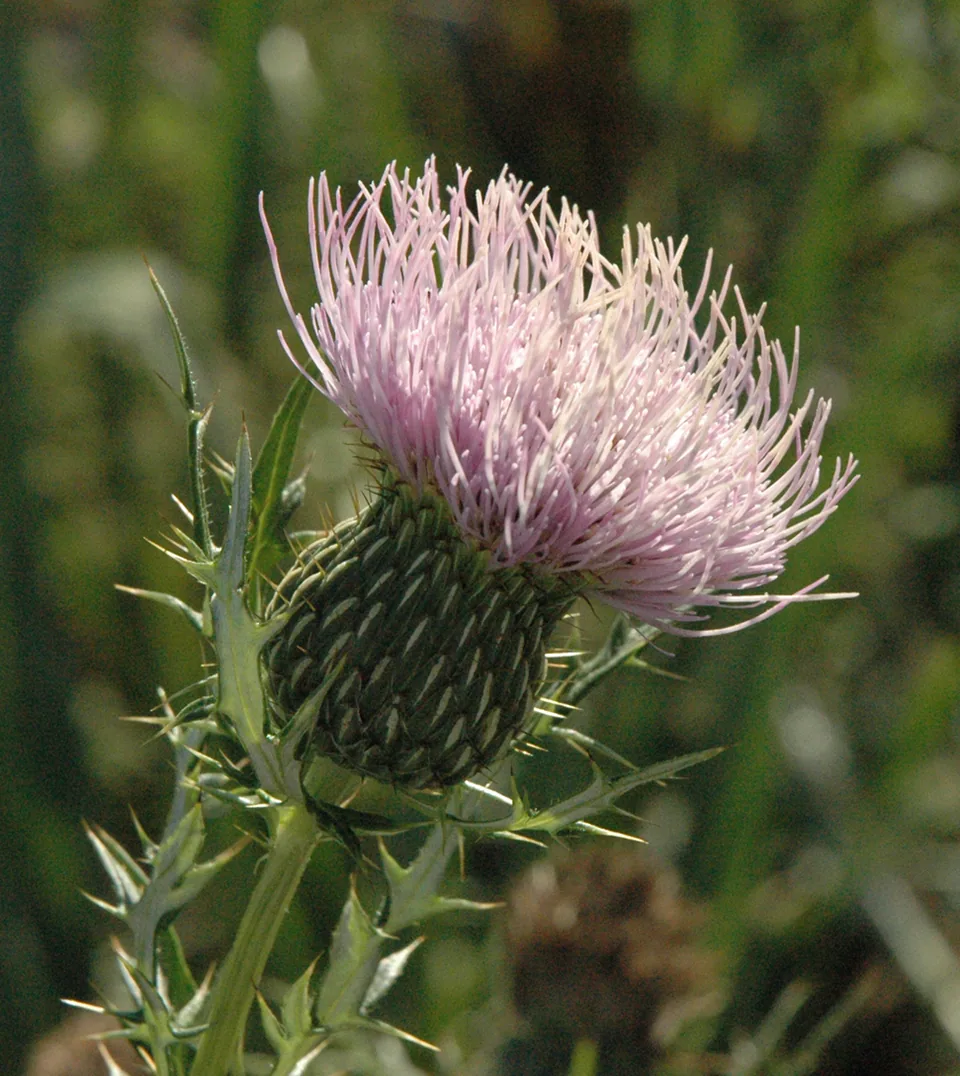


How to Grow and Care for Field Thistle
Cirsium discolor
Written by Emilio Marruso · last checked
At a glance
This thistle is an easygoing choice for a spot in full sun or partial shade. It tolerates drought and asks only for soil that drains well, so it needs little fuss. It lives for two years or a few more, spreads 1 to 2 feet wide, and you can grow new plants from seed.
- Sun
Full sun to partial shade
What the sources say (2)
Light: Full sun to partial shade
It will flower best in full sun but tolerates some shade.
— Cirsium discolor (Field Thistle) | North Carolina Extension Gardener Plant Toolbox [1] Light: Full sun (6 or more hours of direct sunlight a day) Partial Shade (Direct sunlight only part of the day, 2-6 hours)
— Cirsium discolor (Field Thistle) | North Carolina Extension Gardener Plant Toolbox [1] - Water
Tolerates drought: it needs little watering
What the sources say (1)
Watering: Drought tolerant
is drought-tolerant due to a deep tap root.
— Cirsium discolor (Field Thistle) | North Carolina Extension Gardener Plant Toolbox [1] - Soil
Soil that drains well
What the sources say (1)
Watering notes: Well-drained soils
This plant tolerates a wide variety of soils if they are well-drained
— Cirsium discolor (Field Thistle) | North Carolina Extension Gardener Plant Toolbox [1] - Size
1 to 2 ft wide
What the sources say (1)
Mature width: 30.48-60.96 cm (1-2 ft)
Dimensions: Height: 3 ft. 0 in. - 10 ft. 0 in. Width: 1 ft. 0 in. - 2 ft. 0 in.
— Cirsium discolor (Field Thistle) | North Carolina Extension Gardener Plant Toolbox [1] - Propagation
Grow new plants from seed; each plant lives two years or a few more
What the sources say (3)
Propagation: Seed
Recommended Propagation Strategy: Seed Country Or Region Of Origin:
— Cirsium discolor (Field Thistle) | North Carolina Extension Gardener Plant Toolbox [1] It will flower best in full sun but tolerates some shade.It spreads by seeds.
— Cirsium discolor (Field Thistle) | North Carolina Extension Gardener Plant Toolbox [1] Life cycle: biennial to short-lived perennial
Field thistle is a native biennial to short-lived perennial in the daisy (Asteraceae) family
— Cirsium discolor (Field Thistle) | North Carolina Extension Gardener Plant Toolbox [1]
Overview
Field thistle is a native biennial to short-lived perennial that bears large showy pink to purple flower heads from June to October. [1] It is drought-tolerant because of a deep tap root and tolerates a wide variety of soils if they are well-drained. [1] It is considered a primary noxious weed in Iowa. [2]
This record is incomplete: the sources we read do not cover every field yet.
Not yet covered by our sources: Pruning
Field Thistle care
How to water Field Thistle
Watering
Drought tolerant
What the sources say (1)
is drought-tolerant due to a deep tap root.Watering notes
Well-drained soils
What the sources say (1)
This plant tolerates a wide variety of soils if they are well-drainedHow much light Field Thistle needs
Full sun to partial shade
What the sources say (2)
It will flower best in full sun but tolerates some shade.Light:
Full sun (6 or more hours of direct sunlight a day)
Partial Shade (Direct sunlight only part of the day, 2-6 hours)How much cold Field Thistle can take
Hardiness, coldest zone
The sources give different values depending on region, zone or growing conditions.
What each source says
According to NC State Extension: 3a [winter low −40 to −37.2 °C (−40 to −35 °F)]
According to University of Illinois Extension: 2 [winter low −45.6 to −40 °C (−50 to −40 °F)]
What the sources say (2)
According to NC State Extension: USDA Plant Hardiness Zone:
3a, 3b, 4a, 4b, 5a, 5b, 6a, 6b, 7a, 7b, 8a, 8b, 9a, 9bAccording to University of Illinois Extension: USDA Hardiness Zone
2 - 8
Bloom ColorHardiness, warmest zone
The sources give different values depending on region, zone or growing conditions.
What each source says
According to NC State Extension: 9b [winter low −3.9 to −1.1 °C (25 to 30 °F)]
According to University of Illinois Extension: 8 [winter low −12.2 to −6.7 °C (10 to 20 °F)]
What the sources say (2)
According to NC State Extension: USDA Plant Hardiness Zone:
3a, 3b, 4a, 4b, 5a, 5b, 6a, 6b, 7a, 7b, 8a, 8b, 9a, 9bAccording to University of Illinois Extension: USDA Hardiness Zone
2 - 8
Bloom ColorHow to propagate Field Thistle
Seed
What the sources say (2)
Recommended Propagation Strategy:
Seed
Country Or Region Of Origin:It will flower best in full sun but tolerates some shade.It spreads by seeds.How to grow Field Thistle
The plant
Life cycle
biennial to short-lived perennial
What the sources say (1)
Field thistle is a native biennial to short-lived perennial in the daisy (Asteraceae) familyFamily
Asteraceae
What the sources say (1)
Field thistle is a native biennial to short-lived perennial in the daisy (Asteraceae) familyMature height
Mature width
30.48-60.96 cm (1-2 ft)
What the sources say (1)
Dimensions:
Height: 3 ft. 0 in. - 10 ft. 0 in.
Width: 1 ft. 0 in. - 2 ft. 0 in.Remedies
Each remedy shows what official sources say about it; traditional remedies without an official source are marked as such. Harmful ones are listed so you know to avoid them.
Getting rid of it
unwanted thistle
digging out the plant before bloom Partly works
Native thistles are not noxious weeds and shouldn’t be killed.
— gilpin.extension.colostate.edu [5] How: dig or pull up the plant removing the root from below the soil surface; effective only before bloom
Digging, pulling up, removing the root from below the soil’s surface.
— buncombe.ces.ncsu.edu [3] What the evidence says So in subsequent years, all I've done is use the shovel. Plus, I pick off the blossoms and carry them home to destroy since sometimes viable seeds still develop after digging.
— cropwatch.unl.edu [4] mowing at the bolting stage Partly works
Native thistles are not noxious weeds and shouldn’t be killed.
— gilpin.extension.colostate.edu [5] How: mow when plants are bolting to prevent bloom; repeat over several years
It is best to mow when plants are in the bolting stage (growing upright). This prevents them from being able to bloom.
— buncombe.ces.ncsu.edu [3] What the evidence says Mowing will have to be done multiple times and a few years in a row to see effective control.
— buncombe.ces.ncsu.edu [3] clipping off the flower heads Partly works
Native thistles are not noxious weeds and shouldn’t be killed.
— gilpin.extension.colostate.edu [5] How: clip the blooms off and dispose of them
clipping those blooms off and disposing of them (do not leave laying in the pasture) will at least reduce the number of seeds produced that growing season
— buncombe.ces.ncsu.edu [3] What the evidence says clipping those blooms off and disposing of them (do not leave laying in the pasture) will at least reduce the number of seeds produced that growing season but additional measures may need to be taken.
— buncombe.ces.ncsu.edu [3]
Calendar
Pruning
Not stated in the sources we read.
Months as given by the sources, which are mostly from the United States (northern hemisphere). In the southern hemisphere they shift by about six months.
Indicative values
Values from a secondary source, not checked word for word like the rest of this page. Use them as a starting point.
- Drought tolerant
- yesIndicative value, adapt it to your climate · Secondary source
- Soil
- Clay, SandIndicative value, adapt it to your climate · Secondary source
- Soil pH
- 6-7.5Indicative value, adapt it to your climate · Secondary source
- Care level
- MediumIndicative value, adapt it to your climate · Secondary source
- Growth rate
- LowIndicative value, adapt it to your climate · Secondary source
- Pruning
- March, April, MayIndicative value, adapt it to your climate · Secondary source
Similar plants
- Bull Thistle Cirsium vulgare
- Purple Thistle Cirsium horridulum
- Swamp Thistle Cirsium muticum
- Tall Thistle Cirsium altissimum
- Thistle Cirsium arvense
- Pasture Thistle Cirsium pumilum
- African Daisy Dimorphotheca pluvialis
- African Marigold Tagetes erecta
Sources
Every value above is quoted from these documents. Links lead to the original publisher.
- Cirsium discolor (Field Thistle) | North Carolina Extension Gardener Plant Toolbox · plants.ces.ncsu.edu, consulted
- Field Thistle (Cirsium discolor)-Hort Answers - University of Illinois Extension · web.extension.illinois.edu, consulted
- buncombe.ces.ncsu.edu · buncombe.ces.ncsu.edu
- cropwatch.unl.edu · cropwatch.unl.edu
- gilpin.extension.colostate.edu · gilpin.extension.colostate.edu
Written by Emilio Marruso · last checked