
How to Grow and Care for Swamp Thistle
Cirsium muticum
Written by Emilio Marruso · last checked
At a glance
This thistle, a member of the daisy family, loves full sun, 6 or more hours a day, and soil that stays wet to moist, so it's a natural pick for damp, sunny corners. It grows from seed and lives two years, and it handles everything from very cold winters to warm climates. Give it the wettest sunny spot in your garden.
- Sun
Full sun: 6 or more hours a day
What the sources say (1)
Light: Full sun (6 or more hours of direct sunlight a day)
Light: Full sun (6 or more hours of direct sunlight a day)
— Cirsium muticum (Dunce-nettle, Horsetops, Marsh Thistle, Swamp Thistle) | North Carolina Extension Gardener Plant Toolbox [1] - Water
Likes wet to moist soil; don't let it dry out
What the sources say (1)
Watering: Wet to moist conditions
Swamp thistle prefers full sun, wet to moist conditions and grows best in sandy soil although partial sun and other soil types are tolerated.
— Cirsium muticum (Dunce-nettle, Horsetops, Marsh Thistle, Swamp Thistle) | North Carolina Extension Gardener Plant Toolbox [1] - Cold
Survives winters down to −50 °F (−45.6 °C)
Very hardy · USDA 2a · RHS H7 · Z2
What the sources say (2)
Hardiness, coldest zone: 2a [winter low −45.6 to −42.8 °C (−50 to −45 °F)]
USDA Plant Hardiness Zone: 2a, 2b, 3a, 3b, 4a, 4b, 5a, 5b, 6a, 6b, 7a, 7b, 8a, 8b, 9a, 9b
— Cirsium muticum (Dunce-nettle, Horsetops, Marsh Thistle, Swamp Thistle) | North Carolina Extension Gardener Plant Toolbox [1] Hardiness, warmest zone: 9b [winter low −3.9 to −1.1 °C (25 to 30 °F)]
USDA Plant Hardiness Zone: 2a, 2b, 3a, 3b, 4a, 4b, 5a, 5b, 6a, 6b, 7a, 7b, 8a, 8b, 9a, 9b
— Cirsium muticum (Dunce-nettle, Horsetops, Marsh Thistle, Swamp Thistle) | North Carolina Extension Gardener Plant Toolbox [1] - Propagation
Grows from seed; each plant lives two years
What the sources say (2)
Propagation: Seed
It is propagated via seed, but expect it to take two years until it flowers.
— Cirsium muticum (Dunce-nettle, Horsetops, Marsh Thistle, Swamp Thistle) | North Carolina Extension Gardener Plant Toolbox [1] Life cycle: biennial
Genus: Cirsium Species: muticum Family: Asteraceae Life Cycle: Biennial
— Cirsium muticum (Dunce-nettle, Horsetops, Marsh Thistle, Swamp Thistle) | North Carolina Extension Gardener Plant Toolbox [1]
Overview
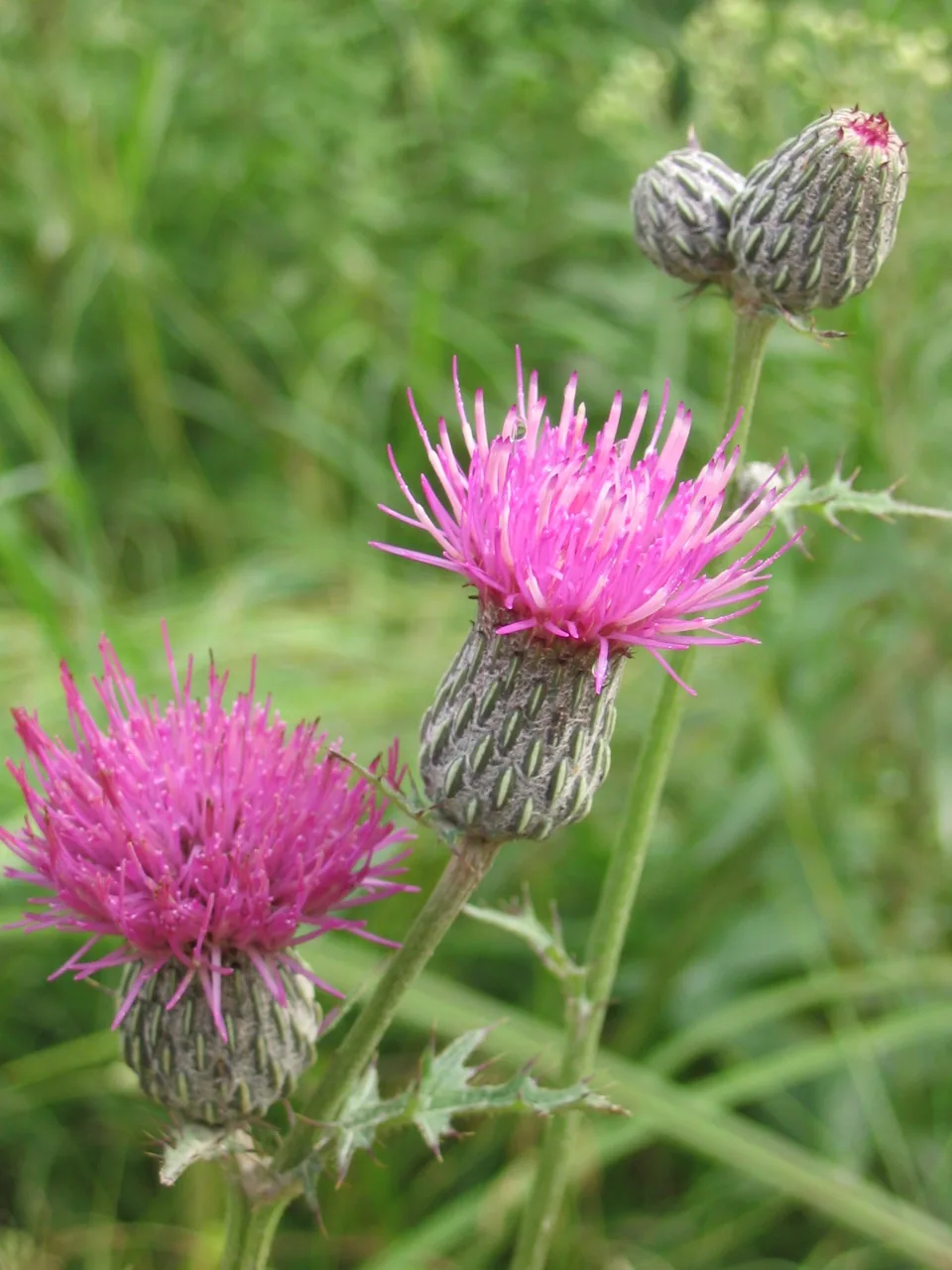
Swamp thistle is a native biennial of wet meadows, marshes and open woods in central and eastern Canada and the United States. [1] It prefers full sun and wet to moist conditions, and is propagated by seed. [1] It is a high-value nectar plant for bees and butterflies, and songbirds eat its seeds. [1]
This record is incomplete: the sources we read do not cover every field yet.
Not yet covered by our sources: Pruning
Swamp Thistle care
How to water Swamp Thistle
Wet to moist conditions
What the sources say (1)
Swamp thistle prefers full sun, wet to moist conditions and grows best in sandy soil although partial sun and other soil types are tolerated.How much light Swamp Thistle needs
Full sun (6 or more hours of direct sunlight a day)
What the sources say (1)
Light:
Full sun (6 or more hours of direct sunlight a day)How much cold Swamp Thistle can take
Hardiness, coldest zone
2a [winter low −45.6 to −42.8 °C (−50 to −45 °F)]
What the sources say (1)
USDA Plant Hardiness Zone:
2a, 2b, 3a, 3b, 4a, 4b, 5a, 5b, 6a, 6b, 7a, 7b, 8a, 8b, 9a, 9bHardiness, warmest zone
9b [winter low −3.9 to −1.1 °C (25 to 30 °F)]
What the sources say (1)
USDA Plant Hardiness Zone:
2a, 2b, 3a, 3b, 4a, 4b, 5a, 5b, 6a, 6b, 7a, 7b, 8a, 8b, 9a, 9bHow to propagate Swamp Thistle
Seed
What the sources say (1)
It is propagated via seed, but expect it to take two years until it flowers.How to grow Swamp Thistle
The plant
Life cycle
biennial
What the sources say (1)
Genus:
Cirsium
Species:
muticum
Family:
Asteraceae
Life Cycle:
BiennialFamily
Asteraceae
What the sources say (1)
Genus:
Cirsium
Species:
muticum
Family:
Asteraceae
Life Cycle:
BiennialRemedies
The sources we checked give no remedies for this plant.
Calendar
Pruning
Not stated in the sources we read.
Months as given by the sources, which are mostly from the United States (northern hemisphere). In the southern hemisphere they shift by about six months.
Indicative values
Values from a secondary source, not checked word for word like the rest of this page. Use them as a starting point.
- Mature height
- 0-0 cm [0 in]Indicative value, adapt it to your climate · Secondary source
- Hours of sun
- 4-6 hoursIndicative value, adapt it to your climate · Secondary source
- Soil pH
- 5.5-7Indicative value, adapt it to your climate · Secondary source
- Care level
- MediumIndicative value, adapt it to your climate · Secondary source
- Growth rate
- HighIndicative value, adapt it to your climate · Secondary source
- Pruning
- March, April, May, June, July, AugustIndicative value, adapt it to your climate · Secondary source
Similar plants
- Field Thistle Cirsium discolor
- Purple Thistle Cirsium horridulum
- Tall Thistle Cirsium altissimum
- Bull Thistle Cirsium vulgare
- Thistle Cirsium arvense
- Pasture Thistle Cirsium pumilum
- African Daisy Dimorphotheca pluvialis
- African Marigold Tagetes erecta
Sources
Every value above is quoted from these documents. Links lead to the original publisher.
- Cirsium muticum (Dunce-nettle, Horsetops, Marsh Thistle, Swamp Thistle) | North Carolina Extension Gardener Plant Toolbox · plants.ces.ncsu.edu, consulted
Written by Emilio Marruso · last checked