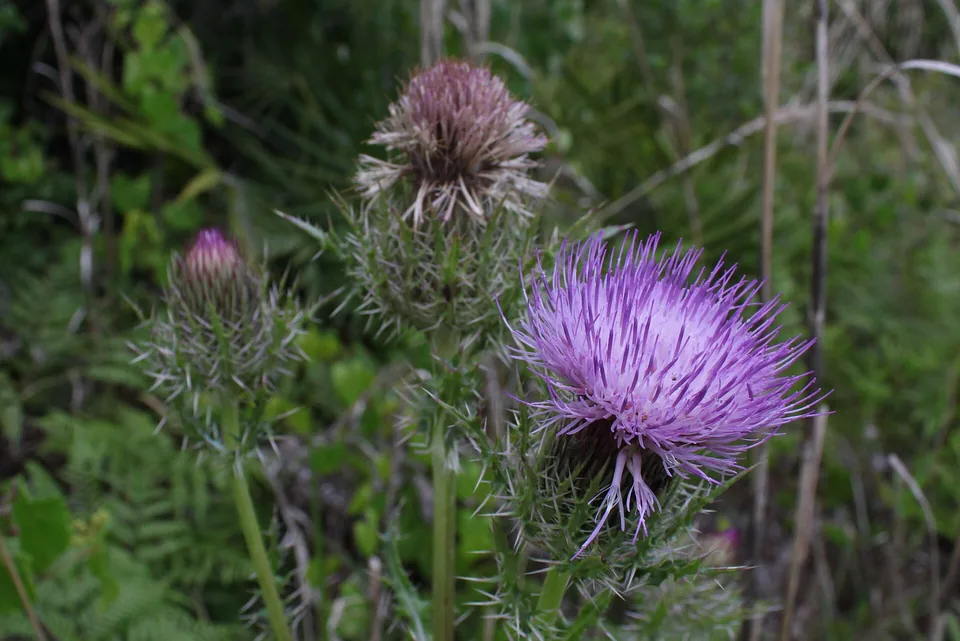


How to Grow and Care for Purple Thistle
Cirsium horridulum
Written by Emilio Marruso · last checked
At a glance
This thistle is happy in full sun or partial shade, and once established it tolerates periods of drought. Starting it is simple: sow the seeds in fall or early spring right on the surface, since they need light, and keep the soil moist until they sprout. It grows 2 to 5 1/2 feet tall, sometimes up to 8 feet.
- Sun
Full sun to partial shade
What the sources say (2)
Light: Full sun to partial shade
prefers sunny, open areas but can tolerate some shade
— Cirsium horridulum (Bristle Thistle, Bull Thistle, Common Yellow Thistle, Horrid Thistle, Purple Thistle, Spiny Thistle, Yellow Thistle) | North Carolina Extension Gardener Plant Toolbox [1] Light: Full sun (6 or more hours of direct sunlight a day) Partial Shade (Direct sunlight only part of the day, 2-6 hours)
— Cirsium horridulum (Bristle Thistle, Bull Thistle, Common Yellow Thistle, Horrid Thistle, Purple Thistle, Spiny Thistle, Yellow Thistle) | North Carolina Extension Gardener Plant Toolbox [1] - Water
Keep the soil moist until the seeds sprout; once established it handles dry spells
What the sources say (2)
Watering: Tolerates periods of drought once established
Once established it can tolerate periods of drought.
— Cirsium horridulum (Bristle Thistle, Bull Thistle, Common Yellow Thistle, Horrid Thistle, Purple Thistle, Spiny Thistle, Yellow Thistle) | North Carolina Extension Gardener Plant Toolbox [1] Watering notes: Keep the soil moist until germination occurs
The seeds require light to germinate, so do not cover them with soil. Keep the soil moist until germination occurs.
— Cirsium horridulum (Bristle Thistle, Bull Thistle, Common Yellow Thistle, Horrid Thistle, Purple Thistle, Spiny Thistle, Yellow Thistle) | North Carolina Extension Gardener Plant Toolbox [1] - Cold
Survives winters down to −20 °F (−28.9 °C)
Very hardy · USDA 5a · RHS H7 · Z5
What the sources say (2)
Hardiness, coldest zone: 5a [winter low −28.9 to −26.1 °C (−20 to −15 °F)]
USDA Plant Hardiness Zone: 5a, 5b, 6a, 6b, 7a, 7b, 8a, 8b, 9a, 9b, 10a, 10b
— Cirsium horridulum (Bristle Thistle, Bull Thistle, Common Yellow Thistle, Horrid Thistle, Purple Thistle, Spiny Thistle, Yellow Thistle) | North Carolina Extension Gardener Plant Toolbox [1] Hardiness, warmest zone: 10b [winter low 1.7 to 4.4 °C (35 to 40 °F)]
USDA Plant Hardiness Zone: 5a, 5b, 6a, 6b, 7a, 7b, 8a, 8b, 9a, 9b, 10a, 10b
— Cirsium horridulum (Bristle Thistle, Bull Thistle, Common Yellow Thistle, Horrid Thistle, Purple Thistle, Spiny Thistle, Yellow Thistle) | North Carolina Extension Gardener Plant Toolbox [1] - Watch out
It can spread into lawns and flower beds: choose its spot with care
- Size
2 to 5 1/2 ft tall, up to 8 ft
What the sources say (1)
Mature height: 61-168 cm (2 to 5 1/2 ft), up to 244 cm (8 ft)
The plant grows 2 to 5 1/2 feet tall or even up to 8 feet and prefers sunny, open areas
— Cirsium horridulum (Bristle Thistle, Bull Thistle, Common Yellow Thistle, Horrid Thistle, Purple Thistle, Spiny Thistle, Yellow Thistle) | North Carolina Extension Gardener Plant Toolbox [1] - Propagation
Grows from seed
What the sources say (1)
Propagation: Seed
Propagate with seeds and sow in the fall or early spring.
— Cirsium horridulum (Bristle Thistle, Bull Thistle, Common Yellow Thistle, Horrid Thistle, Purple Thistle, Spiny Thistle, Yellow Thistle) | North Carolina Extension Gardener Plant Toolbox [1] - Sowing
Sow in fall or early spring on the surface; don't cover the seeds, they need light
What the sources say (2)
Sowing: Fall or early spring
Propagate with seeds and sow in the fall or early spring.
— Cirsium horridulum (Bristle Thistle, Bull Thistle, Common Yellow Thistle, Horrid Thistle, Purple Thistle, Spiny Thistle, Yellow Thistle) | North Carolina Extension Gardener Plant Toolbox [1] Sowing depth: 0 cm [0 in] (seeds need light and are not covered with soil)
The seeds require light to germinate, so do not cover them with soil.
— Cirsium horridulum (Bristle Thistle, Bull Thistle, Common Yellow Thistle, Horrid Thistle, Purple Thistle, Spiny Thistle, Yellow Thistle) | North Carolina Extension Gardener Plant Toolbox [1]
Overview
Purple thistle is a native biennial or short-lived perennial of the Coastal Plain, suited to meadow gardens and naturalized areas. [1] It prefers sunny, open areas, tolerates drought once established and is propagated by seed. [1] The spiny plant may spread into lawns and flower beds and deters deer and rabbits. [1]
This record is incomplete: the sources we read do not cover every field yet.
Not yet covered by our sources: Pruning
Purple Thistle care
How to water Purple Thistle
Watering
Tolerates periods of drought once established
What the sources say (1)
Once established it can tolerate periods of drought.Watering notes
Keep the soil moist until germination occurs
What the sources say (1)
The seeds require light to germinate, so do not cover them with soil. Keep the soil moist until germination occurs.How much light Purple Thistle needs
Full sun to partial shade
What the sources say (2)
prefers sunny, open areas but can tolerate some shadeLight:
Full sun (6 or more hours of direct sunlight a day)
Partial Shade (Direct sunlight only part of the day, 2-6 hours) How much cold Purple Thistle can take
Hardiness, coldest zone
5a [winter low −28.9 to −26.1 °C (−20 to −15 °F)]
What the sources say (1)
USDA Plant Hardiness Zone:
5a, 5b, 6a, 6b, 7a, 7b, 8a, 8b, 9a, 9b, 10a, 10bHardiness, warmest zone
10b [winter low 1.7 to 4.4 °C (35 to 40 °F)]
What the sources say (1)
USDA Plant Hardiness Zone:
5a, 5b, 6a, 6b, 7a, 7b, 8a, 8b, 9a, 9b, 10a, 10bHow to propagate Purple Thistle
Seed
What the sources say (1)
Propagate with seeds and sow in the fall or early spring.How to grow Purple Thistle
The plant
Life cycle
annual/biennial or short-lived perennial
What the sources say (1)
Purple thistle is a native herbaceous annual/biennial or short-lived perennial plant in the daisy family (Asteraceae)Family
Asteraceae
What the sources say (1)
Purple thistle is a native herbaceous annual/biennial or short-lived perennial plant in the daisy family (Asteraceae)Mature height
61-168 cm (2 to 5 1/2 ft), up to 244 cm (8 ft)
What the sources say (1)
The plant grows 2 to 5 1/2 feet tall or even up to 8 feet and prefers sunny, open areasSowing and growth
Sowing depth
0 cm [0 in] (seeds need light and are not covered with soil)
What the sources say (1)
The seeds require light to germinate, so do not cover them with soil.Purple Thistle pests and problems
Spread into lawns and flower beds
Symptom: The species may spread into areas such as lawns and flower beds.
What to do: Select with care.
What the sources say (1)
Select with care, as this species may spread into areas such as lawns and flower beds.
— Cirsium horridulum (Bristle Thistle, Bull Thistle, Common Yellow Thistle, Horrid Thistle, Purple Thistle, Spiny Thistle, Yellow Thistle) | North Carolina Extension Gardener Plant Toolbox [1]
Remedies
Each remedy shows what official sources say about it; traditional remedies without an official source are marked as such. Harmful ones are listed so you know to avoid them.
Getting rid of it
thistle weeds
mowing at the late bolting stage Partly works
How: Time the mowing for when thistles reach the late bolting stage, when the stalk is hollow; thistles do not bolt together, so several mowings are probably needed.
Mowing can be used for controlling thistles, but timing is very important.
— site.extension.uga.edu [2] What the evidence says Mowing can be used for controlling thistles, but timing is very important.
— site.extension.uga.edu [2] digging up or hand-pulling when bolting Official source, not independently tested
How: Dig up or hand-pull thistles while they are bolting and remove as much of the taproot as possible.
If you are interested in digging up or hand-pulling thistles then try to do this when they are bolting. Please remove as much of the taproot as possible.
— site.extension.uga.edu [2]
Calendar
Sowing
Fall or early spring
What the sources say (1)
Propagate with seeds and sow in the fall or early spring.Pruning
Not stated in the sources we read.
Months as given by the sources, which are mostly from the United States (northern hemisphere). In the southern hemisphere they shift by about six months.
Similar plants
- Bull Thistle Cirsium vulgare
- Field Thistle Cirsium discolor
- Swamp Thistle Cirsium muticum
- Tall Thistle Cirsium altissimum
- Thistle Cirsium arvense
- Pasture Thistle Cirsium pumilum
- African Daisy Dimorphotheca pluvialis
- African Marigold Tagetes erecta
Sources
Every value above is quoted from these documents. Links lead to the original publisher.
- Cirsium horridulum (Bristle Thistle, Bull Thistle, Common Yellow Thistle, Horrid Thistle, Purple Thistle, Spiny Thistle, Yellow Thistle) | North Carolina Extension Gardener Plant Toolbox · plants.ces.ncsu.edu, consulted
- site.extension.uga.edu · site.extension.uga.edu
Written by Emilio Marruso · last checked