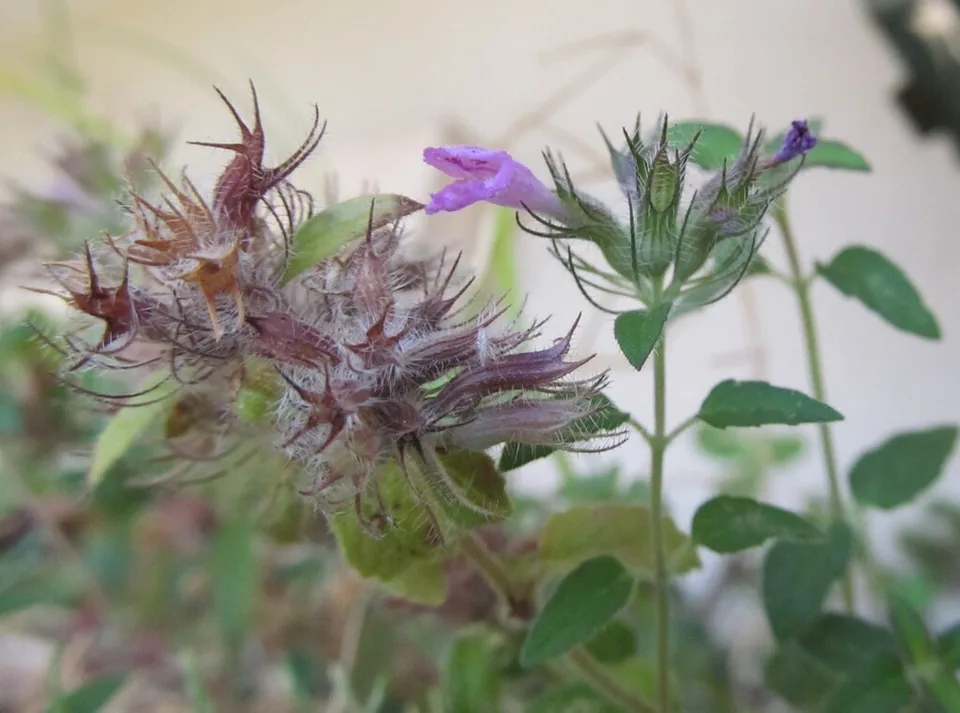
How to Grow and Care for Wild basil
Clinopodium vulgare
Written by Emilio Marruso · last checked
At a glance
Wild basil is an easygoing herb that handles drought and grows happily anywhere from full sun to full shade. Its fresh leaves make a sweet, aromatic tea, and fresh or dried they add flavor to cooked dishes. Start it from seed, divide it or root stem cuttings, and it will even thrive in a pot on your balcony.
- Sun
Full sun, part shade or full shade: it grows in all of them
What the sources say (1)
Light: Full sun, partial shade to full shade
| Sun Requirements: | Full Sun Partial Shade to Full Shade
— Wild Basil (Clinopodium vulgare) - Garden.org [2] - Water
Handles drought well; it needs little watering
What the sources say (1)
Watering: Drought tolerant
Tolerates dry shade Drought tolerant
— Wild Basil (Clinopodium vulgare) - Garden.org [2] - Cold
Survives winters down to −40 °F (−40 °C)
Very hardy · USDA 3 · RHS H7 · Z3
What the sources say (1)
Hardiness, coldest zone: 3 [winter low −40 to −34.4 °C (−40 to −30 °F)]
| Minimum cold hardiness: | Zone 3
— Wild Basil (Clinopodium vulgare) - Garden.org [2] - Spacing
9–12 in between plants
What the sources say (1)
Spacing: 22.9-30.5 cm (9-12 in)
Plant singles with 9-12 in. spacing
— Plant Propagation Protocol for [Clinopodium Vulgare] [3] - Planting
Plant out in summer, or from late spring to early summer the following year
What the sources say (1)
Planting: Summer, or late spring to early summer of the following year
Plant them out in the summer if they have made sufficient growth, otherwise plant them out in late spring or early summer of the following year.
— Clinopodium vulgare - Useful Temperate Plants [4] - Harvest
Leaves, fresh or dried, flavor cooked food; fresh leaves make a sweet herb tea
- Propagation
Grow it from seed, by dividing the clump or from stem cuttings
What the sources say (3)
Propagation: Seed; division; stem cuttings
Division in spring.
— Clinopodium vulgare - Useful Temperate Plants [4] Cuttings of soft wood in May or early summer.
— Clinopodium vulgare - Useful Temperate Plants [4] | Propagation: Other methods: | Cuttings: Stem Division
— Wild Basil (Clinopodium vulgare) - Garden.org [2] - Sowing
Sow in spring in a cold frame, indoors before the last frost, or outside right after it
What the sources say (2)
- Containers
Grows in containers too
What the sources say (1)
In containers: Yes
Needs excellent drainage in pots
— Wild Basil (Clinopodium vulgare) - Garden.org [2]
Overview
Wild basil is a perennial herb of the mint family that reaches 0.45 m [1.5 ft] tall. [4] Its leaves are used fresh or dried as a flavouring and to make an herb tea. [4]
This record is incomplete: the sources we read do not cover every field yet.
Not yet covered by our sources: Harvest
Wild basil care
Measurements in square brackets are our conversion into the other unit system; the quoted text is unchanged.
How to water Wild basil
Drought tolerant
What the sources say (1)
Tolerates dry shade
Drought tolerantHow much light Wild basil needs
Full sun, partial shade to full shade
What the sources say (1)
| Sun Requirements:
| Full Sun
Partial Shade to Full ShadeHow much cold Wild basil can take
3 [winter low −40 to −34.4 °C (−40 to −30 °F)]
What the sources say (1)
| Minimum cold hardiness:
| Zone 3Where to grow Wild basil
In containers
Yes
What the sources say (1)
Needs excellent drainage in potsSpacing
22.9-30.5 cm (9-12 in)
What the sources say (1)
Plant singles with 9-12 in. spacingHow to propagate Wild basil
Seed; division; stem cuttings
Remedies
Each remedy shows what official sources say about it; traditional remedies without an official source are marked as such. Harmful ones are listed so you know to avoid them.
Getting rid of it
weedy spread
pulling or digging out roots and runners Works
How: Pull or dig out and remove all root and shoot runners; late fall, when the persistent hairy sepal clusters make the plant easy to spot, is a good time to dig it out.
Pull or dig out and remove all root and shoot runners.
— kingcounty.gov [5] What the evidence says Manual removal is labor intensive, but effective if horizontal roots (rhizomes) and horizontal stems (stolons) are removed.
— kingcounty.gov [5] mowing Not proven
How: Mowing is not effective and may spread more vegetative parts that can form new plants.
Mowing is not effective and may spread more vegetative parts further that can form new plants.
— kingcounty.gov [5] What the evidence says Mowing is not effective and may spread more vegetative parts further that can form new plants.
— kingcounty.gov [5] disposing of plants in the garbage Official source, not independently tested
How: Dispose of the entire plant in garbage/landfill, because the plant reproduces from seed and root fragments.
Dispose of entire plant in garbage/landfill because plant reproduces from seed and root fragments.
— kingcounty.gov [5] keeping a healthy lawn Works
How: In lawns, maintaining a healthy lawn is the best means of preventing weeds.
Maintaining a healthy lawn is the best means of preventing weeds in lawns.
— ask.extension.org [6] What the evidence says Maintaining a healthy lawn is the best means of preventing weeds in lawns.
— ask.extension.org [6]
Calendar
Sowing
Spring in a cold frame; or indoors before last frost or directly after last frost
Planting
Summer, or late spring to early summer of the following year
What the sources say (1)
Plant them out in the summer if they have made sufficient growth, otherwise plant them out in late spring or early summer of the following year.Harvest
Not stated in the sources we read.
Months as given by the sources, which are mostly from the United States (northern hemisphere). In the southern hemisphere they shift by about six months.
Edibility
Reported by the source, quoted verbatim. Do not eat a plant on the basis of this page alone: identification mistakes can be dangerous.
Similar plants
- Calamint Clinopodium nepeta
- Clinopodium alpinum Clinopodium alpinum
- Abraham Trachystemon orientalis
- Acacia longifolia Acacia longifolia
- African Blue Lily Agapanthus praecox
- African lily Dietes bicolor
- African lovegrass Eragrostis curvula
- African tuliptree Spathodea campanulata
Sources
Every value above is quoted from these documents. Links lead to the original publisher.
- Clinopodium vulgare (Wild Basil): Minnesota Wildflowers · minnesotawildflowers.info, consulted
- Wild Basil (Clinopodium vulgare) - Garden.org · garden.org, consulted
- Plant Propagation Protocol for [Clinopodium Vulgare] · courses.washington.edu, consulted
- Clinopodium vulgare - Useful Temperate Plants · temperate.theferns.info, consulted
- kingcounty.gov · kingcounty.gov
- ask.extension.org · ask.extension.org
Written by Emilio Marruso · last checked