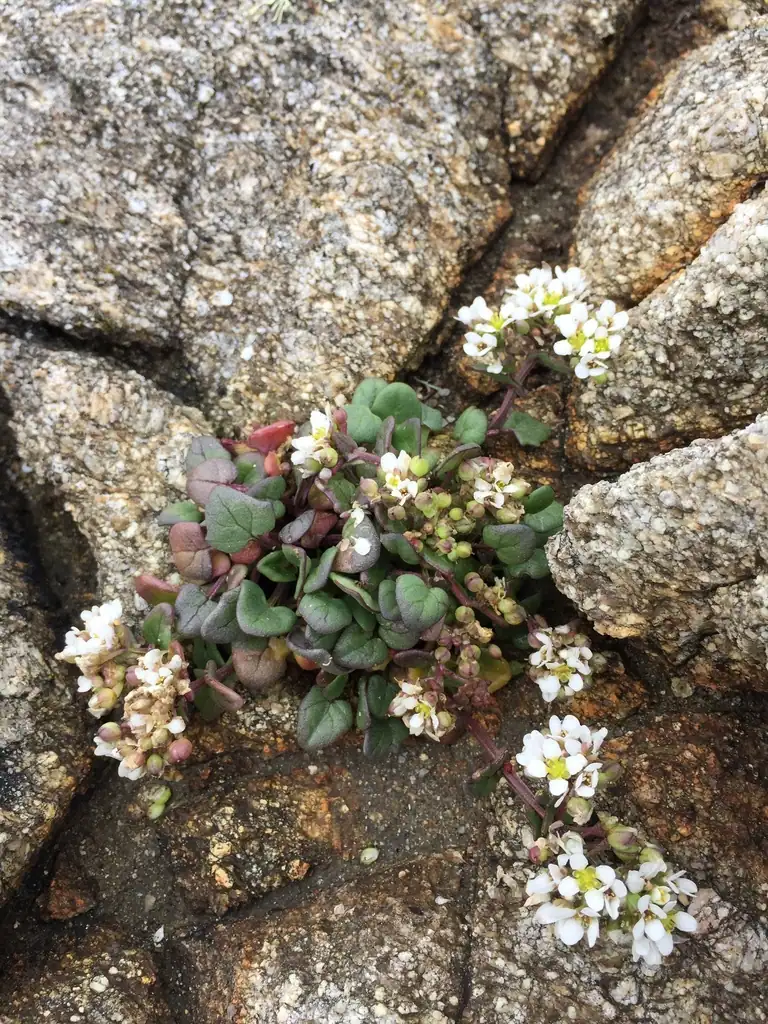
How to Grow and Care for Common Scurvygrass
Cochlearia officinalis
Written by Emilio Marruso · last checked
At a glance
Scurvy grass is an easy plant to start: just sow the seeds right where they will grow, in spring or fall. Give it moderate watering and never let it dry out, because it does not handle drought. In return you get leaves packed with vitamin C, with a sharp, tarry taste that livens up a salad when used in small amounts.
- Water
Moderate watering; don't let it dry out, it can't stand drought
- Harvest
Add a few leaves to salads: sharp, tarry taste and lots of vitamin C
- Propagation
Grows from seed
What the sources say (1)
Propagation: Seed
Seed - sow spring or autumn in situ.
— Cochlearia officinalis - Useful Temperate Plants [1] - Sowing
Sow in spring or fall, right where it will grow
What the sources say (1)
Sowing: Spring or autumn, in situ
Seed - sow spring or autumn in situ.
— Cochlearia officinalis - Useful Temperate Plants [1]
Overview
Cochlearia officinalis is a biennial or perennial up to 30 cm [12 in] tall. [1] It prefers a sandy or gritty well-drained soil. [2] The leaves have been eaten raw for their vitamin C content. [2]
This record is incomplete: the sources we read do not cover every field yet.
Not yet covered by our sources: Light, Harvest, Spacing
Common Scurvygrass care
Measurements in square brackets are our conversion into the other unit system; the quoted text is unchanged.
How to water Common Scurvygrass
Watering
Moderate
What the sources say (1)
Shade tolerance
light shade
Water
moderateWatering notes
Drought intolerant
What the sources say (1)
Drought
intolerantHow much light Common Scurvygrass needs
Not stated in the sources we read.
Where to grow Common Scurvygrass
Not stated in the sources we read.
How to propagate Common Scurvygrass
Seed
What the sources say (1)
Seed - sow spring or autumn in situ.Remedies
The sources we checked give no remedies for this plant.
Calendar
Sowing
Spring or autumn, in situ
What the sources say (1)
Seed - sow spring or autumn in situ.Harvest
Not stated in the sources we read.
Months as given by the sources, which are mostly from the United States (northern hemisphere). In the southern hemisphere they shift by about six months.
Edibility
Reported by the source, quoted verbatim. Do not eat a plant on the basis of this page alone: identification mistakes can be dangerous.
An acrid tarry flavour, it can be added in small quantities to salads for its high content of vitamin C
[2]
Similar plants
- Abyssinian banana Ensete ventricosum
- Agretti Soda inermis
- Aji Capsicum chinense
- Alexanders Smyrnium olusatrum
- Allium senescens Allium senescens
- Allium triquetrum Allium triquetrum
- Alpine dock Rumex alpinus
- Alpine mountain-sorrel Oxyria digyna
Sources
Every value above is quoted from these documents. Links lead to the original publisher.
- Cochlearia officinalis - Useful Temperate Plants · temperate.theferns.info, consulted
- Scurvy Grass (Cochlearia officinalis) — Practical Plants · practicalplants.org, consulted
- Cochlearia officinalis | Euro+Med-Plantbase · europlusmed.org, consulted
Written by Emilio Marruso · last checked