
How to Grow and Care for Golden Marguerite
Cota tinctoria
Written by Emilio Marruso · last checked
At a glance
Golden marguerite is an easygoing perennial that grows up to 2 ft tall and wide in full sun or part shade. Start the seeds in a greenhouse in early spring, plant it out in summer, and keep its roots out of soggy soil. Cut the flowering stems as soon as blooming stops: it helps the plant send up fresh shoots for next year.
- Sun
Full sun to part shade
What the sources say (2)
- Water
Never let the soil stay soggy: it can't stand waterlogging
What the sources say (1)
Watering notes: Does not tolerate waterlogging; does poorly in heavy, clay soils
but does poorly and is short-lived when grown in heavy, clay soils
— Cota tinctoria - Useful Temperate Plants [1] - Cold
Survives winters down to −10 °F (−23.3 °C)
Very hardy · USDA 6 · RHS H7 · Z6
What the sources say (1)
Hardiness, coldest zone: 6 [winter low −23.3 to −17.8 °C (−10 to 0 °F)]
Water moderate Hardiness Zone 6+ Soil textures sandy, loamy, clay
— Yellow Camomile (Anthemis tinctoria) — Practical Plants [2] - Soil
Avoid heavy clay soil: it does poorly there
What the sources say (1)
Watering notes: Does not tolerate waterlogging; does poorly in heavy, clay soils
but does poorly and is short-lived when grown in heavy, clay soils
— Cota tinctoria - Useful Temperate Plants [1] - Planting
Plant it out in summer
What the sources say (1)
Planting: Summer
When they are large enough to handle, prick the seedlings out into individual pots and plant them out into their permanent positions in the summer.
— Cota tinctoria - Useful Temperate Plants [1] - Pruning
Cut off the flowering stems as soon as blooming stops
What the sources say (2)
Pruning: As soon as flowering stops (remove the flowering stems)
It is best to remove the flowering stems as soon as they stop flowering in order to stimulate the production of basal shoots for the following year
— Cota tinctoria - Useful Temperate Plants [1] it tends to go leggy and needs a good 'haircut
— Medieval herb garden blog 30: Dyer's chamomile - Wakefield Museums and Castles [4] - Watch out
Often short-lived: it can flower itself out, so cut spent stems to push new shoots
- Size
Up to 2 ft tall and 2 ft wide
What the sources say (2)
Mature height: up to 61 cm (2 ft)
It grows to a height and spread of up to 2ft.
— Medieval herb garden blog 30: Dyer's chamomile - Wakefield Museums and Castles [4] Mature width: up to 61 cm (2 ft)
It grows to a height and spread of up to 2ft.
— Medieval herb garden blog 30: Dyer's chamomile - Wakefield Museums and Castles [4] - Propagation
By seed, softwood cuttings in early summer, or division in spring or fall
What the sources say (3)
Propagation: Seed; softwood cuttings in early summer; division in spring or autumn
Seed - surface sow early spring in a greenhouse
— Cota tinctoria - Useful Temperate Plants [1] Cuttings of soft wood early summer in a frame.
— Cota tinctoria - Useful Temperate Plants [1] Cuttings of soft wood early summer in a frame. Very easy[K]. Division in spring or autumn
— Yellow Camomile (Anthemis tinctoria) — Practical Plants [2] - Sowing
Sow in a greenhouse in early spring, March–April
What the sources say (2)
Sowing: Early spring (March-April), in a greenhouse
Seed - surface sow early spring in a greenhouse
— Cota tinctoria - Useful Temperate Plants [1] Seed - surface sow March/April in a greenhouse [2] . Do not allow the soil to dry out. Light aids germination.
— Yellow Camomile (Anthemis tinctoria) — Practical Plants [2]
Overview
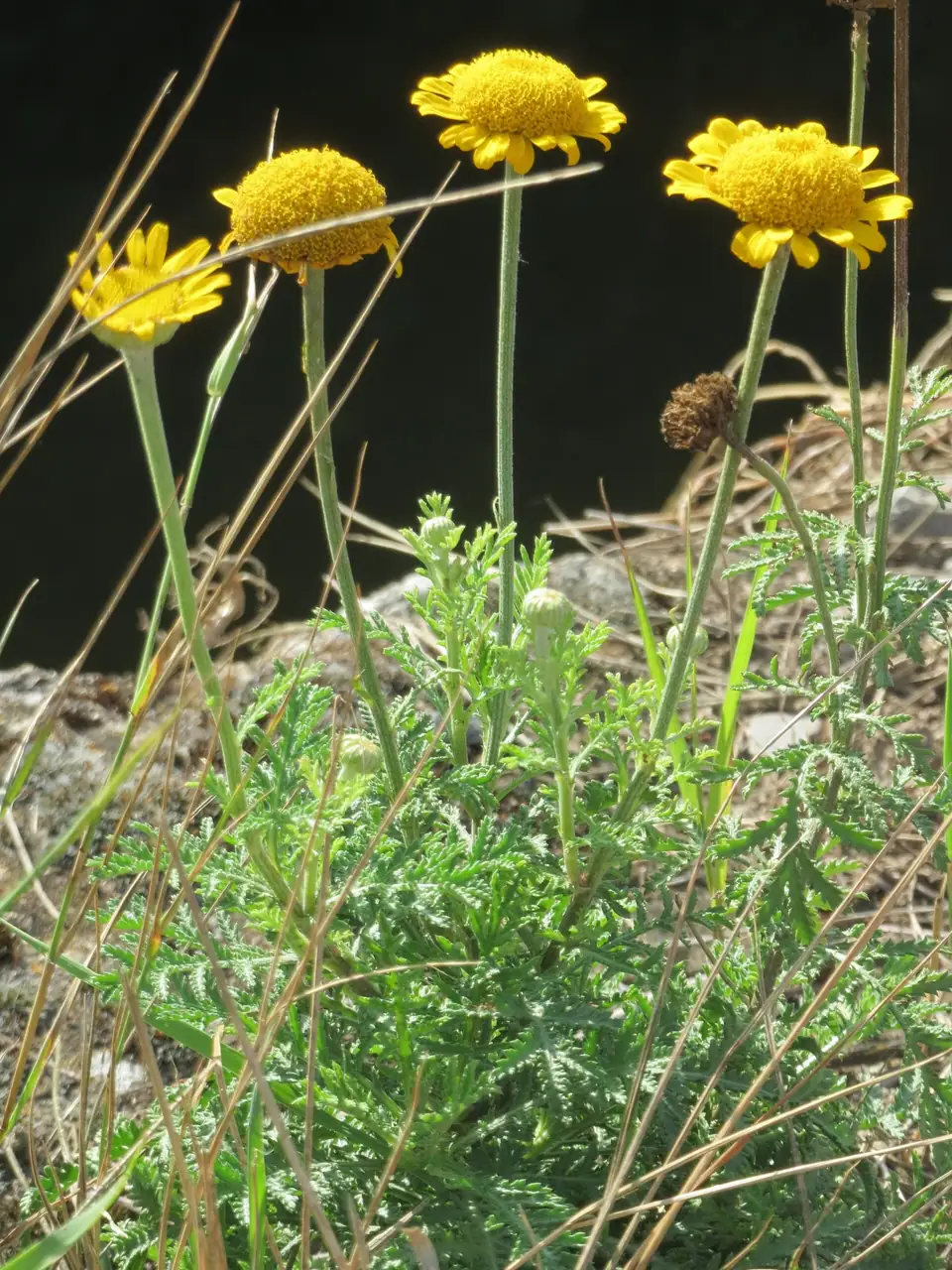
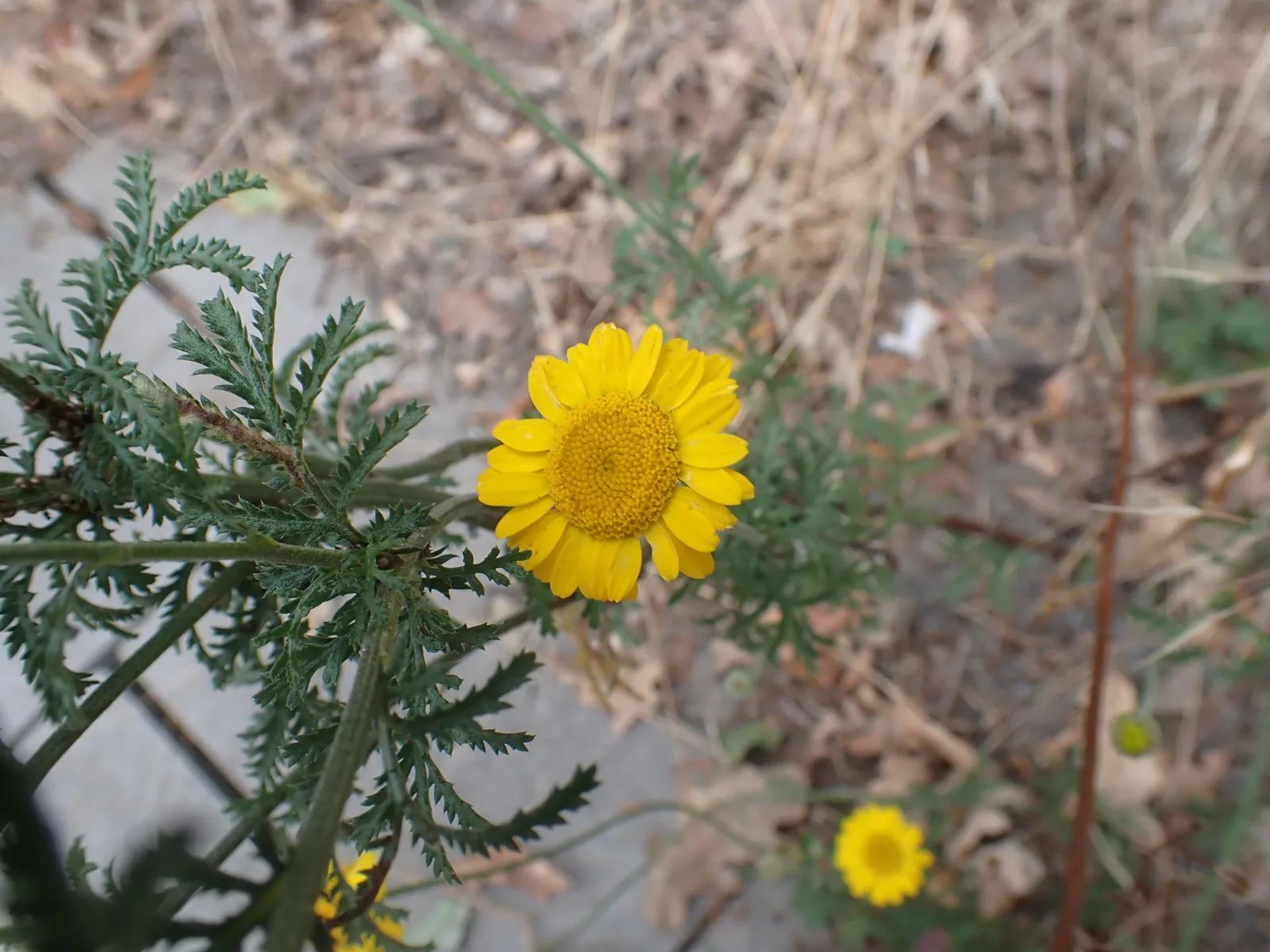
Cota tinctoria is an erect, clump-forming, evergreen perennial that grows around 60 cm [24 in] tall and was once grown as a dye plant. [1] It succeeds in a sunny position in most dry to medium soils so long as they are well-drained. [1] Plants are often short-lived and benefit from removing flowering stems once flowering stops. [1]
This record is incomplete: the sources we read do not cover every field yet.
Not yet covered by our sources: Hardiness, warmest zone
Golden Marguerite care
Measurements in square brackets are our conversion into the other unit system; the quoted text is unchanged.
How to water Golden Marguerite
Watering
The sources give different values depending on region, zone or growing conditions.
What each source says
According to Practical Plants: Moderate
According to Temperate Plants Database: Tolerant of drought and poor soils
What the sources say (2)
According to Practical Plants: Water
moderate
Hardiness
Zone 6+
Soil textures
sandy, loamy, clayAccording to Temperate Plants Database: It is tolerant of drought and poor soilsWatering notes
Does not tolerate waterlogging; does poorly in heavy, clay soils
What the sources say (1)
but does poorly and is short-lived when grown in heavy, clay soilsHow much light Golden Marguerite needs
Full sun to part shade
How much cold Golden Marguerite can take
Hardiness, coldest zone
6 [winter low −23.3 to −17.8 °C (−10 to 0 °F)]
What the sources say (1)
Water
moderate
Hardiness
Zone 6+
Soil textures
sandy, loamy, clayHardiness, warmest zone
Not stated in the sources we read.
How to propagate Golden Marguerite
Seed; softwood cuttings in early summer; division in spring or autumn
What the sources say (3)
Seed - surface sow early spring in a greenhouseCuttings of soft wood early summer in a frame.Cuttings of soft wood early summer in a frame. Very easy[K].
Division in spring or autumnHow to grow Golden Marguerite
The plant
Life cycle
perennial
What the sources say (1)
It is a clump-forming, evergreen perennial. However, it tends to go leggy and needs a goodMature height
up to 61 cm (2 ft)
What the sources say (1)
It grows to a height and spread of up to 2ft.Mature width
up to 61 cm (2 ft)
What the sources say (1)
It grows to a height and spread of up to 2ft.Golden Marguerite pests and problems
Short life and over-flowering
Symptom: Plants are often short-lived: they are apt to over-flower and exhaust themselves
What to do: Remove the flowering stems as soon as they stop flowering to stimulate basal shoots for the following year
What the sources say (2)
Plants are often short-lived - they are apt to over-flower and exhaust themselves.
— Cota tinctoria - Useful Temperate Plants [1] It is best to remove the flowering stems as soon as they stop flowering in order to stimulate the production of basal shoots for the following year
— Cota tinctoria - Useful Temperate Plants [1]
Remedies
The sources we checked give no remedies for this plant.
Calendar
Early spring (March-April), in a greenhouse
Summer
What the sources say (1)
When they are large enough to handle, prick the seedlings out into individual pots and plant them out into their permanent positions in the summer.As soon as flowering stops (remove the flowering stems)
What the sources say (2)
It is best to remove the flowering stems as soon as they stop flowering in order to stimulate the production of basal shoots for the following yearit tends to go leggy and needs a good 'haircutMonths as given by the sources, which are mostly from the United States (northern hemisphere). In the southern hemisphere they shift by about six months.
Indicative values
Values from a secondary source, not checked word for word like the rest of this page. Use them as a starting point.
- Hours of sun
- 6-8 hoursIndicative value, adapt it to your climate · Secondary source
- Soil pH
- 6-7.5Indicative value, adapt it to your climate · Secondary source
- Care level
- MediumIndicative value, adapt it to your climate · Secondary source
- Growth rate
- LowIndicative value, adapt it to your climate · Secondary source
Similar plants
- Abies grandis Abies grandis
- Abraham Trachystemon orientalis
- Abyssinian banana Ensete ventricosum
- Acacia longifolia Acacia longifolia
- Acanthus hungaricus Acanthus hungaricus
- Achlys triphylla Achlys triphylla
- Aconite Aconitum napellus
- Adam's Needle Yucca flaccida
Sources
Every value above is quoted from these documents. Links lead to the original publisher.
- Cota tinctoria - Useful Temperate Plants · temperate.theferns.info, consulted
- Yellow Camomile (Anthemis tinctoria) — Practical Plants · practicalplants.org, consulted
- How to Grow Anthemis - Golden Marguerite · harvesttotable.com, consulted
- Medieval herb garden blog 30: Dyer's chamomile - Wakefield Museums and Castles · museumsandcastles.wakefield.gov.uk, consulted
- Anthemis tinctoria - Calflora · calflora.org, consulted
Written by Emilio Marruso · last checked