
How to Grow and Care for Sea kale
Crambe maritima
Written by Emilio Marruso · last checked
At a glance
Sea kale is a tough perennial that gives you a spring treat: young shoots and tender little leaves you can eat raw or cook like spinach. It grows in full sun or partial shade, and once settled it handles dry spells very well. Give it rich, deep, well-drained sandy soil and pick the shoots when they are 4–5 inches long.
- Sun
Full sun to partial shade
What the sources say (2)
- Water
Once settled in, it handles dry spells very well
What the sources say (1)
Watering: Established plants are very drought tolerant
Established plants are very drought tolerant
— Seacale (Crambe maritima) — Practical Plants [4] - Cold
Survives winters down to −20 °F (−28.9 °C)
Very hardy · USDA 5 · RHS H7 · Z5
What the sources say (1)
Hardiness, coldest zone: 5 [winter low −28.9 to −23.3 °C (−20 to −10 °F)]
Hardiness Zone 5+
— Seacale (Crambe maritima) — Practical Plants [4] - Soil
Rich, very deep, well-drained sandy soil
What the sources say (1)
Watering notes: Prefers a rich, well-drained very deep sandy loam
Prefers a rich, well-drained very deep sandy loam and a pH of 7
— Seacale (Crambe maritima) — Practical Plants [4] - Spacing
2 ft apart each way
What the sources say (1)
Spacing: 60 cm (about 60cm [24 in] apart each way, for ground cover)
Plants can be used for ground cover when spaced about 60cm apart each way
— Seacale (Crambe maritima) — Practical Plants [4] - Planting
Plant in early spring
What the sources say (1)
Planting: Early spring
Plant out young sea kale plants in early spring
— How to Grow Sea Kale | BBC Gardeners World Magazine [1] - Pruning
Prune in autumn
What the sources say (1)
Pruning: Autumn
Seakale is a perennial and should be cut back in autumn.
— How to Grow Sea Kale | BBC Gardeners World Magazine [1] - Harvest
In spring, pick shoots at 4–5 in, before leaves open; eat young leaves raw or cooked like spinach
What the sources say (2)
Harvest: Spring (young shoots)
harvest the young shoots in spring to eat raw or steamed
— How to Grow Sea Kale | BBC Gardeners World Magazine [1] How to harvest: Harvest young shoots when 10.2–12.7 cm (4–5 in) long, crisp and tender, before the leaves start to expand.
Young shoots are harvested when 4–5 inches long, crisp, and tender before leaves start to expand.
— HS665 [2] - Pests
Club root, flea beetles, slugs and caterpillars; protect young leaves with netting
- Size
2 ft tall
What the sources say (1)
Mature height: 60.96 cm (2 ft)
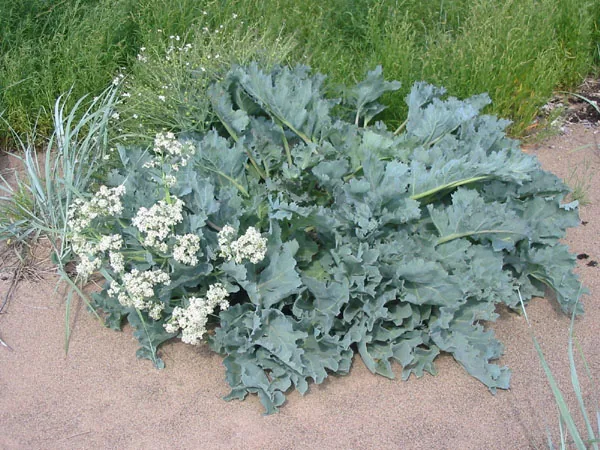
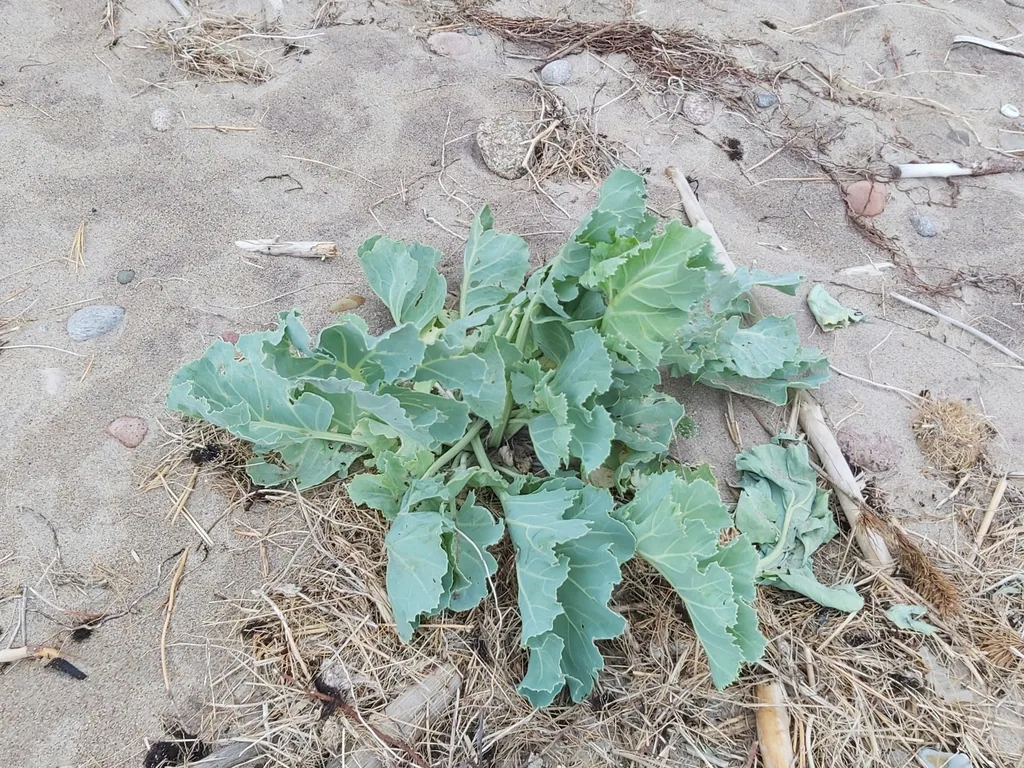
The plant grows to 2 feet, with large, heavy, glossy green leaves that are fringed or curled on the edges.
— HS665 [2] - Propagation
From seed, root cuttings in early spring, or by dividing in spring or autumn
What the sources say (3)
Propagation: Seed; root cuttings (thongs) in early spring; division in spring or autumn
Plant these ‘thongs’ into compost in early spring
— How to Grow Sea Kale | BBC Gardeners World Magazine [1] Division in spring or autumn
— Seacale (Crambe maritima) — Practical Plants [4] You can grow sea kale from seed.
— How to Grow Sea Kale | BBC Gardeners World Magazine [1] - Sowing
Sow in March and April
What the sources say (2)
Overview
Sea kale is a hardy perennial whose edible young shoots arise from the roots each spring. [2] It grows best in full sun or partial shade in fertile, very well-drained soil. [1] It is grown as both an ornamental and an edible plant, and can be raised from seed, root cuttings or division. [1]
Sea kale care
Measurements in square brackets are our conversion into the other unit system; the quoted text is unchanged.
How to water Sea kale
Watering
Established plants are very drought tolerant
What the sources say (1)
Established plants are very drought tolerantWatering notes
Prefers a rich, well-drained very deep sandy loam
What the sources say (1)
Prefers a rich, well-drained very deep sandy loam and a pH of 7How much light Sea kale needs
Full sun to partial shade
How much cold Sea kale can take
5 [winter low −28.9 to −23.3 °C (−20 to −10 °F)]
What the sources say (1)
Hardiness
Zone 5+Where to grow Sea kale
60 cm (about 60cm [24 in] apart each way, for ground cover)
What the sources say (1)
Plants can be used for ground cover when spaced about 60cm apart each wayHow to propagate Sea kale
Seed; root cuttings (thongs) in early spring; division in spring or autumn
How to grow Sea kale
The plant
Life cycle
perennial
What the sources say (1)
It is a hardy perennial whose shoots are similar to asparagus in the way they grow from the roots.Mature height
60.96 cm (2 ft)
What the sources say (1)
The plant grows to 2 feet, with large, heavy, glossy green leaves that are fringed or curled on the edges.Harvest and storage
How to harvest
Harvest young shoots when 10.2–12.7 cm (4–5 in) long, crisp and tender, before the leaves start to expand.
What the sources say (1)
Young shoots are harvested when 4–5 inches long, crisp, and tender before leaves start to expand.Sea kale pests and problems
Club root, flea beetles, slugs and caterpillars
What to do: Use netting or other barrier methods to protect the tender young leaves.
What the sources say (1)
use netting or other barrier methods to protect them.
— How to Grow Sea Kale | BBC Gardeners World Magazine [1]
Remedies
Each remedy shows what official sources say about it; traditional remedies without an official source are marked as such. Harmful ones are listed so you know to avoid them.
Treating the plant
slugs and caterpillars on young leaves
netting or other barriers Not verified
Traditional remedy, not verified by an official source.
How: Use netting or other barrier methods to protect the tender young leaves.
Calendar
March-April
What each source says
According to BBC Gardeners World (grow guide calendar): March-May and September-November
Early spring
What the sources say (1)
Plant out young sea kale plants in early springSpring (young shoots)
What the sources say (1)
harvest the young shoots in spring to eat raw or steamedAutumn
What the sources say (1)
Seakale is a perennial and should be cut back in autumn.Months as given by the sources, which are mostly from the United States (northern hemisphere). In the southern hemisphere they shift by about six months.
Edibility
Reported by the source, quoted verbatim. Do not eat a plant on the basis of this page alone: identification mistakes can be dangerous.
Indicative values
Values from a secondary source, not checked word for word like the rest of this page. Use them as a starting point.
- Hours of sun
- 6-8 hoursIndicative value, adapt it to your climate · Secondary source
- Soil pH
- 6-7.5Indicative value, adapt it to your climate · Secondary source
- Care level
- MediumIndicative value, adapt it to your climate · Secondary source
- Growth rate
- LowIndicative value, adapt it to your climate · Secondary source
Similar plants
- Crambe cordifolia Crambe cordifolia
- Abies grandis Abies grandis
- Abraham Trachystemon orientalis
- Abyssinian banana Ensete ventricosum
- Acacia longifolia Acacia longifolia
- Acanthus hungaricus Acanthus hungaricus
- Achlys triphylla Achlys triphylla
- Aconite Aconitum napellus
Sources
Every value above is quoted from these documents. Links lead to the original publisher.
- How to Grow Sea Kale | BBC Gardeners World Magazine · gardenersworld.com, consulted
- HS665 · edis.ifas.ufl.edu, consulted
- Crambe maritima - Useful Temperate Plants · temperate.theferns.info, consulted
- Seacale (Crambe maritima) — Practical Plants · practicalplants.org, consulted
- View crop · ecocrop.apps.fao.org, consulted
Written by Emilio Marruso · last checked