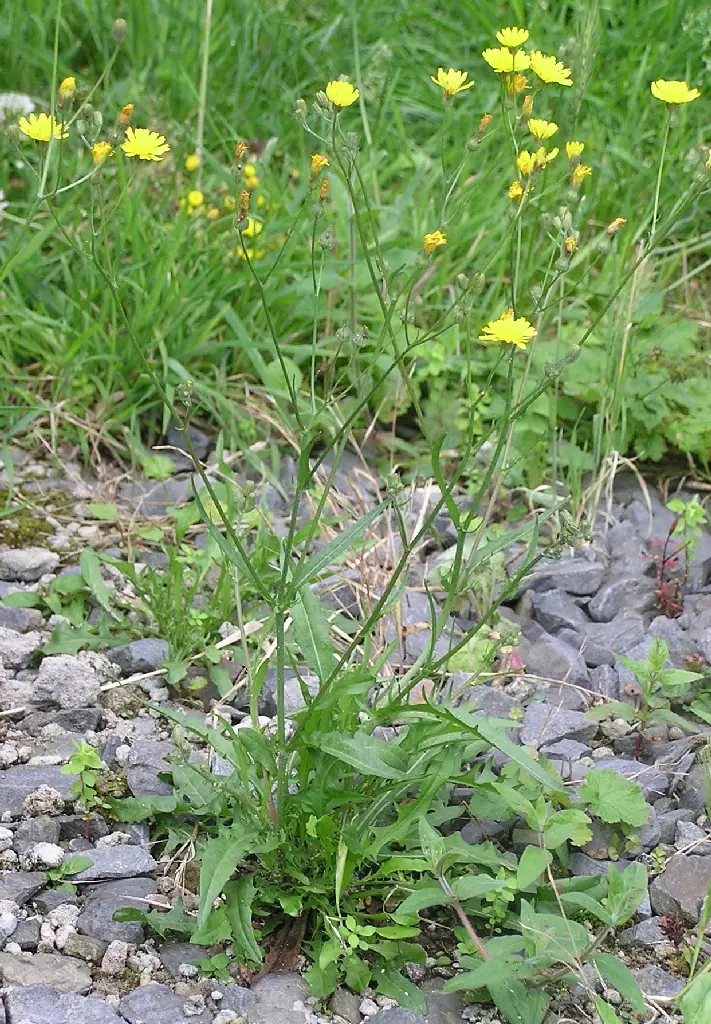
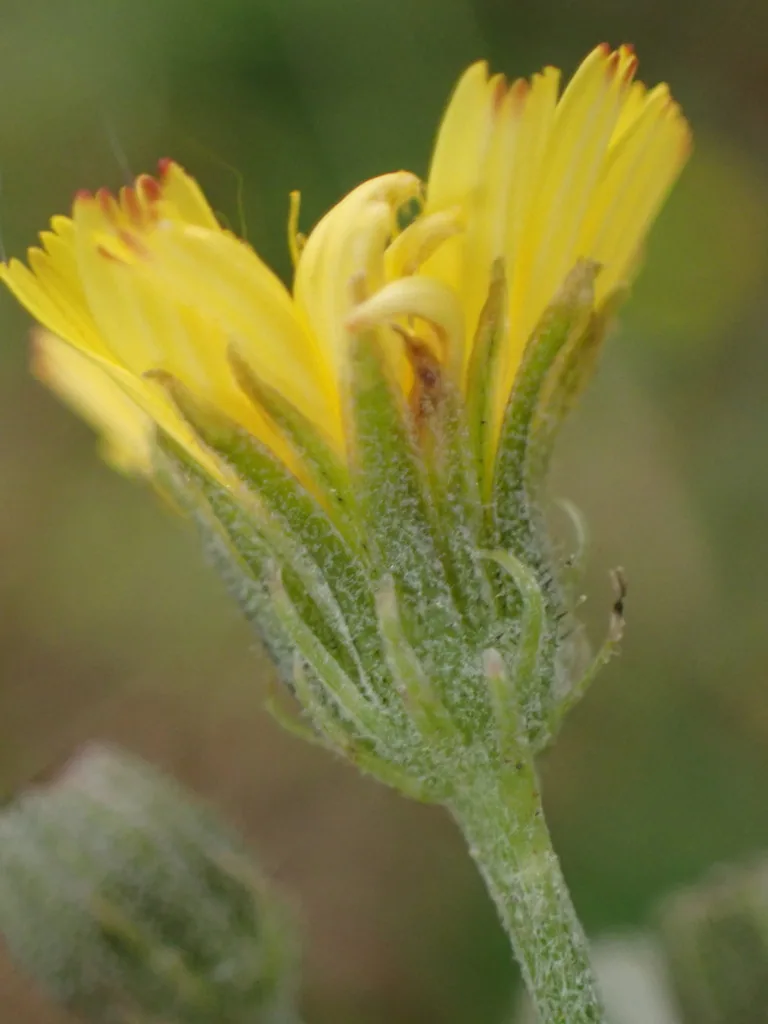

How to Grow and Care for Smooth hawksbeard
Crepis capillaris
Written by Emilio Marruso · last checked
At a glance
This cheerful member of the daisy family lives for two years or more, and it has a place in the kitchen too. The young leaves can be eaten in a salad, and the stem can be cooked as a vegetable. Just keep an eye on it: it can spread as a weed in gardens, crops and young lawns.
- Harvest
Eat the young leaves in salads; the stem can be cooked like a vegetable
- Watch out
Can become a weed in gardens and young lawns; dig it out before it makes seeds
Overview
Crepis capillaris is treated as a weed of pastures, hay fields and roadsides. [2] It is a rapid colonist of dry, disturbed habitats. [1] The young leaves can be eaten as a salad. [4]
This record is incomplete: the sources we read do not cover every field yet.
Not yet covered by our sources: Light, Hardiness, coldest zone, Hardiness, warmest zone, Propagation
Smooth hawksbeard care
How much light Smooth hawksbeard needs
Not stated in the sources we read.
How much cold Smooth hawksbeard can take
Hardiness, coldest zone
Not stated in the sources we read.
Hardiness, warmest zone
Not stated in the sources we read.
How to propagate Smooth hawksbeard
Not stated in the sources we read.
How to grow Smooth hawksbeard
The plant
Life cycle
biennial or perennial
What the sources say (1)
An erect biennial or perennial with conspicuous leaves that clasp the stem.Family
Asteraceae
What the sources say (1)
## Family Asteraceae ## Scientific Name Crepis capillaris ## LeavesSmooth hawksbeard pests and problems
Weed in turf, pasture, crops and gardens
Symptom: Found in crops and gardens; can cause problems in young turf or newly sown pastures.
What to do: In pasture and meadows it should be spudded out to prevent seeding.
Remedies
Each remedy shows what official sources say about it; traditional remedies without an official source are marked as such. Harmful ones are listed so you know to avoid them.
Getting rid of it
weed in turf
hand weeding with whole taproot Not verified
Traditional remedy, not verified by an official source.
How: Remove individual plants by hand, taking care to lift the whole taproot.
Edibility
Reported by the source, quoted verbatim. Do not eat a plant on the basis of this page alone: identification mistakes can be dangerous.
Similar plants
- Beaked hawksbeard Crepis vesicaria
- American Burnweed Erechtites hieraciifolius
- Autumn Goldenrod Solidago sphacelata
- Blessed milkthistle Silybum marianum
- Blue Wood Aster Symphyotrichum cordifolium
- Brown knapweed Centaurea jacea
- Bull Thistle Cirsium vulgare
- Bur Marigold Bidens laevis
Sources
Every value above is quoted from these documents. Links lead to the original publisher.
- Garden Organic | Smooth hawk's-beard · gardenorganic.org.uk, consulted
- smooth hawksbeard Crepis capillaris Weed Profile - Weed Identification · weedid.cals.vt.edu, consulted
- Crepis capillaris (smooth hawk's-beard): Go Botany · gobotany.nativeplanttrust.org, consulted
- · naturblick.museumfuernaturkunde.berlin, consulted
- Hawksbeard - Massey University · massey.ac.nz, consulted
- Smooth Hawksbeard - Wild Food UK · wildfooduk.com, consulted
Written by Emilio Marruso · last checked