
How to Grow and Care for Beaked hawksbeard
Crepis vesicaria
Written by Emilio Marruso · last checked
At a glance
Beaked hawksbeard is a biennial from the daisy family, living two years, with leaves you can eat raw. Toss them into salads for a pleasantly bitter bite. Growing it is simple: sow the seed right where it will grow, either in late summer as soon as the seed is ripe or in spring.
- Harvest
Eat the leaves raw in salads; they taste bitter
- Propagation
Grows from seed
What the sources say (1)
Propagation: Seed
Seed - we have no information for this species but suggest sowing the seed in situ either as soon as it is ripe in late summer or in the spring.
— Crepis vesicaria - Useful Temperate Plants [2] - Sowing
Sow where it will grow, in late summer as soon as the seed is ripe or in spring
What the sources say (1)
Sowing: In situ, as soon as the seed is ripe in late summer or in the spring
Seed - we have no information for this species but suggest sowing the seed in situ either as soon as it is ripe in late summer or in the spring.
— Crepis vesicaria - Useful Temperate Plants [2]
Overview
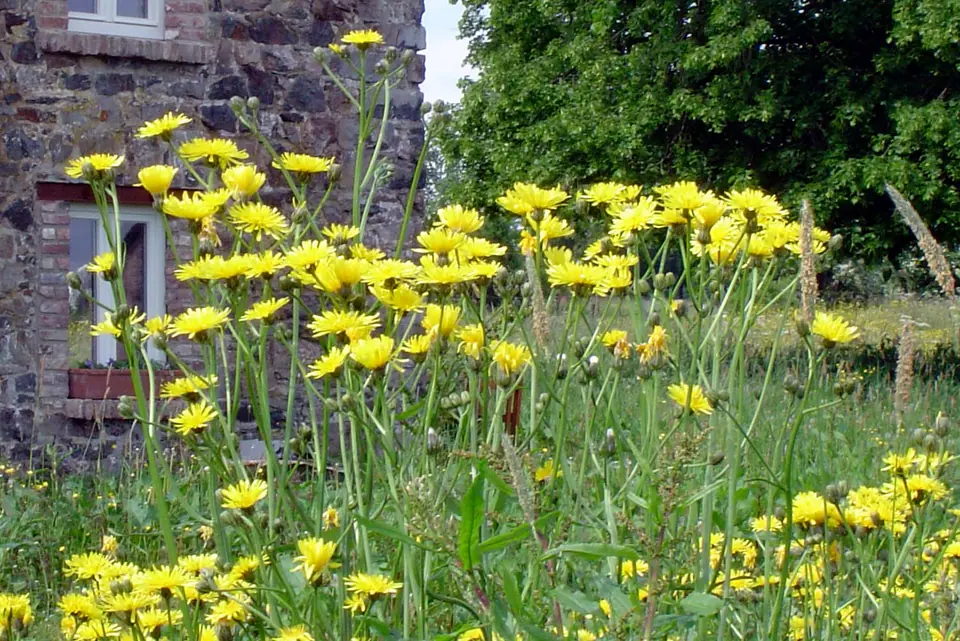
Beaked hawk's-beard is a biennial of the aster family, 30-70 cm [12–28 in] tall. [1] It grows on roadsides, waste ground, walls and rocks. [6] The leaves are eaten raw in salads and have a bitter taste. [2] In the British Isles it is found on waysides, walls, railway banks and waste places, especially on calcareous soils. [2] A UK field observer reports that it appears to prefer basic or neutral soil habitats. [7]
This record is incomplete: the sources we read do not cover every field yet.
Not yet covered by our sources: Watering, Light, Harvest, Spacing
Beaked hawksbeard care
Measurements in square brackets are our conversion into the other unit system; the quoted text is unchanged.
How to water Beaked hawksbeard
Not stated in the sources we read.
How much light Beaked hawksbeard needs
Not stated in the sources we read.
Where to grow Beaked hawksbeard
Not stated in the sources we read.
How to propagate Beaked hawksbeard
Seed
What the sources say (1)
Seed - we have no information for this species but suggest sowing the seed in situ either as soon as it is ripe in late summer or in the spring.How to grow Beaked hawksbeard
The plant
Life cycle
biennial
What the sources say (1)
Biological type: Biennial
Seed:
.
Seedling:
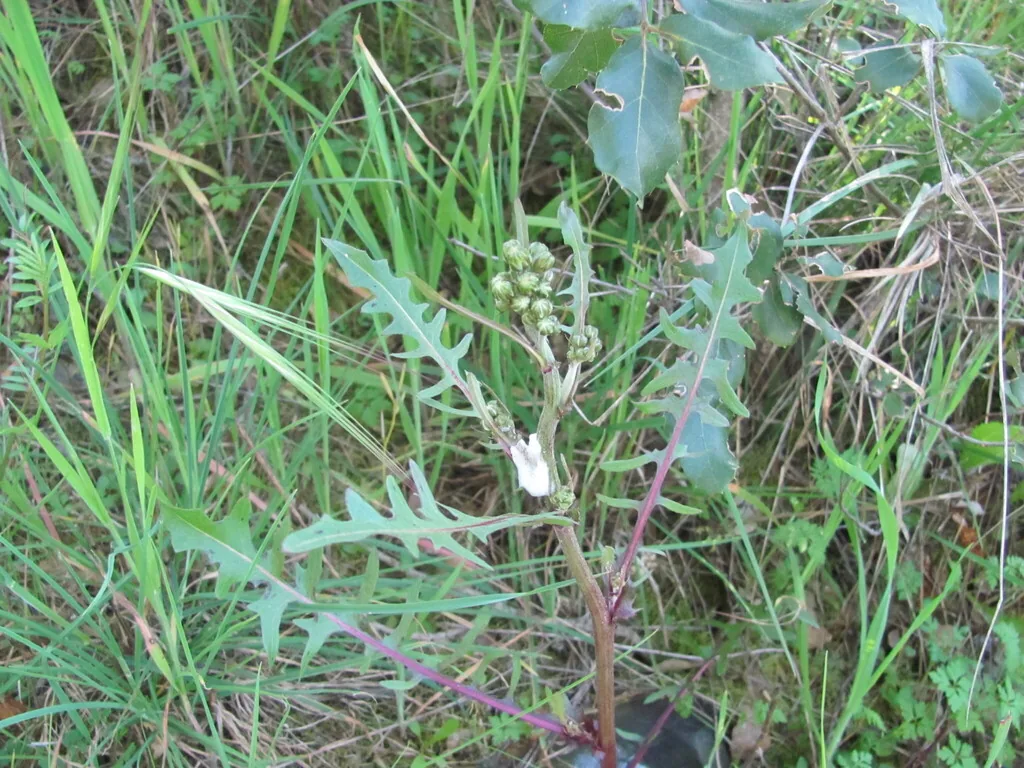
- Cotyledons elongate, spoonlike.
- Leaves entire, deeply notched.
Adult
plant:
- Height: 30-70cm.
- Stems erect, branched above in corymb, grooved and
reddish at the base.
- Leaves basal in rosette downy, oblong, lanceolate,
pinnatipartite. Stem leaves hastate -based, amplexicaule, sessile dentate.
- Florets yellow, the outermost reddish in head.
Capitules numerous, long-stalked, medium-sized. Involucral bracts often very
broad so the head seems campanulate.*
- Fruits : achenes 4-5 mm, with a short beak and a white
pappus.
- Risk of confusion at seedling stage with Cichorium
intybus and the other species of Crepis .
- Biological type: Biennial.Family
Asteraceae (Compositae)
What the sources say (1)
Family:
COMPOSITAE (ASTERACEAE)Remedies
The sources we checked give no remedies for this plant.
Calendar
Sowing
In situ, as soon as the seed is ripe in late summer or in the spring
What the sources say (1)
Seed - we have no information for this species but suggest sowing the seed in situ either as soon as it is ripe in late summer or in the spring.Harvest
Not stated in the sources we read.
Months as given by the sources, which are mostly from the United States (northern hemisphere). In the southern hemisphere they shift by about six months.
Edibility
Reported by the source, quoted verbatim. Do not eat a plant on the basis of this page alone: identification mistakes can be dangerous.
Leaves - raw. Used in salads, they have a bitter taste
[2]
Similar plants
- Smooth hawksbeard Crepis capillaris
- Abraham Trachystemon orientalis
- Abyssinian banana Ensete ventricosum
- Acacia longifolia Acacia longifolia
- African Blue Lily Agapanthus praecox
- African lily Dietes bicolor
- African lovegrass Eragrostis curvula
- African tuliptree Spathodea campanulata
Sources
Every value above is quoted from these documents. Links lead to the original publisher.
- Crepis vesicaria · www2.dijon.inrae.fr, consulted
- Crepis vesicaria - Useful Temperate Plants · temperate.theferns.info, consulted
- Crepis vesicaria (beaked hawk's-beard): Go Botany · gobotany.nativeplanttrust.org, consulted
- Crepis vesicaria L. vesicaria - Herbari Virtual del Mediterrani Occidental · herbarivirtual.uib.cat, consulted
- Flora of New Zealand | Taxon Profile | Crepis vesicaria · nzflora.info, consulted
- Flora of the Burren and Southeast Connemara: Crepis vesicaria · flora-burren.linnaeus.naturalis.nl, consulted
- British Wild Plant: Crepis vesicaria Beaked Hawk's-beard · ukwildflowers.com, consulted
Written by Emilio Marruso · last checked