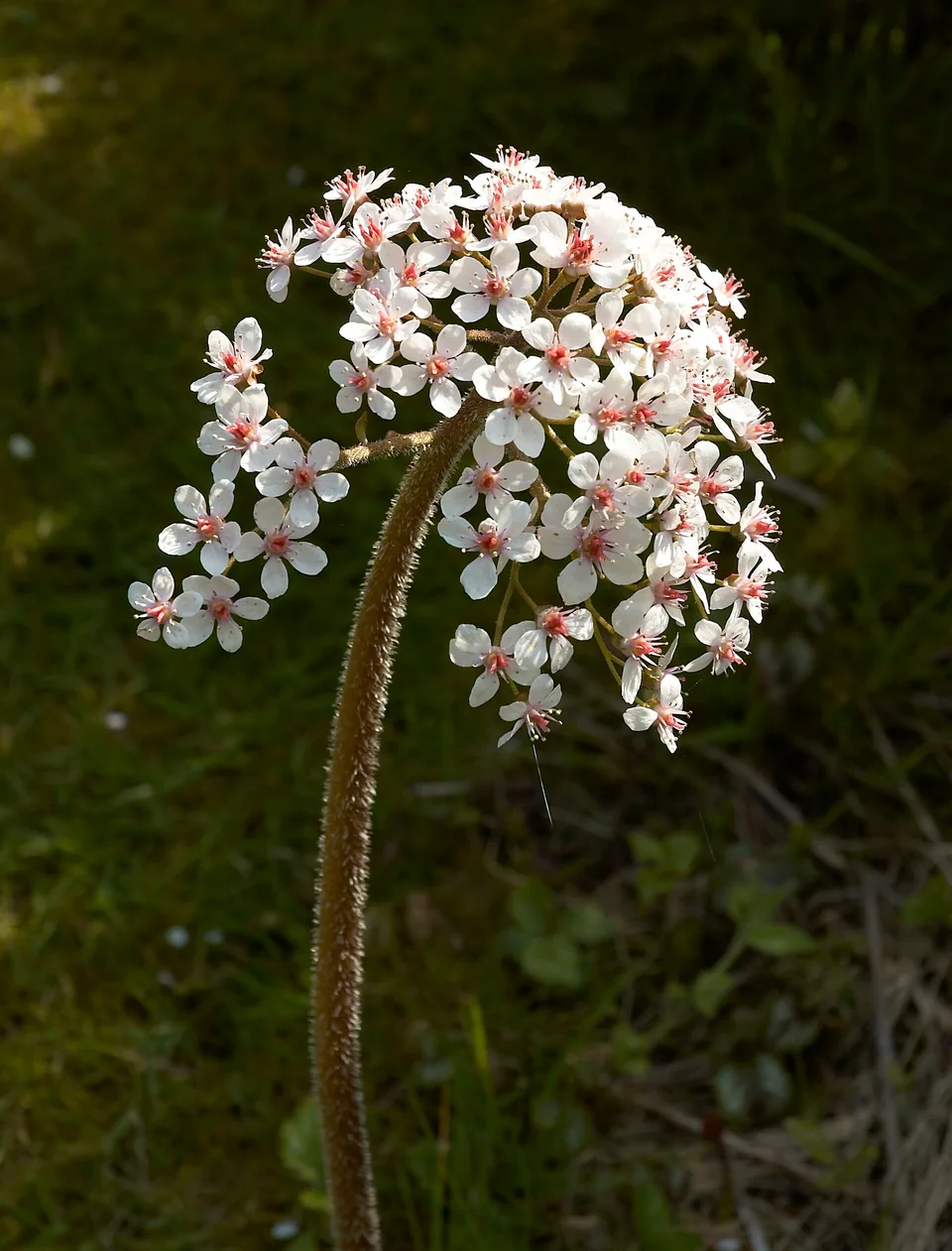
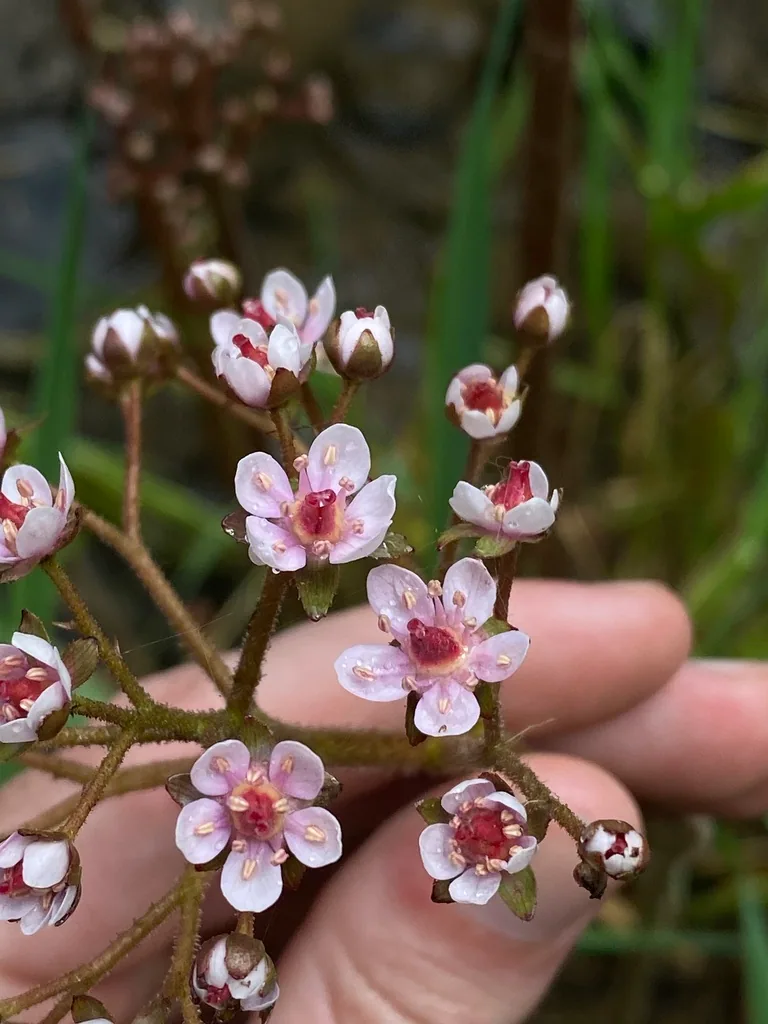

How to Grow and Care for Indian rhubarb
Darmera peltata
Written by Emilio Marruso · last checked
At a glance
Darmera even ends up on your plate: its leafstalks, once peeled, can be eaten raw, cooked like asparagus or added to soups and stews. Plant it in late spring or early summer after the last frosts, keep the soil damp and mulch it well. You can start it from seed or simply divide a clump in spring.
- Water
Keep the soil damp, mulch well and water in dry spells, or the leaves get scorched
What the sources say (1)
Watering notes: Mulch heavily and water in times of drought when grown in barely moist garden soil
Mulch them profusely in such a situation and water it if possible in times of drought.
— 3 Hardy Plants with Umbrella Leaves - Laidback Gardener [6] - Cold
Young spring growth is hurt by frost: plant away from the early morning sun
- Spacing
24 in between plants
What the sources say (2)
- Planting
Seedlings in late spring or early summer after the last frosts; divisions in spring
What the sources say (2)
Planting: Late spring or early summer after the last expected frosts (seedlings); spring (divisions)
Plant them out into their permanent positions in late spring or early summer, after the last expected frosts.
— Umbrella Plant (Darmera peltata) — Practical Plants [3] Plant them out in the spring.
— Umbrella Plant (Darmera peltata) — Practical Plants [3] - Harvest
Peeled leafstalks are eaten raw, cooked like asparagus or in soups and stews
- Propagation
From seed or by dividing the clump
What the sources say (2)
Overview
Darmera peltata is a rhizomatous perennial of mountain stream edges in the western United States, with large rounded leaves attached at the centre like umbrellas. [4] It is propagated by seed sown in a cold frame and by division in spring. [1]
This record is incomplete: the sources we read do not cover every field yet.
Not yet covered by our sources: Watering, Hardiness, warmest zone, Pruning
Indian rhubarb care
Measurements in square brackets are our conversion into the other unit system; the quoted text is unchanged.
How to water Indian rhubarb
Watering
Not stated in the sources we read.
Watering notes
Mulch heavily and water in times of drought when grown in barely moist garden soil
What the sources say (1)
Mulch them profusely in such a situation and water it if possible in times of drought.How much light Indian rhubarb needs
The sources disagree:
Light : Partial Shade to Full Shade
[1]
How much cold Indian rhubarb can take
Hardiness, coldest zone
The sources give different values depending on region, zone or growing conditions.
What each source says
According to Fine Gardening: 5 [winter low −28.9 to −23.3 °C (−20 to −10 °F)]
According to Practical Plants: 6 [winter low −23.3 to −17.8 °C (−10 to 0 °F)]
According to Laidback Gardener (observed colonies): 2 [winter low −45.6 to −40 °C (−50 to −40 °F)]
What the sources say (3)
According to Fine Gardening: Zones :
5, 6, 7, 8, 9According to Practical Plants: Hardiness
Zone 6+According to Laidback Gardener (observed colonies): I’ve seem superb colonies of D. peltata that that have thrived in zone 2 for decades!Hardiness, warmest zone
The sources give different values depending on region, zone or growing conditions.
What each source says
According to Fine Gardening: 9 [winter low −6.7 to −1.1 °C (20 to 30 °F)]
What the sources say (1)
According to Fine Gardening: Zones :
5, 6, 7, 8, 9Where to grow Indian rhubarb
60 cm [24 in]
What each source says
According to Practical Plants (as ground cover): 60 cm [24 in]
How to propagate Indian rhubarb
Indian rhubarb pests and problems
Leaf scorch
Symptom: Leaf scorch
What to do: Keep the soil consistently damp, especially in full sun
What the sources say (1)
Periods of dry soil will cause leaf scorch.
— Umbrella Leaf - Horticulture [5] Frost damage to young spring growth
Symptom: Young growth in spring is frost-tender
What to do: Grow the plants in a position sheltered from the early morning sun
What the sources say (1)
However, the young growth in spring, even on mature plants, is frost-tender and so it is best to grow the plants in a position sheltered from the early morning sun
— Darmera peltata - Useful Temperate Plants [2]
Remedies
Each remedy shows what official sources say about it; traditional remedies without an official source are marked as such. Harmful ones are listed so you know to avoid them.
Getting rid of it
unwanted spread
cutting back spread with an ax or shovel Not verified
Traditional remedy, not verified by an official source.
How: Control the expansion of the creeping rhizomes with an ax or shovel if they go too far.
Calendar
Planting
Late spring or early summer after the last expected frosts (seedlings); spring (divisions)
Pruning
Not stated in the sources we read.
Months as given by the sources, which are mostly from the United States (northern hemisphere). In the southern hemisphere they shift by about six months.
Edibility
Reported by the source, quoted verbatim. Do not eat a plant on the basis of this page alone: identification mistakes can be dangerous.
Leafstalk - peeled and eaten raw, cooked like asparagus or added to soups and stews
[2]
Indicative values
Values from a secondary source, not checked word for word like the rest of this page. Use them as a starting point.
- Life cycle
- Herbaceous PerennialIndicative value, adapt it to your climate · Secondary source
- Mature height
- 91.4-152.4 cm (3-5 ft)Indicative value, adapt it to your climate · Secondary source
- Hours of sun
- 4-6 hoursIndicative value, adapt it to your climate · Secondary source
- Watering
- FrequentIndicative value, adapt it to your climate · Secondary source
- Soil
- Humus richIndicative value, adapt it to your climate · Secondary source
- Soil pH
- 5.5-7.5Indicative value, adapt it to your climate · Secondary source
- Growth rate
- ModerateIndicative value, adapt it to your climate · Secondary source
- Pruning
- May, June, July, March, April, MayIndicative value, adapt it to your climate · Secondary source
- Pests
- Leaf scorch, Pest resistant, Disease resistantIndicative value, adapt it to your climate · Secondary source
Similar plants
- Aaron's Beard Hypericum calycinum
- Abies grandis Abies grandis
- Abraham Trachystemon orientalis
- Abyssinian banana Ensete ventricosum
- Acacia longifolia Acacia longifolia
- Acacia retinodes Acacia retinodes
- Acanthus hungaricus Acanthus hungaricus
- Achlys triphylla Achlys triphylla
Sources
Every value above is quoted from these documents. Links lead to the original publisher.
- Indian rhubarb - Fine Gardening · finegardening.com, consulted
- Darmera peltata - Useful Temperate Plants · temperate.theferns.info, consulted
- Umbrella Plant (Darmera peltata) — Practical Plants · practicalplants.org, consulted
- Darmera peltata | Umbrella Plant | Wildflowers of the Pacific Northwest · pnwflowers.com, consulted
- Umbrella Leaf - Horticulture · hortmag.com, consulted
- 3 Hardy Plants with Umbrella Leaves - Laidback Gardener · laidbackgardener.blog, consulted
Written by Emilio Marruso · last checked