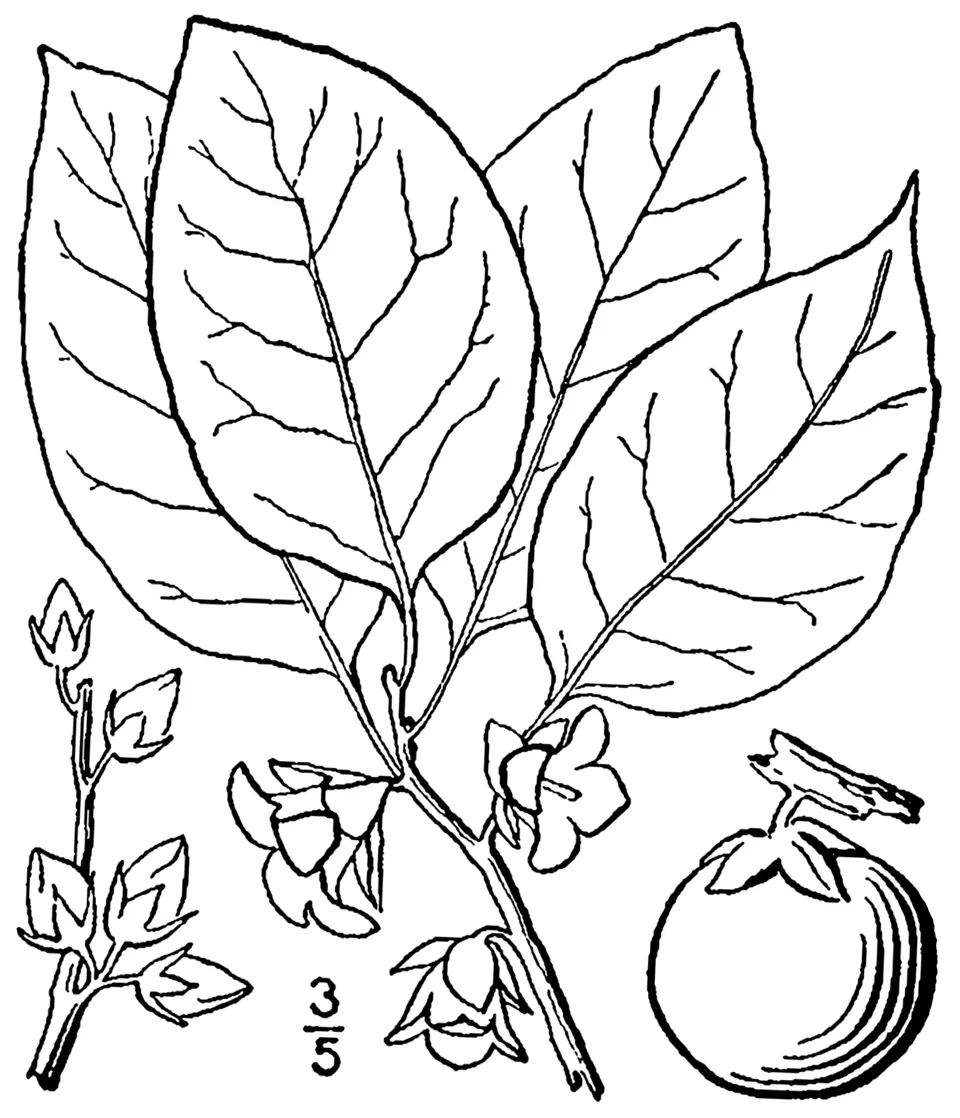


How to Grow and Care for Persimmon
Diospyros virginiana
Written by Emilio Marruso · last checked
At a glance
The American persimmon is a tough fruit tree: it loves full sun and moist soil, yet shrugs off drought and sandy ground. Wait until after the first frost to pick, and the fruit turns soft and sweet, perfect raw or in syrups, jellies, ice cream and pies. Even the leaves can be brewed into tea.
- Sun
Full sun to partial shade; full sun gives the most fruit
What the sources say (2)
Light: Full sun to partial shade; full-sun conditions give the best growth and highest fruit yields
Light: Full sun (6 or more hours of direct sunlight a day) Partial Shade (Direct sunlight only part of the day, 2-6 hours)
— Diospyros virginiana (American Persimmon, Common Persimmon, Date Plum, Eastern Persimmon, Jove's Fruit, Persimmon, Possum Apples, Possumwood, Simmon, Winter Plum) | North Carolina Extension Gardener Plant Toolbox [1] Best growth and highest fruit yields requires full-sun conditions.
— Native Fruits: Persimmon - Alabama Cooperative Extension System [4] - Water
Likes moist soil but tolerates drought
What the sources say (2)
Watering: Moist, well-drained soil, but tolerant of drought
Full sun; moist, well-drained soil, but tolerant of drought; pH adaptable.
— Selecting Trees for Your Home - Common Persimmon (Diospyros virginiana) [2] which makes transplanting established trees difficult but grants it significant drought tolerance.
— Native Fruits: Persimmon - Alabama Cooperative Extension System [4] - Cold
Survives winters down to −30 °F (−34.4 °C)
Very hardy · USDA 4a · RHS H7 · Z4
What the sources say (6)
Hardiness, coldest zone: 4a [winter low −34.4 to −31.7 °C (−30 to −25 °F)]
According to NC State Extension: USDA Plant Hardiness Zone: 4a, 4b, 5a, 5b, 6a, 6b, 7a, 7b, 8a, 8b, 9a, 9b
— Diospyros virginiana (American Persimmon, Common Persimmon, Date Plum, Eastern Persimmon, Jove's Fruit, Persimmon, Possum Apples, Possumwood, Simmon, Winter Plum) | North Carolina Extension Gardener Plant Toolbox [1] According to University of Illinois Extension: | Hardiness Zone: | 5 - 9
— Selecting Trees for Your Home - Common Persimmon (Diospyros virginiana) [2] USDA Plant Hardiness Zone: 4a, 4b, 5a, 5b, 6a, 6b, 7a, 7b, 8a, 8b, 9a, 9b
— Diospyros virginiana (American Persimmon, Common Persimmon, Date Plum, Eastern Persimmon, Jove's Fruit, Persimmon, Possum Apples, Possumwood, Simmon, Winter Plum) | North Carolina Extension Gardener Plant Toolbox [1] Hardiness, warmest zone: 9b [winter low −3.9 to −1.1 °C (25 to 30 °F)]
According to NC State Extension: USDA Plant Hardiness Zone: 4a, 4b, 5a, 5b, 6a, 6b, 7a, 7b, 8a, 8b, 9a, 9b
— Diospyros virginiana (American Persimmon, Common Persimmon, Date Plum, Eastern Persimmon, Jove's Fruit, Persimmon, Possum Apples, Possumwood, Simmon, Winter Plum) | North Carolina Extension Gardener Plant Toolbox [1] According to University of Illinois Extension: | Hardiness Zone: | 5 - 9
— Selecting Trees for Your Home - Common Persimmon (Diospyros virginiana) [2] USDA Plant Hardiness Zone: 4a, 4b, 5a, 5b, 6a, 6b, 7a, 7b, 8a, 8b, 9a, 9b
— Diospyros virginiana (American Persimmon, Common Persimmon, Date Plum, Eastern Persimmon, Jove's Fruit, Persimmon, Possum Apples, Possumwood, Simmon, Winter Plum) | North Carolina Extension Gardener Plant Toolbox [1] - Soil
Best in rich, moist, well-drained soil; still fruits well in dry, sandy ground
What the sources say (3)
Watering: Moist, well-drained soil, but tolerant of drought
Full sun; moist, well-drained soil, but tolerant of drought; pH adaptable.
— Selecting Trees for Your Home - Common Persimmon (Diospyros virginiana) [2] which makes transplanting established trees difficult but grants it significant drought tolerance.
— Native Fruits: Persimmon - Alabama Cooperative Extension System [4] Watering notes: Performs best on rich, moist, organic soils but grows and produces well even on xeric and sandy sites
It will perform best and reach its greatest size on rich, moist, and organic soils but will grow and produce well even on xeric and sandy sites.
— Native Fruits: Persimmon - Alabama Cooperative Extension System [4] - Harvest
Fall to winter: pick only ripe fruit after the first frost; unripe fruit is harsh and puckery
What the sources say (3)
Harvest: Fall to winter; harvest only ripe fruit, waiting until after the first frost of the year
Display/Harvest Time: Fall Winter Fruit Type: Berry Fruit Length: 1-3 inches
— Diospyros virginiana (American Persimmon, Common Persimmon, Date Plum, Eastern Persimmon, Jove's Fruit, Persimmon, Possum Apples, Possumwood, Simmon, Winter Plum) | North Carolina Extension Gardener Plant Toolbox [1] Care should be taken to only harvest ripe fruit, as unripe fruit are powerfully astringent and unpleasant to consume. In order to ensure ripeness, you can wait until after the first frost of the year.
— Native Fruits: Persimmon - Alabama Cooperative Extension System [4] How to harvest: Harvest only ripe fruit, since unripe fruit is powerfully astringent; waiting until after the first frost of the year helps ensure ripeness.
Care should be taken to only harvest ripe fruit, as unripe fruit are powerfully astringent and unpleasant to consume. In order to ensure ripeness, you can wait until after the first frost of the year.
— Native Fruits: Persimmon - Alabama Cooperative Extension System [4] - Pests
Webworms, twig girdlers and spider mites; persimmon wilt is the most serious disease
What the sources say (5)
Pests: leafrollers, twospotted spider mite, fall webworm, webworms, twig girdlers
Insect Damage - Leafrollers ( Tortricidae ) Insect Relative Damage - Twospotted Spidermite [Ornamentals] ( Tetranychus urticae ) Fall webworm is a common insect, but does little damage.
— Selecting Trees for Your Home - Common Persimmon (Diospyros virginiana) [2] Populations of webworms are common on branch ends and can damage small trees. Twig girdlers ( Oncideres cingulata ) can hurt growth and kill branches, especially on young trees.
— Native Fruits: Persimmon - Alabama Cooperative Extension System [4] Diseases: leaf spot, wood rots and decays, persimmon wilt
Insects, Diseases, or Other Plant Problems: Leaf spot may occur. Fruit drop can be messy.
— Diospyros virginiana (American Persimmon, Common Persimmon, Date Plum, Eastern Persimmon, Jove's Fruit, Persimmon, Possum Apples, Possumwood, Simmon, Winter Plum) | North Carolina Extension Gardener Plant Toolbox [1] Fungal Disease - Wood Rots and Decays ( Many genus and species involved )
— Selecting Trees for Your Home - Common Persimmon (Diospyros virginiana) [2] Several fungal diseases are often visible on common persimmons, with persimmon wilt ( Cephalosporium diospyri ) having the most potential to cause significant damage.
— Native Fruits: Persimmon - Alabama Cooperative Extension System [4] - Watch out
Sends up suckers and can form thickets; its long main root makes it hard to transplant
- Size
Spreads 20–35 ft wide
What the sources say (1)
Mature width: 610-1067 cm (20-35 ft)
can reach 30 to 80 feet high and 20 to 35 feet wide
— Diospyros virginiana (American Persimmon, Common Persimmon, Date Plum, Eastern Persimmon, Jove's Fruit, Persimmon, Possum Apples, Possumwood, Simmon, Winter Plum) | North Carolina Extension Gardener Plant Toolbox [1] - Propagation
Grafting, root cuttings, seed or suckers; trees from seed take 4–9 years to fruit
What the sources say (5)
Propagation: Grafting; root cutting; seed; root suckers
Recommended Propagation Strategy: Grafting Root Cutting Seed Country Or Region Of Origin:
— Diospyros virginiana (American Persimmon, Common Persimmon, Date Plum, Eastern Persimmon, Jove's Fruit, Persimmon, Possum Apples, Possumwood, Simmon, Winter Plum) | North Carolina Extension Gardener Plant Toolbox [1] It can be grown readily from seed and can be propagated via root suckers
— Native Fruits: Persimmon - Alabama Cooperative Extension System [4] Years to first fruit: 4-9 years for trees grown from seed
grafted trees (sources differ: 3 years; 3 to 5 years): grafted trees will fruit within 3 to 5 years
— Native Fruits: Persimmon - Alabama Cooperative Extension System [4] Trees propagated from seeds begin producing fruit in 4 to 9 years. Grafted trees need 3 years.
— Diospyros virginiana (American Persimmon, Common Persimmon, Date Plum, Eastern Persimmon, Jove's Fruit, Persimmon, Possum Apples, Possumwood, Simmon, Winter Plum) | North Carolina Extension Gardener Plant Toolbox [1] Seedlings bear fruit in four to 9 years typically, and grafted trees will fruit within 3 to 5 years.
— Native Fruits: Persimmon - Alabama Cooperative Extension System [4] - Sowing
Keep cleaned seed in damp sand in the fridge for several months, then sow in spring
What the sources say (3)
Sowing: Spring, after the cleaned seed has been kept in slightly moist sand or sterile media in the refrigerator for several months
Plant the seeds into deep nursery pots in the spring
— Native Fruits: Persimmon - Alabama Cooperative Extension System [4] keep the cleaned seed in slightly moist sand or other sterile media in the refrigerator for several months.
— Native Fruits: Persimmon - Alabama Cooperative Extension System [4] Saving seeds: Extract the seed from ripe fruit in the fall, wash off the pulp, and keep the cleaned seed in slightly moist sand or other sterile medium in the refrigerator for several months.
extract the seed from ripe fruit in the fall, wash off pulp, and keep the cleaned seed in slightly moist sand or other sterile media in the refrigerator for several months.
— Native Fruits: Persimmon - Alabama Cooperative Extension System [4]
Overview
The common persimmon is a tree whose ripe fruit is excellent for human consumption. [4] It grows best in full sun on rich, moist soil but tolerates drought and a wide variety of soils. [4] Trees are mostly dioecious, so more than one tree must be planted to ensure fruit production. [4]
This record is incomplete: the sources we read do not cover every field yet.
Not yet covered by our sources: Planting, Spacing
Persimmon care
How to water Persimmon
Watering
Moist, well-drained soil, but tolerant of drought
What the sources say (2)
Full sun; moist, well-drained soil, but tolerant of drought; pH adaptable.which makes transplanting established trees difficult but grants it significant drought tolerance.Watering notes
Performs best on rich, moist, organic soils but grows and produces well even on xeric and sandy sites
What the sources say (1)
It will perform best and reach its greatest size on rich, moist, and organic soils but will grow and produce well even on xeric and sandy sites.How much light Persimmon needs
Full sun to partial shade; full-sun conditions give the best growth and highest fruit yields
What the sources say (2)
Light:
Full sun (6 or more hours of direct sunlight a day)
Partial Shade (Direct sunlight only part of the day, 2-6 hours)Best growth and highest fruit yields requires full-sun conditions.How much cold Persimmon can take
Hardiness, coldest zone
4a [winter low −34.4 to −31.7 °C (−30 to −25 °F)]
What each source says
According to NC State Extension: 4a [winter low −34.4 to −31.7 °C (−30 to −25 °F)]
According to University of Illinois Extension: 5 [winter low −28.9 to −23.3 °C (−20 to −10 °F)]
What the sources say (3)
According to NC State Extension: USDA Plant Hardiness Zone:
4a, 4b, 5a, 5b, 6a, 6b, 7a, 7b, 8a, 8b, 9a, 9bAccording to University of Illinois Extension: | Hardiness Zone:
|
5 - 9USDA Plant Hardiness Zone:
4a, 4b, 5a, 5b, 6a, 6b, 7a, 7b, 8a, 8b, 9a, 9bHardiness, warmest zone
9b [winter low −3.9 to −1.1 °C (25 to 30 °F)]
What each source says
According to NC State Extension: 9b [winter low −3.9 to −1.1 °C (25 to 30 °F)]
According to University of Illinois Extension: 9 [winter low −6.7 to −1.1 °C (20 to 30 °F)]
What the sources say (3)
According to NC State Extension: USDA Plant Hardiness Zone:
4a, 4b, 5a, 5b, 6a, 6b, 7a, 7b, 8a, 8b, 9a, 9bAccording to University of Illinois Extension: | Hardiness Zone:
|
5 - 9USDA Plant Hardiness Zone:
4a, 4b, 5a, 5b, 6a, 6b, 7a, 7b, 8a, 8b, 9a, 9bWhere to grow Persimmon
Not stated in the sources we read.
How to propagate Persimmon
Grafting; root cutting; seed; root suckers
What the sources say (2)
Recommended Propagation Strategy:
Grafting
Root Cutting
Seed
Country Or Region Of Origin:It can be grown readily from seed and can be propagated via root suckersHow to grow Persimmon
The plant
Life cycle
perennial
What the sources say (1)
Life Cycle: Perennial Woody Recommended Propagation Strategy: Grafting Root Cutting SeedFamily
Ebenaceae
What the sources say (1)
American persimmon is a woody, deciduous tree in the ebony family (Ebenaceae). It is native to the central and eastern United States and can reach 30 to 80 feet high and 20 to 35 feet wide.Mature height
Mature width
610-1067 cm (20-35 ft)
What the sources say (1)
can reach 30 to 80 feet high and 20 to 35 feet wideYears to first fruit
4-9 years for trees grown from seed
What each source says
grafted trees (sources differ: 3 years; 3 to 5 years):
What the sources say (3)
grafted trees (sources differ: 3 years; 3 to 5 years): grafted trees will fruit within 3 to 5 yearsTrees propagated from seeds begin producing fruit in 4 to 9 years. Grafted trees need 3 years.Seedlings bear fruit in four to 9 years typically, and grafted trees will fruit within 3 to 5 years.Harvest and storage
How to harvest
Harvest only ripe fruit, since unripe fruit is powerfully astringent; waiting until after the first frost of the year helps ensure ripeness.
What the sources say (1)
Care should be taken to only harvest ripe fruit, as unripe fruit are powerfully astringent and unpleasant to consume. In order to ensure ripeness, you can wait until after the first frost of the year.Storage
Ripe fruit does not ship or store well and should be processed as soon as possible; it can be kept in the refrigerator until it can be processed and frozen.
What the sources say (1)
Unfortunately, the soft, ripe fruit does not ship or store well and should be processed as soon as possible. You can store the fruit in the refrigerator until you can process and freeze.Saving seeds
Extract the seed from ripe fruit in the fall, wash off the pulp, and keep the cleaned seed in slightly moist sand or other sterile medium in the refrigerator for several months.
What the sources say (1)
extract the seed from ripe fruit in the fall, wash off pulp, and keep the cleaned seed in slightly moist sand or other sterile media in the refrigerator for several months.Pests and diseases
Pests
leafrollers, twospotted spider mite, fall webworm, webworms, twig girdlers
What the sources say (2)
Insect Damage - Leafrollers ( Tortricidae ) Insect Relative Damage - Twospotted Spidermite [Ornamentals] ( Tetranychus urticae ) Fall webworm is a common insect, but does little damage.Populations of webworms are common on branch ends and can damage small trees. Twig girdlers ( Oncideres cingulata ) can hurt growth and kill branches, especially on young trees.Diseases
leaf spot, wood rots and decays, persimmon wilt
What the sources say (3)
Insects, Diseases, or Other Plant Problems: Leaf spot may occur. Fruit drop can be messy.Fungal Disease - Wood Rots and Decays ( Many genus and species involved )Several fungal diseases are often visible on common persimmons, with persimmon wilt ( Cephalosporium diospyri ) having the most potential to cause significant damage.Persimmon pests and problems
Persimmon wilt
Symptom: Fungal disease visible on common persimmons with the most potential to cause significant damage.
What to do: Remove infected areas and burn the infected vegetation.
What the sources say (1)
with persimmon wilt ( Cephalosporium diospyri ) having the most potential to cause significant damage. Remove infected areas and burn the infected vegetation.
— Native Fruits: Persimmon - Alabama Cooperative Extension System [4] Webworms and twig girdlers
Symptom: Webworm populations are common on branch ends and can damage small trees; twig girdlers can hurt growth and kill branches, especially on young trees.
What the sources say (1)
Populations of webworms are common on branch ends and can damage small trees. Twig girdlers ( Oncideres cingulata ) can hurt growth and kill branches, especially on young trees.
— Native Fruits: Persimmon - Alabama Cooperative Extension System [4] Suckering
Symptom: Persimmon can sucker and form colonies if not well maintained.
What the sources say (1)
Persimmon can sucker and form colonies if not well maintained.
— Selecting Trees for Your Home - Common Persimmon (Diospyros virginiana) [2] Difficult transplanting
Symptom: Difficult to transplant due to taproot.
What the sources say (1)
Difficult to transplant due to taproot; male and female flowers on separate trees so both must be present for fruit to be produced.
— Selecting Trees for Your Home - Common Persimmon (Diospyros virginiana) [2]
Remedies
Each remedy shows what official sources say about it; traditional remedies without an official source are marked as such. Harmful ones are listed so you know to avoid them.
Treating the plant
caterpillars
hand-picking caterpillars Not verified
Traditional remedy, not verified by an official source.
hand-pick the caterpillars (wear gloves in case you’re sensitive)
— gardenerspath.com [5] How: If the tree is defoliated year after year, hand-pick the caterpillars or prune off heavily infested branches.
persimmon wilt
removing and burning infected parts Official source, not independently tested
How: Remove infected areas and burn the infected vegetation.
persimmon wilt ( Cephalosporium diospyri ) having the most potential to cause significant damage. Remove infected areas and burn the infected vegetation.
— Native Fruits: Persimmon - Alabama Cooperative Extension System [4]
Calendar
Sowing
Spring, after the cleaned seed has been kept in slightly moist sand or sterile media in the refrigerator for several months
What the sources say (2)
Plant the seeds into deep nursery pots in the springkeep the cleaned seed in slightly moist sand or other sterile media in the refrigerator for several months.Planting
Not stated in the sources we read.
Harvest
Fall to winter; harvest only ripe fruit, waiting until after the first frost of the year
What the sources say (2)
Display/Harvest Time:
Fall
Winter
Fruit Type:
Berry
Fruit Length:
1-3 inchesCare should be taken to only harvest ripe fruit, as unripe fruit are powerfully astringent and unpleasant to consume. In order to ensure ripeness, you can wait until after the first frost of the year.Months as given by the sources, which are mostly from the United States (northern hemisphere). In the southern hemisphere they shift by about six months.
Edibility
Reported by the source, quoted verbatim. Do not eat a plant on the basis of this page alone: identification mistakes can be dangerous.
The fruit is astringent when green, but sweet when soft and ripe and may be eaten raw. Used in syrups, jellies, ice cream and pies.
[1]Care should be taken to only harvest ripe fruit, as unripe fruit are powerfully astringent and unpleasant to consume.
[4]leaves contain high levels of vitamin C and can be used for tea.
[4]
Indicative values
Values from a secondary source, not checked word for word like the rest of this page. Use them as a starting point.
- Drought tolerant
- yesIndicative value, adapt it to your climate · Secondary source
- Soil pH
- 6-6.5Indicative value, adapt it to your climate · Secondary source
- Care level
- MediumIndicative value, adapt it to your climate · Secondary source
- Growth rate
- LowIndicative value, adapt it to your climate · Secondary source
- Pruning
- FebruaryIndicative value, adapt it to your climate · Secondary source
Similar plants
- Date plum Diospyros lotus
- Japanese persimmon Diospyros kaki
- Abies grandis Abies grandis
- Abraham Trachystemon orientalis
- Abyssinian banana Ensete ventricosum
- Acacia longifolia Acacia longifolia
- Acanthus hungaricus Acanthus hungaricus
- Achlys triphylla Achlys triphylla
Sources
Every value above is quoted from these documents. Links lead to the original publisher.
- Diospyros virginiana (American Persimmon, Common Persimmon, Date Plum, Eastern Persimmon, Jove's Fruit, Persimmon, Possum Apples, Possumwood, Simmon, Winter Plum) | North Carolina Extension Gardener Plant Toolbox · plants.ces.ncsu.edu, consulted
- Selecting Trees for Your Home - Common Persimmon (Diospyros virginiana) · web.extension.illinois.edu, consulted
- American Persimmon - Diospyros virginiana | North Carolina Extension Gardener Plant Toolbox · plants.ces.ncsu.edu, consulted
- Native Fruits: Persimmon - Alabama Cooperative Extension System · aces.edu, consulted
- gardenerspath.com · gardenerspath.com
Written by Emilio Marruso · last checked