
How to Grow and Care for White wallrocket
Diplotaxis erucoides
Written by Emilio Marruso · last checked
Toxic to: People · Why
At a glance
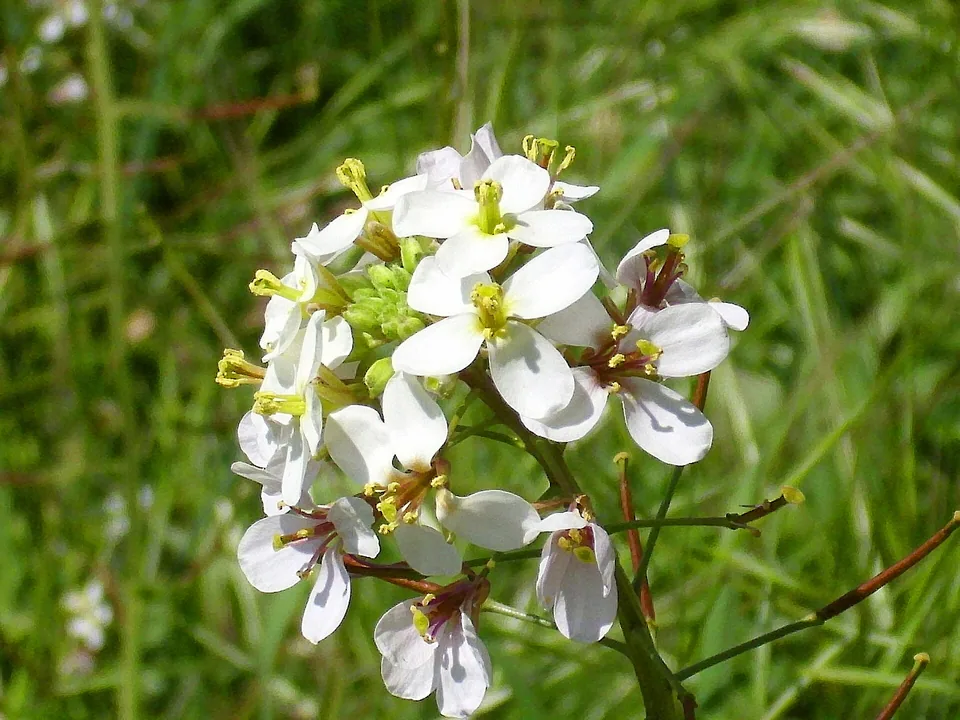
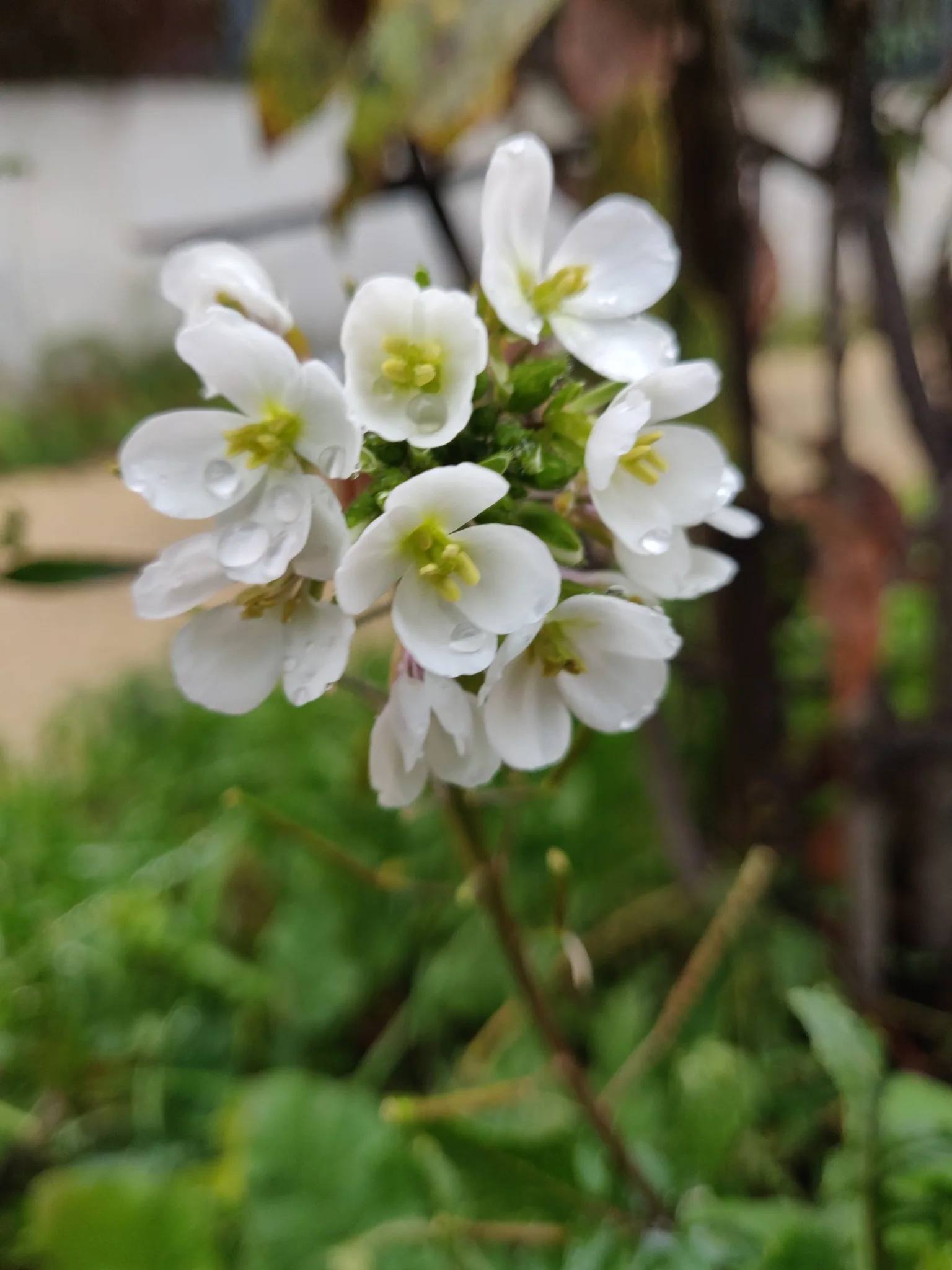
White wall rocket is an annual that brings a mustard-like flavor straight from your garden to your plate. Sow the seed right where it will grow, in spring or as soon as the seed is ripe, in full sun or light shade. Its leaves are tasty raw in salads or cooked, and the plant stays just 8 to 20 inches tall.
- Sun
Full sun to light shade
What the sources say (1)
Light: Full sun to light shade
Light full sun Shade tolerance light shade
— White Wall Rocket (Diplotaxis erucoides) — Practical Plants [4] - Harvest
Eat the leaves raw in salads or cooked; they taste like mustard
- Size
8 to 20 inches tall
What the sources say (1)
Mature height: 20-50 cm [8–20 in]
Height: 20-50cm. Plant with a developed tap-root. - Stem rough at the base with downward appressed hairs.
— Diplotaxis erucoides [1] - Propagation
Grows from seed
What the sources say (1)
Propagation: Seed
Seed - best sown in situ as soon as it is ripe, though it can also be sown in situ in the spring.
— White Wall Rocket (Diplotaxis erucoides) — Practical Plants [4] - Sowing
Sow where it will grow, in spring or as soon as the seed is ripe
What the sources say (2)
Sowing: As soon as the seed is ripe, or in spring (sown in situ)
Seed - best sown in situ as soon as it is ripe, though it can also be sown in situ in the spring.
— White Wall Rocket (Diplotaxis erucoides) — Practical Plants [4] Seed - best sown in situ as soon as it is ripe, though it can also be sown in situ in the spring.
— Diplotaxis erucoides - Useful Temperate Plants [2] - Safety
No known hazards to people
Overview
White wall rocket is an annual of the Mediterranean region that behaves as a weed of arable and waste ground. [1][4] Its leaves are eaten raw or cooked, with a mustard-like flavour. [4] It is grown from seed sown in situ as soon as ripe or in spring, and often germinates in autumn. [4]
This record is incomplete: the sources we read do not cover every field yet.
Not yet covered by our sources: Hardiness, coldest zone, Hardiness, warmest zone
White wallrocket care
How much light White wallrocket needs
Full sun to light shade
What the sources say (1)
Light
full sun
Shade tolerance
light shadeHow much cold White wallrocket can take
Hardiness, coldest zone
Not stated in the sources we read.
Hardiness, warmest zone
Not stated in the sources we read.
How to propagate White wallrocket
Seed
What the sources say (1)
Seed - best sown in situ as soon as it is ripe, though it can also be sown in situ in the spring.How to grow White wallrocket
The plant
Life cycle
annual
What the sources say (1)
Seeds
ovate, flattened, yellow-brown, smooth, about 1 mm.
- Plant melliferous.
- Biological type: Annual.Family
Brassicaceae (Cruciferae)
What the sources say (1)
Family:
CRUCIFERAE (BRASSICACEAE)
Genus:
Diplotaxis
Catalan common name:
Ravenissa blanca.Mature height
20-50 cm [8–20 in]
What the sources say (1)
Height: 20-50cm. Plant with a developed tap-root.
- Stem rough at the base with downward appressed hairs.Remedies
The sources we checked give no remedies for this plant.
Is White wallrocket poisonous?
Reported by the source, quoted verbatim. This is not medical or veterinary advice: if a person or an animal may have eaten this plant, contact a poison control centre or a veterinarian.
Known Hazards None known
[2]
Calendar
Sowing
As soon as the seed is ripe, or in spring (sown in situ)
What the sources say (2)
Seed - best sown in situ as soon as it is ripe, though it can also be sown in situ in the spring.Seed - best sown in situ as soon as it is ripe, though it can also be sown in situ in the spring.Months as given by the sources, which are mostly from the United States (northern hemisphere). In the southern hemisphere they shift by about six months.
Edibility
Reported by the source, quoted verbatim. Do not eat a plant on the basis of this page alone: identification mistakes can be dangerous.
Leaves - raw or cooked. A mustard-like flavour, they can be added to salads [2] .
[4]
Similar plants
- Annual wallrocket Diplotaxis muralis
- Perennial Wallrocket Diplotaxis tenuifolia
- Abraham Trachystemon orientalis
- Abyssinian banana Ensete ventricosum
- Acacia longifolia Acacia longifolia
- African Blue Lily Agapanthus praecox
- African lily Dietes bicolor
- African lovegrass Eragrostis curvula
Sources
Every value above is quoted from these documents. Links lead to the original publisher.
- Diplotaxis erucoides · www2.dijon.inrae.fr, consulted
- Diplotaxis erucoides - Useful Temperate Plants · temperate.theferns.info, consulted
- Diplotaxis erucoides (L.) DC. - Herbari Virtual del Mediterrani Occidental · herbarivirtual.uib.cat, consulted
- White Wall Rocket (Diplotaxis erucoides) — Practical Plants · practicalplants.org, consulted
- Diplotaxis erucoides · cretanflora.com, consulted
- Online Flora of the Maltese Islands - Plant Family Index · maltawildplants.com, consulted
- Diplotaxis erucoides (L.) DC., Двурядка эруковидная (Сорняки) - Pl@ntNet identify · identify.plantnet.org, consulted
Written by Emilio Marruso · last checked