
How to Grow and Care for Cape sundew
Drosera capensis
Written by Emilio Marruso · last checked
Toxic to: People · Why
At a glance
Cape sundew is happy in a sunny spot, indoors or in a pot, and asks for no fertilizer at all. In spring and summer, just stand its pot in a tray of rainwater; in fall and winter, take it out of the tray and keep the compost moist. You can plant it in almost any month of the year.
- Sun
Full sun
What the sources say (2)
Light: Full sun
Cape sundews do best in full sun in a nutrient-poor, acidic medium
— Drosera capensis | BBC Gardeners World Magazine [3] Choose a bright position and acclimate sun exposure gradually, avoiding excessive heat against glass.
— Cape Sundew Care: Grow Drosera Capensis with Light and Low-Mineral Water - Houseplant Central [4] - Water
Pot in a tray of rainwater in spring and summer; just moist in fall and winter. Never tap water
What the sources say (2)
Watering: Keep the compost wet in spring and summer by standing the pot in a tray of rainwater; in autumn and winter remove from the tray but keep the compost moist
Keep compost wet during spring and summer by standing the pot in a tray of rainwater. Remove from the tray in autumn and winter, but ensure that the compost stays moist.
— Drosera capensis | BBC Gardeners World Magazine [3] Watering notes: Use distilled, reverse-osmosis, or clean rainwater with low mineral content
Use distilled, reverse-osmosis, or clean rainwater with low mineral content.
— Cape Sundew Care: Grow Drosera Capensis with Light and Low-Mineral Water - Houseplant Central [4] - Soil
No ordinary garden soil or potting compost: they are too rich
What the sources say (2)
Avoid: Any fertilizer; also ordinary soil or potting compost, which are too rich
Most species grow readily in a nutrient-poor, peat/sand mix, kept moist year-round, and in full sun in the ground or containers. Do not apply fertilizers and always use rainwater or distilled water for irrigation.
— [6] Never plant carnivorous plants in soil or potting compost, as these are too rich for them.
— [7] - Planting
Plant in any month except February
What the sources say (1)
Planting: January, March-December
| Plant | yes | | yes | yes | yes | yes | yes | yes | yes | yes | yes | yes
— Drosera capensis | BBC Gardeners World Magazine [3] - Feeding
Never fertilize it
What the sources say (4)
How often: None: do not fertilize
Most species grow readily in a nutrient-poor, peat/sand mix, kept moist year-round, and in full sun in the ground or containers. Do not apply fertilizers and always use rainwater or distilled water for irrigation.
— [6] Most carnivorous plants originate in low-nutrient conditions, so need no additional fertiliser.
— [7] Avoid: Any fertilizer; also ordinary soil or potting compost, which are too rich
Most species grow readily in a nutrient-poor, peat/sand mix, kept moist year-round, and in full sun in the ground or containers. Do not apply fertilizers and always use rainwater or distilled water for irrigation.
— [6] Never plant carnivorous plants in soil or potting compost, as these are too rich for them.
— [7] - Watch out
It self-seeds: seedlings may pop up in nearby pots, so label your plants
- Sowing
Sow in any month except February
What the sources say (1)
Sowing: January, March-December
| Sow | yes | | yes | yes | yes | yes | yes | yes | yes | yes | yes | yes
— Drosera capensis | BBC Gardeners World Magazine [3] - Containers
Grows well in pots, indoors too
- Safety
No toxic effects reported
Overview
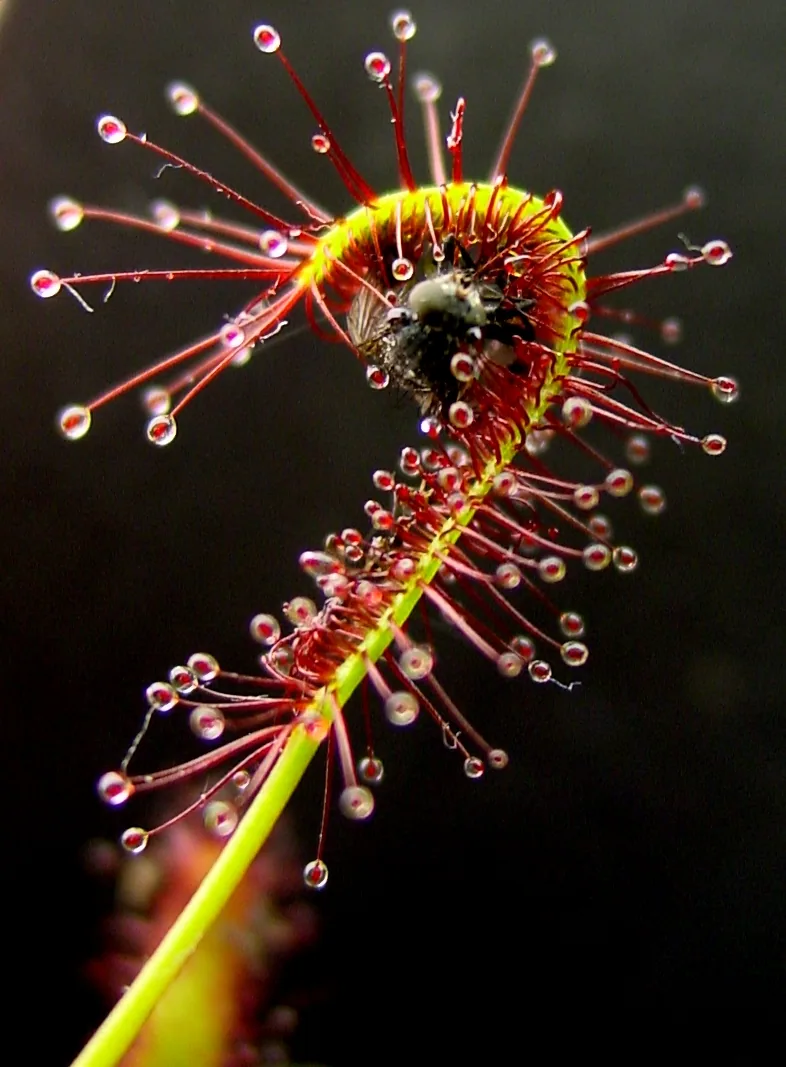
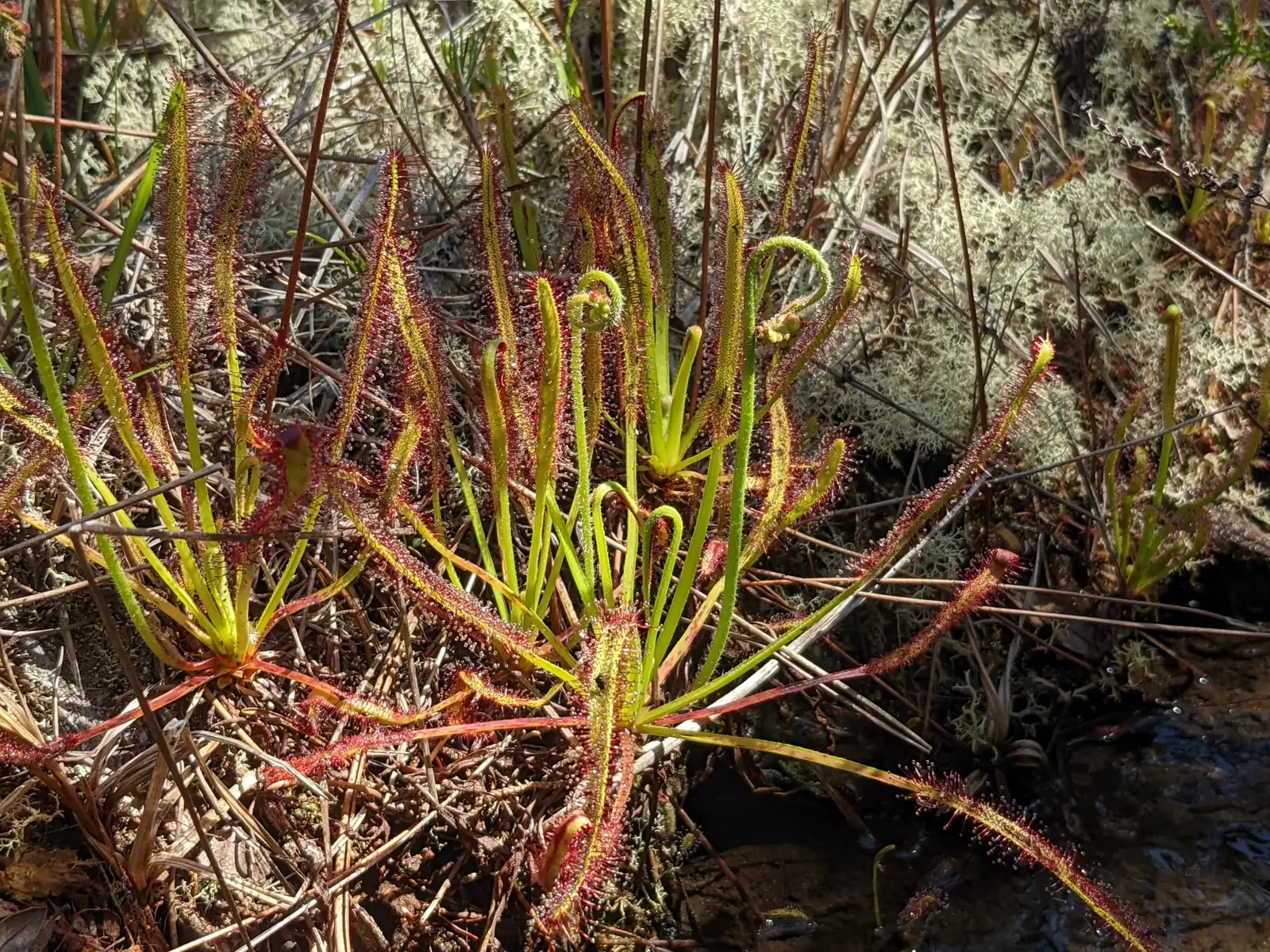
Cape sundew is a carnivorous perennial whose rosette of sticky-haired leaves catches and digests small insects. [3] It does best in full sun in a nutrient-poor, acidic medium kept wet with rainwater. [3] It can be grown on a sunny windowsill as a houseplant. [3]
This record is incomplete: the sources we read do not cover every field yet.
Not yet covered by our sources: Propagation
Cape sundew care
How to water Cape sundew
Watering
Keep the compost wet in spring and summer by standing the pot in a tray of rainwater; in autumn and winter remove from the tray but keep the compost moist
What the sources say (1)
Keep compost wet during spring and summer by standing the pot in a tray of rainwater. Remove from the tray in autumn and winter, but ensure that the compost stays moist.Watering notes
Use distilled, reverse-osmosis, or clean rainwater with low mineral content
What the sources say (1)
Use distilled, reverse-osmosis, or clean rainwater with low mineral content.How much light Cape sundew needs
Full sun
What the sources say (2)
Cape sundews do best in full sun in a nutrient-poor, acidic mediumChoose a bright position and acclimate sun exposure gradually, avoiding excessive heat against glass.Where to grow Cape sundew
Indoors
Yes
What the sources say (1)
It will thrive on a sunny, south-facing windowsillIn containers
Yes
What the sources say (1)
Keep compost wet during spring and summer by standing the pot in a tray of rainwater.How to propagate Cape sundew
Not stated in the sources we read.
How to grow Cape sundew
Fertilizing
How often
None: do not fertilize
What the sources say (2)
Most species grow readily in a nutrient-poor, peat/sand mix, kept moist year-round, and in full sun in the ground or containers. Do not apply fertilizers and always use rainwater or distilled water for irrigation.Most carnivorous plants originate in low-nutrient conditions, so need no additional fertiliser.Avoid
Any fertilizer; also ordinary soil or potting compost, which are too rich
What the sources say (2)
Most species grow readily in a nutrient-poor, peat/sand mix, kept moist year-round, and in full sun in the ground or containers. Do not apply fertilizers and always use rainwater or distilled water for irrigation.Never plant carnivorous plants in soil or potting compost, as these are too rich for them.Cape sundew pests and problems
Self-seeding
Symptom: Flowers may produce abundant seed, and seedlings can appear in nearby pots
What to do: Keep plants labeled and remove unwanted seedlings responsibly
What the sources say (1)
Flowers may produce abundant seed, and seedlings can appear in nearby suitable pots. Keep plants labeled and remove unwanted seedlings responsibly.
— Cape Sundew Care: Grow Drosera Capensis with Light and Low-Mineral Water - Houseplant Central [4]
Remedies
Each remedy shows what official sources say about it; traditional remedies without an official source are marked as such. Harmful ones are listed so you know to avoid them.
Getting rid of it
invasive spread
dig out Not verified
Traditional remedy, not verified by an official source.
Follow up treated areas 3 times per year. Encourage natural regeneration of native plants or replant treated areas where possible after 2-3 treatments to establish dense ground cover and minimise reinvasion.
— tiakitamakimakaurau.nz [8] How: Dig out the plants and dispose of all plant parts; follow up treated areas 3 times per year.
Is Cape sundew poisonous?
Reported by the source, quoted verbatim. This is not medical or veterinary advice: if a person or an animal may have eaten this plant, contact a poison control centre or a veterinarian.
poisonous? Drosera ‘Capensis’ has no toxic effects reported.
[3]
Calendar
January, March-December
What the sources say (1)
| Sow | yes | | yes | yes | yes | yes | yes | yes | yes | yes | yes | yesJanuary, March-December
What the sources say (1)
| Plant | yes | | yes | yes | yes | yes | yes | yes | yes | yes | yes | yesMonths as given by the sources, which are mostly from the United States (northern hemisphere). In the southern hemisphere they shift by about six months.
Indicative values
Values from a secondary source, not checked word for word like the rest of this page. Use them as a starting point.
- Life cycle
- Herbaceous PerennialIndicative value, adapt it to your climate · Secondary source
- Mature height
- 76.2-182.9 cm (2.5-6 ft)Indicative value, adapt it to your climate · Secondary source
- Soil pH
- 4.5-5.5Indicative value, adapt it to your climate · Secondary source
- USDA hardiness zones
- 7-9 [winter low −17.8 to −1.1 °C (0 to 30 °F)]Indicative value, adapt it to your climate · Secondary source
- Growth rate
- LowIndicative value, adapt it to your climate · Secondary source
- Pruning
- June, July, August, May, June, JulyIndicative value, adapt it to your climate · Secondary source
- Propagation
- Division, Leaf Cutting, Seed Propagation, Root CuttingIndicative value, adapt it to your climate · Secondary source
Similar plants
- Pink Sundew Drosera capillaris
- Roundleaf Sundew Drosera rotundifolia
- Sundew Drosera filiformis
- Spoonleaf Sundew Drosera intermedia
- African Blood Lily Scadoxus multiflorus
- African Blue Lily Agapanthus praecox
- African Violet Saintpaulia ionantha
- Allamanda Allamanda cathartica
Sources
Every value above is quoted from these documents. Links lead to the original publisher.
- Drosera - the Sundews · botany.org, consulted
- Flora of New Zealand | Taxon Profile | Drosera capensis · nzflora.info, consulted
- Drosera capensis | BBC Gardeners World Magazine · gardenersworld.com, consulted
- Cape Sundew Care: Grow Drosera Capensis with Light and Low-Mineral Water - Houseplant Central · houseplantcentral.com, consulted
- Cape Sundew (Drosera capensis) - bplant.org · bplant.org, consulted
- plants.ces.ncsu.edu · plants.ces.ncsu.edu
- rhs.org.uk · rhs.org.uk
- tiakitamakimakaurau.nz · tiakitamakimakaurau.nz
Written by Emilio Marruso · last checked