
How to Grow and Care for Sundew
Drosera filiformis
Written by Emilio Marruso · last checked
At a glance
This sundew feeds itself: it takes its nutrients from the prey it digests, so you never need to fertilize it. Give it full sun, constant moisture with rainwater or distilled water, and a nutrient-poor mix. A perennial that grows 4 inches to 1 foot tall, it is happy in a pot, even indoors, and you can easily share it by division.
- Sun
Full sun
What the sources say (1)
Light: Full sun
Plant in full sun with a planting mix of whole fiber sphagnum moss
— Drosera filiformis (Sundew, Threadleaf Sundew) | North Carolina Extension Gardener Plant Toolbox [1] - Water
Keep it always moist, using only rainwater or distilled water
What the sources say (2)
Watering: Constant moisture
The plants require constant moisture and a winter dormancy for longevity.
— Drosera filiformis (Sundew, Threadleaf Sundew) | North Carolina Extension Gardener Plant Toolbox [1] Watering notes: Always use distilled water or rainwater to irrigate
Always use distilled water or rainwater to irrigate these plants.
— Drosera filiformis (Sundew, Threadleaf Sundew) | North Carolina Extension Gardener Plant Toolbox [1] - Cold
Survives winters down to −10 °F (−23.3 °C)
Very hardy · USDA 6a · RHS H7 · Z6
What the sources say (2)
Hardiness, coldest zone: 6a [winter low −23.3 to −20.6 °C (−10 to −5 °F)]
USDA Plant Hardiness Zone: 6a, 6b, 7a, 7b, 8a, 8b, 9a
— Drosera filiformis (Sundew, Threadleaf Sundew) | North Carolina Extension Gardener Plant Toolbox [1] Hardiness, warmest zone: 9a [winter low −6.7 to −3.9 °C (20 to 25 °F)]
USDA Plant Hardiness Zone: 6a, 6b, 7a, 7b, 8a, 8b, 9a
— Drosera filiformis (Sundew, Threadleaf Sundew) | North Carolina Extension Gardener Plant Toolbox [1] - Soil
Acidic mix, pH 6.0 or lower, poor in nutrients
What the sources say (3)
Soil pH, maximum: 6.0
Soil pH: Acid (<6.0) Soil Drainage: Moist Occasionally Dry
— Drosera filiformis (Sundew, Threadleaf Sundew) | North Carolina Extension Gardener Plant Toolbox [1] Avoid: Do not fertilize: grow it in a nutrient-poor mix; the plant takes its nutrients from digested prey
The mix should be low in nutrients, and no fertilizer is necessary. The plant will get all the nutrients from digested prey.
— Drosera filiformis (Sundew, Threadleaf Sundew) | North Carolina Extension Gardener Plant Toolbox [1] Do not apply fertilizers and always use rainwater or distilled water for irrigation.
— Drosera (Sundew) | North Carolina Extension Gardener Plant Toolbox [3] - Feeding
Never fertilize: it feeds on the prey it digests
What the sources say (2)
Avoid: Do not fertilize: grow it in a nutrient-poor mix; the plant takes its nutrients from digested prey
The mix should be low in nutrients, and no fertilizer is necessary. The plant will get all the nutrients from digested prey.
— Drosera filiformis (Sundew, Threadleaf Sundew) | North Carolina Extension Gardener Plant Toolbox [1] Do not apply fertilizers and always use rainwater or distilled water for irrigation.
— Drosera (Sundew) | North Carolina Extension Gardener Plant Toolbox [3] - Size
4 in to 1 ft tall, 1–2 in wide
What the sources say (2)
Mature height: 10.16-30.48 cm (0 ft 4 in - 1 ft 0 in)
Height: 0 ft. 4 in. - 1 ft. 0 in.
— Drosera filiformis (Sundew, Threadleaf Sundew) | North Carolina Extension Gardener Plant Toolbox [1] Mature width: 2.54-5.08 cm (0 ft 1 in - 0 ft 2 in)
Width: 0 ft. 1 in. - 0 ft. 2 in.
— Drosera filiformis (Sundew, Threadleaf Sundew) | North Carolina Extension Gardener Plant Toolbox [1] - Propagation
By division or from seed
What the sources say (2)
Propagation: Division, seed
Life Cycle: Perennial Recommended Propagation Strategy: Division Seed
— Drosera filiformis (Sundew, Threadleaf Sundew) | North Carolina Extension Gardener Plant Toolbox [1] Threadleaf sundew is easy to cultivate and will form clumps that can be divided while dormant.
— Drosera filiformis (Sundew, Threadleaf Sundew) | North Carolina Extension Gardener Plant Toolbox [1] - Containers
Grows well in a pot, even indoors
What the sources say (2)
In containers: Yes
Threadleaf sundew can be grown outside in bog gardens, troughs or containers.
— Drosera filiformis (Sundew, Threadleaf Sundew) | North Carolina Extension Gardener Plant Toolbox [1] Indoors: Yes
This species can also be grown indoors. Place the plant in a small pot and set the pot in a tray of distilled or rainwater.
— Drosera filiformis (Sundew, Threadleaf Sundew) | North Carolina Extension Gardener Plant Toolbox [1]
Overview
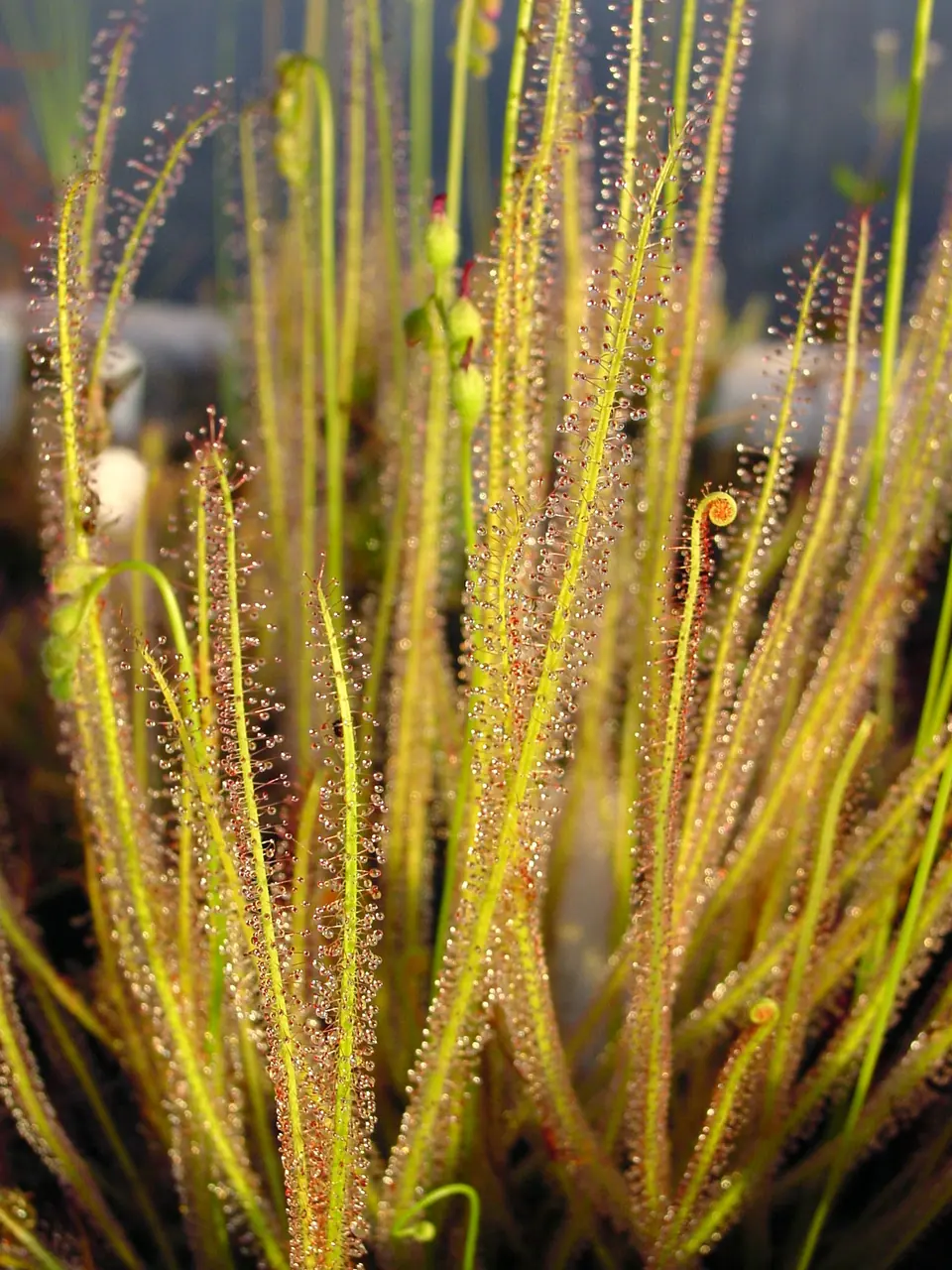
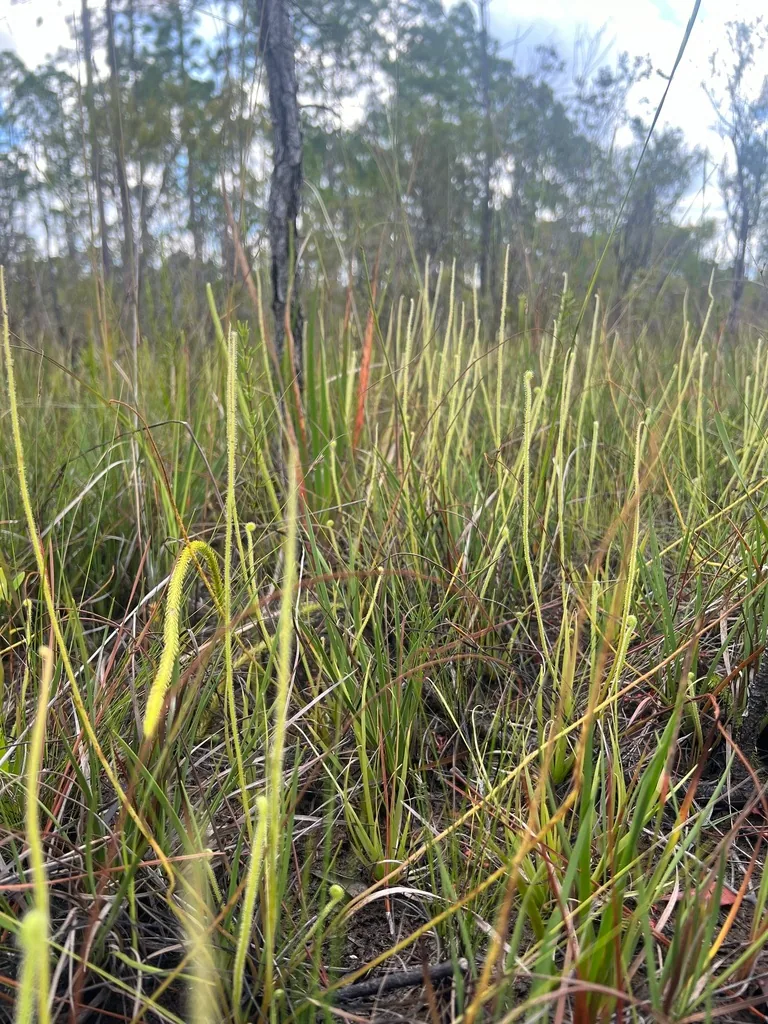
Threadleaf sundew is a carnivorous herbaceous perennial native to the Atlantic Seaboard, from Connecticut to Florida. [1] It is planted in full sun in a low-nutrient mix and needs constant moisture, a winter dormancy and distilled water or rainwater. [1] It can be grown in bog gardens, troughs or containers, or indoors in a small pot set in a tray of distilled water or rainwater. [1]
This record is incomplete: the sources we read do not cover every field yet.
Not yet covered by our sources: Pruning
Sundew care
How to water Sundew
Watering
Constant moisture
What the sources say (1)
The plants require constant moisture and a winter dormancy for longevity.Watering notes
Always use distilled water or rainwater to irrigate
What the sources say (1)
Always use distilled water or rainwater to irrigate these plants.How much light Sundew needs
Full sun
What the sources say (1)
Plant in full sun with a planting mix of whole fiber sphagnum mossHow much cold Sundew can take
Hardiness, coldest zone
6a [winter low −23.3 to −20.6 °C (−10 to −5 °F)]
What the sources say (1)
USDA Plant Hardiness Zone:
6a, 6b, 7a, 7b, 8a, 8b, 9aHardiness, warmest zone
9a [winter low −6.7 to −3.9 °C (20 to 25 °F)]
What the sources say (1)
USDA Plant Hardiness Zone:
6a, 6b, 7a, 7b, 8a, 8b, 9aBest soil for Sundew
6.0
What the sources say (1)
Soil pH:
Acid (<6.0)
Soil Drainage:
Moist
Occasionally DryWhere to grow Sundew
Indoors
Yes
What the sources say (1)
This species can also be grown indoors. Place the plant in a small pot and set the pot in a tray of distilled or rainwater.In containers
Yes
What the sources say (1)
Threadleaf sundew can be grown outside in bog gardens, troughs or containers.How to propagate Sundew
Division, seed
What the sources say (2)
Life Cycle:
Perennial
Recommended Propagation Strategy:
Division
SeedThreadleaf sundew is easy to cultivate and will form clumps that can be divided while dormant.How to grow Sundew
The plant
Life cycle
perennial
What the sources say (1)
Threadleaf sundew is a carnivorous herbaceous perennial native to the Atlantic Seaboard, from Connecticut to Florida. It is a member of the sundew family (Droseraceae).Family
Droseraceae
What the sources say (1)
Threadleaf sundew is a carnivorous herbaceous perennial native to the Atlantic Seaboard, from Connecticut to Florida. It is a member of the sundew family (Droseraceae).Mature height
10.16-30.48 cm (0 ft 4 in - 1 ft 0 in)
What the sources say (1)
Height: 0 ft. 4 in. - 1 ft. 0 in.Mature width
2.54-5.08 cm (0 ft 1 in - 0 ft 2 in)
What the sources say (1)
Width: 0 ft. 1 in. - 0 ft. 2 in.Fertilizing
Avoid
Do not fertilize: grow it in a nutrient-poor mix; the plant takes its nutrients from digested prey
What the sources say (2)
The mix should be low in nutrients, and no fertilizer is necessary. The plant will get all the nutrients from digested prey.Do not apply fertilizers and always use rainwater or distilled water for irrigation.Remedies
Each remedy shows what official sources say about it; traditional remedies without an official source are marked as such. Harmful ones are listed so you know to avoid them.
Treating the plant
aphids
rubbing alcohol swab Not verified
Traditional remedy, not verified by an official source.
Apply alcohol only to the pest itself, and avoid letting it pool in the soil.
— collectorsonline.com.au [4] How: Dab and remove aphids, mealybugs and scale insects with a cotton swab dipped in rubbing alcohol.
strong water spray Not verified
Traditional remedy, not verified by an official source.
How: A strong stream of water dislodges aphids and spider mites; repeat every few days.
insecticidal soap Not verified
Traditional remedy, not verified by an official source.
How: Test on a small area first; apply in the evening or on a cloudy day to avoid leaf burn.
neem oil Not verified
Traditional remedy, not verified by an official source.
Always test on a small area first, and keep the plant out of direct sun after application to prevent burns.
— collectorsonline.com.au [4] How: Apply in the evening or on a cloudy day to avoid leaf burn; repeat applications may be necessary.
fungus gnats
yellow sticky traps Not verified
Traditional remedy, not verified by an official source.
How: Capture adult fungus gnats to reduce their population.
Calendar
Pruning
Not stated in the sources we read.
Months as given by the sources, which are mostly from the United States (northern hemisphere). In the southern hemisphere they shift by about six months.
Indicative values
Values from a secondary source, not checked word for word like the rest of this page. Use them as a starting point.
- Care level
- MediumIndicative value, adapt it to your climate · Secondary source · Data for the variety Drosera filiformis var. filiformis
- Growth rate
- LowIndicative value, adapt it to your climate · Secondary source · Data for the variety Drosera filiformis var. filiformis
- Pruning
- March, April, May, AugustIndicative value, adapt it to your climate · Secondary source · Data for the variety Drosera filiformis var. filiformis
Similar plants
- Pink Sundew Drosera capillaris
- Roundleaf Sundew Drosera rotundifolia
- Spoonleaf Sundew Drosera intermedia
- Cape sundew Drosera capensis
- Venus flytrap Dionaea muscipula
- Abies grandis Abies grandis
- Abraham Trachystemon orientalis
- Abyssinian banana Ensete ventricosum
Sources
Every value above is quoted from these documents. Links lead to the original publisher.
- Drosera filiformis (Sundew, Threadleaf Sundew) | North Carolina Extension Gardener Plant Toolbox · plants.ces.ncsu.edu, consulted
- Sundew - Drosera | North Carolina Extension Gardener Plant Toolbox · plants.ces.ncsu.edu, consulted
- Drosera (Sundew) | North Carolina Extension Gardener Plant Toolbox · plants.ces.ncsu.edu, consulted
- collectorsonline.com.au · collectorsonline.com.au
Written by Emilio Marruso · last checked