
How to Grow and Care for Roundleaf Sundew
Drosera rotundifolia
Written by Emilio Marruso · last checked
At a glance
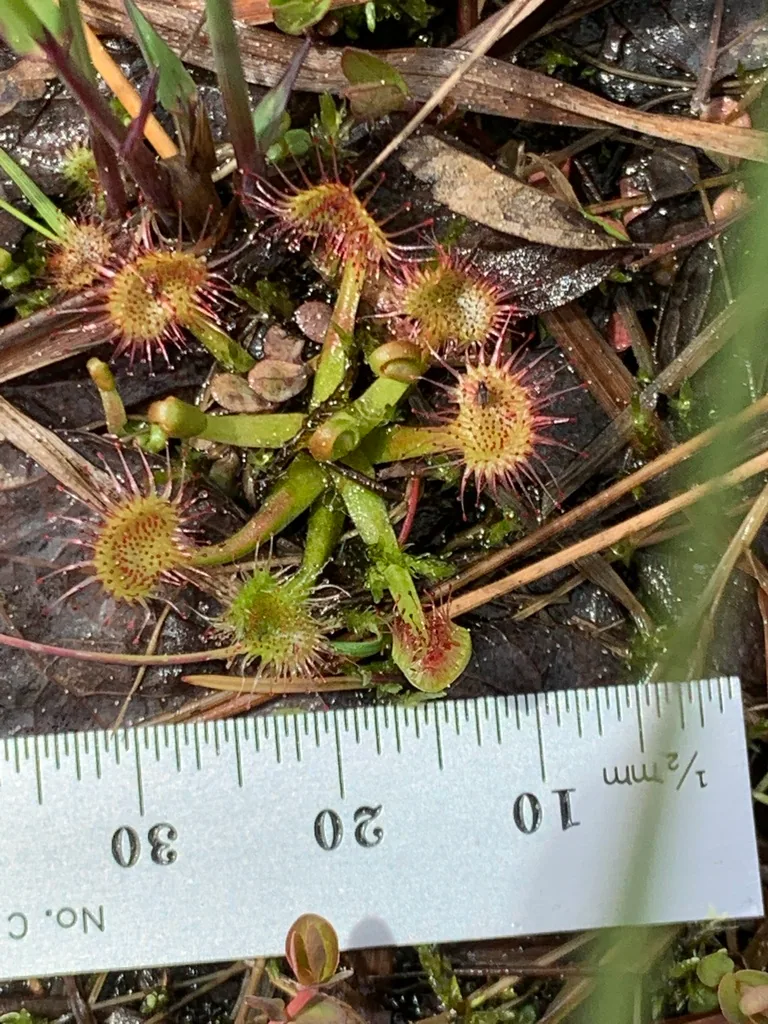
This tiny perennial catches insects all by itself and takes from them the food it needs, so you never have to feed it. Give it full sun, though it tolerates partial shade, and keep its nutrient-free mix moist with rainwater or distilled water. Only 2–10 inches tall, it fits happily in a pot, even indoors, sitting in a tray of water.
- Sun
Full sun; it also tolerates partial shade
What the sources say (1)
Light: Full sun; tolerates partial shade
It thrives in full sun but will tolerate partial shade.
— Drosera rotundifolia (Common Sundew, Roundleaf Sundew) | North Carolina Extension Gardener Plant Toolbox [1] - Water
Keep the mix always moist, using only rainwater or distilled water
What the sources say (1)
Watering: Keep the nutrient-free growing medium moist with distilled water or rainwater
Like all carnivorous plants, it grows best in a nutrient-free medium that is kept moist with distilled water or rainwater.
— Drosera rotundifolia (Common Sundew, Roundleaf Sundew) | North Carolina Extension Gardener Plant Toolbox [1] - Soil
Nutrient-free, acidic growing mix, pH 6.0 or lower
What the sources say (3)
Soil pH, maximum: 6.0
Soil pH: Acid (<6.0) Soil Drainage: Moist Occasionally Wet
— Drosera rotundifolia (Common Sundew, Roundleaf Sundew) | North Carolina Extension Gardener Plant Toolbox [1] Avoid: Do not fertilize: grow it in a nutrient-free medium; the plant takes the nutrients it needs from the insects it traps
Like all carnivorous plants, it grows best in a nutrient-free medium that is kept moist with distilled water or rainwater. Do not fertilize the plant; it will get all the nutrients it needs from the insects it traps.
— Drosera rotundifolia (Common Sundew, Roundleaf Sundew) | North Carolina Extension Gardener Plant Toolbox [1] Do not apply fertilizers and always use rainwater or distilled water for irrigation.
— Drosera (Sundew) | North Carolina Extension Gardener Plant Toolbox [3] - Feeding
Never feed it: it gets what it needs from the insects it traps
What the sources say (2)
Avoid: Do not fertilize: grow it in a nutrient-free medium; the plant takes the nutrients it needs from the insects it traps
Like all carnivorous plants, it grows best in a nutrient-free medium that is kept moist with distilled water or rainwater. Do not fertilize the plant; it will get all the nutrients it needs from the insects it traps.
— Drosera rotundifolia (Common Sundew, Roundleaf Sundew) | North Carolina Extension Gardener Plant Toolbox [1] Do not apply fertilizers and always use rainwater or distilled water for irrigation.
— Drosera (Sundew) | North Carolina Extension Gardener Plant Toolbox [3] - Size
2–10 in tall and 4–6 in wide
What the sources say (2)
Mature height: 5-25 cm (2-10 in)
Dimensions: Height: 0 ft. 2 in. - 0 ft. 10 in. Width: 0 ft. 4 in. - 0 ft. 6 in.
— Drosera rotundifolia (Common Sundew, Roundleaf Sundew) | North Carolina Extension Gardener Plant Toolbox [1] Mature width: 10-15 cm (4-6 in)
Dimensions: Height: 0 ft. 2 in. - 0 ft. 10 in. Width: 0 ft. 4 in. - 0 ft. 6 in.
— Drosera rotundifolia (Common Sundew, Roundleaf Sundew) | North Carolina Extension Gardener Plant Toolbox [1] - Containers
Grows in pots, indoors too: set the pot in a tray of rainwater or distilled water
What the sources say (3)
In containers: Yes
This sundew can be grown outside in bog gardens, troughs or containers.
— Drosera rotundifolia (Common Sundew, Roundleaf Sundew) | North Carolina Extension Gardener Plant Toolbox [1] Indoors: Yes
This species can also be grown indoors. Place the plant in a small pot and set the pot in a tray of distilled or rainwater, but allow the plant to go dormant in winter.
— Drosera rotundifolia (Common Sundew, Roundleaf Sundew) | North Carolina Extension Gardener Plant Toolbox [1] Watering notes: Indoors, set the pot in a tray of distilled or rainwater
This species can also be grown indoors. Place the plant in a small pot and set the pot in a tray of distilled or rainwater, but allow the plant to go dormant in winter.
— Drosera rotundifolia (Common Sundew, Roundleaf Sundew) | North Carolina Extension Gardener Plant Toolbox [1]
Overview
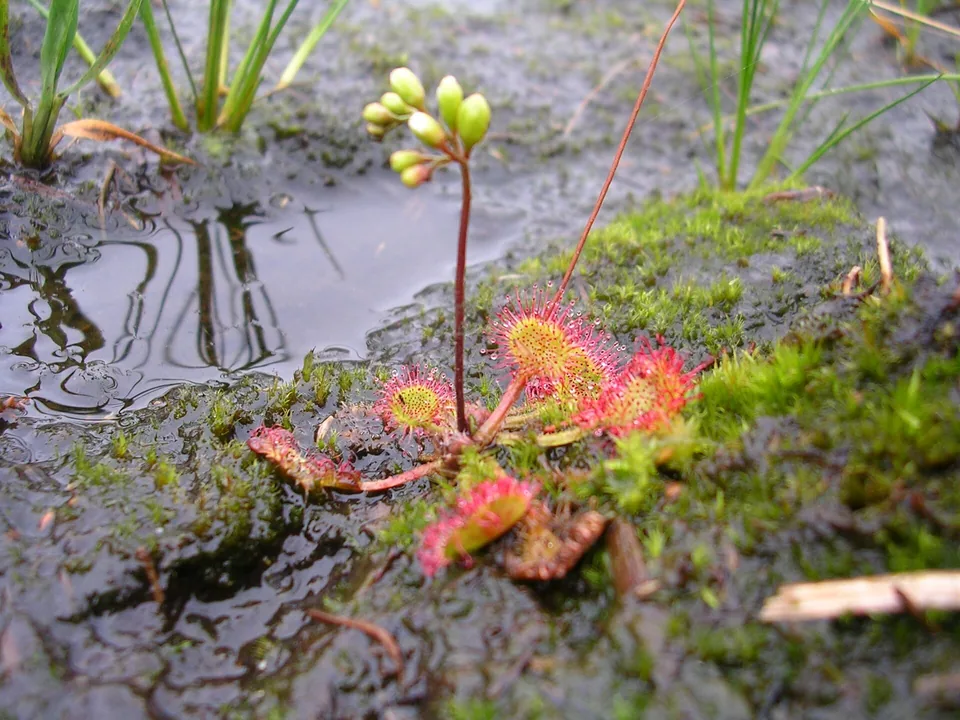
Roundleaf sundew is a carnivorous plant native to boggy sites across Asia, Europe and North America. [1] It thrives in full sun and grows best in a nutrient-free medium kept moist with distilled water or rainwater. [1] It can be grown outside in bog gardens, troughs or containers, or indoors in a small pot. [1]
This record is incomplete: the sources we read do not cover every field yet.
Not yet covered by our sources: Pruning, Propagation
Roundleaf Sundew care
How to water Roundleaf Sundew
Watering
Keep the nutrient-free growing medium moist with distilled water or rainwater
What the sources say (1)
Like all carnivorous plants, it grows best in a nutrient-free medium that is kept moist with distilled water or rainwater.Watering notes
Indoors, set the pot in a tray of distilled or rainwater
What the sources say (1)
This species can also be grown indoors. Place the plant in a small pot and set the pot in a tray of distilled or rainwater, but allow the plant to go dormant in winter.How much light Roundleaf Sundew needs
Full sun; tolerates partial shade
What the sources say (1)
It thrives in full sun but will tolerate partial shade.How much cold Roundleaf Sundew can take
Hardiness, coldest zone
The sources give different values depending on region, zone or growing conditions.
What each source says
According to NC State Extension, species page: 3a [winter low −40 to −37.2 °C (−40 to −35 °F)]
According to NC State Extension, genus Drosera page: 6a [winter low −23.3 to −20.6 °C (−10 to −5 °F)]
What the sources say (3)
According to NC State Extension, species page: USDA Plant Hardiness Zone:
3a, 3b, 4a, 4b, 5a, 5b, 6a, 6b, 7a, 7b, 8a, 8bAccording to NC State Extension, genus Drosera page: USDA Plant Hardiness Zone:
6a, 6b, 7a, 7b, 8a, 8b, 9a, 9b, 10a, 10bUSDA Plant Hardiness Zone:
3a, 3b, 4a, 4b, 5a, 5b, 6a, 6b, 7a, 7b, 8a, 8bHardiness, warmest zone
The sources give different values depending on region, zone or growing conditions.
What each source says
According to NC State Extension, species page: 8b [winter low −9.4 to −6.7 °C (15 to 20 °F)]
According to NC State Extension, genus Drosera page: 10b [winter low 1.7 to 4.4 °C (35 to 40 °F)]
What the sources say (3)
According to NC State Extension, species page: USDA Plant Hardiness Zone:
3a, 3b, 4a, 4b, 5a, 5b, 6a, 6b, 7a, 7b, 8a, 8bAccording to NC State Extension, genus Drosera page: USDA Plant Hardiness Zone:
6a, 6b, 7a, 7b, 8a, 8b, 9a, 9b, 10a, 10bUSDA Plant Hardiness Zone:
3a, 3b, 4a, 4b, 5a, 5b, 6a, 6b, 7a, 7b, 8a, 8bBest soil for Roundleaf Sundew
6.0
What the sources say (1)
Soil pH:
Acid (<6.0)
Soil Drainage:
Moist
Occasionally WetWhere to grow Roundleaf Sundew
Indoors
Yes
What the sources say (1)
This species can also be grown indoors. Place the plant in a small pot and set the pot in a tray of distilled or rainwater, but allow the plant to go dormant in winter.In containers
Yes
What the sources say (1)
This sundew can be grown outside in bog gardens, troughs or containers.How to propagate Roundleaf Sundew
Not stated in the sources we read.
How to grow Roundleaf Sundew
The plant
Life cycle
perennial
What the sources say (1)
Life Cycle: Perennial Country Or Region Of Origin: Northern Hemisphere Distribution:Family
Droseraceae
What the sources say (1)
Roundleaf sundew is a carnivorous plant in the sundew family (Droseraceae).Mature height
5-25 cm (2-10 in)
What the sources say (1)
Dimensions: Height: 0 ft. 2 in. - 0 ft. 10 in. Width: 0 ft. 4 in. - 0 ft. 6 in.Mature width
10-15 cm (4-6 in)
What the sources say (1)
Dimensions: Height: 0 ft. 2 in. - 0 ft. 10 in. Width: 0 ft. 4 in. - 0 ft. 6 in.Fertilizing
Avoid
Do not fertilize: grow it in a nutrient-free medium; the plant takes the nutrients it needs from the insects it traps
What the sources say (2)
Like all carnivorous plants, it grows best in a nutrient-free medium that is kept moist with distilled water or rainwater. Do not fertilize the plant; it will get all the nutrients it needs from the insects it traps.Do not apply fertilizers and always use rainwater or distilled water for irrigation.Remedies
The sources we checked give no remedies for this plant.
Calendar
Pruning
Not stated in the sources we read.
Months as given by the sources, which are mostly from the United States (northern hemisphere). In the southern hemisphere they shift by about six months.
Similar plants
- Pink Sundew Drosera capillaris
- Spoonleaf Sundew Drosera intermedia
- Sundew Drosera filiformis
- Cape sundew Drosera capensis
- Venus flytrap Dionaea muscipula
- Abies grandis Abies grandis
- Abraham Trachystemon orientalis
- Abyssinian banana Ensete ventricosum
Sources
Every value above is quoted from these documents. Links lead to the original publisher.
- Drosera rotundifolia (Common Sundew, Roundleaf Sundew) | North Carolina Extension Gardener Plant Toolbox · plants.ces.ncsu.edu, consulted
- Common Sundew - Drosera rotundifolia | North Carolina Extension Gardener Plant Toolbox · plants.ces.ncsu.edu, consulted
- Drosera (Sundew) | North Carolina Extension Gardener Plant Toolbox · plants.ces.ncsu.edu, consulted
Written by Emilio Marruso · last checked