

How to Grow and Care for Spoonleaf Sundew
Drosera intermedia
Written by Emilio Marruso · last checked
At a glance
This sundew feeds itself: it takes the nutrients it needs from the insects it traps, so you never have to fertilize it. Give it full sun or partial shade, keep its nutrient-free mix moist with rainwater or distilled water, and set the pot in a tray of water. It grows happily in a pot, even indoors.
- Sun
Full sun; it also takes partial shade
What the sources say (1)
Light: Full sun, tolerates partial shade
It thrives in full sun but will tolerate partial shade.
— Drosera intermedia (Narrow-Leaved Sundew, Oblong-Leaved Sundew, Spatulate-Leaved Sundew, Spoonleaf Sundew, Water Sundew) | North Carolina Extension Gardener Plant Toolbox [1] - Water
Keep it moist with rainwater or distilled water; set the pot in a tray of that water
What the sources say (2)
Watering: Keep the nutrient-free medium moist with distilled water or rainwater
it grows best in a nutrient-free medium that is kept moist with distilled water or rainwater.
— Drosera intermedia (Narrow-Leaved Sundew, Oblong-Leaved Sundew, Spatulate-Leaved Sundew, Spoonleaf Sundew, Water Sundew) | North Carolina Extension Gardener Plant Toolbox [1] Watering notes: Set the pot in a tray of distilled or rainwater
Place the plant in a small pot and set the pot in a tray of distilled or rainwater.
— Drosera intermedia (Narrow-Leaved Sundew, Oblong-Leaved Sundew, Spatulate-Leaved Sundew, Spoonleaf Sundew, Water Sundew) | North Carolina Extension Gardener Plant Toolbox [1] - Cold
Survives winters down to −30 °F (−34.4 °C)
Very hardy · USDA 4a · RHS H7 · Z4
What the sources say (2)
Hardiness, coldest zone: 4a [winter low −34.4 to −31.7 °C (−30 to −25 °F)]
USDA Plant Hardiness Zone: 4a, 4b, 5a, 5b, 6a, 6b, 7a, 7b, 8a, 8b, 9a, 9b
— Drosera intermedia (Narrow-Leaved Sundew, Oblong-Leaved Sundew, Spatulate-Leaved Sundew, Spoonleaf Sundew, Water Sundew) | North Carolina Extension Gardener Plant Toolbox [1] Hardiness, warmest zone: 9b [winter low −3.9 to −1.1 °C (25 to 30 °F)]
USDA Plant Hardiness Zone: 4a, 4b, 5a, 5b, 6a, 6b, 7a, 7b, 8a, 8b, 9a, 9b
— Drosera intermedia (Narrow-Leaved Sundew, Oblong-Leaved Sundew, Spatulate-Leaved Sundew, Spoonleaf Sundew, Water Sundew) | North Carolina Extension Gardener Plant Toolbox [1] - Soil
A nutrient-free mix with pH 6.0 or lower
What the sources say (2)
Watering: Keep the nutrient-free medium moist with distilled water or rainwater
it grows best in a nutrient-free medium that is kept moist with distilled water or rainwater.
— Drosera intermedia (Narrow-Leaved Sundew, Oblong-Leaved Sundew, Spatulate-Leaved Sundew, Spoonleaf Sundew, Water Sundew) | North Carolina Extension Gardener Plant Toolbox [1] Soil pH, maximum: 6.0
Soil pH: Acid (<6.0) Soil Drainage: Frequent Standing Water
— Drosera intermedia (Narrow-Leaved Sundew, Oblong-Leaved Sundew, Spatulate-Leaved Sundew, Spoonleaf Sundew, Water Sundew) | North Carolina Extension Gardener Plant Toolbox [1] - Feeding
Never fertilize: it feeds on the insects it traps
What the sources say (2)
Avoid: Do not fertilize: grow it in a nutrient-free medium; the plant takes the nutrients it needs from the insects it traps
Like all carnivorous plants, it grows best in a nutrient-free medium that is kept moist with distilled water or rainwater. Do not fertilize the plant; it will get all the nutrients it needs from the insects it traps.
— Drosera intermedia (Narrow-Leaved Sundew, Oblong-Leaved Sundew, Spatulate-Leaved Sundew, Spoonleaf Sundew, Water Sundew) | North Carolina Extension Gardener Plant Toolbox [1] Do not apply fertilizers and always use rainwater or distilled water for irrigation.
— Drosera (Sundew) | North Carolina Extension Gardener Plant Toolbox [3] - Propagation
By division, leaf cuttings, root cuttings or seed
What the sources say (1)
Propagation: Division, leaf cutting, root cutting, seed
Recommended Propagation Strategy: Division Leaf Cutting Root Cutting Seed
— Drosera intermedia (Narrow-Leaved Sundew, Oblong-Leaved Sundew, Spatulate-Leaved Sundew, Spoonleaf Sundew, Water Sundew) | North Carolina Extension Gardener Plant Toolbox [1] - Containers
Grows well in pots, even indoors
What the sources say (2)
In containers: Yes
This sundew can be grown outside in bog gardens, troughs, or containers.
— Drosera intermedia (Narrow-Leaved Sundew, Oblong-Leaved Sundew, Spatulate-Leaved Sundew, Spoonleaf Sundew, Water Sundew) | North Carolina Extension Gardener Plant Toolbox [1] Indoors: Yes
This species can also be grown indoors. Place the plant in a small pot and set the pot in a tray of distilled or rainwater.
— Drosera intermedia (Narrow-Leaved Sundew, Oblong-Leaved Sundew, Spatulate-Leaved Sundew, Spoonleaf Sundew, Water Sundew) | North Carolina Extension Gardener Plant Toolbox [1]
Overview
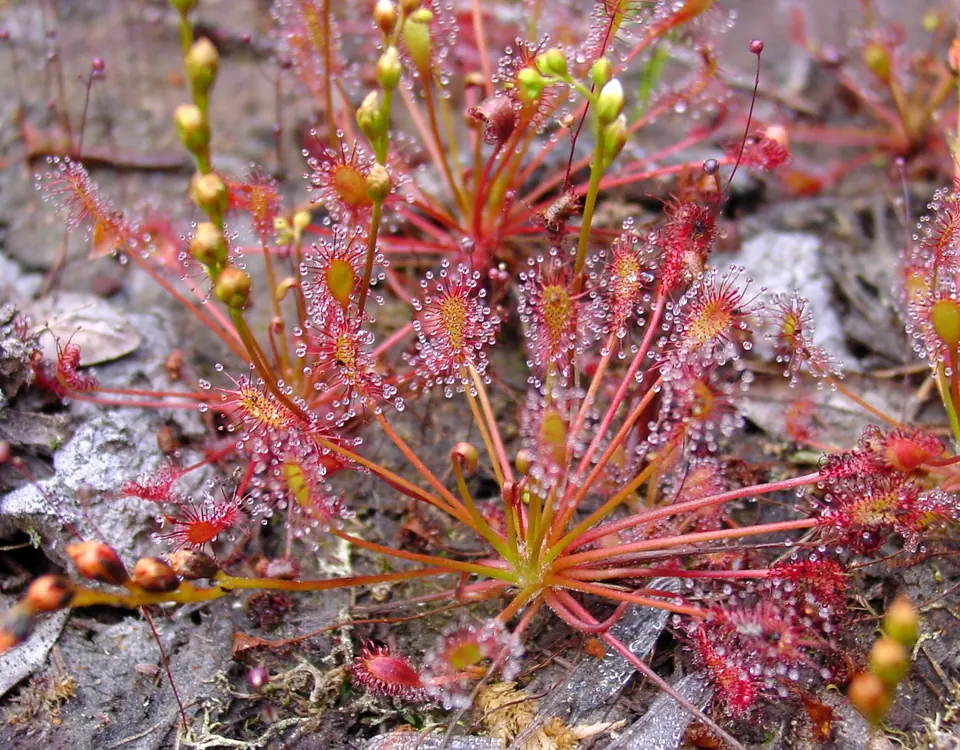
Spoonleaf sundew is a native carnivorous perennial of bogs and wet areas. [1] It thrives in full sun but tolerates partial shade, and grows best in a nutrient-free medium kept moist with distilled water or rainwater. [1] It can be grown outdoors in bog gardens, troughs or containers, and also indoors. [1]
This record is incomplete: the sources we read do not cover every field yet.
Not yet covered by our sources: Pruning
Spoonleaf Sundew care
How to water Spoonleaf Sundew
Watering
Keep the nutrient-free medium moist with distilled water or rainwater
What the sources say (1)
it grows best in a nutrient-free medium that is kept moist with distilled water or rainwater.Watering notes
Set the pot in a tray of distilled or rainwater
What the sources say (1)
Place the plant in a small pot and set the pot in a tray of distilled or rainwater.How much light Spoonleaf Sundew needs
Full sun, tolerates partial shade
What the sources say (1)
It thrives in full sun but will tolerate partial shade.How much cold Spoonleaf Sundew can take
Hardiness, coldest zone
4a [winter low −34.4 to −31.7 °C (−30 to −25 °F)]
What the sources say (1)
USDA Plant Hardiness Zone:
4a, 4b, 5a, 5b, 6a, 6b, 7a, 7b, 8a, 8b, 9a, 9bHardiness, warmest zone
9b [winter low −3.9 to −1.1 °C (25 to 30 °F)]
What the sources say (1)
USDA Plant Hardiness Zone:
4a, 4b, 5a, 5b, 6a, 6b, 7a, 7b, 8a, 8b, 9a, 9bBest soil for Spoonleaf Sundew
6.0
What the sources say (1)
Soil pH:
Acid (<6.0)
Soil Drainage:
Frequent Standing WaterWhere to grow Spoonleaf Sundew
Indoors
Yes
What the sources say (1)
This species can also be grown indoors. Place the plant in a small pot and set the pot in a tray of distilled or rainwater.In containers
Yes
What the sources say (1)
This sundew can be grown outside in bog gardens, troughs, or containers.How to propagate Spoonleaf Sundew
Division, leaf cutting, root cutting, seed
What the sources say (1)
Recommended Propagation Strategy:
Division
Leaf Cutting
Root Cutting
SeedHow to grow Spoonleaf Sundew
The plant
Family
Droseraceae
What the sources say (1)
Spoonleaf sundew is a native carnivorous plant in the sundew family (Droseraceae).Fertilizing
Avoid
Do not fertilize: grow it in a nutrient-free medium; the plant takes the nutrients it needs from the insects it traps
What the sources say (2)
Like all carnivorous plants, it grows best in a nutrient-free medium that is kept moist with distilled water or rainwater. Do not fertilize the plant; it will get all the nutrients it needs from the insects it traps.Do not apply fertilizers and always use rainwater or distilled water for irrigation.Remedies
Each remedy shows what official sources say about it; traditional remedies without an official source are marked as such. Harmful ones are listed so you know to avoid them.
First aid
First aid: not a substitute for a doctor
skin irritation from the leaves
cool compress and minimising contact with the plant Official source, not independently tested
How: Minimise contact with the plant, wear protective clothing, avoid irritating topical applications, apply a cool compress.
Minimise contact with the relevant plant - Protective clothing - Remove the implicated plant from the garden - Sun protection - Avoid aggravating the problem with potentially irritating or allergenic topical applications - Cool compress
— dermnetnz.org [4]
Calendar
Pruning
Not stated in the sources we read.
Months as given by the sources, which are mostly from the United States (northern hemisphere). In the southern hemisphere they shift by about six months.
Similar plants
- Pink Sundew Drosera capillaris
- Roundleaf Sundew Drosera rotundifolia
- Sundew Drosera filiformis
- Cape sundew Drosera capensis
- Venus flytrap Dionaea muscipula
- Abies grandis Abies grandis
- Abraham Trachystemon orientalis
- Abyssinian banana Ensete ventricosum
Sources
Every value above is quoted from these documents. Links lead to the original publisher.
- Drosera intermedia (Narrow-Leaved Sundew, Oblong-Leaved Sundew, Spatulate-Leaved Sundew, Spoonleaf Sundew, Water Sundew) | North Carolina Extension Gardener Plant Toolbox · plants.ces.ncsu.edu, consulted
- Spoonleaf Sundew - Drosera intermedia | North Carolina Extension Gardener Plant Toolbox · plants.ces.ncsu.edu, consulted
- Drosera (Sundew) | North Carolina Extension Gardener Plant Toolbox · plants.ces.ncsu.edu, consulted
- dermnetnz.org · dermnetnz.org
Written by Emilio Marruso · last checked