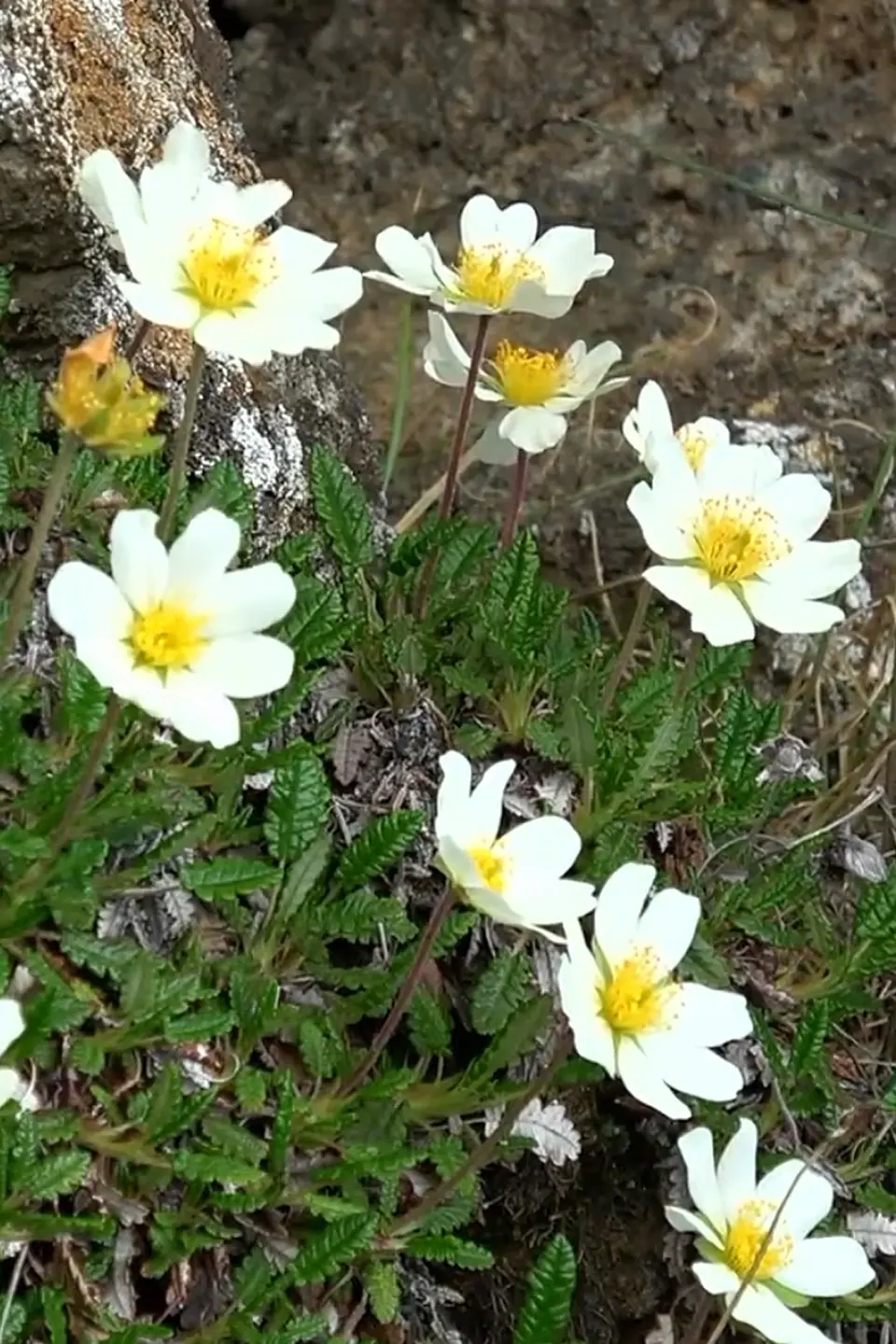
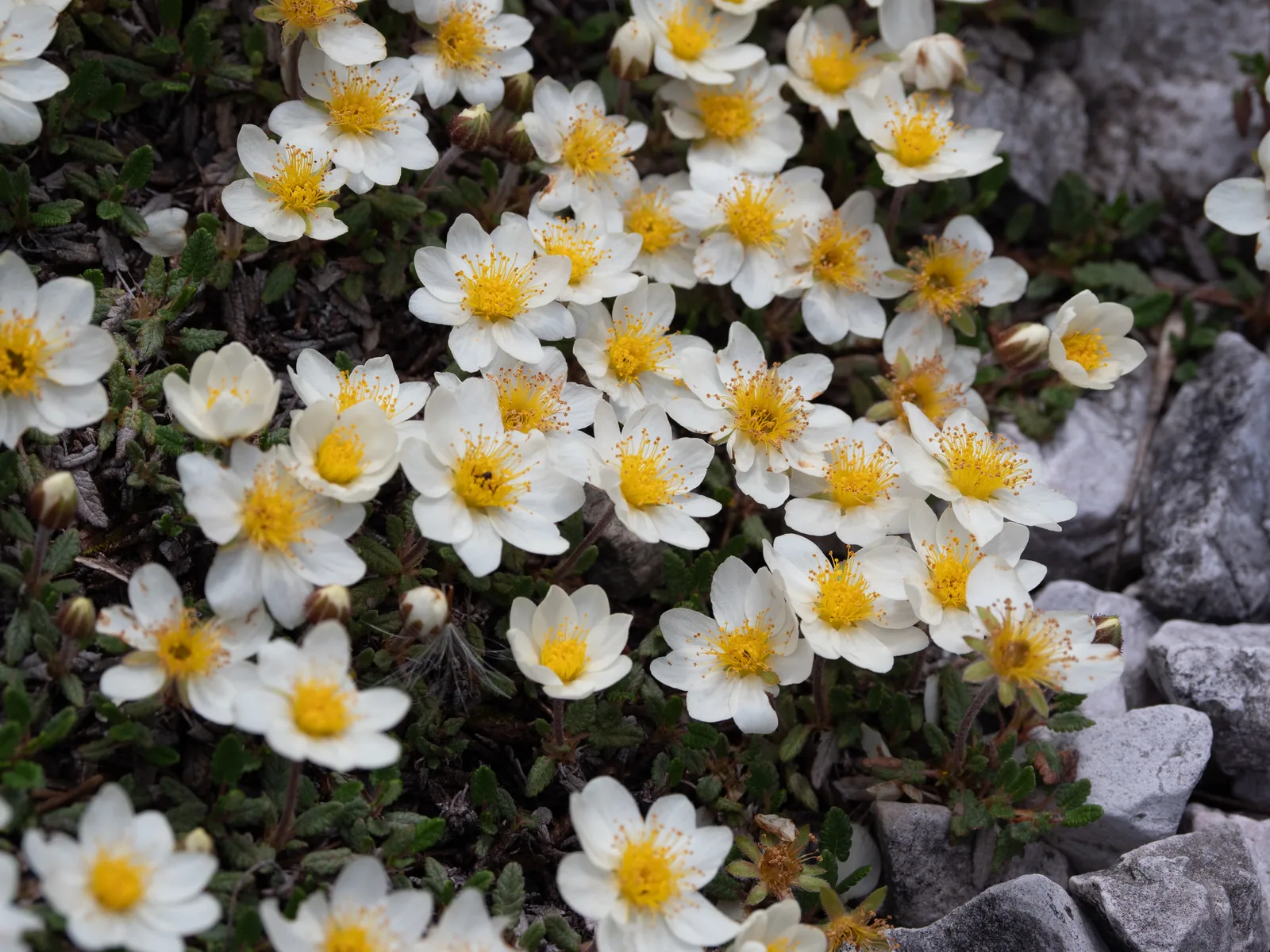
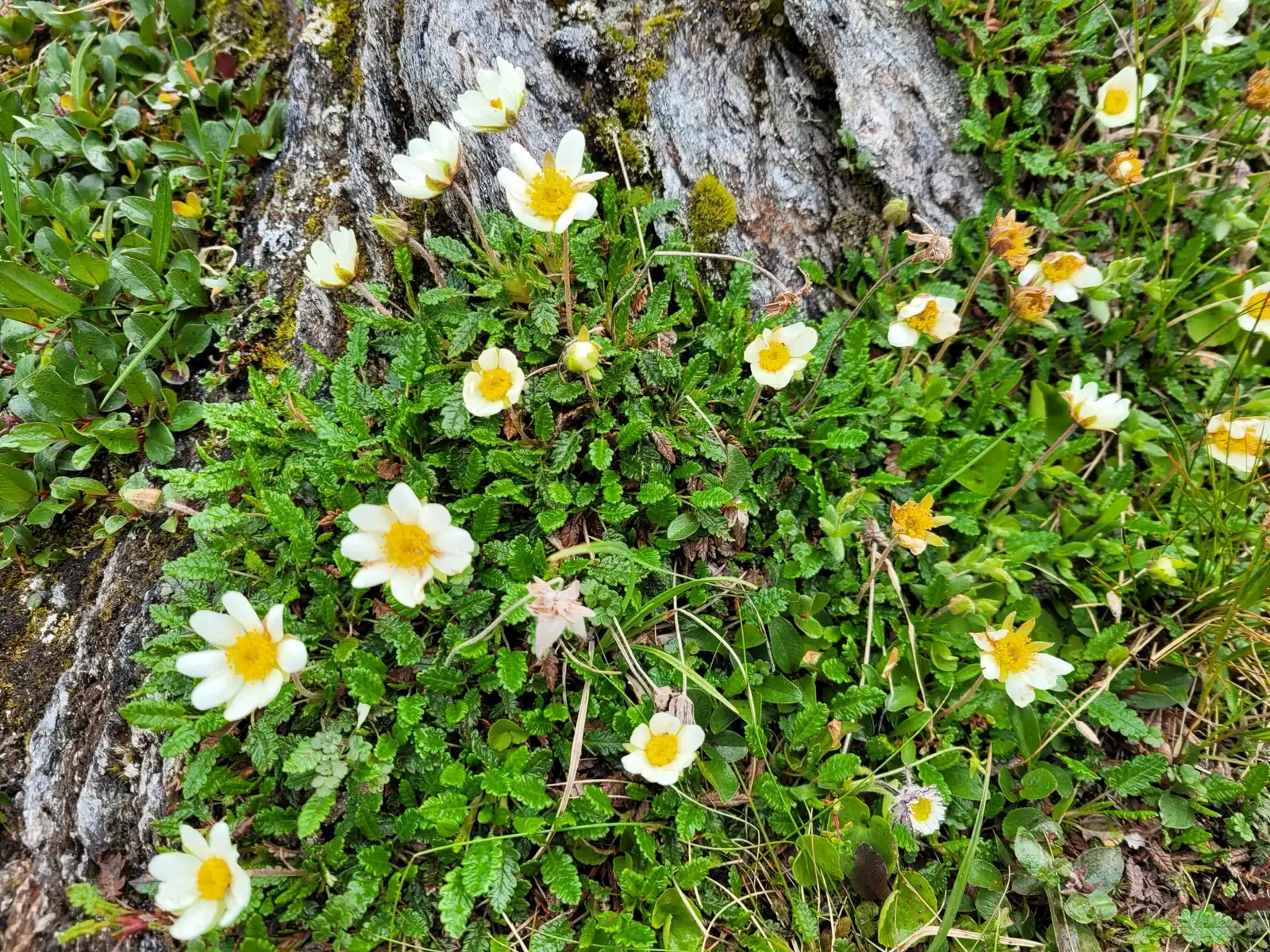

How to Grow and Care for Eightpetal mountain-avens
Dryas octopetala
Written by Emilio Marruso · last checked
Toxic to: People · Why
At a glance
Mountain avens is a sun lover that asks for little water; in fact, too much water is what it fears most. Plant it out in July or August, after the snow melts, and make new plants from stem cuttings, layering or root division. It has no known hazards for people, and it is gathered in the wild for food, medicine and materials.
- Sun
Full sun
- Water
Water sparingly: it suffers from too much water
What the sources say (1)
Watering notes: Susceptible to overwatering (nursery culture)
Careful attention is needed to irrigation frequency since this species is suseptible to overwatering.
— Plant Propagation Protocol for Dryas octopetala L. [2] - Planting
Plant out in July and August, after the snow melts
What the sources say (1)
Planting: July and August, after snowmelt (outplanting of nursery stock)
Outplanting date: July and Augus post-snowmelt.
— Plant Propagation Protocol for Dryas octopetala L. [2] - Harvest
Gathered in the wild for food, medicine and materials
- Propagation
Stem cuttings, layering or root division; layering and division work better than seed
What the sources say (2)
Propagation: Stem cuttings, layering and root division (layering and division more successful than seed)
Layering and Root division techniques are more successful than seed cultivation.
— Plant Propagation Protocol for Dryas octopetala L. [2] Stem cuttings to be made in late July
— Plant Propagation Protocol for Dryas octopetala L. [2] - Safety
No known hazards for people
Overview
Mountain avens is a small evergreen shrub of rocky places and high pastures, especially on limestone, suited to a rock garden. [1] It prefers a sunny position and a gritty, well-drained peaty soil. [1]
This record is incomplete: the sources we read do not cover every field yet.
Not yet covered by our sources: Watering, Hardiness, coldest zone, Hardiness, warmest zone, Pruning
Eightpetal mountain-avens care
How to water Eightpetal mountain-avens
Watering
Not stated in the sources we read.
Watering notes
Susceptible to overwatering (nursery culture)
What the sources say (1)
Careful attention is needed to irrigation frequency since this species is suseptible to overwatering.How much light Eightpetal mountain-avens needs
How much cold Eightpetal mountain-avens can take
Hardiness, coldest zone
Not stated in the sources we read.
Hardiness, warmest zone
Not stated in the sources we read.
How to propagate Eightpetal mountain-avens
Stem cuttings, layering and root division (layering and division more successful than seed)
Remedies
The sources we checked give no remedies for this plant.
Is Eightpetal mountain-avens poisonous?
Reported by the source, quoted verbatim. This is not medical or veterinary advice: if a person or an animal may have eaten this plant, contact a poison control centre or a veterinarian.
Known Hazards None known
[1]
Calendar
July and August, after snowmelt (outplanting of nursery stock)
What the sources say (1)
Outplanting date: July and Augus post-snowmelt.Not stated in the sources we read.
Months as given by the sources, which are mostly from the United States (northern hemisphere). In the southern hemisphere they shift by about six months.
Edibility
Reported by the source, quoted verbatim. Do not eat a plant on the basis of this page alone: identification mistakes can be dangerous.
It is harvested from the wild for local use as a food, medicine and source of materials.
[1]
Similar plants
- Abies grandis Abies grandis
- Abraham Trachystemon orientalis
- Abyssinian banana Ensete ventricosum
- Acacia longifolia Acacia longifolia
- Acanthus hungaricus Acanthus hungaricus
- Aconite Aconitum napellus
- Adam's Needle Yucca flaccida
- Adriatic lizard orchid Himantoglossum adriaticum
Sources
Every value above is quoted from these documents. Links lead to the original publisher.
- Dryas octopetala - Useful Temperate Plants · temperate.theferns.info, consulted
- Plant Propagation Protocol for Dryas octopetala L. · courses.washington.edu, consulted
- British Wild Plant: Dryas octopetala Mountain Avens · ukwildflowers.com, consulted
- FAMIGLIA GENERE SPECIE AUTORE · ortobotanico.unito.it, consulted
Written by Emilio Marruso · last checked