
How to Grow and Care for Cockspur Coral Tree
Erythrina crista-galli
Written by Emilio Marruso · last checked
Toxic to: People · Why
At a glance
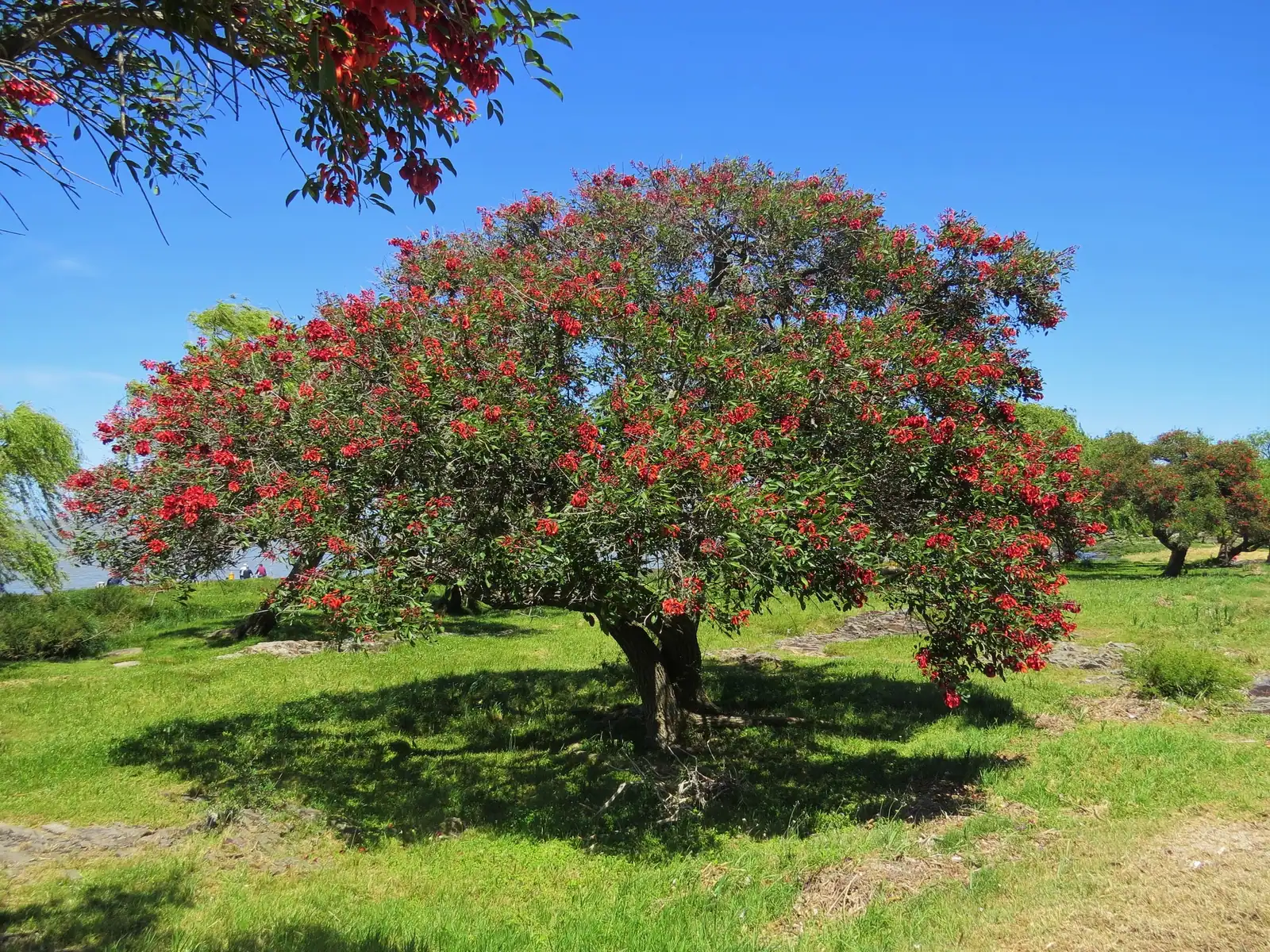
This tree from the pea family loves full sun and regular watering that keeps the soil a little moist. In the wild it grows in marshy ground, yet it also copes with dry soil. Sow it in spring, root cuttings or divide it in autumn, and watch it grow up to 33 feet tall, or keep it in a container.
- Sun
Full sun
What the sources say (1)
Light: Full sun
Erythrina crista-galli needs full sun exposure (south facing) and warm climates.
— Erythrina crista-galli or Cockspur coral tree | Care and Growing [5] - Water
Water regularly to keep the soil a little moist; it also copes with dry soil
What the sources say (2)
Watering: Water regularly to keep the soil a little moist
Water regularly to keep the soil a little moist.
— Erythrina crista-galli or Cockspur coral tree | Care and Growing [5] Watering notes: Found in the wild in very moist and marshy soils, though it also succeeds in dry soils
This species is found in the wild in very moist and marshy soils, though it also succeeds in dry soils
— Erythrina crista-galli - Useful Temperate Plants [2] - Cold
Survives winters down to 25 °F (−3.9 °C)
Half hardy: mild winters or an unheated greenhouse · USDA 9b · RHS H3 · Z9
What the sources say (1)
Hardiness, coldest zone: 9b [winter low −3.9 to −1.1 °C (25 to 30 °F)]
which rates its hardiness as H3 (half hardy – unheated greenhouse/mild winter), considered equivalent to USDA Zone 9b/10a.
— DENDROLOGY [4] - Pruning
In spring, cut away dry branches and stems
What the sources say (1)
Pruning: Spring (dry branches and stems)
Fertilize in spring with manure and in spring and summer every 20 days with mineral fertilizer. Prune dry branches and stems in spring.
— Erythrina crista-galli or Cockspur coral tree | Care and Growing [5] - Pests
Mites can attack it when the air is too humid
- Watch out
Weak branch joints can split: keep one trunk and shorten weak limbs
- Size
Up to 33 ft tall
What the sources say (1)
Mature height: up to 1000 cm (10 m)
A small deciduous tree that can reach 10 m.
— Erythrina crista-galli L. - Herbari Virtual del Mediterrani Occidental [8] - Propagation
From seed, cuttings or division in autumn
What the sources say (2)
Propagation: Seed; cuttings; division (autumn)
Erythrina crista-galli propagates by seeds sown in spring, by cuttings in spring or by division in autumn.
— Erythrina crista-galli or Cockspur coral tree | Care and Growing [5] Heeled cuttings of young growth in the spring in a frame
— Erythrina crista-galli - Useful Temperate Plants [2] - Sowing
Sow in spring
What the sources say (2)
Sowing: Spring
Erythrina crista-galli propagates by seeds sown in spring, by cuttings in spring or by division in autumn.
— Erythrina crista-galli or Cockspur coral tree | Care and Growing [5] Seed - pre-soak for 12 hours in warm water and sow spring in a greenhouse.
— Erythrina crista-galli - Useful Temperate Plants [2] - Containers
Grows in containers too
What the sources say (1)
In containers: Yes
In northern Europe it can be grown well as a container plant but requires seasonal care and the container needs to be overwintered indoors.
— DENDROLOGY [4] - Safety
Do not eat any part of it; the pollen can cause mild allergies
Overview
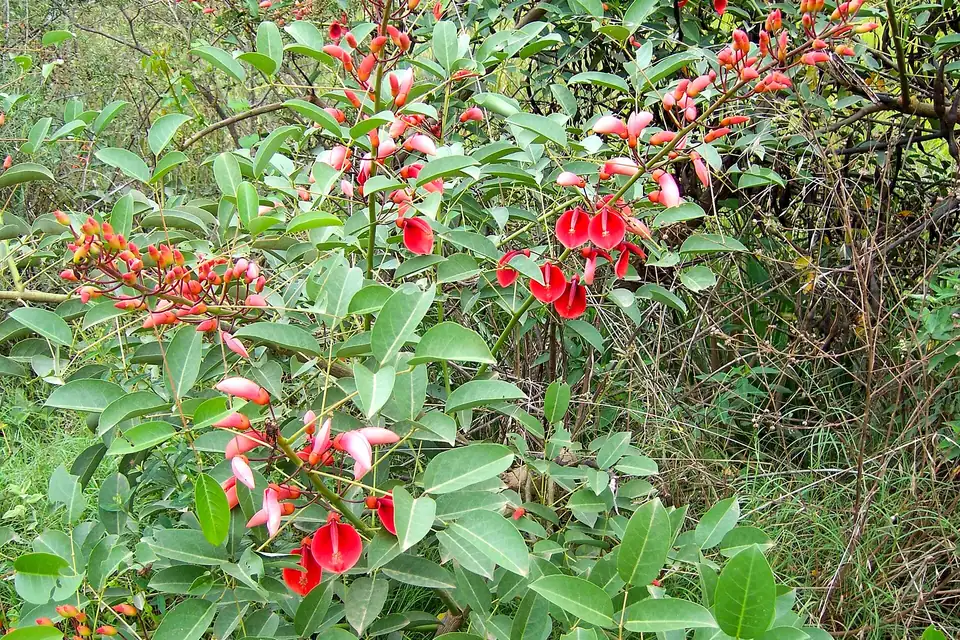
Cockspur coral tree is a small deciduous thorny tree from warm-temperate South America, grown as an ornamental for its crimson flowers. [1] It needs full sun and warm climates and does not resist frost. [5] Erythrina species contain toxic alkaloids, most concentrated in the seeds. [2]
This record is incomplete: the sources we read do not cover every field yet.
Not yet covered by our sources: Hardiness, warmest zone
Cockspur Coral Tree care
How to water Cockspur Coral Tree
Watering
Water regularly to keep the soil a little moist
What the sources say (1)
Water regularly to keep the soil a little moist.Watering notes
Found in the wild in very moist and marshy soils, though it also succeeds in dry soils
What the sources say (1)
This species is found in the wild in very moist and marshy soils, though it also succeeds in dry soilsHow much light Cockspur Coral Tree needs
Full sun
What the sources say (1)
Erythrina crista-galli needs full sun exposure (south facing) and warm climates.How much cold Cockspur Coral Tree can take
Hardiness, coldest zone
9b [winter low −3.9 to −1.1 °C (25 to 30 °F)]
What the sources say (1)
which rates its hardiness as H3 (half hardy – unheated greenhouse/mild winter), considered equivalent to USDA Zone 9b/10a.Hardiness, warmest zone
Not stated in the sources we read.
Where to grow Cockspur Coral Tree
Yes
What the sources say (1)
In northern Europe it can be grown well as a container plant but requires seasonal care and the container needs to be overwintered indoors.How to propagate Cockspur Coral Tree
Seed; cuttings; division (autumn)
What the sources say (2)
Erythrina crista-galli propagates by seeds sown in spring, by cuttings in spring or by division in autumn.Heeled cuttings of young growth in the spring in a frameHow to grow Cockspur Coral Tree
The plant
Family
Leguminosae
What the sources say (1)
Family: LEGUMINOSAE Genus: Erythrina Catalan common name: Eritrina cresta de gall.Mature height
up to 1000 cm (10 m)
What the sources say (1)
A small deciduous tree that can reach 10 m.Cockspur Coral Tree pests and problems
Included bark and trunk decay
Symptom: Included bark can form in the crotch of main branches, weakening the tree; trees do not compartmentalize decay well.
What to do: Prune to one trunk and shorten limbs with bark inclusions to help prevent failure.
What the sources say (1)
Included bark can form in the crotch of main branches, weakening the tree. Prune to one trunk and shorten limbs with bark inclusions to help prevent failure.
— Cockspur Coral Tree - Tree selection - Landscape plants - Edward F. Gilman - UF/IFAS [6] Mites
Symptom: Attacked by mites in excessive humidity.
What the sources say (1)
If there is excessive humidity Coral Tree can be attacked by mites .
— Erythrina crista-galli or Cockspur coral tree | Care and Growing [5]
Remedies
The sources we checked give no remedies for this plant.
Is Cockspur Coral Tree poisonous?
Reported by the source, quoted verbatim. This is not medical or veterinary advice: if a person or an animal may have eaten this plant, contact a poison control centre or a veterinarian.
We have no specific information on the concentration of the alkaloids in this species, but care should be exercised in any use of the plant that involves ingestion.
[2]- Poisonous parts
these can be found in all parts of the plant but are usually most concentrated in the seeds.
[2]- Toxic principle
The seeds have been found to contain curare-like alkaloids, a characteristic of the genus Erythrina
[4]- Symptoms
These alkaloids have a curare-like action (obtained from Strychnos species) and can cause paralysis and even death by respiratory failure
[2]
as street trees. Pollen can cause mild allergy reactions.
[6]- Poisonous parts
as street trees. Pollen can cause mild allergy reactions.
[6]
Calendar
Sowing
Spring
What the sources say (2)
Erythrina crista-galli propagates by seeds sown in spring, by cuttings in spring or by division in autumn.Seed - pre-soak for 12 hours in warm water and sow spring in a greenhouse.Planting
The sources give different values depending on region, zone or growing conditions.
What each source says
According to Consulta Plantas: Early spring
after the last expected frosts: Late spring or early summer
What the sources say (2)
According to Consulta Plantas: The soil can be a mixture of garden substrate with 20% clay that retains water. The transplant is done in early spring.after the last expected frosts: Plant them out into their permanent positions in late spring or early summer, after the last expected frosts.Pruning
Spring (dry branches and stems)
What the sources say (1)
Fertilize in spring with manure and in spring and summer every 20 days with mineral fertilizer.
Prune dry branches and stems in spring.Months as given by the sources, which are mostly from the United States (northern hemisphere). In the southern hemisphere they shift by about six months.
Indicative values
Values from a secondary source, not checked word for word like the rest of this page. Use them as a starting point.
- Life cycle
- PerennialIndicative value, adapt it to your climate · Secondary source
- Hours of sun
- 6-8 hoursIndicative value, adapt it to your climate · Secondary source
- Soil pH
- 6-7.5Indicative value, adapt it to your climate · Secondary source
- Care level
- HighIndicative value, adapt it to your climate · Secondary source
- Growth rate
- HighIndicative value, adapt it to your climate · Secondary source
Similar plants
- Abies grandis Abies grandis
- Abraham Trachystemon orientalis
- Abyssinian banana Ensete ventricosum
- Acacia longifolia Acacia longifolia
- Acanthus hungaricus Acanthus hungaricus
- Aconite Aconitum napellus
- Adam's Needle Yucca flaccida
- Adriatic lizard orchid Himantoglossum adriaticum
Sources
Every value above is quoted from these documents. Links lead to the original publisher.
- HortFlora · hortflora.rbg.vic.gov.au, consulted
- Erythrina crista-galli - Useful Temperate Plants · temperate.theferns.info, consulted
- Erythrina crista-galli • New Zealand Plant Conservation Network · nzpcn.org.nz, consulted
- DENDROLOGY · dendrology.org, consulted
- Erythrina crista-galli or Cockspur coral tree | Care and Growing · consultaplantas.com, consulted
- Cockspur Coral Tree - Tree selection - Landscape plants - Edward F. Gilman - UF/IFAS · hort.ifas.ufl.edu, consulted
- Centro de Germoplasma y Vivero Nacional Dr. Alejandro Gallinal · gub.uy, consulted
- Erythrina crista-galli L. - Herbari Virtual del Mediterrani Occidental · herbarivirtual.uib.cat, consulted
Written by Emilio Marruso · last checked